The dry season arrives on schedule. Every year. In northern Cameroon, Nigeria, and the Sahel zone, the harmattan brings temperatures above 35°C from November through February. In southern Cameroon and the coastal belt, the long dry season from December through February drives ambient house temperatures above 32°C for weeks at a time. In the middle belt of Nigeria and Ghana, peak heat in March and April can push well above 38°C during the afternoon hours.
These temperatures are not a surprise. They are events that can be planned for, prepared for, and managed through. The layer farms that protect production during the dry season are not the ones with the most expensive cooling infrastructure — they are the ones that adjust their feeding program before the heat arrives, not after the eggs stop coming.
Heat stress and nutrition interact in a specific, well-characterized sequence. The farmer who understands that sequence can interrupt it at multiple points. The farmer who waits for the production data to show the damage before investigating has already paid for the heat — in feed consumed, eggs not produced, and a recovery timeline that extends weeks beyond the heat event itself.
This article covers every feeding intervention available for dry-season heat stress management in commercial layer operations: what heat does to the hen’s feed intake, energy balance, amino acid requirements, mineral metabolism, and gut health — and what to feed, in what quantity, at what time of day, to protect production through the season.
What Heat Does to a Laying Hen: The Physiological Sequence
Understanding the feeding strategy requires understanding the biological problem it is solving. Heat stress in a laying hen is not a single event — it is a cascade of physiological disruptions that compound each other.
Step 1: Feed Intake Collapse
At 22°C (the thermoneutral zone), a commercial brown-egg layer hen eats 110–120 grams of feed per day and produces body heat at a rate she can dissipate through radiation and convection from her skin surface and comb.
At 28°C, she begins reducing feed intake by approximately 1.5 grams per degree Celsius above the thermoneutral zone — and initiates evaporative cooling through panting.
At 32°C, feed intake is approximately 9–12% below standard. At 35°C, 15–20% below. At 38°C, 25–30% below.
The hen is reducing feed intake because digestion generates metabolic heat — approximately 30–40% of metabolizable energy intake is released as heat during nutrient processing. Eating less reduces the metabolic heat load. It also reduces the nutrient delivery the hen needs to maintain egg production.
This is the fundamental tension of heat stress nutrition: the hen’s strategy for cooling herself (eat less) directly conflicts with her nutritional requirements for maintaining production.
Step 2: Electrolyte Loss Through Panting
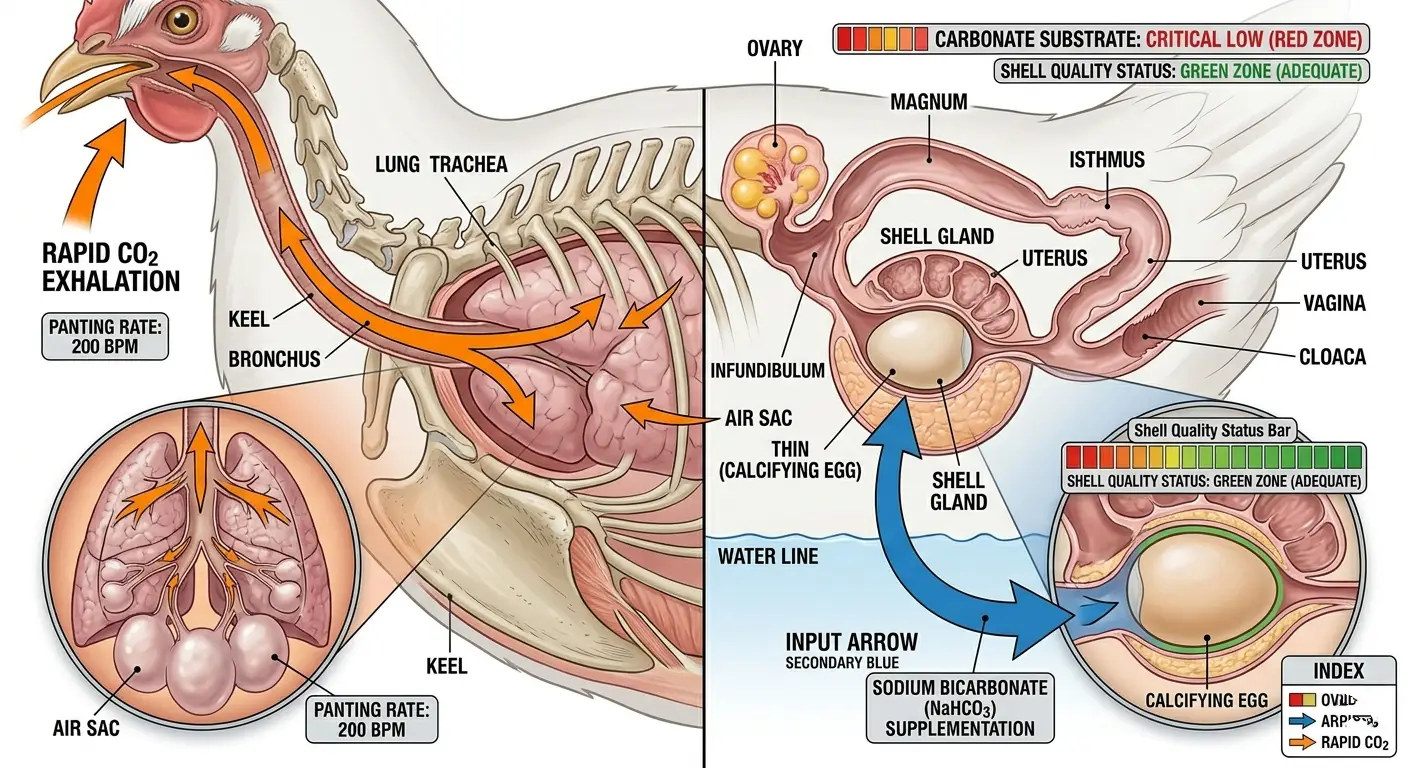
Panting — the primary evaporative cooling mechanism in birds, which cannot sweat — drives respiratory rate from 20 breaths per minute under normal conditions to 150–250 breaths per minute under severe heat stress.
At this respiratory rate, the hen exhales significant quantities of carbon dioxide (CO₂). Loss of CO₂ reduces blood carbonic acid, raising blood pH — a condition called respiratory alkalosis. Simultaneously, bicarbonate (HCO₃⁻) is excreted by the kidney to compensate, reducing the carbonate substrate available for eggshell calcium carbonate deposition.
The mineral losses from panting also include potassium and sodium — electrolytes that are critical for maintaining blood osmolarity, muscle function, and feed intake regulation. Hypokalemia (low blood potassium) reduces feed intake independently of temperature, compounding the voluntary intake reduction the hen is already making.
Step 3: Reproductive Axis Suppression
Sustained heat stress elevates blood corticosterone — the primary stress hormone in poultry — which suppresses luteinizing hormone (LH) secretion from the pituitary. LH is the trigger for ovulation. Suppressed LH reduces the frequency of the ovulatory cycle, directly reducing laying rate. This hormonal suppression persists for 48–72 hours after the heat event — meaning a 2-hour peak heat afternoon reduces laying rate for 2–4 days, not just the afternoon it occurred.
Step 4: Gut Integrity Compromise
During heat stress, blood is redistributed from the visceral organs — including the intestinal tract — to the peripheral circulation, where it facilitates heat dissipation from the skin surface. Reduced intestinal blood flow causes villus atrophy, increased intestinal permeability (“leaky gut”), and bacterial translocation from the gut lumen into the bloodstream.
The consequence for nutrient absorption: reduced absorption efficiency for amino acids, fat-soluble vitamins, and minerals — meaning the nutrients the farmer is providing are absorbed at 15–25% lower efficiency than the ration design assumes.
The consequence for immune function: systemic bacterial exposure from gut translocation maintains a chronic low-grade inflammatory state that diverts metabolic resources from egg production to immune activation.
This four-step cascade — reduced intake, electrolyte loss, reproductive suppression, gut compromise — is what the feeding strategy must interrupt. Each step has a specific nutritional intervention.
Strategy 1: Increase Energy Density to Compensate for Reduced Intake Volume
The hen is eating less. The solution is not to force her to eat more — it is to put more energy into each gram she does eat.
The Energy Density Formula
The heat-adjusted energy requirement calculation:
Adjusted ME% = (Target daily ME intake ÷ Actual daily feed intake at current temperature) × 100
If the target daily ME intake is 310 kcal per bird per day and the flock is eating 95g per bird per day at 33°C:
Adjusted ME% = (310 ÷ 95) × 100 = 326 kcal per 100g = 3,260 kcal/kg
Compare this to the standard summer ration at 2,800–2,850 kcal/kg. The heat-adjusted requirement is 400 kcal/kg higher than the standard formulation — a gap that cannot be closed by changing protein or mineral levels. It requires energy-dense ingredients.
How to Increase Energy Density
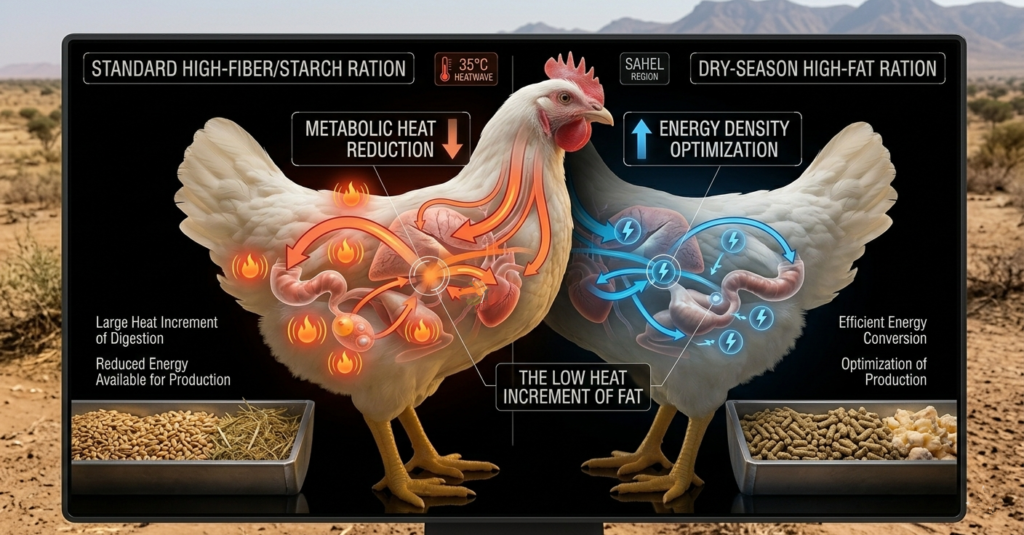
Fat supplementation: Adding 2.5–4.0% fat to the ration is the most efficient route to increased energy density. Fat provides 2.25 times more ME per gram than carbohydrates (8.5 kcal/g vs. 3.7 kcal/g) and, critically, generates significantly less metabolic heat per unit of ME compared to starch and fiber — a property called the low heat increment of fat.
This heat increment property makes fat doubly valuable in heat stress conditions: it provides dense energy while generating less body heat during its metabolism than an equivalent energy contribution from grain starch. The hen gains ME without gaining the same thermal cost.
Practical fat sources in West Africa:
- Soybean oil: ME 8,500 kcal/kg; widely available; clean flavor; does not affect palatability at 2–4% inclusion
- Palm oil (refined): ME 8,000 kcal/kg; available; cost-effective; check peroxide value — rancid palm oil is pro-oxidant and will degrade vitamin E in the ration
- Poultry fat: ME 7,500–8,500 kcal/kg, where available; cost-effective if sourced from a reliable abattoir with consistent quality
Add fat by reducing the starch fraction (maize) proportionally — do not add fat on top of a fully formulated ration without simultaneously reducing another energy source, or the ME will exceed the target.
Reducing fiber and anti-nutritional factors: High fiber ingredients — rice bran above 5%, wheat bran above 5%, cassava peel — reduce diet ME density and increase the heat of digestion. Minimize these ingredients in the dry-season ration.
Strategy 2: Adjust Amino Acid Concentrations Upward
When feed intake drops by 15–20%, amino acid intake drops by the same percentage unless the ration concentration is increased proportionally. A ration with 0.85% lysine formulated for 115g intake delivers 978 mg lysine per bird per day. The same ration at 95g intake (during heat stress) delivers only 808 mg per bird per day — 17% below the laying requirement, with immediate consequences for egg size and laying rate.
The Amino Acid Concentration Adjustment
The heat-adjusted amino acid concentration formula:
Adjusted Amino Acid % = (Target daily amino acid intake in mg ÷ Actual daily feed intake in grams) × 10
For lysine at 33°C with 95g actual intake: Adjusted Lysine % = (980 ÷ 95) × 10 = 1.03%
Compared to the standard 0.85–0.90% lysine in the normal laying ration. Heat stress requires a 15–20% increase in amino acid concentration to deliver the same daily gram intake.
Heat-adjusted amino acid targets for brown-egg commercial layers at 32–35°C ambient:
| Amino Acid | Standard Ration Target | Heat-Adjusted Target (95g intake) | Practical Adjustment Method |
|---|---|---|---|
| Lysine | 0.85–0.90% | 1.00–1.05% | Add L-lysine HCl |
| Methionine + Cystine | 0.72–0.78% | 0.85–0.92% | Add DL-methionine |
| Threonine | 0.65–0.70% | 0.75–0.82% | Add L-threonine |
| Tryptophan | 0.17–0.19% | 0.20–0.22% | Add L-tryptophan (also has appetite-stimulating effects — see below) |
Synthetic amino acids — L-lysine HCl, DL-methionine, L-threonine, L-tryptophan — allow precise amino acid concentration adjustment without proportionally increasing crude protein, which is important because excess protein increases metabolic heat production.
The Crude Protein Reduction Strategy
Excess crude protein in the ration is metabolized through the urea cycle, which generates heat. A ration with 18% crude protein produces more metabolic heat per gram consumed than a ration with 16% crude protein at the same amino acid balance. In heat stress conditions, reducing crude protein by 1–2 percentage points — while maintaining amino acid levels through synthetic supplementation — reduces the thermal burden of protein catabolism.
Target: During heat stress, reduce crude protein to 15–16% while using synthetic amino acids to maintain amino acid delivery at heat-adjusted targets. This “ideal protein” approach maintains production performance while reducing heat increment from protein catabolism.
Strategy 3: Electrolyte Supplementation and Bicarbonate Restoration
The respiratory alkalosis and electrolyte loss from panting are the most immediately correctable physiological consequences of heat stress — and the fastest-responding interventions in the feeding program.
Sodium Bicarbonate: The Shell and Intake Protector
Sodium bicarbonate (NaHCO₃) added to drinking water or the ration during heat stress serves two simultaneous functions:
- Restores blood bicarbonate depleted by respiratory alkalosis, providing the carbonate substrate for eggshell calcium carbonate deposition
- Increases blood pH buffering capacity, reducing the severity of the alkalotic state and partially restoring carbonic anhydrase activity in the shell gland
Protocol: Add sodium bicarbonate to drinking water at 0.3–0.5 g per liter during heat stress periods. Alternatively, include in the ration at 0.3–0.5% of total ration weight during the dry season.
Note: Sodium bicarbonate increases dietary sodium. During heat stress, increased sodium is generally appropriate because sodium loss from panting and reduced intake combine to create a deficit. However, verify that the total ration sodium (from salt + sodium bicarbonate combined) does not exceed 0.25% — excess sodium above this level causes polydipsia, wet droppings, and litter moisture accumulation.
Potassium Chloride: The Intake Protector
Potassium deficiency from heat stress-associated losses reduces voluntary feed intake independently of temperature-driven appetite suppression. Supplementing potassium chloride at 0.15–0.20% of the ration maintains blood potassium within the normal range and prevents the compounding intake reduction from hypokalemia.
Dietary electrolyte balance (dEB): The combination of sodium, potassium, and chloride in the diet determines blood pH and osmolarity. The target dietary electrolyte balance during heat stress is 200–250 mEq/kg, slightly above the standard 180–220 mEq/kg to compensate for respiratory losses.
dEB (mEq/kg) = (Na% × 435) + (K% × 256) − (Cl% × 282)
Verify the dEB calculation when adjusting electrolyte inclusion during heat stress. A dEB above 350 mEq/kg causes metabolic alkalosis. A dEB below 150 mEq/kg causes metabolic acidosis. Both suppress production.
Vitamin C: The Stress Response Modifier
Under heat stress, endogenous vitamin C synthesis in the hen’s liver is insufficient to meet demand. Vitamin C (ascorbic acid) is required for:
- Collagen synthesis in the eggshell membrane
- Cortisol metabolism — reducing the duration and severity of the corticosterone response to heat stress
- Antioxidant protection of the reproductive tract against reactive oxygen species generated during heat-induced hyperthermia
Supplementation protocol: 150–200 mg per liter of drinking water, or 150–200 mg per kg of feed, continuously during dry season heat stress periods.
Note: Vitamin C is heat-labile and water-soluble. Add it to drinking water in the morning from a freshly prepared solution — do not premix large volumes that sit at ambient temperature for more than 2–3 hours before consumption. For ration inclusion, use a stabilized, coated form of ascorbic acid that survives feed processing temperatures.
Strategy 4: Feeding Timing — When the Feed Is Offered Matters as Much as What Is in It
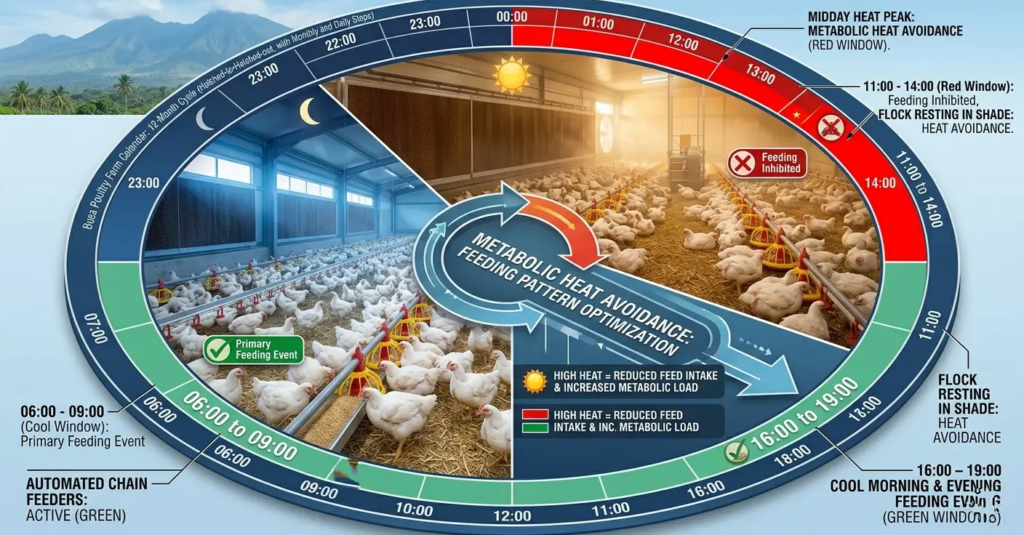
Feed offered during the hottest part of the day will not be eaten in the quantities that the ration requires. Digestive processes generate heat that a thermally stressed bird will avoid. Shifting feeding timing to the cooler parts of the 24-hour cycle is one of the simplest and most effective heat stress interventions available — and costs nothing.
The Optimal Feeding Schedule for Dry Season
06:00–09:00 (pre-peak heat): Provide 40–45% of the daily feed allocation during this window. Birds are most active, body temperature is at its daily minimum, and feeding motivation is highest. The morning feed allocation is also the primary window for calcium absorption — critical because shell formation occurs primarily during the dark period and the calcium absorbed in the morning feeds the medullary bone reserve for overnight shell calcification.
11:00–14:00 (peak heat — minimum feeding): Do not add fresh feed during this window. Birds will not eat meaningfully during peak heat hours, and fresh feed left sitting during peak heat is subject to moisture absorption, mold, and rancidity that reduces palatability and nutrient value by the time birds eat in the cooler evening.
16:00–19:00 (post-peak heat): Provide the remaining 55–60% of the daily feed allocation. Body temperature has begun declining. Feed intake motivation recovers. The evening feeding period is particularly important because it is the last feeding opportunity before the dark period — and the coarse limestone in the ration consumed during this window will dissolve slowly in the gizzard overnight, providing calcium during peak shell calcification.
Practical implementation: In houses with chain feeders, run the chain at 06:00 and again at 16:00 — not at midday. For manually fed operations, divide the daily bag allocation explicitly across two feeding events and do not allow ad libitum access that fills feeders at midday.
Water Access During Peak Heat
Water intake is the single most important variable during peak heat hours. At 35°C, a laying hen’s water requirement is approximately 300–350 mL per bird per day, 60–80% above the 180–220 mL standard requirement. The water being consumed during these hours is the hen’s primary cooling mechanism and the primary carrier of the electrolyte supplements being provided.
Ensure water line flushing before the peak heat window (09:00–10:00) to replace thermally elevated standing water in overhead lines with cooler source water. Hot water in drinker lines suppresses voluntary water intake significantly — a hen that approaches a drinker and receives water at 38°C will drink less than one that receives water at 20°C.
Strategy 5: Calcium Adjustment for Heat Stress
The combined effects of respiratory alkalosis (reducing carbonate substrate), reduced feed intake (reducing total calcium delivery), and vitamin D₃ degradation in stored feed (reducing absorption efficiency) make calcium supply failure the most immediate shell quality risk of dry-season heat stress.
The Heat-Adjusted Calcium Formula
As covered in previous articles in this series, the heat adjustment formula is:
Adjusted Calcium % = (Daily calcium requirement in grams ÷ Actual daily feed intake in grams) × 100
At 95g intake during peak heat with a 4.0g daily calcium requirement: Adjusted Calcium % = (4.0 ÷ 95) × 100 = 4.21%
This is 0.4–0.6 percentage points above standard summer ration calcium — the equivalent of adding approximately 11 kg of limestone per tonne of feed.
Free-Choice Calcium Supplementation During Heat Stress
Hens experiencing calcium debt during heat stress will self-select additional calcium above ration levels when given the opportunity. Providing a separate hopper of coarse limestone or oystershell free-choice during the dry season allows birds to meet their own calcium requirements above ration levels during the period when ration calcium delivery is suppressed.
This free-choice supplementation approach is particularly valuable during peak heat events when feed intake drops acutely — the bird can compensate for the reduced ration calcium delivery by self-selecting additional calcium independently. Cost is minimal; the hopper requires filling once or twice per week.
Strategy 6: Antioxidant Supplementation for Gut and Reproductive Tract Protection
Heat stress generates reactive oxygen species (ROS) — free radicals that damage intestinal epithelial cells, oviduct mucosa, and follicular granulosa cells. This oxidative damage is why heat stress reduces egg quality and disrupts the ovulatory cycle beyond the hormonal effects of corticosterone alone.
Antioxidant supplementation protects against this oxidative damage at the cellular level.
Vitamin E: 40–60 IU/kg of ration during heat stress periods (double the standard supplementation of 20–30 IU/kg). Vitamin E is the primary fat-soluble antioxidant in cell membranes. Protecting intestinal and oviduct cell membranes from ROS damage maintains absorption efficiency and egg formation integrity under thermal challenge.
Selenium (organic form): 0.3–0.5 mg/kg of ration as selenomethionine. Selenium is the cofactor for glutathione peroxidase — the enzyme that neutralizes lipid peroxides before they damage cell membranes. Organic selenium is 15–20% more bioavailable than inorganic sodium selenite.
Zinc: 80–100 mg/kg of ration as zinc chelate. Zinc is the cofactor for superoxide dismutase (SOD) — an antioxidant enzyme that neutralizes superoxide free radicals. Heat stress depletes tissue zinc through increased urinary excretion and metabolic demand.
Practical implementation: During the dry season, use a heat stress premix that includes elevated vitamin E, organic selenium, organic zinc, vitamin C, and electrolytes in a single supplementation event rather than individually adding each nutrient. Several regional and international feed additive suppliers offer premixed heat stress packs formulated for tropical layer operations.
Strategy 7: Tryptophan and Appetite Stimulation
Tryptophan is the precursor for serotonin and melatonin — neurotransmitters that regulate appetite, stress response, and circadian rhythm in birds. Beyond its role as an essential amino acid for protein synthesis, tryptophan at above-requirement levels (0.20–0.25% of ration vs. standard 0.17–0.19%) has documented appetite-stimulating effects in heat-stressed birds — partially counteracting the voluntary intake reduction driven by thermal load.
Mechanism: Tryptophan-derived serotonin in the gut acts on enteric neurons and central feeding centers to maintain feeding motivation at ambient temperatures where thermal load alone would suppress it. In controlled trials, supplemental tryptophan at 0.23–0.25% of ration reduced feed intake depression during heat stress by 4–7% compared to unsupplemented controls.
Practical inclusion: This effect requires tryptophan supplementation above the amino acid requirement — meaning it is an investment in voluntary intake recovery, not just amino acid balance maintenance. Use only if the economics of recovering 4–7% of lost feed intake justify the cost of supplemental L-tryptophan.
Building the Dry-Season Ration: A Complete Specification
Combining all seven strategies into a single dry-season ration specification:
Target conditions: Ambient temperature 32–36°C, sustained daily high; actual daily feed intake 95–100g per bird per day.
| Nutrient | Standard Layer Ration | Dry-Season Adjusted Ration | Adjustment Mechanism |
|---|---|---|---|
| Metabolizable energy | 2,800–2,850 kcal/kg | 3,050–3,150 kcal/kg | Fat supplementation 3–4% |
| Crude protein | 16–17% | 15–16% | Reduce + synthetic AA |
| Lysine | 0.85–0.90% | 1.00–1.05% | L-lysine HCl |
| Methionine + Cystine | 0.72–0.78% | 0.85–0.92% | DL-methionine |
| Calcium | 3.8–4.0% | 4.1–4.3% | Additional limestone |
| Available phosphorus | 0.35–0.38% | 0.35–0.38% | No change required |
| Sodium | 0.16–0.18% | 0.16–0.20% | Verify with NaHCO₃ addition |
| dEB (mEq/kg) | 180–220 | 220–260 | NaHCO₃ + KCl |
| Vitamin D₃ | 3,000–3,500 IU/kg | 3,500–4,000 IU/kg | Fresher milling, safety margin |
| Vitamin E | 20–30 IU/kg | 40–60 IU/kg | Double standard supplementation |
| Vitamin C | — | 150–200 mg/kg | Added to ration or water |
| Selenium (organic) | 0.3 mg/kg | 0.4–0.5 mg/kg | Selenomethionine |
| Zinc (organic) | 80 mg/kg | 90–100 mg/kg | Zinc chelate |
In drinking water (throughout dry season):
- Sodium bicarbonate: 0.3–0.5 g/liter
- Vitamin C: 150–200 mg/liter (if not in feed)
- Oral electrolyte mix: as per product label during peak heat events
Monitoring the Feeding Strategy: What to Track Weekly
The dry-season feeding strategy is not a one-time ration change. It is a dynamic response to changing conditions that must be monitored and adjusted weekly.
Weekly metrics during the dry season:
Daily feed intake per bird: Weigh feed in and out daily. Compare to the target intake for the current ambient temperature level. If intake is falling faster than the heat-adjustment formula predicted, the house temperature is higher than assumed — increase energy density further or investigate cooling infrastructure.
Water consumption: Measure daily water delivered vs. remaining. Target during heat stress: 300–350 mL per bird per day at 32–35°C. Below this level indicates water line temperature problems, drinker access restriction, or palatability issues from electrolyte supplementation above the acceptable range.
Laying rate vs. previous week and breed standard: Any drop beyond the expected 2–4% seasonal decline that occurs even in well-managed heat stress conditions indicates a feeding program gap. Map the laying rate decline against the ambient temperature log to distinguish a heat-driven decline from a nutritional or health problem.
Shell quality (10-egg break-out weekly): Thin shells or soft shells appearing during peak heat indicate calcium or bicarbonate supply failure. Check the calcium concentration calculation against actual feed intake, and verify sodium bicarbonate supplementation in water is reaching the correct concentration at the far-end drinker.
Body weight (monthly during dry season): Hens losing more than 50–75g of body weight per month during heat stress are drawing on body reserves to maintain production, indicating that the energy density adjustment is still insufficient. Increase fat supplementation by 0.5% and recheck body weight the following month.
Summary
Heat stress during the dry season is predictable, annual, and expensive when it is managed reactively rather than proactively. The farms that lose 15–25% of production from October through March are the farms that adjust the ration after production falls. The farms that hold 85–90% of production through the same period adjusted the ration before the harmattan arrived.
The seven feeding strategies in this article — increased energy density through fat, heat-adjusted amino acid concentrations, electrolyte supplementation and bicarbonate restoration, optimized feeding timing, calcium adjustment, antioxidant protection, and tryptophan supplementation for appetite — address every link in the heat stress physiological chain.
None of them requires expensive infrastructure. All of them require understanding what heat does to the hen’s biology, and formulating around that biology rather than hoping the standard ration is adequate when it clearly is not.
The dry season arrives on schedule. The feeding program should too.