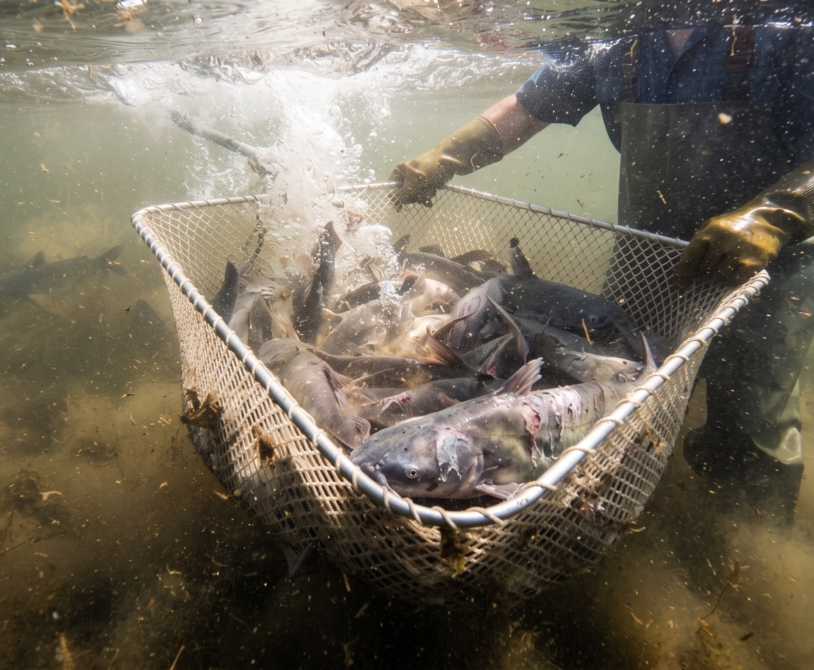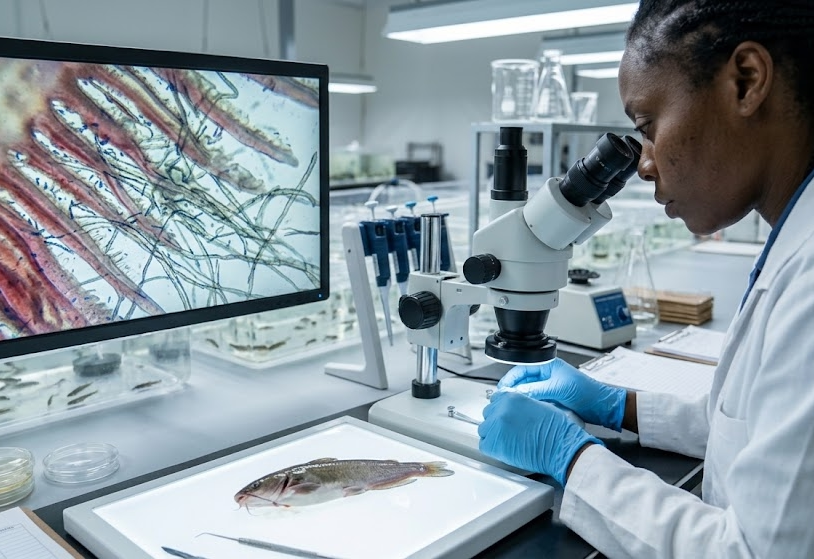
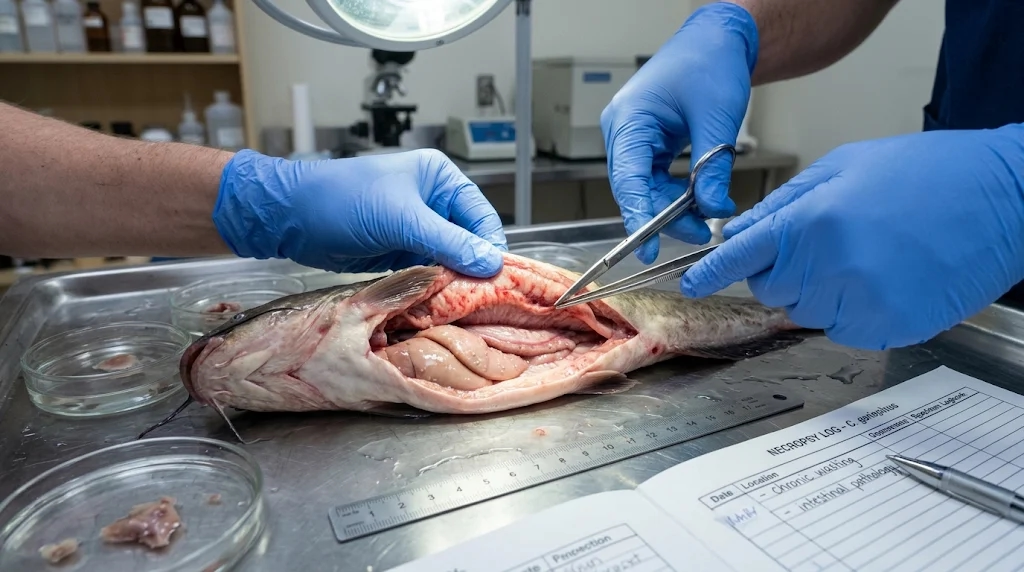
While external parasites and gill pathogens cause immediate, visible distress through flashing and surface gasping, internal parasites—such as nematodes, tapeworms, and digenean trematodes—operate quietly inside the digestive tract, body cavity, and internal tissues of African catfish (Clarias gariepinus) and Channel catfish (Ictalurus punctatus).
Rather than causing sudden mass die-offs overnight, internal parasites inflict a slow, compounding toll on farm profitability by sabotaging nutrition, stunting growth rates, and severely degrading feed conversion efficiency.
1. Mechanisms of Nutritional Deprivation and Malabsorption
Internal helminths and protozoans disrupt the host’s normal physiology through several direct mechanisms that starve the fish of essential resources:
- Direct Nutrient Stealing: Tapeworms (Polyonchobothrium clarias) lack a digestive tract of their own, absorbing pre-digested proteins, vitamins, and carbohydrates directly through their skin from the host’s intestinal lumen, robbing the fish of the very nutrients required for muscle and skeletal growth.
- Mucosal Damage and Impaired Digestion: Nematodes (Procamallanus species) and intestinal flukes clamp onto or burrow into the stomach and intestinal walls using specialized buccal capsules or hooks. This constant tissue trauma causes localized enteritis, thickening, and shedding of the epithelial lining, destroying the microvilli responsible for absorbing digested food.
- Blood and Iron Loss: Blood-feeding roundworms pierce the mucosal tissue to feed on host blood and hemoglobin. Heavy infestations lead to chronic internal bleeding, iron deficiency, and systemic anemia, diverting energy away from somatic growth toward basic survival and red blood cell replacement.
2. Clinical Indicators of Stunted Growth and Wasting
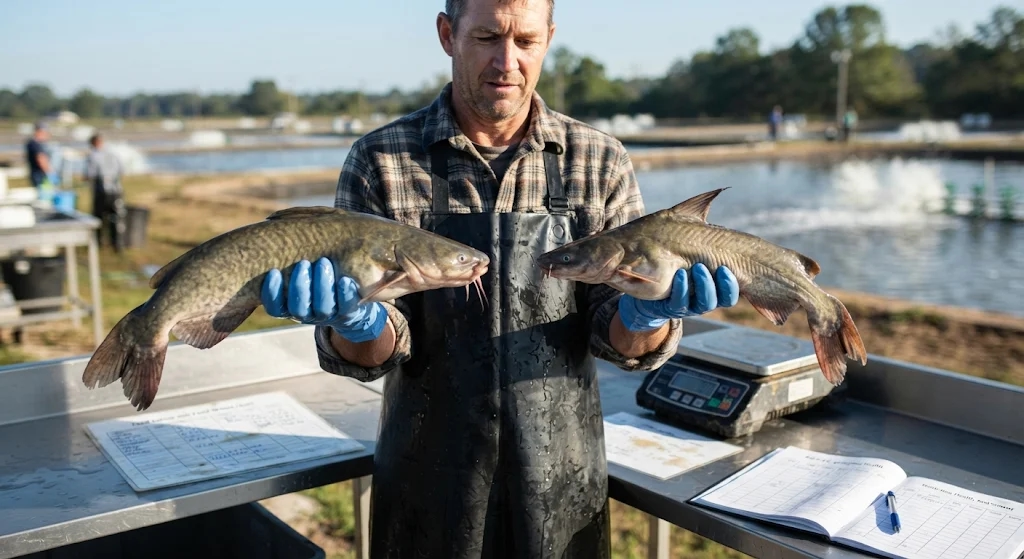
Because the digestive system is compromised, infected catfish display clear physical and behavioral signs of undernutrition despite often maintaining a normal or even voracious appetite:
- “Pinched” Bellies and Knife-Backs: As internal organs and muscle tissues are catabolized to sustain the fish under nutrient starvation, infected catfish develop sunken bellies, sharp dorsal ridges, and pronounced structural stunting relative to healthy cohort populations.
- Destruction of Feed Conversion Ratios (FCR): Fish burdened with internal worms consume commercial feed but fail to convert it into body weight. This drives up production costs because feed inputs are wasted on supporting the parasite population rather than marketable fish biomass.
- Size Disparity and Grading Inefficiencies: Parasitic burdens are rarely uniform across a pond. Heavy infections in sensitive individuals create massive size variation within the stock, requiring frequent, labor-intensive sorting and grading.
3. Systemic Stress and Organ Dysfunction
Beyond the gut, migrating parasites and severe infestations compromise major metabolic organs:
- Visceral Pathology: When larval digenean trematodes or protozoans migrate through or encyst within vital organs—such as the liver, kidneys, and mesenteries—they trigger localized inflammation, necrosis, and granuloma formation.
- Suppressed Immunity: Chronic internal parasitism drains the fish’s metabolic reserves, resulting in chronic stress and suppressed immune function. This leaves the stock highly vulnerable to secondary bacterial infections and opportunistic pathogens.
4. Mitigation and Control for Optimal Growth
Restoring growth rates and feed efficiency requires breaking the parasite life cycle and protecting the digestive tract:
- Implement Rigorous Biosecurity: Prevent the ingestion of intermediate hosts (such as copepods and snails) by installing fine-mesh filters on water inlets and avoiding raw, unsterilized trash fish diets.
- Quarantine and Screening: Screen incoming fingerlings and broodstock thoroughly before stocking them into main production units.
- Pond Bottom Management: Completely drain, lime, and dry earthen production ponds between cycles to eliminate parasite eggs, cysts, and benthic intermediate vectors.
Need Assistance?
Are you noticing poor feed conversion ratios, uneven sizing, sunken bellies, or stunted growth in your catfish stock? Please contact us today
for professional diagnostic support, necropsy evaluations, and tailored parasite management strategies to maximize your farm’s productivity.