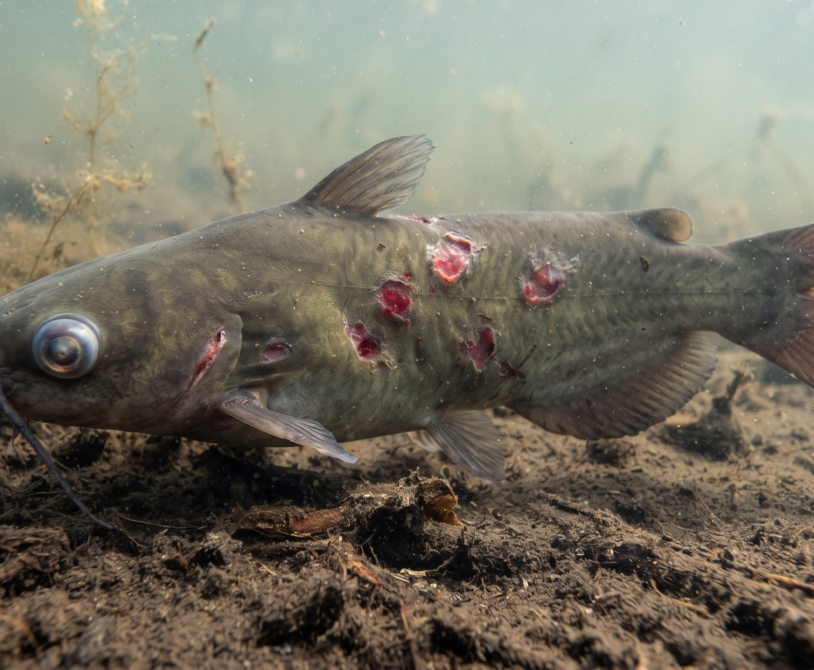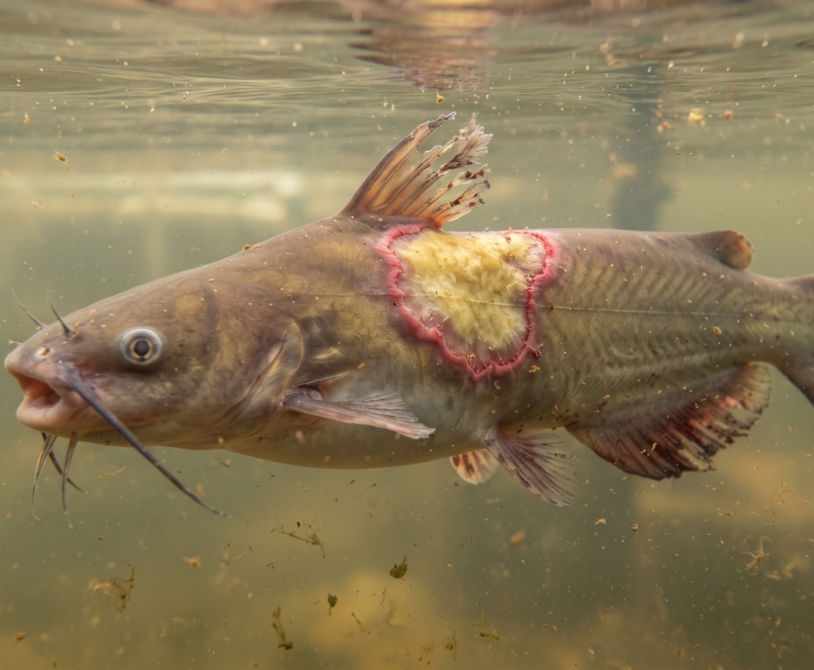
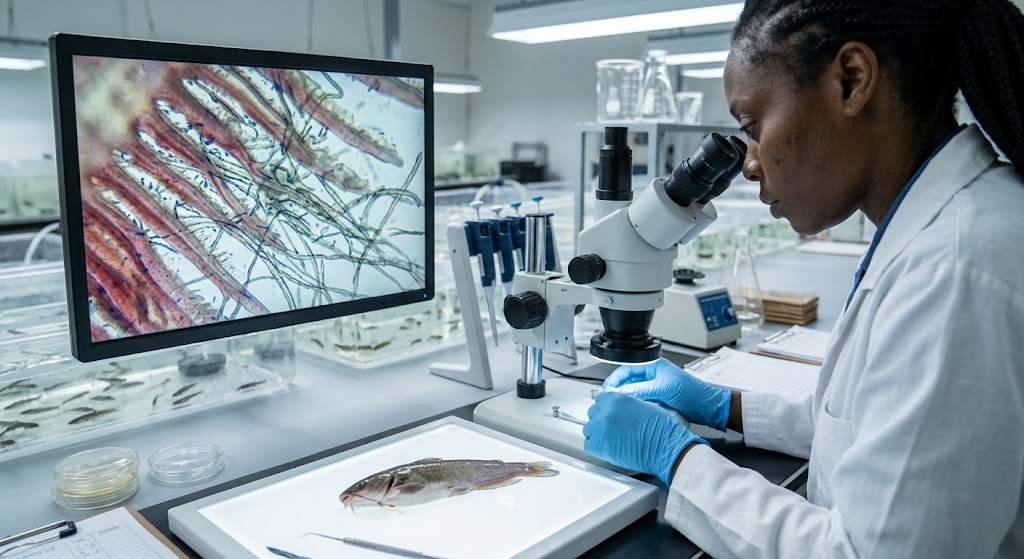
Bacterial gill disease is a potential health problem in catfish farming that affects the gills, the organs responsible for extracting dissolved oxygen from water. When the gills become damaged or function poorly, affected fish may struggle to breathe, reduce feeding, become weak and, in severe cases, die.
In African catfish (Clarias gariepinus), gill problems should be investigated carefully because bacterial disease can produce signs similar to low dissolved oxygen, ammonia toxicity, nitrite toxicity, and parasitic gill infections.
Important: Visible symptoms alone cannot confirm bacterial gill disease. Water-quality testing and, when necessary, examination by a qualified fish-health professional are needed to distinguish infection from environmental stress.
What Is Bacterial Gill Disease in Catfish?
Bacterial gill disease refers to a condition in which bacterial activity is associated with inflammation, irritation or damage to the gill tissue.
Healthy gills support gas exchange and help regulate important physiological processes. When the gill surface is damaged, fish may have difficulty obtaining sufficient oxygen even when the water appears normal.
The term describes a suspected disease condition rather than a confirmed diagnosis. A farmer should not assume that every catfish with damaged gills has a bacterial infection.
Symptoms of Bacterial Gill Disease in Catfish
Observe the fish’s behaviour and examine affected fish for changes in the gills.
1. Rapid gill movement
Affected catfish may move their gill covers faster than normal as they attempt to maintain oxygen uptake.
2. Gasping at the water surface
Fish may gather near the surface or gulp air more frequently. However, African catfish can naturally breathe atmospheric air, so surface breathing alone does not prove disease.
3. Reduced feeding
Sick or stressed fish may eat less, respond slowly to feed, or stop feeding altogether.
4. Lethargy and abnormal behaviour
Affected fish may become less active, react slowly to disturbance or behave differently from healthy fish.
5. Abnormal gill appearance
The gills may appear pale, swollen, irritated, or damaged. These signs are not specific to bacterial disease and may also occur with parasites, toxic water conditions, or other gill disorders.
6. Increased mortality
Severe gill damage or an underlying environmental problem may result in deaths. Sudden mortality should trigger an immediate investigation rather than an assumption that bacteria are responsible.
What Causes Bacterial Gill Disease in Catfish?
The source topic-cluster plan identifies bacterial gill disease as a subject for coverage but does not specify the responsible bacterial species or establish a single cause. The following are therefore factors to investigate, not confirmed causes of every case.
Poor water quality
Ammonia, nitrite and other water-quality problems can irritate or damage gill tissue and increase stress. These conditions may resemble gill infection or occur alongside it.
Organic waste accumulation
Uneaten feed, faeces and other organic matter can degrade water quality. Excess waste should be investigated when fish show respiratory distress or abnormal gills.
High stocking density
Crowded ponds or tanks can increase the demand for oxygen, increase waste accumulation and make disease management more difficult.
Stress and fish handling
Transport, grading, rough handling, and abrupt environmental changes can stress catfish and may worsen existing health problems.
Exposure to infectious agents
Bacterial disease is an infectious possibility, but identifying the organism responsible requires appropriate diagnostic assessment. A specific bacterial cause should not be assigned from visual symptoms alone.
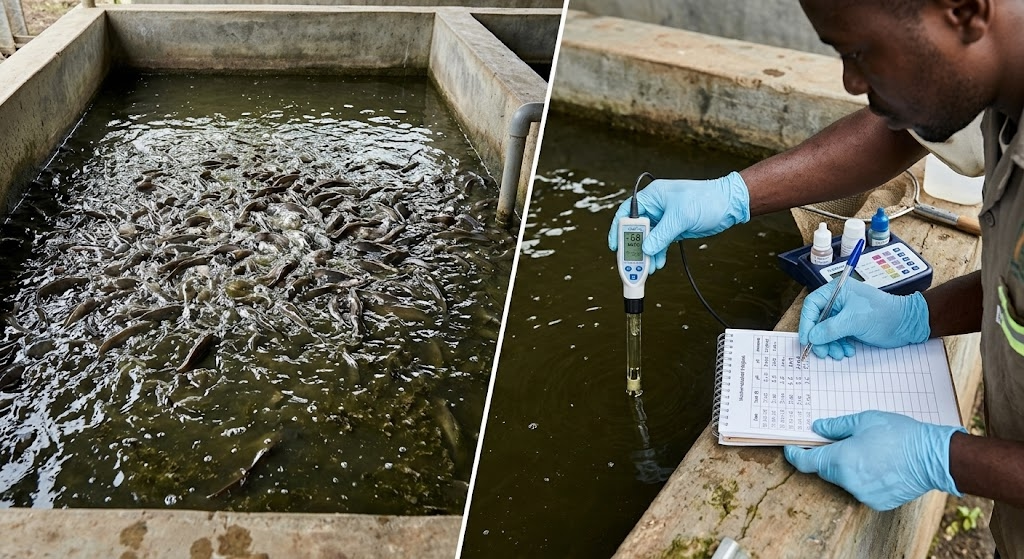
How to Diagnose Bacterial Gill Disease
A reliable diagnosis combines observation, water-quality assessment, and examination of the affected fish.
Step 1: Observe the affected population
Record how many fish show symptoms, whether the problem affects one tank or several ponds, when the signs began and whether deaths are increasing.
Step 2: Test the water
Check the following parameters:
- Dissolved oxygen
- Ammonia
- Nitrite
- pH
- Water temperature
Compare the results with the requirements of the fish and the farm’s established operating targets. Test promptly if fish are gasping, swimming abnormally, or dying.
Step 3: Examine the gills
A qualified person should assess the gill tissue for abnormal colour, swelling, excess mucus, irritation, or structural damage. These findings can guide further investigation but are not sufficient on their own to confirm bacterial disease.
Step 4: Investigate other possible causes
Consider gill parasites, low oxygen, ammonia toxicity, nitrite toxicity, and other gill disorders. More than one problem may be present at the same time.
Step 5: Seek laboratory confirmation when necessary
If the problem persists, spreads, or causes significant mortality, consult a fish-health professional or aquatic diagnostic laboratory. Appropriate laboratory testing can help determine whether bacteria are involved and guide treatment decisions.
How to Manage Suspected Bacterial Gill Disease
The first priority is to protect the fish while identifying the actual cause.
- Assess water quality immediately. Correct confirmed water-quality problems using a controlled procedure appropriate to the pond or tank.
- Improve oxygen availability when needed. If dissolved oxygen is low, use suitable aeration and monitor the fish’s response.
- Remove dead fish promptly. Dispose of them safely and avoid transferring contaminated equipment between production units.
- Reduce unnecessary handling. Avoid additional stress while the fish are compromised.
- Review feeding and waste management. Adjust feeding to the fish’s condition and remove accumulating waste using appropriate farm procedures.
- Obtain a diagnosis. Seek professional assistance if symptoms continue, mortality rises, or an infectious disease is suspected.
Should antibiotics be used?
Do not use antibiotics simply because the gills look damaged. The responsible organism may not be bacterial, and inappropriate treatment can contribute to antimicrobial resistance, residues in harvested fish, and unnecessary expense.
Antibiotic use should be based on a defensible diagnosis, local regulations, veterinary or fish-health guidance and the product’s approved instructions, including withdrawal periods where applicable.
No specific antibiotic, chemical or dosage can be recommended from the source plan alone.
How to Prevent Bacterial Gill Disease in Catfish
Prevention focuses on reducing stress, maintaining water quality, and limiting the introduction or spread of infectious agents.
Maintain good water quality
Monitor dissolved oxygen, ammonia, nitrite, pH, and temperature. Keep records so that changes can be identified before fish develop severe symptoms.
Avoid excessive stocking density
Stock fish according to the system’s water supply, aeration, filtration, waste-removal capacity and management resources.
Maintain effective feeding practices
Use suitable, good-quality feed and avoid excessive feeding that leaves uneaten material in the water.
Practise farm biosecurity
- Clean and disinfect equipment using appropriate procedures.
- Avoid sharing equipment between ponds without proper cleaning.
- Quarantine new fish before introducing them to established stocks.
- Monitor newly introduced fish for abnormal behaviour and illness.
- Record disease signs, treatments, water-quality results and mortality.
Inspect fish regularly
Observe feeding behaviour, swimming patterns, gill movement and mortality during routine farm checks. Early detection makes it easier to investigate and correct problems before they spread.
When Should a Catfish Farmer Seek Professional Help?
Seek prompt assistance when:
- Fish are dying rapidly, or mortality is increasing.
- Several ponds or tanks develop similar symptoms.
- Gills appear severely damaged or abnormal.
- Fish remain distressed after water-quality problems have been addressed.
- The cause is unclear, or treatment has failed.
- An antibiotic or other disease-control product is being considered.
If many fish are gasping or dying, treat the situation as urgent and assess oxygen and water quality immediately while arranging professional diagnosis.
Frequently Asked Questions
Can bacterial gill disease kill catfish?
Yes, severe gill dysfunction associated with bacterial disease can be fatal. However, the level of risk depends on the cause, severity, fish condition, and environmental circumstances.
How can I tell bacterial gill disease from gill parasites?
The symptoms can overlap. Abnormal gills, rapid gill movement, and poor feeding do not reliably distinguish bacterial disease from parasites. Examination and, where appropriate, laboratory testing are needed.
Can poor water quality cause similar symptoms?
Yes. Low dissolved oxygen, ammonia, and nitrite problems can cause respiratory distress and gill damage. These factors should be investigated before attributing the problem to bacteria.
Should I stop feeding affected catfish?
Do not apply one rule to every situation. Assess the severity of the illness, feeding response, and water conditions. Avoid adding feed that the fish cannot consume, because uneaten feed can worsen water quality.
Can bacterial gill disease be prevented completely?
No prevention programme can guarantee that disease will never occur. Good water-quality management, appropriate stocking, hygiene, quarantine and early investigation can reduce risk.