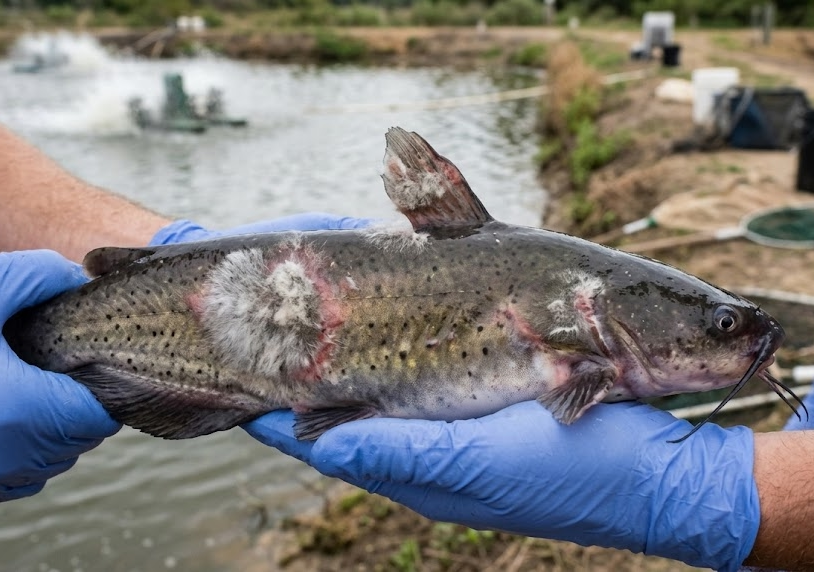
Rapid gill movement in catfish can indicate respiratory stress, poor water quality or a health problem affecting the gills. When a catfish moves its gill covers faster than usual, it may be attempting to obtain more oxygen or responding to irritation or impaired gill function.
In African catfish (Clarias gariepinus), rapid gill movement should be investigated alongside water-quality readings, feeding behaviour and other clinical signs. The symptom alone does not confirm a specific disease.
What Is Rapid Gill Movement in Catfish?
Gill movement refers to the repeated opening and closing of the gill covers as water passes over the gills. This process supports oxygen uptake and the removal of carbon dioxide.
Rapid gill movement occurs when the fish’s breathing activity increases. It can be a response to environmental conditions, physiological stress or damage to the respiratory system.
African catfish can also breathe atmospheric air, so surface air-gulping behaviour should be interpreted alongside gill movement and other signs of distress.
What Causes Rapid Gill Movement in Catfish?
1. Low dissolved oxygen
Low dissolved oxygen is an important cause of respiratory distress in aquaculture. When oxygen availability is inadequate, catfish may increase their respiratory effort and visit the water surface more frequently.
Investigate oxygen conditions immediately if several fish begin showing rapid gill movement at the same time.
2. Ammonia toxicity
Elevated ammonia can irritate or damage gill tissue and interfere with normal physiological function. The toxicity risk depends on the ammonia concentration and water conditions, including pH and temperature.
Test ammonia rather than assuming that rapid breathing is caused by an infection.
3. Nitrite toxicity
Nitrite interferes with the blood’s ability to transport oxygen normally. Consequently, fish may show respiratory distress even when dissolved oxygen in the water appears adequate.
Measure nitrite when investigating unexplained rapid gill movement.
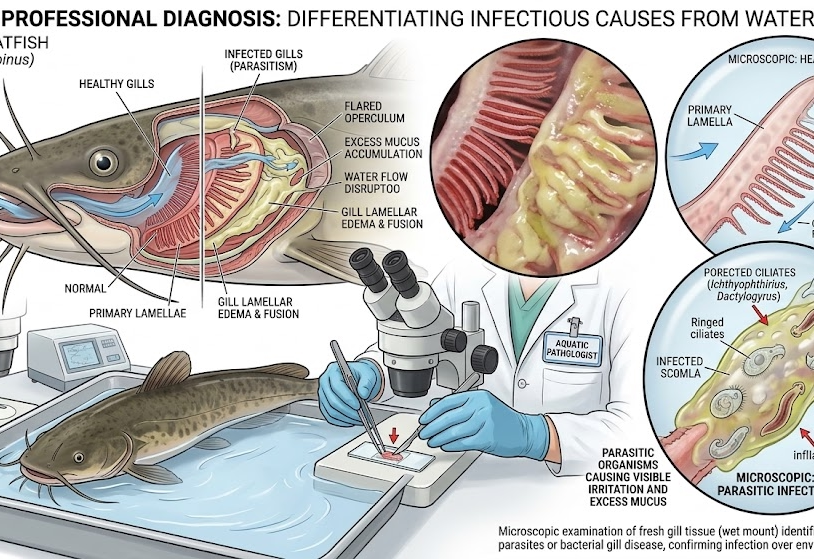
4. Gill parasites
Gill parasites can irritate the respiratory tissue and interfere with normal gill function. Affected fish may show rapid gill movement, reduced feeding or other abnormal behaviour.
Microscopic examination may be required to identify a parasite.
5. Bacterial gill disease
Bacterial involvement may contribute to inflammation or damage of the gill tissue. However, rapid gill movement alone is insufficient to establish a bacterial infection.
Professional examination and appropriate testing may be needed.
6. Fungal gill problems
Fungal involvement is another possible cause of abnormal gill tissue. Additional examination is needed because fungal disease can resemble other gill disorders.
7. Handling and environmental stress
Transport, grading, crowding and abrupt changes in water conditions can stress fish and alter their behaviour. Consider recent management activities when investigating the onset of symptoms.
Other Signs to Look For
Rapid gill movement becomes more concerning when it occurs with additional symptoms, such as:
- Reduced appetite or refusal to feed
- Unusual surface breathing
- Lethargy or abnormal swimming
- Pale, swollen or damaged gills
- Excess mucus around the gills
- Fish gathering in areas with better water flow
- Increasing mortality
These signs help guide investigation but do not identify one specific cause.
How to Diagnose Rapid Gill Movement
Step 1: Observe how many fish are affected
Determine whether one fish, a small group or the entire pond is affected. A sudden problem involving many fish may indicate a shared environmental issue.
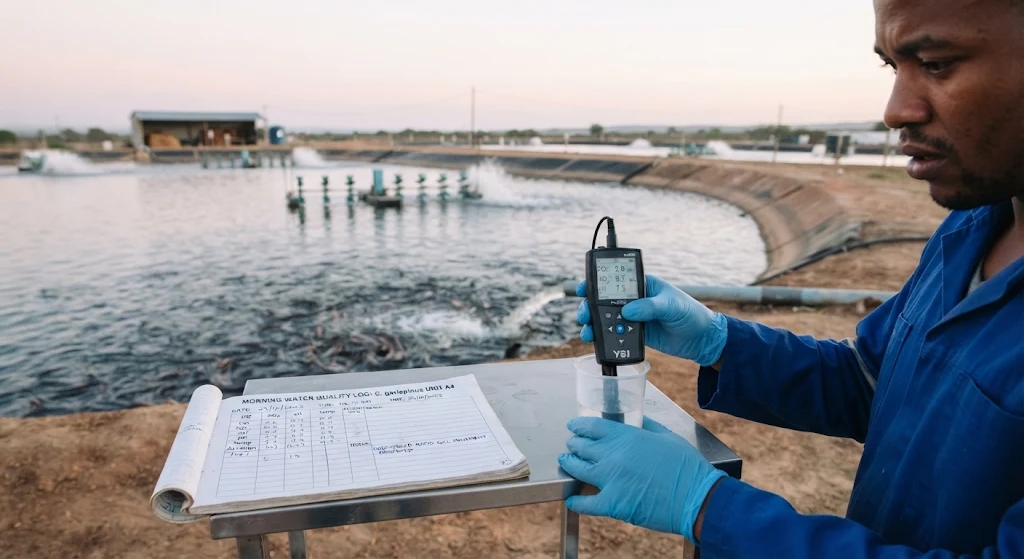
Step 2: Check dissolved oxygen
Measure dissolved oxygen using a suitable meter if available. In ponds, pay particular attention to periods when oxygen may be lowest, including early morning.
Step 3: Test other water-quality parameters
Check:
- Ammonia
- Nitrite
- pH
- Water temperature
These measurements help distinguish water-quality problems from other potential causes.
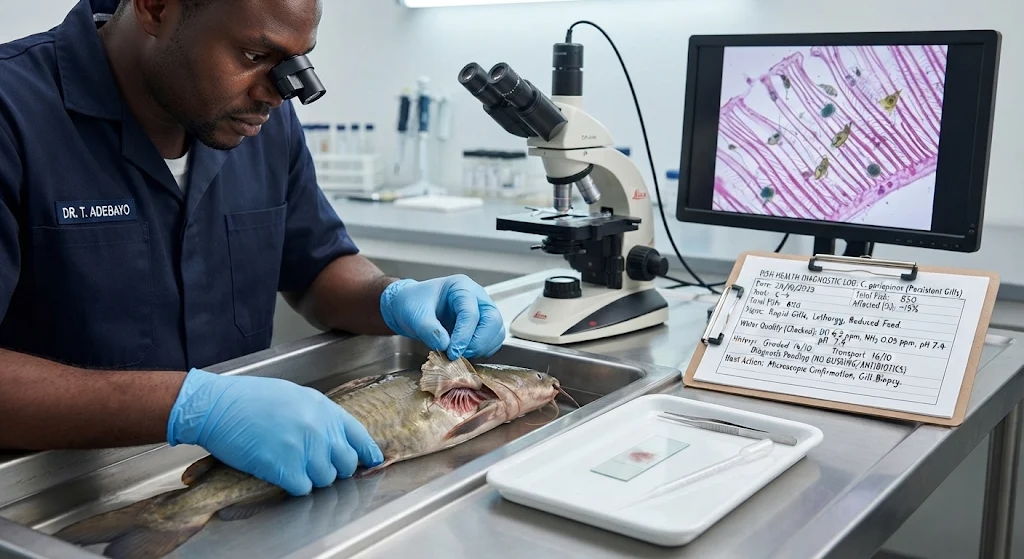
Step 4: Examine the gills
A qualified person should check for abnormal colour, swelling, excess mucus, visible damage or parasites. Avoid unnecessary handling of distressed fish.
Step 5: Review recent farm activities
Consider recent feeding changes, stocking, transport, grading, water exchange, aeration problems and equipment failures.
Step 6: Seek professional diagnosis
If rapid gill movement continues after environmental problems have been addressed, or if fish show severe symptoms or increasing mortality, consult a fish-health professional or aquatic diagnostic laboratory.
What to Do When Catfish Show Rapid Gill Movement
Respond promptly, especially when several fish are affected.
- Assess oxygen availability immediately. If oxygen shortage is suspected, provide suitable aeration while checking the water.
- Test ammonia and nitrite. Do not assume that respiratory distress is caused only by low oxygen.
- Review pH and temperature. These measurements help interpret water-quality risks.
- Check feeding and waste accumulation. Reduce unnecessary feed inputs when fish are distressed and remove excessive waste using appropriate procedures.
- Minimise handling. Avoid additional stress while the fish are unwell.
- Investigate infectious causes. If water-quality results do not explain the symptoms, seek professional examination for parasites or other gill diseases.
- Monitor recovery. Record water readings, fish behaviour and mortality after corrective action.
If fish are gasping severely or dying, treat the situation as urgent. Do not delay appropriate oxygen support while waiting for a complete diagnosis.
How to Prevent Rapid Gill Movement
Maintain water quality
Monitor dissolved oxygen, ammonia, nitrite, pH and temperature regularly. Keep records to identify changes before they cause serious stress.
Control stocking density
Ensure the system’s oxygen supply, water exchange, filtration and waste-removal capacity can support the fish biomass.
Manage feeding carefully
Avoid overfeeding, especially when fish are not feeding normally. Excess feed contributes to organic waste and can worsen water-quality problems.
Maintain farm biosecurity
Clean equipment appropriately, quarantine incoming fish and prevent the movement of potentially contaminated equipment between ponds without proper cleaning.
Inspect fish regularly
Observe gill movement, feeding response, swimming behaviour and mortality during routine checks. Early recognition allows faster investigation.
Maintain aeration equipment
Where mechanical aeration is required, inspect equipment and prepare a response plan for failures.
Rapid Gill Movement Versus Other Symptoms
| Observation | Possible explanation |
|---|---|
| Rapid gill movement across many fish | Shared water-quality or environmental problem |
| Rapid movement with low dissolved oxygen | Oxygen stress |
| Rapid movement with elevated ammonia | Possible ammonia toxicity |
| Rapid movement with elevated nitrite | Possible nitrite toxicity |
| Rapid movement with abnormal gill tissue | Possible infection, parasites or environmental injury |
| Persistent rapid movement despite suitable water quality | Further health assessment may be required |
These observations are clues for troubleshooting, not a substitute for diagnosis.
Frequently Asked Questions
Is rapid gill movement always a sign of disease?
No. It can result from low oxygen, unsuitable water conditions, handling stress or a gill disorder. The cause must be investigated.
Can rapid gill movement kill catfish?
The movement itself is a symptom. If it reflects severe oxygen shortage, toxic water conditions or serious gill disease, the underlying problem can become fatal.
Why are several catfish breathing rapidly at the same time?
A shared environmental problem, such as inadequate oxygen or deteriorating water quality, should be investigated first. Infectious causes may also need consideration depending on the findings.
Should I use antibiotics when catfish breathe rapidly?
No—not without a diagnosis and appropriate professional guidance. Rapid gill movement does not prove a bacterial infection.
When should I seek professional help?
Seek assistance if the symptom persists, affects many fish, occurs with abnormal gills or reduced feeding, or is accompanied by increasing mortality.