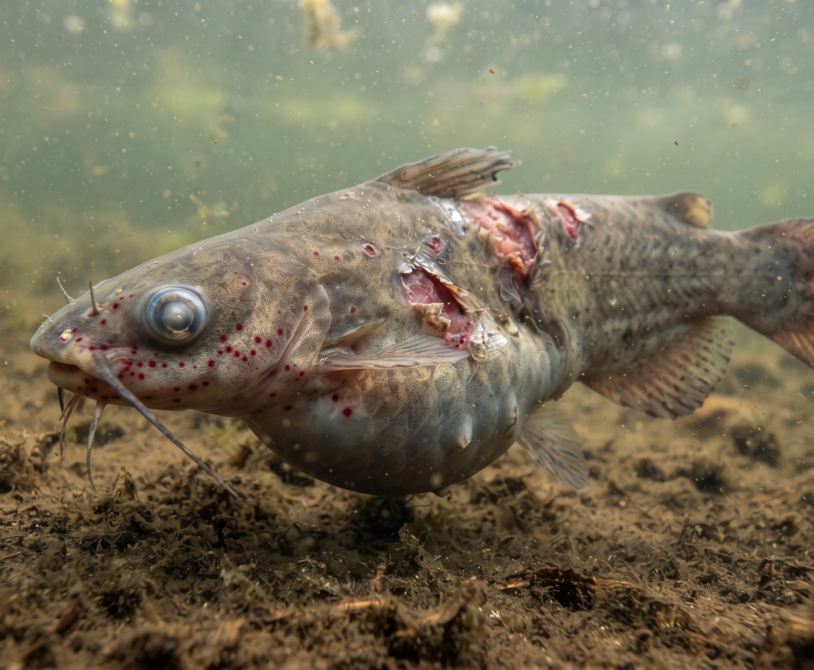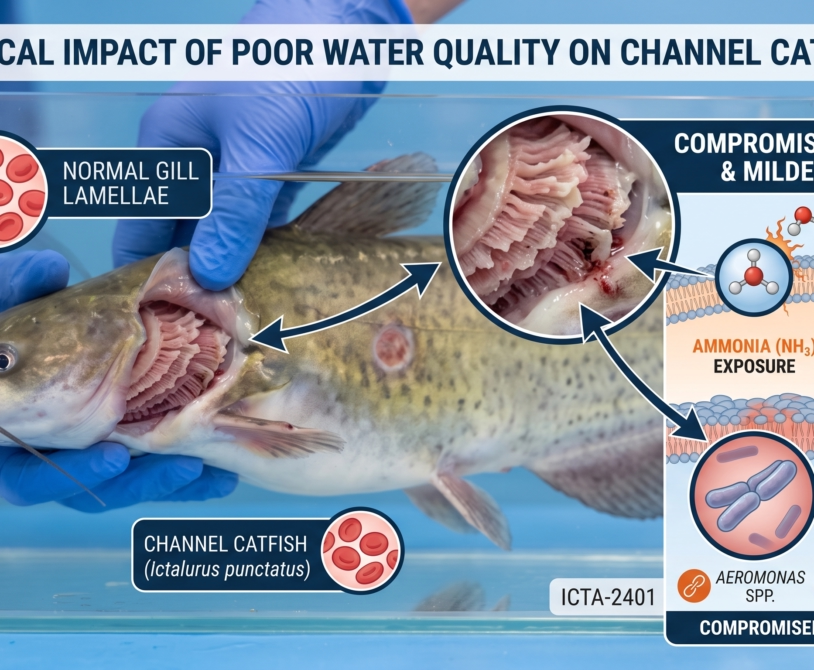
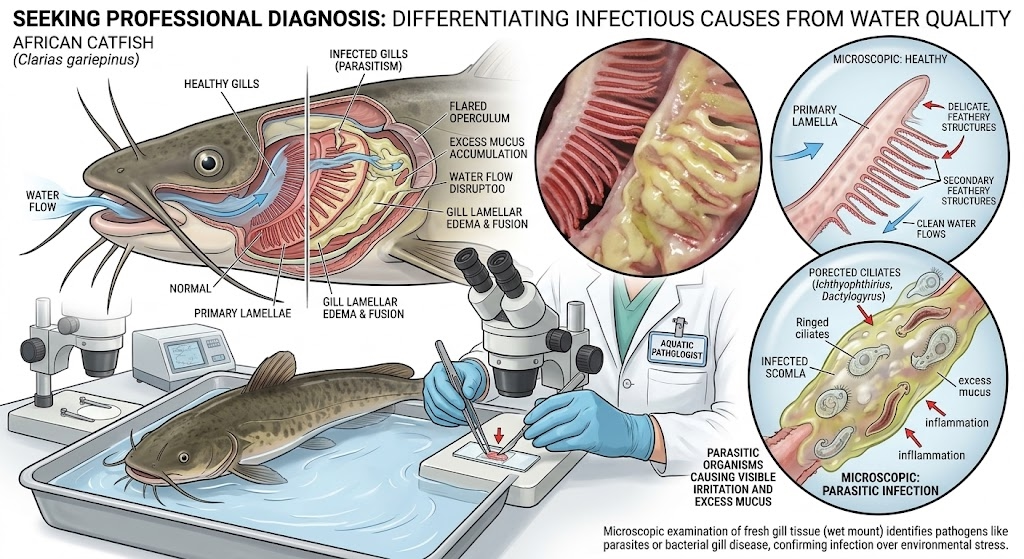
Gill diseases are an important health concern in catfish farming because the gills are essential for oxygen uptake and normal physiological function. When gill tissue becomes irritated, damaged, or infected, affected fish may show respiratory distress, reduced feeding, abnormal behaviour, and, in severe cases, mortality.
In African catfish (Clarias gariepinus), gill problems can result from parasites, bacterial or fungal infections, low dissolved oxygen, ammonia toxicity, nitrite toxicity, and other environmental stressors. Identifying the underlying cause is essential for effective management.
What Are Catfish Gill Diseases?
Catfish gill diseases are conditions that affect the structure or function of the gills. They may be infectious, parasitic, or environmental in origin.
The gills allow fish to absorb dissolved oxygen from water and release carbon dioxide. They also contribute to the regulation of salts and other substances in the body.
When gill function is impaired, fish may struggle to maintain normal physiological processes. However, similar symptoms can develop from different causes, so visible signs alone cannot establish a specific diagnosis.
Common Types of Gill Problems in Catfish
1. Gill parasites
Parasitic organisms may attach to or affect gill tissue, causing irritation and interfering with normal respiratory function.
Possible signs include rapid gill movement, excess mucus, reduced feeding, and abnormal behaviour. Microscopic examination may be required to identify the parasite.
2. Bacterial gill disease
Bacterial involvement may cause inflammation or damage to the gills. Affected fish may show respiratory distress and reduced feeding.
These symptoms are not specific to bacterial disease. Water-quality problems and parasites must also be considered.
3. Fungal gill infections
Fungal organisms may be involved in certain gill disorders. Abnormal gill tissue alone does not confirm a fungal infection, so appropriate examination is necessary before selecting treatment.
4. Gill damage from low dissolved oxygen
Low dissolved oxygen can cause respiratory stress and increase the effort fish use to obtain oxygen. Severe or prolonged oxygen shortages can result in mortality.
Oxygen stress should not automatically be classified as an infectious gill disease.
5. Ammonia-related gill injury
Elevated ammonia can irritate or damage gill tissue. The toxicity risk depends on water conditions, including pH and temperature, which influence the proportion of ammonia present in its more toxic unionised form.
6. Nitrite toxicity
Nitrite can enter fish through the gills and interfere with oxygen transport in the blood. Fish may experience respiratory distress even when dissolved oxygen in the water appears adequate.
Symptoms of Gill Disease in Catfish
The signs vary according to the underlying cause and severity.
- Rapid gill-cover movement
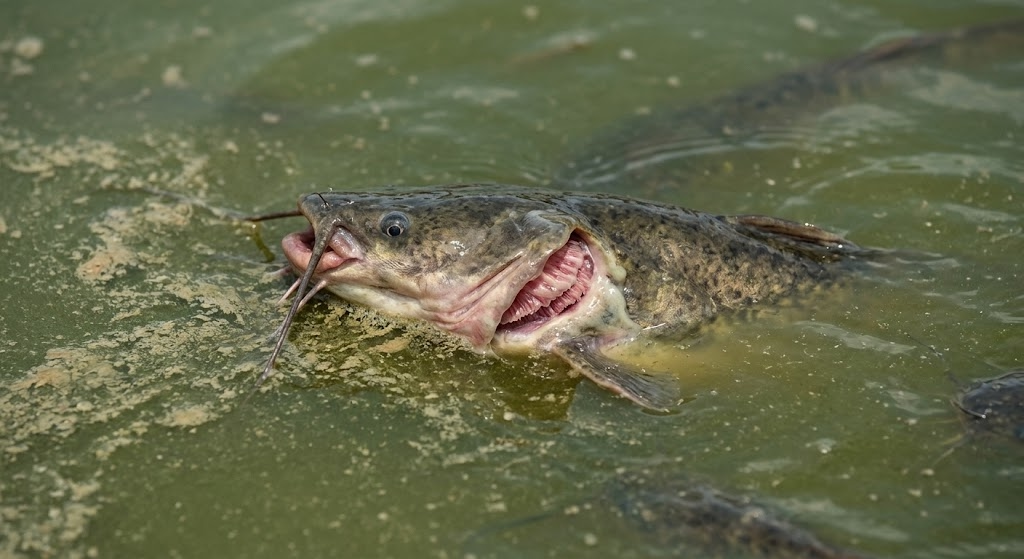
- Increased surface breathing
- Reduced appetite or refusal to feed
- Lethargy or abnormal swimming
- Pale, swollen or damaged gills
- Excess mucus on the gills
- Poor growth or declining condition
- Increased mortality in severe cases
African catfish naturally breathe atmospheric air, so surface air-gulping behaviour is not sufficient evidence of gill disease. Changes from normal behaviour, especially when accompanied by other symptoms, warrant investigation.
What Causes Gill Problems in Catfish?
Gill disorders may arise from several interacting factors.
Poor water quality
Low dissolved oxygen and elevated ammonia or nitrite can cause respiratory stress and impair fish health.
Excessive stocking density
High stocking density can increase oxygen demand and waste production, placing additional pressure on the water-management system.
Organic waste accumulation
Uneaten feed and fish waste can contribute to deteriorating water quality and should be investigated when respiratory symptoms appear.
Exposure to infectious agents
Bacteria, fungi and parasites may cause disease, but their involvement must be established through appropriate assessment rather than assumed from symptoms.
Handling and environmental stress
Transport, grading and abrupt changes in water conditions can stress fish and may worsen existing health problems.
How to Diagnose Gill Disease in Catfish
Step 1: Observe the fish
Record changes in feeding, swimming, gill movement and mortality. Note how many fish are affected and whether symptoms started suddenly or developed gradually.
Step 2: Test water quality
Measure:
- Dissolved oxygen
- Ammonia
- Nitrite
- pH
- Water temperature
Compare results with suitable targets for the species, life stage and production system.
Step 3: Examine the gills
A qualified person should assess gill tissue for abnormal colour, swelling, excess mucus, visible damage or parasites.
Gill appearance provides useful clues but cannot reliably distinguish all infectious and environmental conditions.
Step 4: Investigate infectious causes
If water-quality measurements do not explain the problem, further examination may be needed to investigate bacterial, fungal or parasitic disease.
Step 5: Seek professional confirmation
Contact a fish-health professional or aquatic diagnostic laboratory if symptoms persist, several ponds are affected, or mortality is increasing.
How to Manage Gill Disease in Catfish
The correct response depends on the underlying cause. A practical initial approach is to stabilise the environment and investigate the problem.
- Check dissolved oxygen promptly. Provide suitable aeration if oxygen availability is inadequate.
- Test ammonia and nitrite. Investigate water-quality problems that may cause or worsen respiratory distress.
- Review feeding and waste management. Avoid excessive feed inputs and address accumulated organic matter.
- Reduce unnecessary handling. Minimise stress while fish are unwell.
- Remove dead fish safely. Follow appropriate disposal procedures and clean equipment before using it in another production unit.
- Obtain a diagnosis. Seek professional advice before using antibiotics, antiparasitic products or antifungal treatments.
- Monitor the response. Record water-quality readings, fish behaviour and mortality after corrective action.
Avoid applying a treatment simply because the gills look abnormal. An incorrect product or dose can harm fish, affect water quality or delay effective management.
How to Prevent Gill Diseases in Catfish
Maintain good water quality
Monitor dissolved oxygen, ammonia, nitrite, pH and temperature. Keep records to identify recurring problems and changes in water conditions.
Manage stocking density
Match fish biomass to the system’s aeration, water exchange, filtration and waste-removal capacity.
Practise careful feeding
Use suitable feed and adjust feeding to fish size, biomass and appetite. Prevent excessive accumulation of uneaten feed.
Apply farm biosecurity
Clean and disinfect equipment appropriately, quarantine incoming fish and avoid moving potentially contaminated equipment between ponds without proper cleaning.
Reduce handling stress
Use appropriate procedures during grading, transport and other routine operations.
Monitor fish regularly
Observe feeding, swimming, gill movement and mortality. Early recognition helps farmers investigate problems before they become severe.
How to Distinguish Gill Disease from Water-Quality Problems
| Observation | What to investigate |
|---|---|
| Several fish develop respiratory distress simultaneously | Dissolved oxygen and other shared environmental factors |
| Rapid gill movement with elevated ammonia | Possible ammonia-related stress or injury |
| Respiratory distress with elevated nitrite | Possible nitrite toxicity |
| Abnormal gills with visible parasites | Parasitic disease requiring confirmation |
| Persistent gill abnormalities despite suitable water quality | Further investigation for infection or other disease |
| Increasing mortality | Urgent water-quality assessment and professional diagnosis |
These are troubleshooting clues, not definitive diagnostic criteria. Environmental problems and infectious disease may occur together.
Frequently Asked Questions
What is the most common cause of gill disease in catfish?
The available topic-cluster source lists parasitic, bacterial, fungal and water-quality-related gill problems but does not establish which cause is most common. The cause must be determined from the farm’s conditions and diagnostic findings.
Can poor water quality cause gill disease?
Poor water quality can cause respiratory stress and gill injury. It can also occur alongside infectious disease, making water testing an important part of the investigation.
Can gill disease kill African catfish?
Yes. Severe impairment of gill function or associated respiratory problems can be fatal, depending on the underlying cause and severity.
Should antibiotics be used for gill disease?
Antibiotics should not be used solely because fish have abnormal gills. Appropriate diagnosis, professional guidance, local regulations, and product instructions should guide their use.
When should a farmer seek professional help?
Seek assistance when fish show persistent respiratory distress, abnormal gills, reduced feeding, or increasing mortality, especially when water-quality corrections do not resolve the problem.