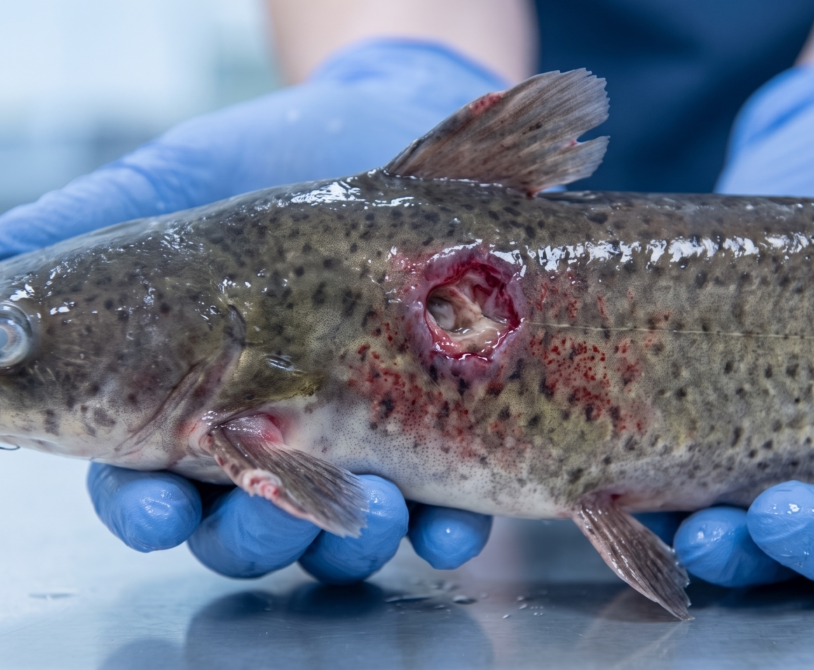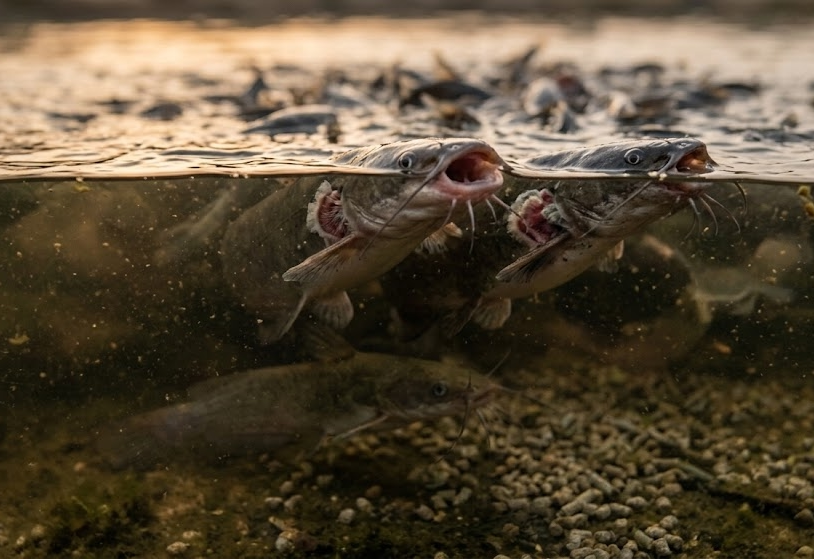
Cloudy water is a common water-quality problem in catfish farming. It occurs when suspended particles, microorganisms, plankton, or other materials reduce water clarity. In African catfish (Clarias gariepinus) production, cloudy water may result from disturbed pond sediment, excessive organic waste, algae growth, or changes in water conditions.
Cloudy water does not automatically mean that a pond is unhealthy. The important step is to identify what is causing the cloudiness and determine whether it is affecting dissolved oxygen, ammonia, fish behaviour, or overall water quality.
What Causes Cloudy Water in Catfish Ponds?
1. Suspended soil and clay particles
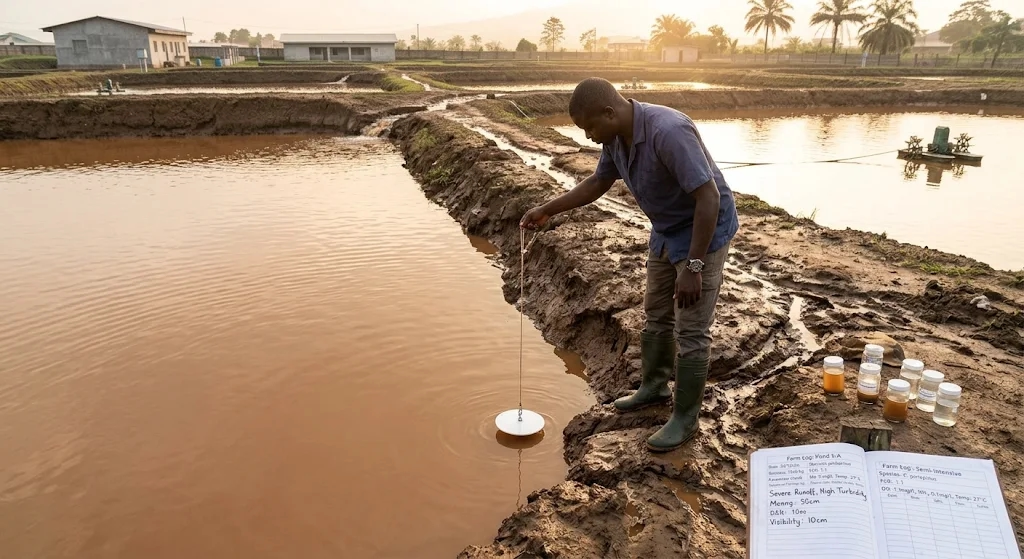
Soil particles can enter ponds through runoff, erosion, or disturbance of the pond bottom. Fine clay particles may remain suspended for long periods, making the water appear brown, grey, or muddy.
Common causes include:
- Heavy rainfall and surface runoff.
- Unprotected pond banks.
- Fish activity that disturbs bottom sediment.
- Water entering the pond at high speed.
- Pond construction or recent excavation.
Suspended clay can reduce light penetration and interfere with the natural productivity of a pond.
2. Excessive organic waste
Uneaten feed, fish faeces, dead algae, and decaying plant material contribute to organic loading. Some of this material can remain suspended, making the water appear cloudy.
Organic waste can also increase microbial oxygen consumption and contribute to ammonia accumulation. If cloudy water occurs alongside unpleasant odours, poor feeding, or fish gasping, investigate water quality promptly.
3. Algae and plankton
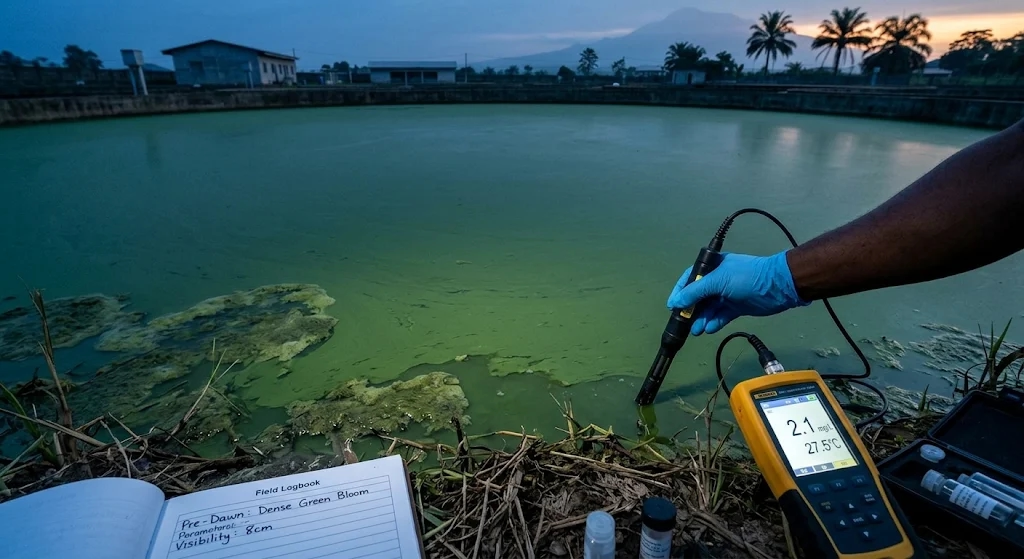
Algae and microscopic plankton can make pond water appear green, brown, or greenish-grey. Their presence is not necessarily harmful because some plankton support natural food production in ponds.
However, excessive algal growth can contribute to large daily changes in dissolved oxygen. When dense algae populations die and decompose, oxygen demand may increase significantly.
Green water should therefore be assessed alongside dissolved oxygen, fish behaviour, and other water-quality measurements.
4. Overfeeding
Uneaten feed breaks down in water and adds organic material. Excessive feeding can increase suspended particles, microbial activity, and nutrient loading.
To reduce this problem:
- Feed according to fish biomass and feeding response.
- Use appropriate feed sizes.
- Avoid giving more feed than fish can consume.
- Remove uneaten feed where practical.
- Review feeding quantities when fish stop eating normally.
5. Overstocking
High stocking density increases the amount of faeces and feed required by the fish population. Fish activity may also disturb pond sediment.
If the pond’s waste-processing capacity is inadequate, organic matter and suspended particles can accumulate, contributing to poor water quality.
6. Inadequate pond maintenance
Damaged pond banks, poorly managed inflows, accumulated sediment, and inadequate waste removal can contribute to persistent cloudiness.
A pond that becomes cloudy repeatedly may require improvements to its drainage, water entry points, feeding practices, or sediment management.
How to Identify the Cause of Cloudy Water
The colour and appearance of cloudy water can provide clues, but they cannot confirm the cause on their own.
| Appearance or observation | Possible cause | What to check |
|---|---|---|
| Brown or muddy water after rain | Soil erosion and runoff | Pond banks, drainage, and incoming water |
| Brown or grey water after fish activity | Disturbed bottom sediment | Pond depth and sediment condition |
| Green water | Algae or phytoplankton | Dissolved oxygen, especially before sunrise |
| Cloudiness with feed residues | Excessive feeding or organic waste | Feeding rates and accumulated solids |
| Cloudiness with a foul smell | Organic waste accumulation or oxygen-poor sediment | Dissolved oxygen, ammonia, and waste deposits |
| Cloudiness with gasping fish | Possible oxygen shortage or another water-quality problem | Dissolved oxygen immediately, followed by other tests |
These observations are diagnostic clues, not definitive tests.
Does Cloudy Water Harm Catfish?
The effects depend on what is suspended in the water and why the water has become cloudy.
Reduced light penetration
High concentrations of suspended particles can reduce light penetration. This may affect aquatic plants and the productivity of natural food organisms.
Increased oxygen demand
If cloudiness results from excessive organic waste or decomposing algae, microorganisms may consume substantial amounts of oxygen. Dissolved oxygen can fall, particularly overnight or early in the morning.
Deteriorating water quality
Cloudy water associated with waste accumulation may occur alongside elevated ammonia or nitrite. These compounds can harm fish even when the cloudiness itself is not the direct cause of the problem.
Stress and disease risk
Persistent poor water quality can stress catfish and reduce their ability to cope with environmental challenges. However, cloudy water alone does not prove that a fish disease is present.
How to Fix Cloudy Water in Catfish Ponds
The correct solution depends on the cause. Avoid treating every cloudy pond in the same way.
1. Test the water first
Check dissolved oxygen, ammonia, nitrite, pH, and temperature using suitable testing equipment.
If fish are gasping or showing severe distress, assess dissolved oxygen immediately and take appropriate corrective action while investigating the cause.
2. Improve feeding management
If excessive feeding is contributing to cloudiness, adjust feed quantities to match fish biomass and feeding response. Avoid unnecessary feed input and monitor whether the water quality improves.
3. Control runoff and erosion
Where soil particles are responsible:
- Repair eroding pond banks.
- Manage drainage around the pond.
- Reduce direct entry of muddy runoff.
- Protect exposed soil around the pond.
- Inspect incoming water for suspended sediment.
Do not introduce new materials into the pond without confirming that they are suitable for aquaculture.
4. Remove accumulated organic waste
In tanks and intensive systems, remove settled solids using appropriate equipment. Maintain drains and filtration systems.
In ponds, manage sediment and organic waste according to the pond design. Avoid sudden disturbance of heavily accumulated bottom deposits, which may release additional material into the water.
5. Maintain adequate aeration
Aeration is especially important if cloudiness is associated with high organic loading or excessive algae.
Check dissolved oxygen at times when it is most likely to be low, including before sunrise. Aeration can help correct oxygen shortages, but it does not directly remove clay particles or resolve every cause of cloudiness.
6. Manage excessive algae carefully
If algae are responsible, monitor dissolved oxygen and assess the severity of the bloom before taking action.
Avoid abruptly killing a dense algal population without a management plan. Rapid algal die-off can increase oxygen consumption as the material decomposes.
Seek qualified aquaculture advice before using algicides or other chemicals, especially in stocked ponds.
7. Review stocking density and pond capacity
If cloudiness repeatedly occurs alongside organic waste accumulation, poor oxygen levels, or elevated nitrogen compounds, reassess stocking density and system capacity.
Reducing excessive fish biomass may be necessary when the pond cannot maintain acceptable water quality.
How to Prevent Cloudy Water in Catfish Farming
Prevention is generally more effective than repeatedly treating the water after cloudiness develops.
- Maintain appropriate stocking density.
- Feed according to fish size, biomass, and feeding response.
- Remove dead fish and accumulated waste promptly.
- Prevent soil erosion and uncontrolled runoff.
- Maintain suitable aeration and water circulation.
- Monitor water-quality parameters regularly.
- Inspect pond banks, drains, and water inlets.
- Keep records of water clarity, feeding, fish behaviour, and test results.
A simple monitoring record can help identify whether cloudiness follows rainfall, increased feeding, changes in stocking density, or other management activities.
Frequently Asked Questions
Is cloudy water dangerous for African catfish?
Not always. Cloudiness caused by harmless suspended particles may have different consequences from cloudiness associated with excessive organic waste or an algal bloom. Determine the cause and test the water before deciding whether intervention is needed.
Why does my catfish pond become cloudy after feeding?
Cloudiness after feeding may indicate uneaten feed, suspended waste, or fish disturbing bottom sediment. Review feeding quantities and observe whether the cloudiness persists. Test water quality if fish show stress or the problem continues.
Can I use chemicals to clear cloudy catfish pond water?
Do not use chemicals without identifying the cause and confirming that the product is safe for the fish, the production system, and the intended use. A treatment suitable for suspended clay may be inappropriate for an algal bloom or organic pollution.
Does cloudy water mean that ammonia is high?
No. Ammonia cannot be reliably determined from water colour or clarity. Use an appropriate test to measure ammonia concentration and interpret the result alongside pH and temperature.
Should I change all the water when a pond becomes cloudy?
Not automatically. Sudden, extensive water replacement can introduce additional stress if the replacement water differs substantially in temperature, pH, or other characteristics. Choose a water-management response based on the identified cause and the condition of the fish.
Conclusion
Cloudy water in catfish ponds can result from suspended soil, organic waste, algae, overfeeding, overstocking, or inadequate pond maintenance. Its effects depend on the underlying cause and whether other water-quality parameters are affected.
For African catfish farmers, the priority is to identify the source of cloudiness, test the water, correct feeding and waste-management problems, and maintain adequate oxygen levels. Persistent cloudiness accompanied by poor feeding, unusual behaviour, or mortality requires prompt investigation.