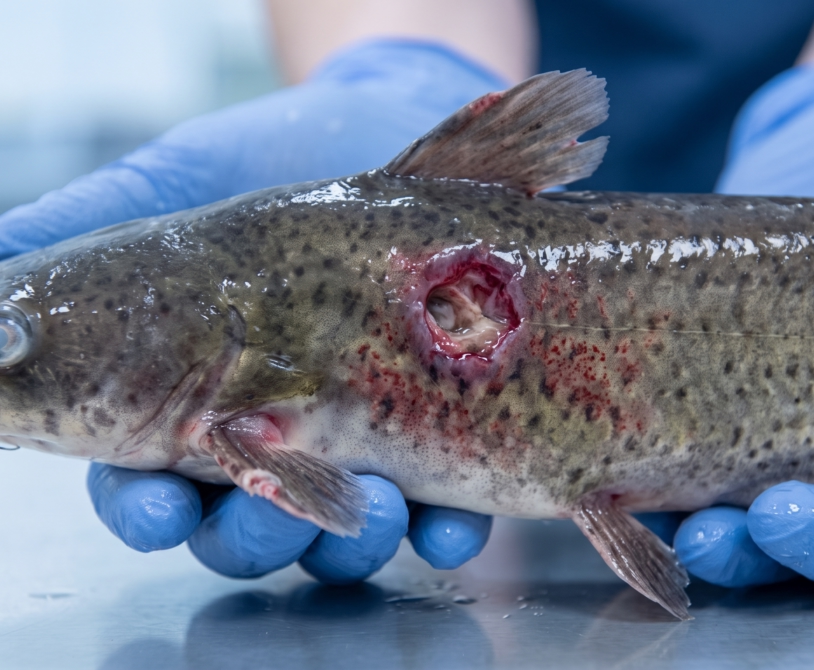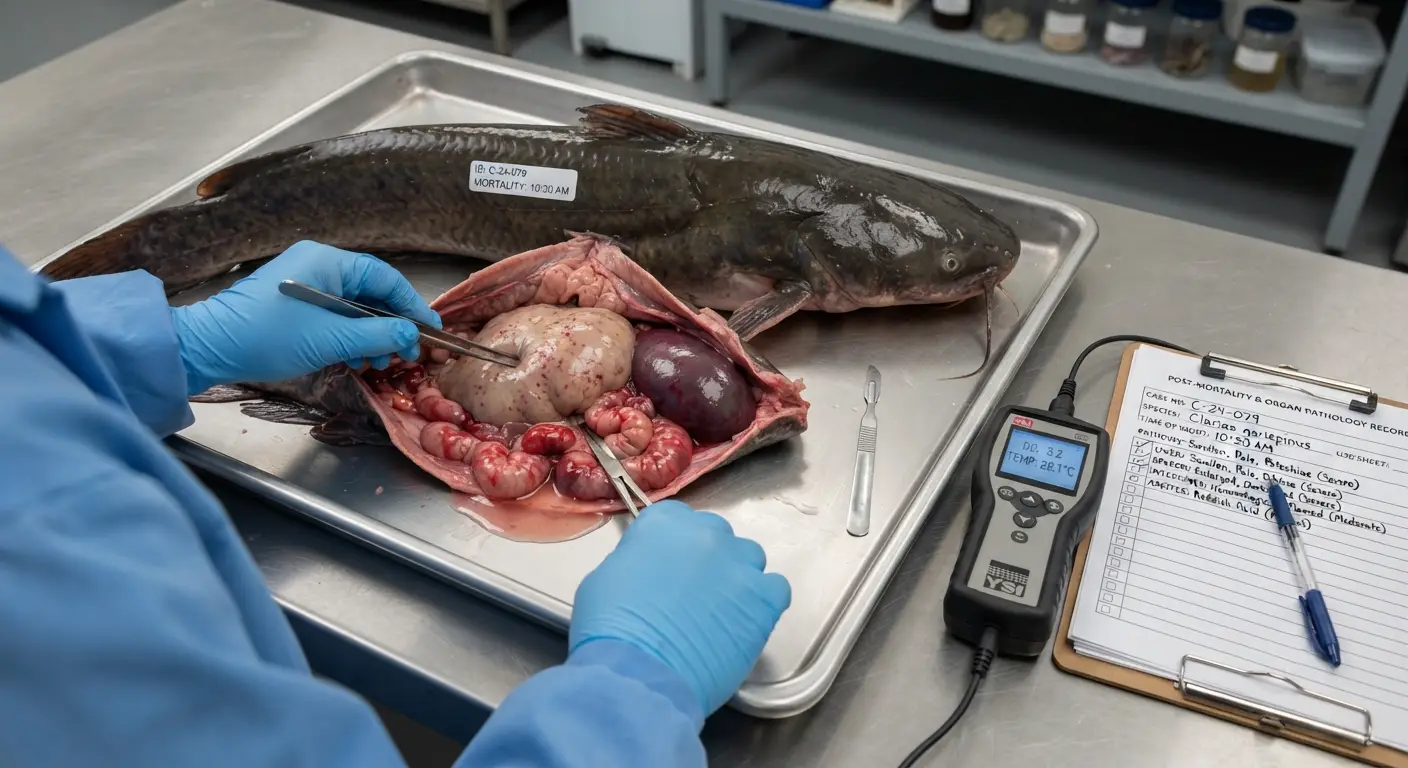
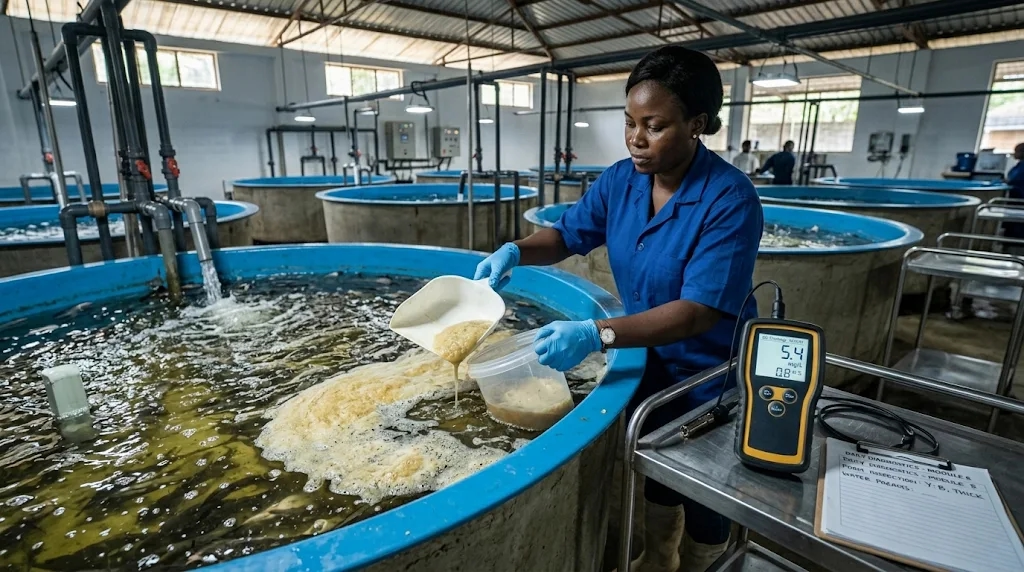
Foamy water is a water-quality condition that can occur in catfish ponds and tanks. Foam may appear as white, grey, or brown bubbles that collect on the water surface, around pond edges, near water inlets, or where aeration creates turbulence.
In African catfish (Clarias gariepinus) farming, foam can result from dissolved organic compounds, excess feed, fish waste, algae, or mechanical aeration. Although some foam is harmless, persistent or unusual foam may indicate excessive organic loading or other water-quality problems.
The key is to identify what is causing the foam before attempting to remove it.
What Causes Foamy Water in Catfish Ponds?
1. Excess organic waste
Uneaten feed, fish faeces, dead algae, and decaying plant material release organic compounds into pond water. Some of these compounds can help stabilise bubbles, allowing foam to remain on the surface.
Organic waste accumulation may also increase microbial activity and oxygen demand.
Common contributing factors include:
- Overfeeding.
- High fish stocking density.
- Inadequate solids removal.
- Accumulation of decaying material.
- Poorly managed pond-bottom waste.
2. Protein and other dissolved organic compounds
As feed and other biological materials break down, proteins and other organic compounds may enter the water. These substances can affect surface tension and make bubbles more stable.
Persistent foam in a heavily stocked system may therefore indicate that the organic load deserves investigation.
However, foam alone cannot confirm that protein levels or other specific water-quality parameters are excessive.
3. Mechanical aeration
Air stones, diffusers, pumps, and water-return pipes introduce air into the water. This creates bubbles, which may accumulate as foam when suitable organic compounds are present.
If foam appears mainly around an aerator or water inlet, mechanical turbulence may be contributing to its formation.
Aeration should not automatically be stopped to remove foam, particularly if fish depend on it to maintain adequate dissolved oxygen.
4. Algae and decaying plant material
Algae and aquatic plants can release organic compounds as they grow, break down, or die. Dense algal growth followed by decomposition may contribute to foam and can also increase oxygen demand.
If foam develops alongside green water, unusual odours, or declining fish activity, investigate the condition of the pond and test the water.
5. Water contamination
Cleaning agents, detergents, or other contaminants entering a pond can create unusual or persistent foam.
If foaming begins suddenly after new water enters the pond or after chemicals are used nearby, consider contamination as a possible cause.
Prevent runoff from washing detergents, household waste, or unknown chemicals into fish-production water. If contamination is suspected, seek appropriate aquaculture or environmental advice before treating the pond.
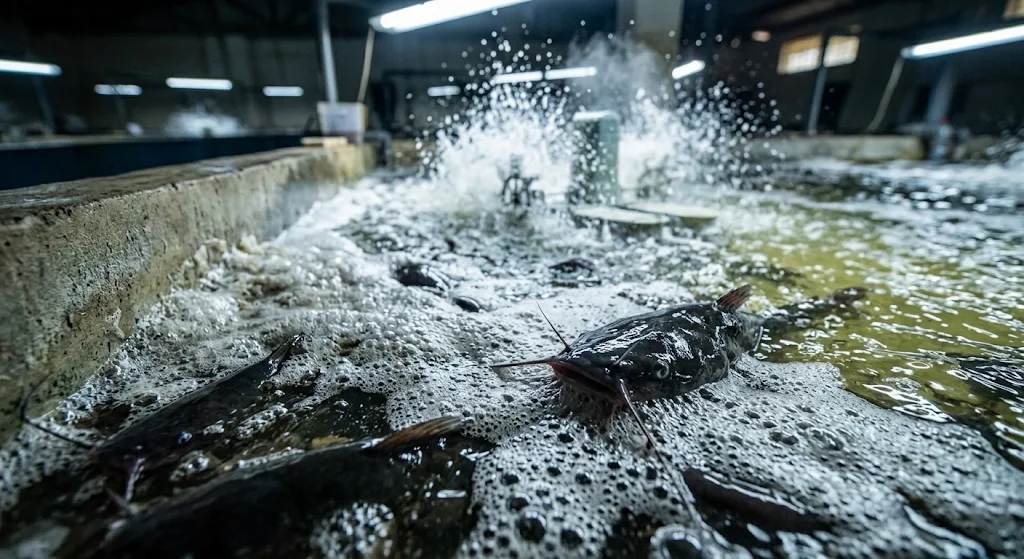
How to Recognise Potentially Problematic Foam
The appearance of foam can offer clues, but it is not a reliable diagnosis by itself.
| Observation | Possible explanation | Recommended check |
|---|---|---|
| Foam around aerators | Air bubbles and dissolved organic compounds | Inspect aeration and organic loading |
| Persistent foam near pond edges | Stable bubbles associated with organic compounds | Check feeding, waste accumulation, and water quality |
| Brown or dirty-looking foam | Suspended or decomposing organic material | Inspect the pond and test relevant water parameters |
| Foam with green water | Algae or organic compounds associated with algal activity | Monitor dissolved oxygen and assess algae |
| Sudden foam after water inflow | Turbulence or possible contamination | Inspect the source and quality of incoming water |
| Foam accompanied by fish gasping | Possible oxygen shortage or another environmental problem | Check dissolved oxygen immediately |
Foam colour and persistence are clues, not proof of a particular cause.
Can Foamy Water Harm Catfish?
Foam itself does not necessarily harm catfish. The risk depends on the substance producing it and the water-quality conditions associated with it.
Reduced water quality
If foam is associated with excess organic waste, the underlying problem may contribute to increased oxygen demand and the accumulation of waste-related compounds.
Oxygen depletion
Organic matter decomposes through microbial activity that can consume oxygen. In heavily loaded ponds, this may contribute to low dissolved oxygen, especially overnight and early in the morning.
Exposure to contaminants
Foam caused by detergents or other unsuitable chemicals may indicate contamination that could harm fish. Such incidents require investigation rather than simply removing the visible bubbles.
Increased stress and disease risk
Poor water quality can stress fish and reduce their ability to cope with environmental challenges. However, foam alone does not establish that fish have an infectious disease.
How to Fix Foamy Water in Catfish Ponds
1. Test water quality
Start by checking dissolved oxygen, ammonia, nitrite, pH, and temperature.
If fish are gasping, swimming abnormally, or dying, assess dissolved oxygen immediately and take appropriate corrective action.
Do not use foam as a substitute for water testing.
2. Review feeding practices
Excessive feeding can increase organic waste and contribute to foaming.
- Adjust feed quantities to fish biomass and feeding response.
- Use suitable feed sizes and good-quality feed.
- Avoid feeding more than fish can consume.
- Remove uneaten feed where practical.
- Investigate sudden changes in appetite.
3. Remove accumulated organic waste
In tanks and intensive systems, remove settled solids and maintain filters and drains. In ponds, manage accumulated waste using methods appropriate to the pond design.
Avoid disturbing large deposits of bottom sediment suddenly, because this may release additional material into the water.
4. Maintain appropriate aeration
Keep aeration operating when it is needed to maintain dissolved oxygen. If foam is concentrated around equipment, inspect the water-return arrangement and equipment condition, but do not sacrifice oxygen supply simply to reduce surface foam.
5. Check the water source
If the foam appeared suddenly, inspect the incoming water and surrounding drainage for possible contaminants.
If contamination is suspected, prevent further entry where safe and practical, test the water where suitable methods are available, and seek qualified advice before deciding whether water replacement or other action is appropriate.
6. Review stocking density
High fish biomass can increase feed requirements, faecal production, and the pressure on waste-management systems.
If foam repeatedly occurs alongside excessive waste, low oxygen, or deteriorating water quality, reassess stocking density and the capacity of the system.
How to Prevent Foamy Water
Preventing excessive organic loading is often more effective than repeatedly removing surface foam.
- Maintain appropriate stocking density.
- Feed according to fish biomass and feeding response.
- Remove dead fish and excess solids promptly.
- Maintain effective aeration and filtration.
- Monitor water quality regularly.
- Prevent contaminated runoff from entering the pond.
- Inspect water inlets, drains, and equipment.
- Record changes in foam, water appearance, feeding, and fish behaviour.
Frequently Asked Questions
Is white foam on a catfish pond dangerous?
Not necessarily. White foam may result from aeration and naturally occurring dissolved organic compounds. Persistent foam, especially when accompanied by bad odours, poor feeding, or fish distress, warrants further investigation.
Why does my catfish pond foam after aeration?
Aeration produces bubbles. Dissolved organic compounds in the water can stabilise those bubbles and allow them to collect as foam. The presence of foam does not automatically mean that the aerator is faulty.
Should I stop aeration when foam appears?
No, not simply to eliminate foam. If aeration is needed to maintain dissolved oxygen, stopping it may make conditions worse. Investigate the source of the foam while maintaining adequate oxygen supply.
Can overfeeding cause foam in catfish ponds?
Yes. Uneaten feed adds organic material to the water, and its decomposition can contribute to compounds that stabilise bubbles. Correcting feeding practices can help reduce the underlying organic load.
Should I add chemicals to remove pond foam?
Avoid adding chemicals without identifying the cause and confirming that the product is safe for aquaculture. Removing visible foam does not necessarily correct the water-quality problem responsible for it.
Conclusion
Foamy water in catfish ponds can result from aeration, dissolved organic compounds, excess feed, fish waste, algae, or contamination. Some foam is harmless, but persistent foam can be a useful warning to examine feeding practices and water quality.
For African catfish farmers, the priority is to identify the source, maintain adequate dissolved oxygen, control organic waste, and prevent contaminants from entering the pond. If foam appears alongside fish distress or mortality, investigate the water promptly