EXECUTIVE SUMMARY
- 2.3M vs. 1.18M Tonnes CO₂e: Shifting the UK entirely to organic free-range egg production would yield nearly double the greenhouse gas emissions of a fully caged system.
- The Efficiency Dilemma: Caged hens produce eggs with higher feed efficiency, lower mortality, and significantly reduced land, water, and emissions footprints per egg.
- Crucial Data Gaps: The study relies on 2009–2010 farm data and excludes critical environmental metrics like pesticide toxicity, soil biology, and overall biodiversity on farms.
- The Sustainability Trade-Off: Animal welfare advocates and environmental scientists face a stark conflict between hen quality of life and carbon intensity.
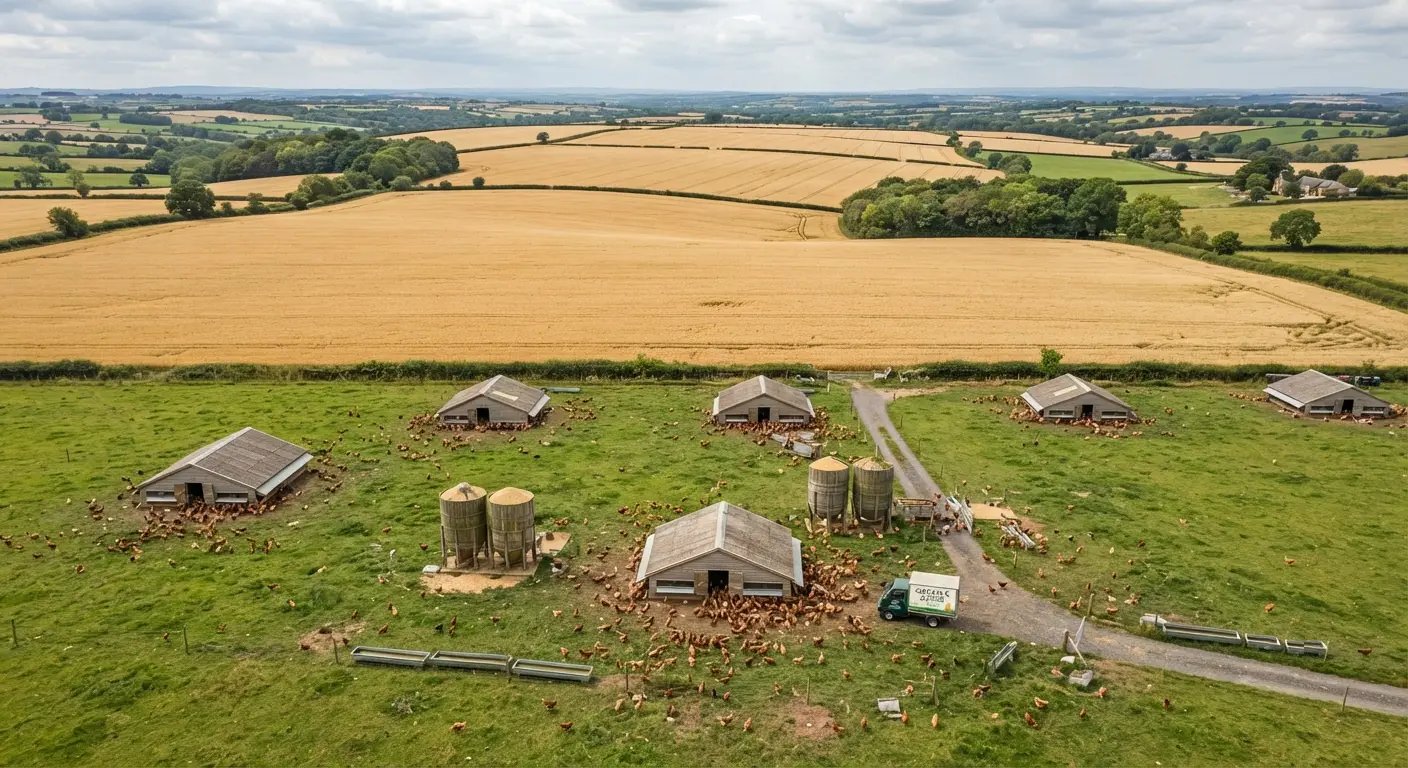
A national shift to 100% organic free-range egg production in the UK would generate 2,316,000 tonnes of CO₂ equivalent (tCO₂e) annually—nearly twice the 1,184,000 tCO₂e emitted by an all-caged production model, according to research published in Royal Society Open Science.
Led by Dr. Harriet Bartlett, Senior Research Associate at Oxford University’s Smith School of Enterprise and the Environment, the study highlights a profound tension at the heart of modern agriculture: production systems engineered for superior animal welfare often carry a significantly higher carbon and environmental footprint per unit of food produced.
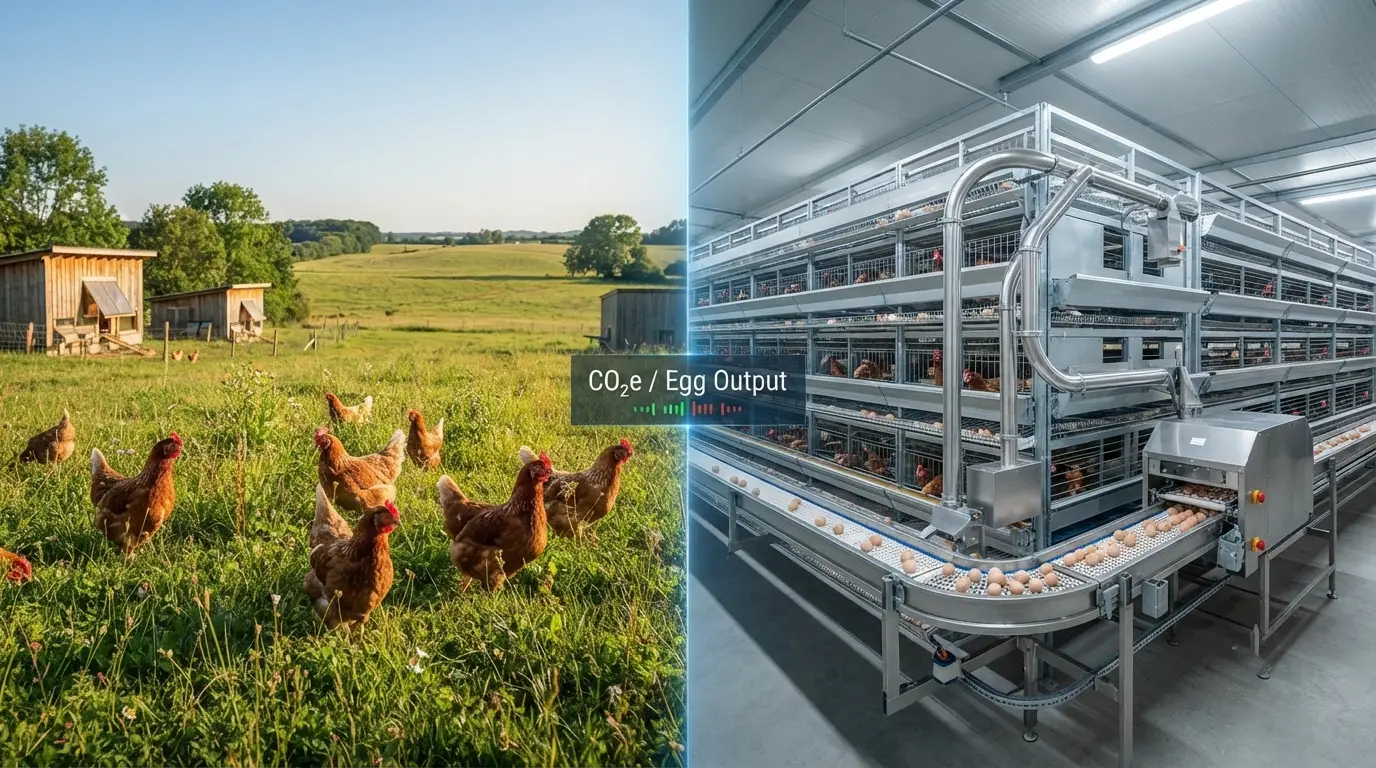
Model Comparison: System Efficiency vs. Footprint
| Farming System Model | Projected Annual Emissions (tCO₂e) | Efficiency & Land Use | Water Eutrophication & Acidification | Hen Mortality Rate |
| Organic Free-Range | 2,316,000 | Lowest (More hens required per egg) | Highest | Highest |
| Current UK Mix (Caged/Barn/Free-Range/Organic) | 1,439,000 | Baseline mixed performance | Moderate | Moderate |
| Fully Caged Systems | 1,184,000 | Highest (Optimized feed conversion) | Lowest | Lowest |
The Underlying Mechanism: The “Welfare-Efficiency Trade-Off”
The primary driver behind the higher footprint of organic systems is metabolic efficiency:
- Feed Conversion: Caged hens expend minimal energy moving around, channeling a higher percentage of caloric intake into egg production.
- Population Requirements: Because organic free-range birds have lower efficiency and higher natural mortality rates, farms must maintain larger total bird populations to meet the same egg yield.
- Resource Scale: Larger populations require more land, higher total feed cultivation, and broader water consumption.
CAGED PRODUCTION (High Efficiency)
Feed Consumed ──► Body Maintenance (Low) + Egg Yield (High)  ──► Lower CO₂e per egg

ORGANIC FREE-RANGE (Low Efficiency)
Feed Consumed ──► Body Maintenance (High) + Egg Yield (Lower) ──► Higher CO₂e per egg
“The types of farms that are generally regarded as being better for animal welfare can actually require more birds to produce the same amount of eggs because they’re less efficient and have higher environmental impacts.”
— Dr. Harriet Bartlett, Oxford University Smith School
Limitations & Industry Response
While the findings present a compelling carbon argument for intensive farming, experts point out notable boundaries to the study’s scope:
    STUDY SCOPE BOUNDARIES
    ├── Included Metrics:  Greenhouse gases, land footprint, acidification, water eutrophication, bird mortality.
    └── Excluded Metrics:  Pesticide toxicity, synthetic fertilizer run-off, soil organic matter, on-farm biodiversity.
Lee Holdstock, Head of Regulatory and Trade Affairs at Soil Association Certification, cautioned against relying solely on carbon efficiency to evaluate food systems:
“A truly sustainable food system must also consider impacts on nature, soil health, water quality, the use of synthetic inputs, and animal welfare. Intensive systems may have lower emissions per unit of output, but that reflects only one part of the environmental picture.”
Additionally, researchers acknowledged that using farm data from 2009–2010 represents a key limitation, as it does not capture recent technological and management advances in modern free-range housing.