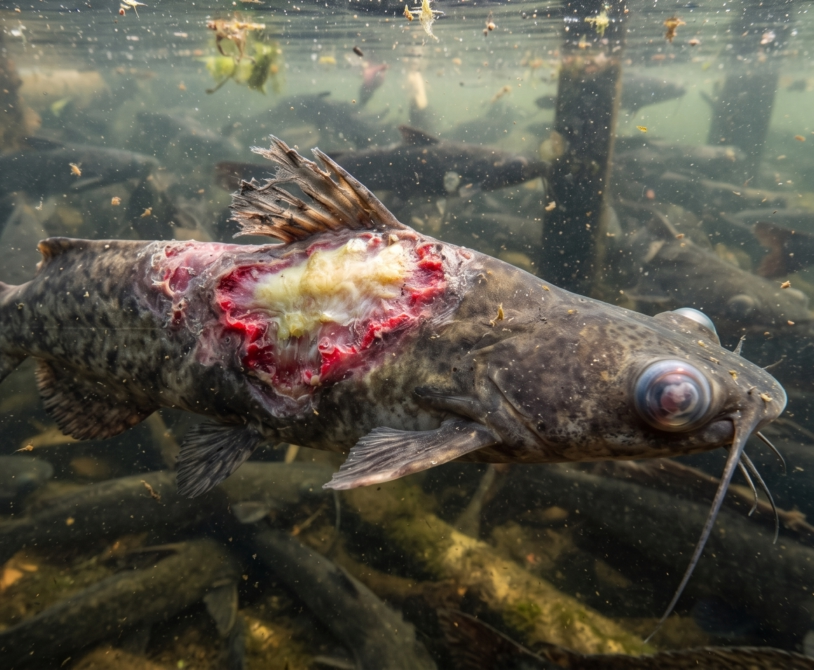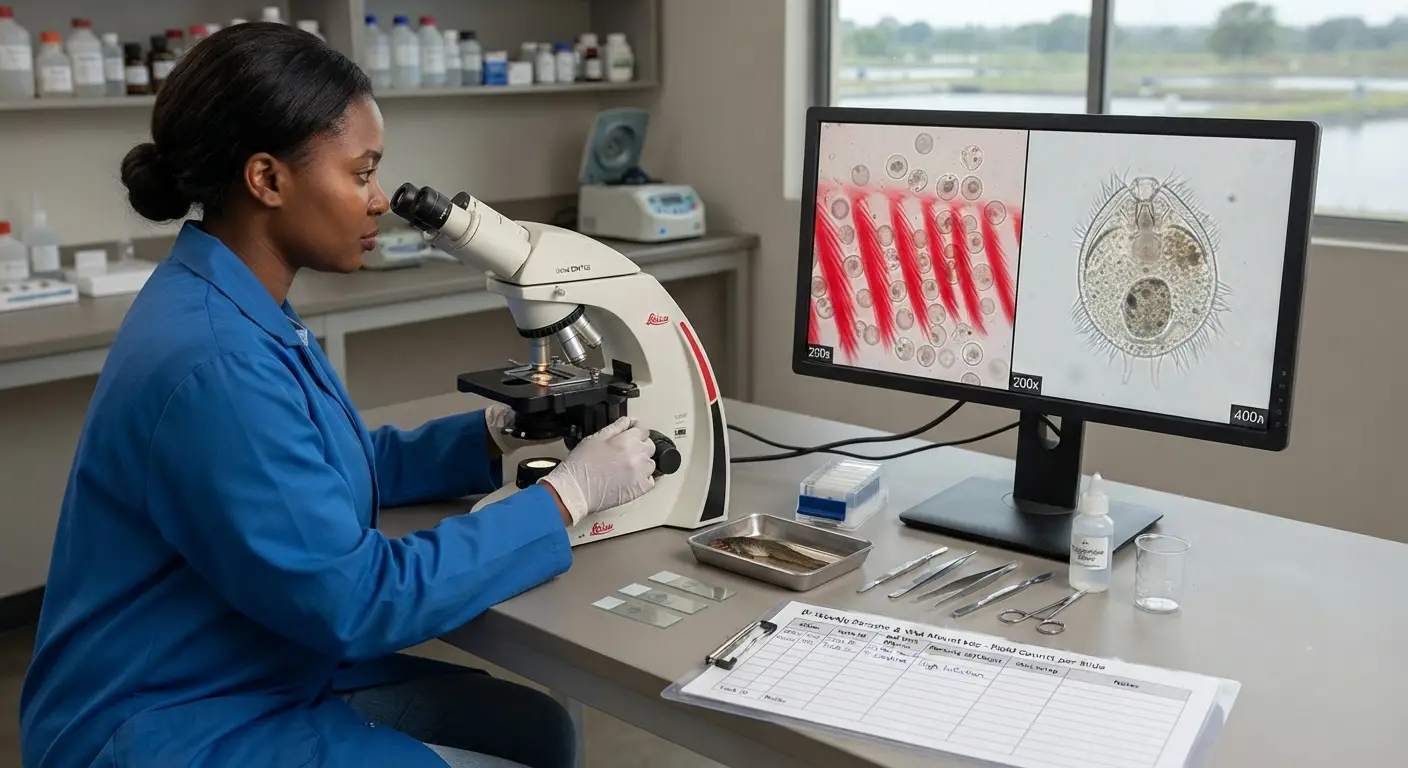
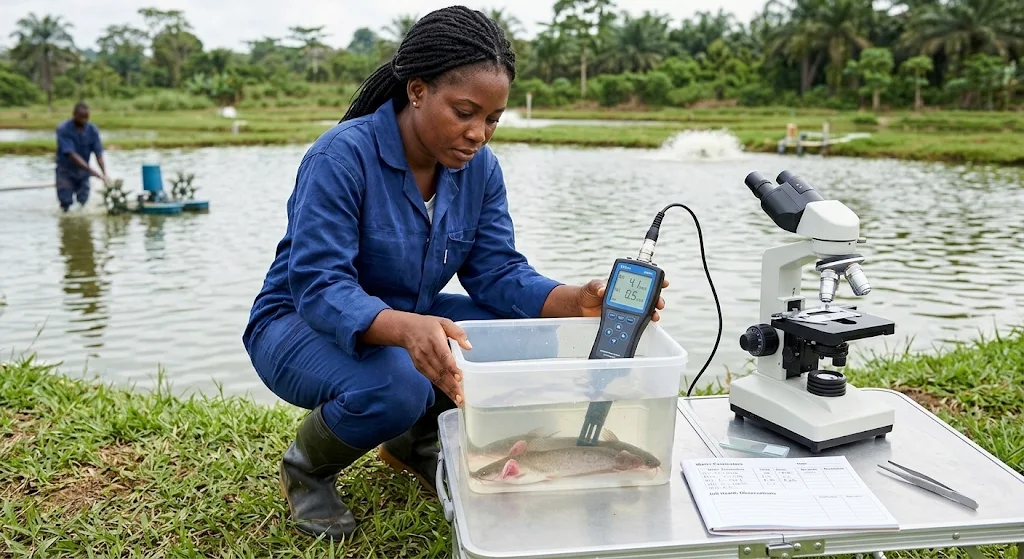
Swollen gills in catfish can indicate irritation, inflammation, parasitic infestation, infection, or exposure to unsuitable water conditions. Because the gills are responsible for oxygen uptake, swelling that interferes with their normal function can lead to respiratory distress, reduced feeding, and, in severe cases, mortality.
In African catfish (Clarias gariepinus), swollen gills are a clinical sign rather than a specific diagnosis. Farmers should investigate water quality and other possible causes before choosing a treatment.
What Do Swollen Gills Look Like?
Swollen gills may appear enlarged, thickened, or inflamed compared with normal tissue. Depending on the underlying problem, affected gills may also show abnormal coloration, excess mucus, or visible tissue damage.
Other signs may include:
- Rapid gill-cover movement
- Increased surface breathing
- Reduced appetite
- Lethargy or abnormal swimming
- Excess mucus around the gills
- Poor growth or declining condition
- Increased mortality in severe cases
These signs can occur with several different health and environmental problems. Visual inspection alone cannot confirm the cause.
What Causes Swollen Gills in Catfish?
1. Gill parasites
Parasitic organisms can irritate gill tissue and interfere with normal respiratory function. An affected fish may show abnormal gill movement, reduced feeding, or other signs of distress.
Gill swelling alone cannot identify a parasite. Appropriate examination, sometimes including microscopy, may be necessary.
2. Bacterial gill disease
Bacterial involvement may be associated with inflammation and damage to gill tissue. However, swelling does not establish that bacteria are responsible.
A fish-health professional may recommend further examination or laboratory testing if bacterial disease is suspected.
3. Fungal gill problems
Fungal involvement is another possible explanation for abnormal gill tissue. The appearance of swollen gills alone is insufficient to confirm a fungal infection.
Treatment should depend on an appropriate assessment of the suspected organism and the production system.
4. Ammonia toxicity
Elevated ammonia can irritate or damage gill tissue. The risk depends partly on the proportion of total ammonia present as the more toxic unionised form, which is influenced by pH and temperature.
Test ammonia alongside pH and temperature when swollen gills occur.
5. Nitrite toxicity
Nitrite primarily affects oxygen transport in the blood, but fish exposed to elevated nitrite may also show respiratory distress. It should be considered during a water-quality investigation, even if the gills do not show obvious external damage.
6. Poor dissolved oxygen
Low dissolved oxygen can cause respiratory stress and increased gill movement. Although it does not automatically explain visible swelling, oxygen conditions should be checked whenever fish show difficulty breathing.
7. Other irritants or environmental stressors
Unsuitable water conditions and exposure to harmful substances may irritate gill tissue. The specific cause cannot be established without information about the water, fish, and recent farm activities.
How Swollen Gills Affect Catfish
The gills have a large surface area that supports gas exchange. When inflammation or tissue damage interferes with their function, fish may struggle to obtain sufficient oxygen from the water.
Potential consequences include:
- Increased respiratory effort
- Reduced feeding and activity
- Poor growth
- Increased susceptibility to additional stress
- Severe illness or mortality when the underlying problem is serious
The outcome depends on the cause, severity, and duration of the condition.
How to Diagnose Swollen Gills in Catfish
Step 1: Observe fish behaviour
Record whether fish are feeding normally, swimming normally, or showing increased surface breathing. Note how many fish are affected and when the problem began.
Step 2: Test water quality
Measure the following parameters:
- Dissolved oxygen
- Ammonia
- Nitrite
- pH
- Water temperature
Compare the results with the appropriate operating targets for the production system.
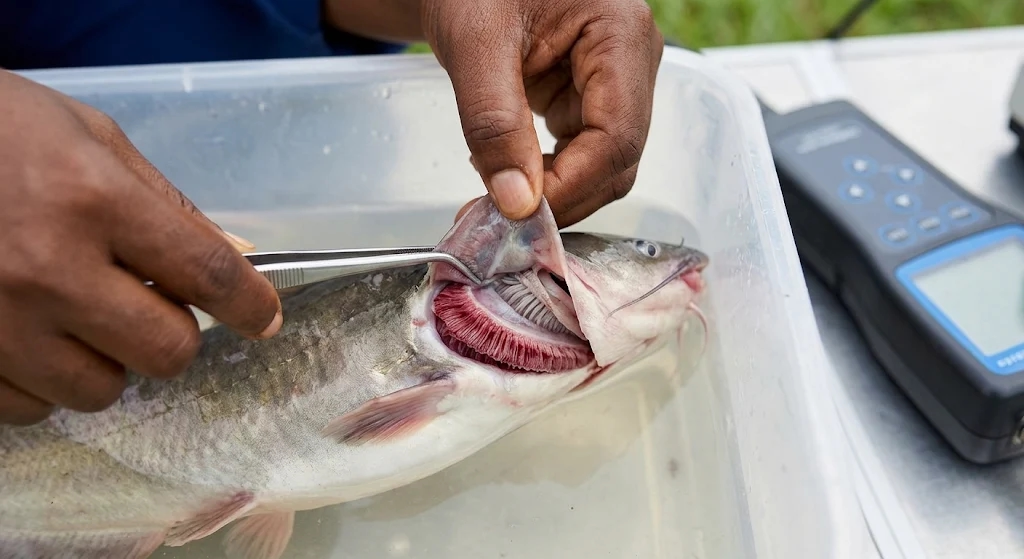
Step 3: Examine the gills
A qualified person should assess the gills for swelling, abnormal colour, excess mucus, visible parasites or tissue damage.
Avoid unnecessary handling, particularly when fish are already showing respiratory distress.
Step 4: Investigate infectious causes
If water-quality results do not explain the problem, further examination may be required to investigate parasites, bacteria or fungi.
Step 5: Seek professional confirmation
Contact a fish-health professional or aquatic diagnostic laboratory if symptoms persist, spread or cause significant mortality.
What to Do When Catfish Have Swollen Gills
The safest response is to address urgent environmental problems while investigating the underlying cause.
- Check dissolved oxygen immediately if fish are showing respiratory distress.
- Test ammonia and nitrite to identify possible water-quality problems.
- Review pH and temperature to help interpret the water-quality results.
- Provide suitable aeration if oxygen availability is inadequate.
- Review feeding and waste management to identify excessive organic waste or deteriorating water conditions.
- Minimise unnecessary handling to reduce additional stress.
- Obtain a diagnosis before using antibiotics, antiparasitic products or antifungal treatments.
If many fish are gasping or dying, treat the situation as urgent. Correct confirmed water-quality problems promptly and seek professional assistance.
How to Prevent Swollen Gills in Catfish
Maintain good water quality
Monitor dissolved oxygen, ammonia, nitrite, pH, and temperature regularly. Keep records so that changes can be identified before fish become severely affected.
Control stocking density
Match the number and biomass of fish to the system’s oxygen supply, water exchange, filtration and waste-removal capacity.
Avoid excessive feeding
Feed according to fish size, biomass and appetite. Excess feed can increase organic waste and contribute to poor water quality.
Practise farm biosecurity
Clean and disinfect equipment appropriately, quarantine incoming fish, and avoid transferring potentially contaminated equipment between production units without proper cleaning.
Inspect fish regularly
Observe feeding, swimming, gill movement and mortality. Investigate abnormal gill appearance early rather than waiting for widespread illness.
Maintain accurate farm records
Record water-quality readings, fish health observations, mortality, and any management actions. These records can help identify recurring problems and support diagnosis.
Swollen Gills Versus Other Gill Problems
| Finding | Possible explanation |
|---|---|
| Swollen gills with excess mucus | Irritation, parasites, infection or unsuitable water conditions |
| Swollen gills with rapid gill movement | Respiratory distress requiring investigation |
| Swollen gills with visible tissue damage | Possible infection, parasites or environmental injury |
| Swollen gills with elevated ammonia | Possible ammonia-related gill irritation or damage |
| Respiratory distress with elevated nitrite | Possible nitrite toxicity affecting oxygen transport |
| Swollen gills with increasing mortality | Urgent water-quality assessment and professional diagnosis |
These findings help guide investigation but are not definitive diagnostic criteria.
Frequently Asked Questions
Are swollen gills always caused by infection?
No. Swelling may be associated with parasites, bacterial or fungal disease, chemical irritation or other environmental problems. Diagnosis is necessary before selecting treatment.
Can ammonia cause swollen gills?
Elevated ammonia can injure or irritate gill tissue. However, swelling alone cannot establish ammonia toxicity; water testing is needed.
Can gill parasites cause swelling?
Yes, parasitic irritation is one possible explanation. Appropriate examination is required to determine whether parasites are present.
Should I treat the pond immediately?
Respond immediately to urgent problems such as inadequate oxygen, but do not apply disease-control chemicals without assessing the cause and the product’s suitability. An incorrect treatment may harm fish or worsen water conditions.
When should I seek professional help?
Seek assistance if swelling persists, several fish are affected, fish stop feeding, respiratory distress increases or mortality occurs.