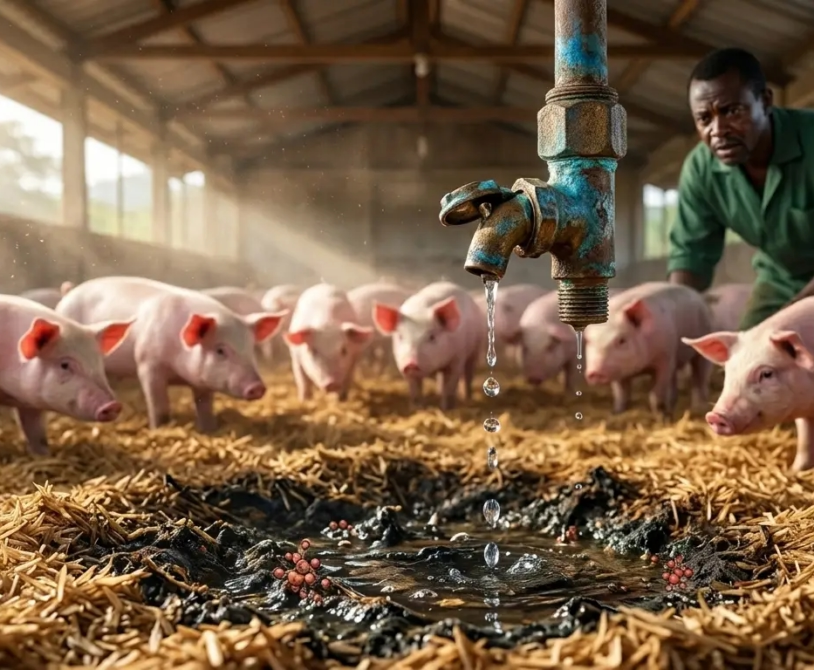
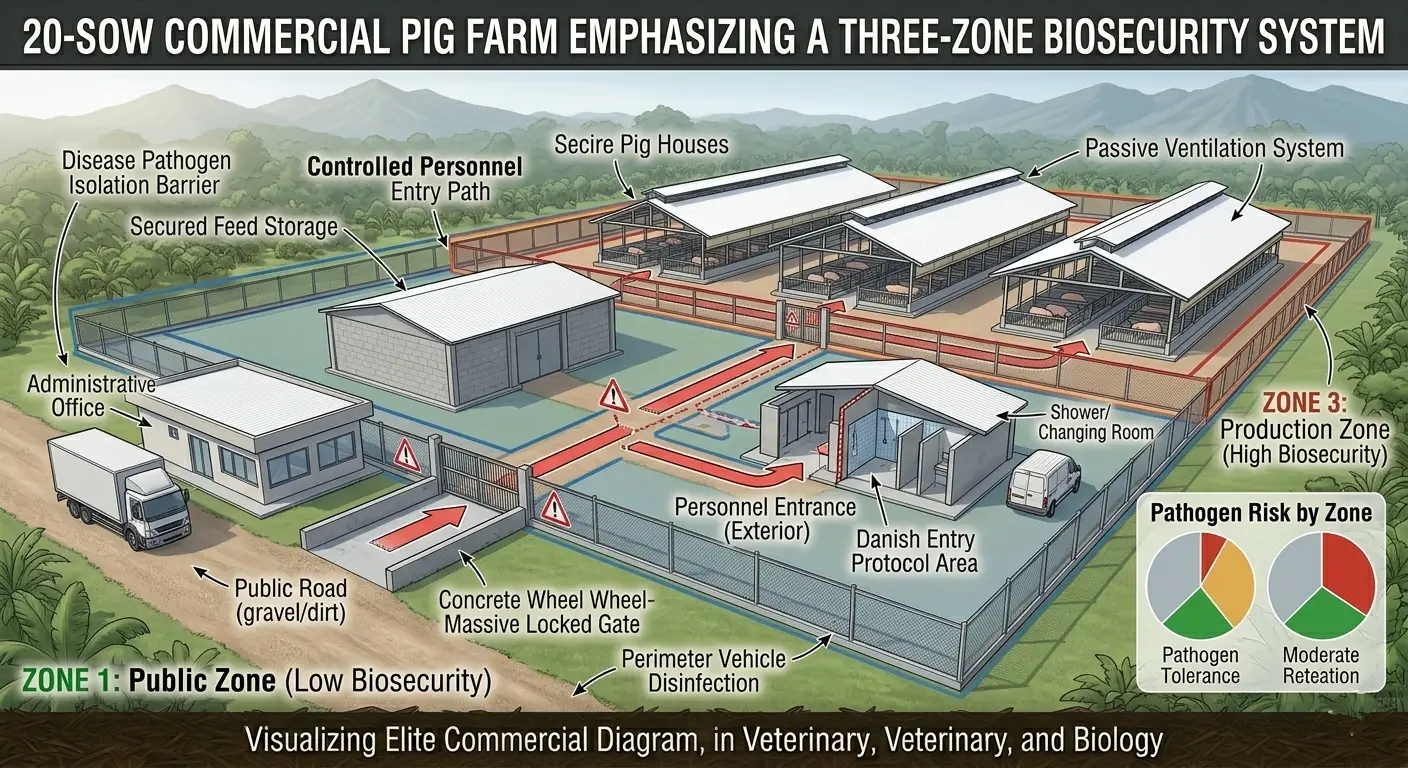
The pen determines the pig’s life. The layout determines the farm’s efficiency. And both, once built, are permanent — the most consequential infrastructure decisions a pig farmer makes before the first sow arrives.
A poorly designed piggery does not simply create operational inconvenience. It systematically undermines every management input that follows: disease spreads faster in poorly ventilated spaces, waste accumulates where drainage was not planned, labor cost rises when feed and water require manual delivery across an inefficient layout, and reproductive performance suffers when farrowing rooms cannot maintain the stable temperatures that neonatal piglets require.
The best pig genetics, the most precisely formulated ration, and the most disciplined biosecurity program all perform below their potential when the physical infrastructure they operate within was designed without understanding what commercial pig production requires from its housing.
This guide builds that understanding systematically: the principles behind each design decision, the specifications that implement those principles in concrete and steel, and the layout logic that creates a farm that is operationally efficient, biosecurally sound, and scalable from 10 sows to 100 sows without fundamental reconstruction.
Part 1: Site Selection — The Decision That Cannot Be Undone
Site selection for a piggery is the only design decision that precedes the design itself. Everything else can be modified after construction. Site location cannot.
The Five Site Selection Criteria
1. Prevailing wind direction relative to neighbors and water sources
Pig farming generates odor — primarily from hydrogen sulfide, ammonia, and volatile fatty acids released during manure decomposition. The volume and concentration of these odors is manageable with correct waste management systems, but the directional character of odor plumes means that a farm positioned upwind of a residential area, school, or market will generate neighbor complaints regardless of how well the waste is managed.
Position the farm downwind of any sensitive receptors — where the prevailing wind carries odors away from populated areas rather than toward them. In the harmattan season across Cameroon and Nigeria, the dominant wind direction is from the northeast — farms south and west of nearby communities are correctly positioned relative to seasonal odor transport.
Minimum buffer distances:
- Residential properties: 300–500 meters (minimum 300m; 500m where the operation exceeds 100 sows)
- Schools, hospitals, markets: 500–1,000 meters
- Water bodies (streams, rivers, ponds): 100–200 meters minimum; ideally upslope
- Boreholes and wells (on or off property): 50–100 meters
2. Slope and drainage
Pig houses should be positioned on a gentle slope — 2–5% grade — that allows wastewater, wash water, and rain runoff to flow away from the buildings by gravity. This single topographic feature simplifies waste management more than any constructed drainage system.
The slope should drain away from the clean areas of the farm (feed storage, chick pens, medication storage) toward the waste processing area (settling tanks, biogas digester, or lagoon). Never position waste management infrastructure upslope from production buildings.
Avoid: Low-lying sites that collect water during the rainy season, sites with seasonally high water tables (below 2 meters depth), and sites with impermeable clay layers that prevent drainage infiltration.
3. Road access
Commercial pig farming requires frequent heavy vehicle access: feed deliveries (bags or bulk), slaughter pig transport, manure removal, and veterinary and supplier vehicles. A site requiring vehicles to cross a wet-season-impassable road or bridge creates operational disruptions that coincide with the periods when feed delivery delays are most damaging to pig performance.
Minimum road specification: All-weather gravel or compacted laterite road capable of supporting a 5-tonne loaded truck from the nearest tarred road to the farm gate. Internal farm roads should be concrete, compacted laterite, or block-paved to maintain accessibility throughout the rainy season.
4. Water supply
A 100-sow commercial pig farm at full production (sows, boars, piglets, weaners, growers, finishers) requires approximately 1,500–3,000 liters of water per day — 500–1,000 liters for drinking and 1,000–2,000 liters for washing and cooling. This is not an estimate — it is an operational requirement that must be reliably met every day of the production calendar.
Verify before committing to the site:
- Borehole yield rate: minimum 2,000 liters/hour to serve a 100-sow farm
- Water table depth: must be consistent year-round (some dry-season water tables in northern Nigeria and northern Cameroon drop significantly below the borehole’s wet-season yield)
- Water quality: conduct a basic mineral and bacterial analysis — high iron content (above 0.3 mg/L) indicates treatment requirements; bacterial contamination indicates sanitation requirements before connecting to farm water systems
5. Feed supply proximity
Pig feed is bulky and heavy. A 100-sow farm at full production consumes 3–5 tonnes of feed per week. Transport cost per kilometer per tonne adds directly to the feed cost per kg. Position the farm within practical transport distance of a feed mill or feed supplier — ideally within 30–50 km for weekly delivery, or within 100 km for bi-weekly delivery with adequate on-farm storage.
Part 2: Farm Zoning — The Biosecurity Architecture
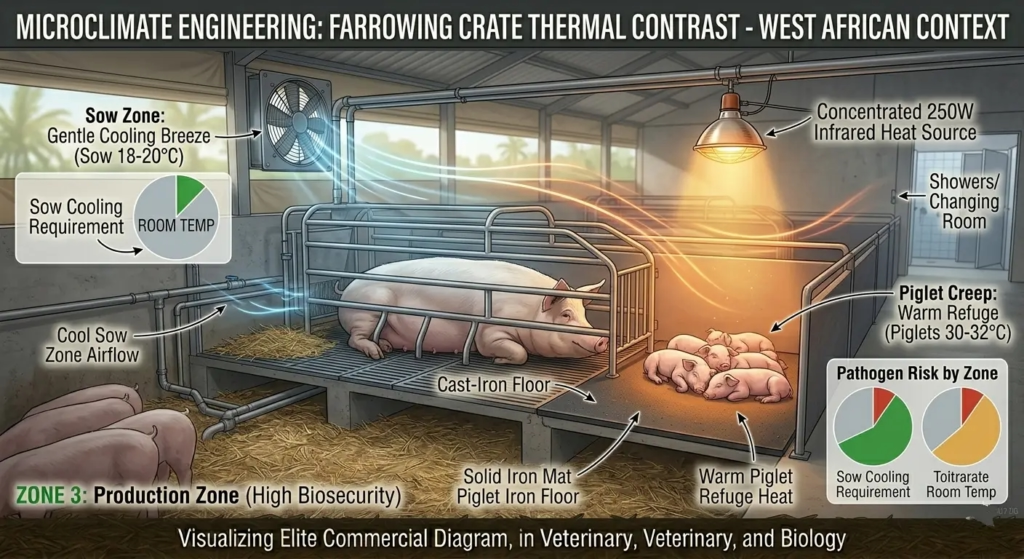
The most important layout principle in commercial piggery design is zone separation — the physical segregation of areas with different biosecurity status so that pathogens introduced at the farm boundary cannot freely reach the production animals.
The Three-Zone System
Zone 1 — Public Zone (outside the farm perimeter fence): Feed delivery vehicles, visitors, and all external traffic stop here. No production access. All vehicles stop at the Zone 1-to-Zone 2 boundary for wheel disinfection before entry.
Zone 2 — Farm Service Zone (inside the perimeter, outside production buildings): Feed storage, dead animal disposal, egg grading areas if applicable, vehicle parking for farm staff, veterinary service areas. Visitors who do not need to enter production buildings are received here. Personnel changing from Zone 1 clothing to farm clothing occurs at the Zone 1-to-Zone 2 boundary changing station.
Zone 3 — Production Zone (pig houses and their immediate surrounding areas): The highest biosecurity zone. Entry requires: farm-designated footwear change at the Zone 2-to-Zone 3 boundary, farm clothing (dedicated coveralls or uniform), and, where disease risk is elevated, shower entry.
The physical implementation:
- A perimeter fence (chain-link, concrete block, or wire-on-post) defines the Zone 1-to-Zone 2 boundary
- A secondary fence or clear physical demarcation separates Zone 2 from Zone 3
- Every passage from Zone 2 to Zone 3 passes through a footbath with active disinfectant (quaternary ammonium or chlorine at label concentration)
- Each pig house has its own entry footbath — movement between houses requires crossing a footbath at each house
The All-In/All-Out Principle and Building Layout
All-in/all-out (AIAO) management — filling and emptying each building or room before cleaning, disinfecting, and restocking — is the most effective disease management practice available in pig production. It requires that the building design support complete pen emptying.
Layout implication: Buildings should be divided into discrete rooms or sections that can be filled and emptied on a production schedule. A farrowing house with 10 farrowing crates that can accommodate 10 simultaneous litters maintains AIAO management. A farrowing house where sows farrow continuously because the room size does not match the farm’s batch farrowing schedule cannot be managed on AIAO principles, regardless of management intent.
Part 3: The Production Flow Layout
A well-designed piggery has a logical production flow — pigs move in one direction through their production stages, and that movement direction does not intersect with the flow of waste, clean water, or personnel from different biosecurity zones.
The Linear Flow Principle
Ideal production flow (left to right):
Sow barn (gestation) → Farrowing house → Weanling room → Nursery/post-weaning → Grower house → Finisher barn → Holding pen → Loading ramp
Each stage is physically separated from the next by a distinct building or room. Pigs never move backward — from finisher toward farrowing. Personnel and equipment should follow the same directional logic — starting work in the youngest, most vulnerable animals (farrowing house, weanling room) and moving toward the older, more disease-resistant population (growers, finishers).
The practical layout for a 20-sow farm:
[ENTRY GATE + WHEEL DIP] → [CHANGING ROOM] →

[FEED STORAGE] ← ← ← (separate delivery access)

[BOAR PEN] ↕
[GESTATION SOWS] → [FARROWING] → [WEANERS] → [GROWERS/FINISHERS]

→ [LOADING RAMP] (separate exit, downwind)

↓
[WASTE MANAGEMENT] (biogas or lagoon, downslope)
The feed delivery pathway (from gate to feed storage) and the waste removal pathway (from pens to waste management) should not cross each other or cross the pig movement pathway.
Part 4: Individual Building Specifications
4.1 Gestation House (Dry Sow Building)
The gestation house accommodates sows from weaning through to approximately 10 days before expected farrowing, when they are moved to the farrowing house.
Stocking options:
Individual gestation stalls (full-restriction):
- Stall dimensions: 60–65 cm wide × 200–210 cm long
- Allows precise individual feeding, individual health monitoring, and minimizes competition injuries
- Pen space: 1.4–1.5 m² per sow
- Welfare concern: restricted movement limits bone density maintenance; banned in some export markets
Group gestation pens (European welfare standard):
- EU minimum: 2.25 m² per sow in groups of 6+ (after the first 4 weeks of pregnancy)
- Practical West African commercial minimum: 1.8–2.2 m² per sow in groups of 5–10
- Requires electronic sow feeding (ESF) systems or careful manual feeding management to prevent dominant sows from consuming subordinate sows’ rations
Construction specifications:
- Wall height (solid pen division): 100–120 cm from the floor
- Floor: textured concrete (coefficient of friction > 0.5 when wet) — smooth floors cause leg injuries from slipping
- Slope: 2–3% toward the drainage channel
- Drinkers: 1 nipple drinker per 10 sows (flow rate 1.0–1.5 liters/minute)
- Feeders: in group housing, feeder space minimum 45 cm per sow to allow simultaneous feeding without displacement
4.2 Farrowing House
The farrowing house is the highest-management and highest-capital building on the pig farm. It serves three simultaneous populations with different thermal requirements: the sow (thermoneutral zone 15–22°C), the newborn piglet (requires 32–34°C in the first 24 hours), and the growing piglet (28–30°C at week 1, declining to 24–26°C at week 3).
This temperature conflict is the central engineering challenge of farrowing house design: the house must simultaneously be cool enough for the sow to avoid heat stress and hot enough to prevent neonatal chilling in piglets that cannot thermoregulate independently for the first 7–10 days of life.
Farrowing crate dimensions:
- Total crate width: 180–200 cm
- Sow confinement zone: 60–65 cm wide × 220–230 cm long
- Piglet creep area each side: 60–70 cm wide (sow zone centered, creep areas flanking)
- Crate height: 90–100 cm
- Guard bars: 20–25 cm from the floor, positioned to prevent the sow crushing piglets as she lies down
The creep area heating solution for tropical conditions:
The creep heating challenge in West African piggeries is different from temperate climates, where the entire farrowing room must be heated. In a tropical climate where ambient house temperature may already reach 28–32°C:
- The house ambient temperature is near or above the sow’s comfortable limit
- The creep area still requires heating to 32–34°C for newborns
- Heating the entire room to creep temperature causes severe heat stress in the sow
Solution: Localized creep heating only. Options:
- Infrared heat lamp (250W): Position 50–60 cm above the creep area. Adjust height based on creep surface temperature (target 32°C at piglet level). XAF 8,000–15,000 (USD 13–25) per lamp. Simple, low capital cost, but creates fire risk if positioned incorrectly and litter is present.
- Heated creep pad (electric): A 30 × 60 cm electric heating pad embedded in the creep floor area, providing surface heat at 32–34°C. No fire risk. XAF 25,000–60,000 (USD 42–100) per crate. More reliable and safer than overhead lamps in litter-present farrowing systems.
- Covered creep box: An insulated wooden or plastic box placed in the creep area that retains the piglets’ own body heat — effective from day 3–4 when piglets begin generating adequate metabolic heat, but insufficient for the first 48 hours.
Farrowing house ventilation:
Maintaining sow comfort (below 22°C) while protecting piglets from drafts requires:
- Ventilation inlets positioned above sow level — not at floor level, where drafts reach neonatal piglets
- Ridge exhaust venting for stack-effect passive ventilation
- Supplemental fans positioned to move air across the sow’s body without creating floor-level drafts
- Temperature monitoring at both sow level (shoulder height) and creep level simultaneously
Floor specifications for farrowing:
The sow area floor must allow efficient manure drainage while preventing hoof injuries:
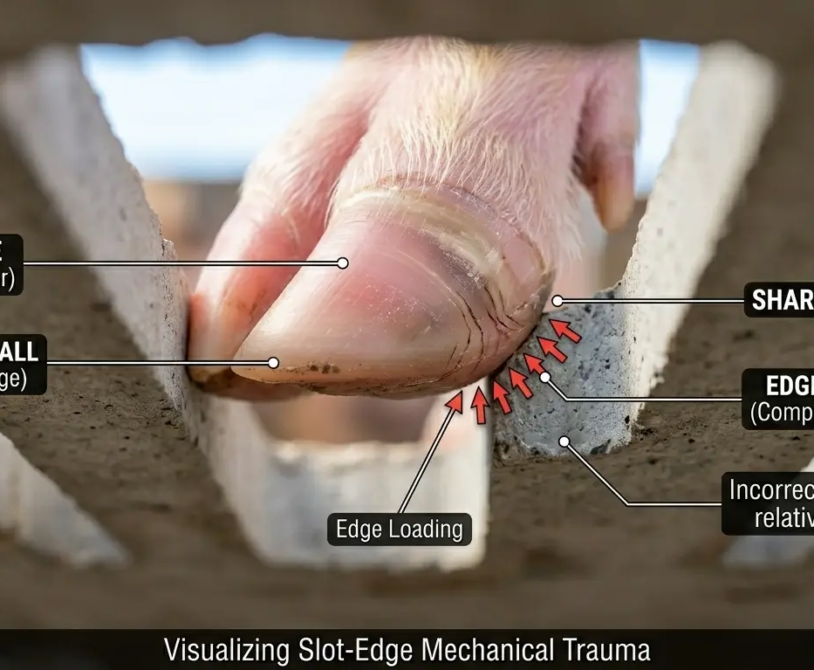
- Partially slatted concrete: Rear third of sow area in slats (slot width 20 mm maximum, bar width 80–100 mm), solid front area for sow lying
- Cast iron slats (preferred): Smooth surface reduces foot injury risk; durable; XAF 45,000–90,000 (USD 75–150) per crate set
- Plastic-coated slats: Lower foot injury risk than bare concrete; easier to clean; XAF 25,000–55,000 (USD 42–92) per crate set
- Creep area: solid, smooth concrete or rubber mat — slatted floors in the creep area cause leg injuries in neonatal piglets
Farrowing house capacity planning:
Number of farrowing crates required = (Number of farrowings per week × Farrowing occupancy period) + 15% buffer
For a 20-sow farm with batch farrowing every 3 weeks (approximately 5 sows per batch, occupancy 28 days in crate): Crates required = 5 sows × 1 batch × (28/21 weeks) + 15% = approximately 8 crates
4.3 Post-Weaning / Weanling Room
Piglets are weaned at 21–28 days old and weigh 5–7 kg. The transition from the farrowing crate to the weanling room is the highest-stress event in the pig’s life — new environment, new pen-mates, cessation of sow milk, transition to solid feed. The building design must minimize additional stressors during this period.
Pen specifications for weanlings:
- Group size: 10–15 piglets per pen
- Floor space: 0.3–0.35 m² per piglet
- Floor type: fully slatted plastic (essential — weanlings cannot maintain pen hygiene on solid floors at this age)
- Pen temperature: 28–30°C in the first week post-weaning, declining 2°C per week to 22–24°C at week 4–5
- Feeder: wet/dry feeder (combination of dry feed and water in a single unit) — reduces feed-finding stress and improves post-weaning feed intake
- Drinker: nipple drinker at piglet shoulder height; flow rate 0.3–0.5 liters/minute
Heating in the weanling room:
Unlike the farrowing house, where only the creep area requires localized heating, the entire weanling room air temperature must meet the target. Options:
- Gas radiant heaters (suspended): Heat the air effectively; XAF 80,000–200,000 (USD 133–333) per heater; requires good ventilation design to avoid CO accumulation
- Under-floor heating: Embedded hot water pipes or electric cables in the concrete floor; even heat distribution; high capital cost; XAF 300,000–800,000 (USD 500–1,333) per room installation
- Insulated building envelope: The most cost-effective “heating” for a tropical climate is reducing the house’s heat loss overnight. Insulated walls (polyurethane foam panels) and an insulated roof maintain ambient warmth generated by the piglets themselves — reducing or eliminating the need for supplemental heating in most West African highland conditions where overnight temperatures do not drop below 15°C.
4.4 Grower and Finisher Houses
The grower (25–60 kg) and finisher (60–110 kg) phases are where most of the feed cost is incurred and most of the saleable weight is produced. The building’s role is to provide a thermally comfortable environment that allows appetite and growth rate to reach their genetic potential.
Pen specifications:
| Stage | Live Weight | Floor Space per Pig | Group Size |
|---|---|---|---|
| Weanling (post-weaning) | 7–25 kg | 0.30–0.35 m² | 10–15 |
| Grower | 25–60 kg | 0.55–0.70 m² | 10–15 |
| Finisher | 60–110 kg | 0.85–1.00 m² | 8–12 |
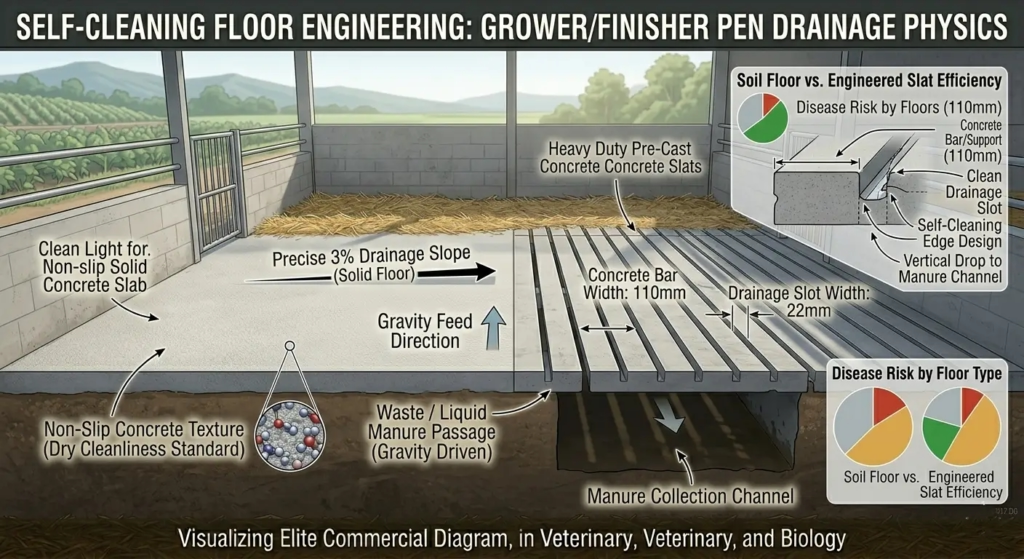
Floor design for grower/finisher:
Partially slatted (recommended):
- 1/3 to 1/2 of the pen area in concrete slats over a manure collection channel below
- Remainder solid concrete (lying area)
- Slat dimensions: 100–120 mm bar width, 20–25 mm slot width
- Sloped solid area (2–3%) toward the slatted section to direct manure flow to the slats
Fully slatted:
- The entire pen area over the manure collection pits
- Higher capital cost, but significantly easier manure management and lower disease pressure from litter contact
- Appropriate for commercial operations in humid climates where litter management is challenging
Deep litter (lowest capital, highest management):
- Rice husks, wood shavings, or sawdust bedding, 20–30 cm depth
- Must be turned regularly to maintain aerobic decomposition and prevent ammonia accumulation
- Not recommended for high-density commercial operations in high-humidity West African conditions
Ventilation for grower/finisher:
A finisher pig at 90 kg generates approximately 25–30 watts of metabolic heat and exhales approximately 0.5 liters of moisture per hour. A pen of 10 finishers generates 250–300 watts of heat and 5 liters of moisture per hour continuously. The ventilation system must remove this heat and moisture load to maintain house temperature below 25°C and ammonia below 20 ppm.
Target ventilation rates:
| Season | Minimum Ventilation Rate |
|---|---|
| Cold/cool season | 0.3 m³/hour per kg live weight |
| Moderate | 0.6 m³/hour per kg live weight |
| Hot season | 1.5–3.0 m³/hour per kg live weight |
For a house of 100 finisher pigs at 80 kg average live weight in the peak hot season: Required airflow = 100 pigs × 80 kg × 2.0 m³/hr/kg = 16,000 m³/hour
Natural ventilation design for West African grower/finisher:
Open-sided construction — 60–80% of wall area open mesh — with adjustable curtains is the most appropriate ventilation system for most commercial pigs housed in the equatorial and sub-Saharan zones of West Africa. The ridge vent running the full length of the house ensures stack-effect thermal buoyancy removes heat and ammonia even on low-wind days. Supplemental circulation fans during peak dry-season afternoons (14:00–18:00), when natural airflow stalls, provide the “top-up” cooling that natural ventilation alone cannot deliver.
4.5 Boar Pens
Boars require individual housing with visual and olfactory contact with sows to maintain libido and semen quality, but physical separation that prevents injuries to sows during out-of-heat encounters.
Boar pen specifications:
- Floor area: minimum 7.5 m² per boar (10–12 m² recommended for large breeds)
- Pen division: solid wall 1.2 m high; chain-link or pipe rail above to allow visual/olfactory contact with adjacent sows without physical contact
- Exercise area (important for libido and foot health): 15–20 m² additional outdoor or covered run per boar
- Boar service area: adjacent to boar pen, 10–12 m² solid floor, non-slip surface — the mating or semen collection area
4.6 Isolation Facility
One building that most small piggeries omit and regret: a physically separate isolation facility for incoming animals and sick animals.
Isolation facility requirements:
- Location: Downwind and downslope from all production buildings; minimum 50 meters separation
- Capacity: Accommodate 10% of the total farm pig population simultaneously
- Separate entry, separate personnel
- Separate water supply, separate equipment (dedicated to isolation only)
- Dedicated boot-over at the isolation facility entry
Any pig entering the farm from outside — purchased replacement gilts, boars, or piglets — must spend 21–28 days in isolation before entering the production herd. The isolation period allows clinical signs of any disease introduced from the source farm to manifest before the animal has contact with the production population.
Part 5: Waste Management Infrastructure
Pig manure is the most nutrient-dense and highest-volume waste generated by any commonly farmed livestock species. A 100-sow farm at full production generates approximately 5,000–8,000 liters of liquid manure and wash water per day. This volume cannot be managed informally — it requires a designed infrastructure that handles it safely, legally, and productively.
The Waste Flow System
Stage 1 — Collection: Manure and wash water drain from pens through channels to a collection sump or settling tank. Channel slope: 2–3% minimum. Channel dimensions: 30 cm wide × 25 cm deep minimum.
Stage 2 — Settling/primary treatment: A settling tank (5–10% of daily volume × 30-day retention = 7,500–24,000-liter tank for a 100-sow farm) separates solid and liquid fractions. Solids accumulate at the bottom; liquid overflow passes to secondary treatment.
Stage 3 — Secondary treatment options:
Biogas digester: Anaerobic digestion of the settled slurry produces biogas (methane-rich gas for cooking and electricity generation) and digestate (liquid fertilizer). Capital cost for a 100-sow farm: XAF 2,000,000–6,000,000 (USD 3,333–10,000). The gas output from a 100-sow farm produces the equivalent of 10–20 kg of LPG per day — sufficient to fuel the farm’s cooking gas needs and potentially generate supplemental electricity.
Lagoon system: A sealed lined lagoon stores the liquid fraction after settling. Anaerobic decomposition in the lagoon reduces BOD (Biochemical Oxygen Demand) over a 60–90 day hydraulic retention time. Lagoon liquid can then be used for crop or plantation irrigation. Capital cost: XAF 500,000–2,000,000 (USD 833–3,333) depending on lagoon size and lining material.
Stage 4 — Application: Settled solids composted with carbon material (rice husks, wood chips) at a 25–30:1 C : N ratio produce organic fertilizer worth XAF 10,000–25,000 (USD 17–42) per tonne. Lagoon liquid applied at recommended agronomic rates provides nitrogen, phosphorus, and potassium to adjacent crop and plantation land — the circular economy between pig farming and crop or palm oil production.
Part 6: Feed Storage and Distribution
Feed is 60–70% of the pig production operating cost. The physical infrastructure for feed storage and distribution should protect this investment while minimizing labor required to move it.
Feed Storage Specifications
Dry feed storage:
- Location: Zone 2 (accessible to delivery vehicle without entering Zone 3)
- Construction: Concrete floor, ventilated walls to prevent condensation, metal or solid roof
- Rodent exclusion: Metal sheeting to 60 cm above ground; no gaps at the wall-floor junction
- Capacity: Minimum 4-week supply at current consumption rate — provides resilience against supply disruption
- Temperature and humidity: Below 25°C and 70% RH — tropical conditions outside this range require additional ventilation or climate control to prevent mold growth
The feed delivery route: Feed enters the farm at Zone 1, moves to Zone 2 storage without entering Zone 3. From storage, feed is portioned and moved to individual houses. The path from storage to house should be paved and covered to allow year-round access without contamination.
Automatic vs. manual feed distribution:
For farms below 50 sows, manual feed distribution (feed trolley per house) is appropriate and cost-effective. Labor cost for manual feed distribution for 50 sows: approximately 1.5 person-hours per day.
For farms above 100 sows: automated auger feed systems (delivering feed from a central hopper to individual pen feeders through a network of auger tubes) reduce labor by 60–70% and improve feeding consistency. Capital cost: XAF 3,000,000–8,000,000 (USD 5,000–13,333) for a system servicing 200 pig places.
Part 7: The Complete Farm Layout — A Reference Design
Small Commercial Farm (20 Sows)
Land requirement: 2,500–4,000 m² (0.25–0.40 ha)
Building schedule:
| Building | Size | Notes |
|---|---|---|
| Gestation house | 100 m² (20 stalls or group pens) | Individual stalls: 20 × (0.65m × 2.0m) = 26 m² + aisles |
| Farrowing house | 120 m² (8 crates + aisles) | 8 crates × (2.0m × 2.5m) = 40 m² + aisles |
| Weanling room | 80 m² | 2 AIAO rooms × 40 m² each |
| Grower house | 150 m² | 3 pens × 12 pigs × 0.65 m² = 23.4 m² per pen + aisles |
| Finisher house | 200 m² | 4 pens × 10 pigs × 0.95 m² = 38 m² per pen + aisles |
| Boar pen + service area | 50 m² | 2 boar pens + service area |
| Isolation facility | 60 m² | 2 pens, physically separate |
| Feed storage | 40 m² | 4-week capacity |
| Changing room + office | 20 m² | Zone boundary |
| Waste management | 100 m² | Settling tank + biogas or lagoon |
Total covered building area: approximately 920 m²
Capital cost estimate (West Africa, 2026):
| Item | XAF | USD |
|---|---|---|
| Civil construction (920 m² @ XAF 80,000/m²) | 73,600,000 | 122,667 |
| Farrowing crates (8 × XAF 500,000) | 4,000,000 | 6,667 |
| Gestation equipment | 2,000,000 | 3,333 |
| Weanling slat flooring + equipment | 1,500,000 | 2,500 |
| Feed systems, drinkers, feeders | 3,000,000 | 5,000 |
| Waste management (biogas 5m³) | 2,500,000 | 4,167 |
| Perimeter fence and gates | 2,000,000 | 3,333 |
| Water supply and distribution | 2,500,000 | 4,167 |
| Electrical installation | 1,500,000 | 2,500 |
| Total Capital Investment | 92,600,000 | 154,333 |
Part 8: Design Principles That Are Frequently Violated
Common Design Failures and Their Consequences
1. Insufficient pen ventilation resulting in ammonia accumulation. Above 20 ppm ammonia at pig level: mucociliary clearance impaired, E. coli and Mycoplasma respiratory infection risk dramatically elevated. Solution: open-sided construction with adjustable curtains, full-length ridge vent, and circulation fans during peak heat.
2. Wet floors from an inadequate drainage slope. Chronically wet floors produce foot rot, hoof softening, and skin infections. Any floor slope below 2% in any pig house is insufficient for self-cleaning. Floors that pool water must be resurfaced with an adequate slope before disease consequences become chronic.
3. No physical separation between farrowing rooms. A farrowing house with continuous occupancy — sows entering and exiting individually rather than as a batch — cannot be cleaned and disinfected effectively between groups. The accumulated pathogen load builds cycle by cycle. AIAO management requires multiple discrete farrowing rooms (or two separate farrowing houses) sized for batch management.
4. Undersized isolation facility or none. The introduction of purchased replacement gilts directly into the breeding herd without a quarantine period is the most reliable way to introduce a new pathogen from the source farm’s population. Porcine Reproductive and Respiratory Syndrome (PRRS), Aujeszky’s Disease (Pseudorabies), and Mycoplasma hyopneumoniae are commonly introduced through this route — all capable of significantly reducing reproductive performance for months or years after introduction.
5. Feed storage accessible to rodents. Rodents consume feed, contaminate it with Salmonella-laden feces, and introduce external pathogens from the farm boundary environment. A feed store without rodent exclusion is not a feed store — it is a rodent feeding station that happens to have some pig feed in it.
6. Waste management infrastructure positioned upslope from pig houses. Leachate from waste lagoons or compost bays that drains toward pig house foundations contaminates the pig environment with concentrated pathogen loads. Waste management must always be downslope and downwind from production buildings.
Summary
A modern piggery design is not primarily an architectural achievement. It is an operational tool — built to reduce disease transmission by creating physical barriers between populations at different biosecurity risk, to reduce labor cost by placing feed storage, water systems, and waste management in logical relationships to each other and to the animals they serve, and to allow all-in/all-out management by sizing buildings to match production batch sizes.
Every square meter of concrete laid for the wrong purpose — insufficient pen size, wrong drainage slope, no isolation facility, no clear zone separation — will generate ongoing operational cost and disease risk for the next 20 years. Every square meter laid correctly will reduce it.
The pig farm built on these principles — correctly sited, correctly zoned, correctly specified at each production stage — is the infrastructure that allows every other management input to perform at its potential: genetics, nutrition, vaccination, and stockmanship all perform better in a building designed to support them than in a building that works against them.
Design first. Build the second. Manage third. In that sequence, commercial pig production in West and Central Africa is one of the most financially viable agricultural enterprises available.