
A piggery is a facility designed and managed for the commercial production of pigs. It encompasses the housing, feeding systems, health management, breeding program, and waste management infrastructure that together convert feed inputs into saleable pigs — either as live animals for slaughter, as pork carcasses, or as breeding stock sold to other farms.
The word itself is simple. The operation behind it is not. A piggery is not a collection of pigs in a shed. It is a biological production system where the housing design, the nutritional program, the reproductive management, and the health protocols all interact — and where failure in any one of them produces measurable production loss that shows up in the numbers within weeks.
This article answers the fundamental questions about piggeries: what they produce, who operates them, what the different types are, what pigs actually need to grow and reproduce, and what separates a profitable piggery from one that feeds pigs expensively without generating adequate returns.
What Does a Piggery Produce?
A piggery produces pigs, but pigs in several different forms depending on the production system’s purpose.
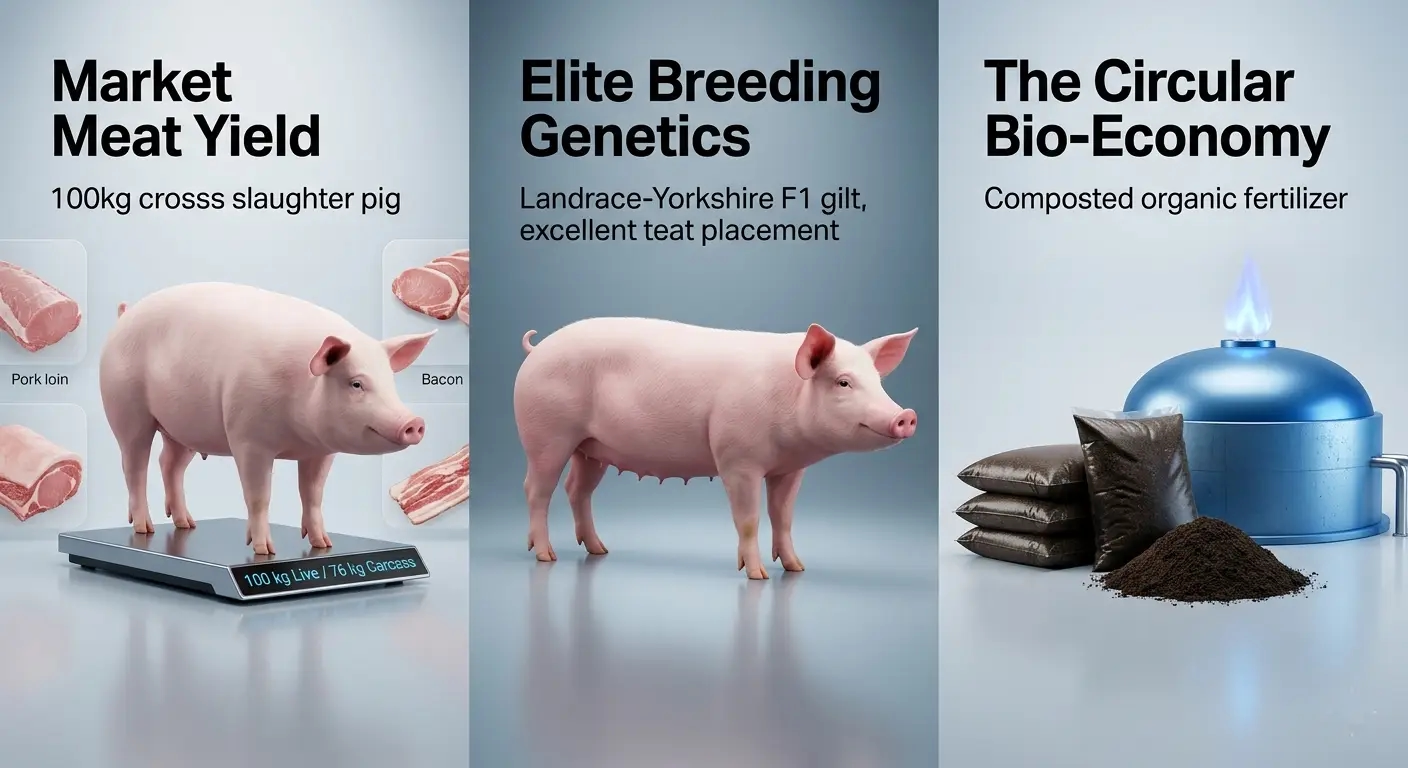
Slaughter pigs (pork production): The most common output. Pigs are raised from birth to a slaughter weight of 90–110 kg live weight, then sold to abattoirs, slaughterhouses, or butchers who process them into pork cuts — fresh pork, bacon, sausages, smoked meats, and processed pork products. The pig’s live weight at slaughter determines how much saleable meat the carcass yields; a well-managed pig at 100 kg live weight produces approximately 75–78 kg of hot carcass weight, of which roughly 55–60% is boneless lean meat.
Piglets (weaner or feeder pig sales): Some piggeries specialize in breeding and farrowing only — producing piglets that are weaned at 21–28 days and sold to other farms (finisher operations) that grow them to slaughter weight. This is a legitimate specialization in areas where feed grain prices favor piglet selling over finishing.
Breeding stock: Genetics companies and multiplier farms sell gilts (young female pigs that have not yet farrowed) and boars with documented performance records to commercial farms building or renewing their sow herds. Breeding stock commands significantly higher per-animal prices than commercial slaughter pigs because buyers are purchasing the animal’s lifetime productive potential, not just its current weight.
Manure and organic fertilizer: Every piggery produces large volumes of nutrient-rich manure that, when correctly composted or processed through a biogas digester, becomes a valuable organic fertilizer or energy source. A 100-sow farm generates enough manure to fertilize 3–5 hectares of crops annually — a secondary revenue stream that most piggeries in West Africa undervalue or dispose of rather than monetize.
What Types of Piggery Exist?
Not all piggeries are the same. They differ in scale, production system, degree of specialization, and the market they supply.
By Scale
Smallholder piggery (2–20 sows): Family-operated, typically in peri-urban or rural areas. Provides supplementary income alongside other farming activities. Management is usually less specialized; pigs are often raised on agricultural byproducts and kitchen waste alongside commercial feed. Profitability depends heavily on local pork demand and whether the family’s labor is the primary input cost.
Small commercial piggery (20–100 sows): Dedicated commercial operation with designed infrastructure, hired labor, and systematic health and nutrition management. At 50 sows, a well-managed piggery producing 20+ pigs per sow per year can generate 1,000+ slaughter pigs annually — sufficient to supply local butchers, hotels, and restaurants directly. This is the most common scale of piggery development in West and Central African peri-urban areas.
Medium commercial piggery (100–500 sows): Requires formal business structure, dedicated farm management, multiple specialized staff, and significant capital investment in infrastructure. Typically supplies abattoirs or operates its own processing facility. At 200 sows, annual pork production exceeds 2,000 tonnes — requiring established supply contracts with large buyers.
Industrial piggery (500+ sows): Fully integrated production facilities with automated feeding and ventilation systems, professional management teams, and supply contracts with food industry processors. Rare in West Africa at present but emerging in Nigeria and Cameroon as the commercial pork market develops.
By Production System
Intensive (indoor confinement): Pigs are housed entirely indoors in controlled environments. Feed is delivered by automated systems, manure is collected in channels below slatted floors, and environmental conditions are managed by ventilation and heating systems. Highest output per square meter, highest capital cost, and highest management precision required.
Semi-intensive: Pigs have indoor housing for sleeping, feeding, and farrowing, with access to an outdoor run area during daytime. Common in smaller commercial operations in West Africa. Lower capital cost than full confinement; higher disease risk from ground contact with soil-borne parasites.
Extensive (free-range or pasture-based): Pigs roam across land, rooting for food and supplemented with feed. Common in traditional systems. Very low capital cost; lowest productivity per animal; appropriate primarily for breeds adapted to foraging (local breeds, Berkshire) rather than commercial genetics bred for confinement.
By Production Stage Specialization
Farrow-to-finish: The most common type. A single operation manages all stages from breeding through farrowing, weaning, growing, and finishing to slaughter weight. Provides maximum control over the entire production system; requires the most diverse range of housing and management skills.
Farrow-to-wean: Specializes in breeding and producing weanling piglets, sold to separate growing operations. Requires farrowing house infrastructure but minimal grower/finisher space. Appropriate in markets where piglet prices are high relative to finisher feed costs.
Wean-to-finish: Purchases weanling piglets and grows them to slaughter weight. Requires significant pen space but no farrowing infrastructure. Lower initial capital cost; production output depends entirely on a reliable piglet supply from external sources.
What Do Pigs Need to Grow?
A pig’s productive output — whether measured in daily weight gain, reproductive performance, or feed conversion efficiency — is determined by whether its basic biological requirements are met. These requirements are more specific than most people assume.
Nutrition
Feed accounts for 60–70% of all pig production costs. It is the single largest variable expense and the one most directly linked to production performance. Pigs require:
Energy: Metabolizable energy (ME) from carbohydrates (maize, cassava), fats, and protein catabolism drives growth, reproduction, and body maintenance. A growing pig at 50 kg live weight requires approximately 7,500–8,500 kcal ME per day to grow at 700–800 g/day. An energy shortfall means the pig grows more slowly — or stops growing and maintains weight only.
Protein and amino acids: Protein provides the amino acids that build muscle, produce enzymes and hormones, and support immune function. Lysine is the first-limiting amino acid in pig nutrition — the amino acid most likely to be deficient in a maize-soybean meal ration. A grower pig requires approximately 13–15 g of digestible lysine per day. Below this, lean tissue growth is restricted regardless of how much energy is available.
Vitamins and minerals: Calcium and phosphorus support skeletal development. Vitamin D₃ enables their absorption. Iron is critical for neonatal piglets (who are born with minimal iron reserves and depend on injectable iron supplementation in confinement systems where they cannot access iron-containing soil). Selenium and vitamin E work together as antioxidant protection for reproductive tissue and muscles.
Water: Arguably the most important nutrient. A growing pig drinks 2–3 times its feed intake by weight. A sow in late gestation drinks 12–20 liters per day; a lactating sow with a large litter drinks 25–35 liters per day. Water deprivation above 12 hours suppresses feed intake and growth immediately. Water quality — bacterial count, mineral content, pH — affects pig health and performance as directly as feed quality.
Space
Overcrowding is one of the most consistent causes of below-potential growth performance in commercial piggeries. Pigs that are crowded:
- Compete for feeder and drinker access, meaning subordinate animals eat less than their requirement
- Experience elevated corticosterone (stress hormone) that suppresses immune function and redirects metabolic resources from growth to stress response
- Foul their lying area more quickly, increasing disease pressure from manure contact
Minimum space requirements:
| Stage | Minimum Floor Space |
|---|---|
| Weanlings (7–25 kg) | 0.30–0.35 m² per pig |
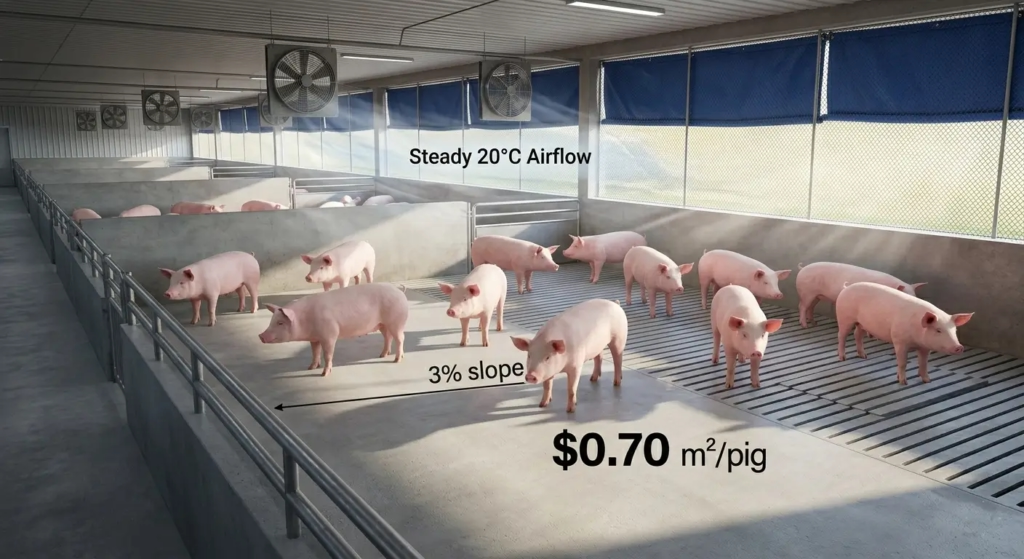
| Growers (25–60 kg) | 0.55–0.70 m² per pig |
| Finishers (60–110 kg) | 0.85–1.00 m² per pig |
| Dry/gestating sows | 1.80–2.25 m² per sow |
| Lactating sow + litter | 4.0–5.0 m² per farrowing crate |
| Boar | 7.5–10.0 m² per animal |
Temperature
Pigs are more temperature-sensitive than most farmers initially appreciate. They cannot sweat — their primary heat dissipation mechanism is wallowing in water or mud (not available in confinement) and respiratory panting at elevated temperatures. Their thermoneutral zone — the temperature range in which they are thermally comfortable and not diverting energy to thermoregulation — varies with age:
| Stage | Thermoneutral Zone |
|---|---|
| Newborn piglet (0–3 days) | 32–34°C |
| Piglet (1–3 weeks) | 28–32°C |
| Weanling (3–8 weeks) | 22–28°C |
| Grower | 18–22°C |
| Finisher | 16–20°C |
| Sow (non-lactating) | 15–22°C |
| Lactating sow | 15–20°C |
The practical implication for West African piggeries: At ambient temperatures of 28–35°C — routine in lowland Nigeria and Cameroon during the dry season — finisher pigs and sows are significantly above their thermoneutral zone. Heat stress suppresses voluntary feed intake (1.8% per degree Celsius above the thermoneutral zone), reduces growth rate, and in sows, reduces conception rate and litter size. Ventilation design, cooling systems, and building orientation are not comfort features — they are production infrastructure.
Health Management
A pig that is spending metabolic energy fighting an infection is a pig not spending that energy growing or reproducing. The impact of subclinical disease — infections that do not produce obvious clinical signs but maintain the immune system in a state of chronic activation — on feed conversion efficiency and growth rate is often larger than the impact of the disease event itself.
The three most important health management practices in any piggery:
Vaccination: Porcine Circovirus Type 2 (PCV2), Mycoplasma hyopneumoniae (enzootic pneumonia), Erysipelas, Parvovirus, and Leptospira (for sow reproductive performance) are the core vaccination targets in most West African commercial pig operations. Newcastle disease vaccination does not apply to pigs, but it is a reminder that vaccination programs are species-specific and must be designed for the specific pathogens present in the local production environment.
Biosecurity: The physical and procedural barriers that prevent new pathogens from entering the herd and existing pathogens from spreading between production stages. Isolation of newly purchased animals for 21–28 days before introduction to the herd. Footbaths at the house entry. Dedicated clothing for production areas. Restriction of visitor access to production buildings.
Hygiene and all-in/all-out management: Completely emptying, cleaning, disinfecting, and resting a building between groups of pigs breaks the pathogen cycle that accumulates over continuous occupation. A building that is never emptied provides continuous exposure of young, immunologically naive animals to the cumulative pathogen load built up by older animals — a guaranteed recipe for elevated disease pressure.
What Makes a Piggery Profitable?
Piggery profitability is determined by the relationship between three variables: pigs produced per sow per year, feed cost per kilogram of pork produced, and the price received per kilogram of pork sold.
Pigs Produced per Sow per Year (PSY)
PSY is the single most important productivity metric in sow-based pig production. It integrates farrowing rate, litter size, piglet mortality, weaning rate, and farrowing interval into one number that describes how productively each sow is using her reproductive capacity.
PSY calculation: PSY = Farrowings per sow per year × Pigs weaned per litter
PSY benchmarks:
| PSY Level | Classification | What It Typically Indicates |
|---|---|---|
| Below 16 | Poor | Reproductive disease, poor nutrition, inadequate management |
| 16–20 | Average | Acceptable commercial performance |
| 20–24 | Good | Well-managed commercial operation |
| 24–28 | Excellent | High-performing commercial genetics with precise management |
| Above 28 | Elite | Top-tier commercial genetics in optimized conditions |
A difference of 4 PSY — between a 20-PSY and a 24-PSY operation at 20 sows — is 80 additional pigs per year. At 90 kg slaughter weight and XAF 1,500 (USD 2.50) per kg live, that is XAF 10,800,000 (USD 18,000) in additional annual revenue from the same sow herd, the same land, and largely the same fixed costs.
Feed Conversion Ratio (FCR)
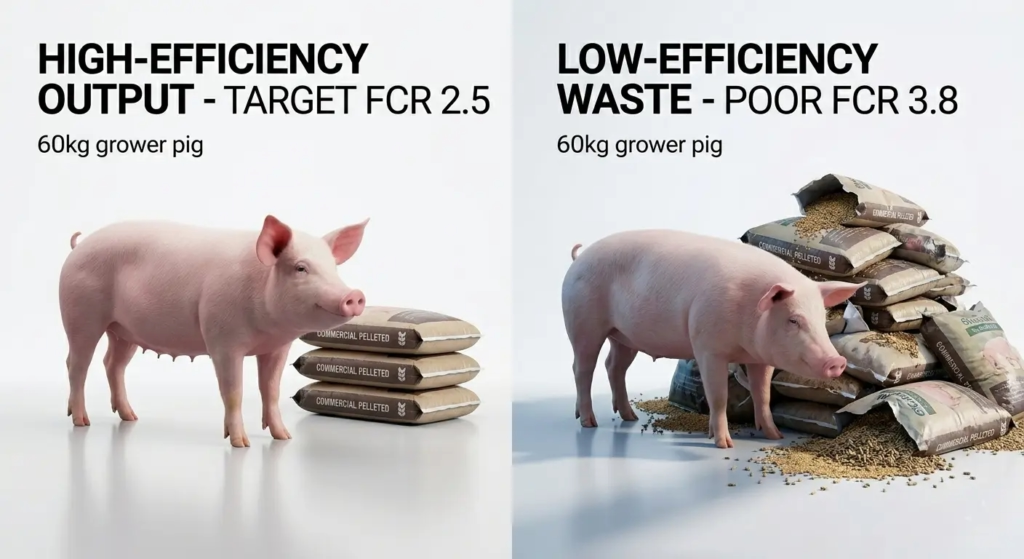
Feed conversion ratio measures how many kilograms of feed are required to produce one kilogram of live weight gain. Feed is 60–70% of pig production cost, so FCR is the most direct efficiency metric for cost management.
FCR benchmarks by production stage:
| Stage | Target FCR | Poor FCR |
|---|---|---|
| Weanling (7–25 kg) | 1.4–1.7 | Above 2.0 |
| Grower (25–60 kg) | 2.2–2.5 | Above 3.0 |
| Finisher (60–110 kg) | 2.7–3.2 | Above 3.8 |
| Whole life (7–110 kg) | 2.4–2.8 | Above 3.5 |
The cost of a poor FCR: At a commercial operation growing 500 pigs per year from 25 kg to 100 kg (75 kg weight gain), the feed cost difference between a 2.6 FCR and a 3.2 FCR:
- At FCR 2.6: 500 × 75 kg × 2.6 = 97,500 kg feed
- At FCR 3.2: 500 × 75 kg × 3.2 = 120,000 kg feed
- Additional feed at 3.2 FCR: 22,500 kg × XAF 300/kg = XAF 6,750,000 (USD 11,250) additional cost per year
Pork Price and Market Access
The third variable is the price received per kilogram of pork — and this is where most West African piggeries leave the most money on the table. The difference between selling live pigs at the farm gate to a middleman (XAF 1,200–1,400/kg live weight / USD 2.00–2.33/kg) and supplying a hotel or supermarket with processed pork cuts (XAF 3,000–5,000/kg / USD 5.00–8.33/kg) is 200–300% on the same kilogram of pork. That price difference is not captured by producing better pigs — it is captured by marketing them differently.
Is a Piggery a Good Business?
A piggery is a good business under specific conditions:
It is a good business when:
- Local pork demand is growing, and supply is insufficient (true in most West African cities)
- Feed grain prices are moderate relative to pork prices (the feed cost to pork price ratio should be below 4:1 for profitable production)
- The operator has the management skills and commitment to maintain PSY above 20 and FCR below 3.0
- Biosecurity infrastructure prevents the disease events that can collapse an entire year’s production in weeks
- Market access goes beyond a single middleman buyer — direct hotel, restaurant, or retail relationships capture premium pricing
It is a poor business when:
- Feed prices spike above 50% of their normal level without corresponding pork price increases (common during import disruptions of maize and soybean meal)
- Disease is introduced from purchased animals without a quarantine period and spreads through the herd
- Capital is insufficient to complete the infrastructure required — a half-built piggery that lacks an isolation facility, proper waste management, or adequate pen space creates problems that compound over time
- The operation is situated too close to residential areas, creating neighbor conflict and potential regulatory closure
Summary
A piggery is a managed pig production system — and the word “managed” is the operative term. Pigs are productive animals under good conditions: fast-growing, feed-efficient, highly reproductive, and producing a high-value protein that is in growing demand across West and Central Africa. They are expensive and frustrating animals kept in poor conditions: disease-susceptible when their housing compromises respiratory health, reproductively underperforming when sow nutrition is inadequate, and slow-growing when overcrowded.
The piggery that works is the one where the housing provides the thermal environment, space, and ventilation that the pig’s biology requires; where the feed program matches the nutritional specifications of the breed at each production stage; where the health management system prevents disease rather than responding to it; and where the marketing strategy captures the premium available for quality pork in an undersupplied market.
That combination — housing, nutrition, health, and market — is what a piggery is, at the level that determines whether it generates income or consumes it.
