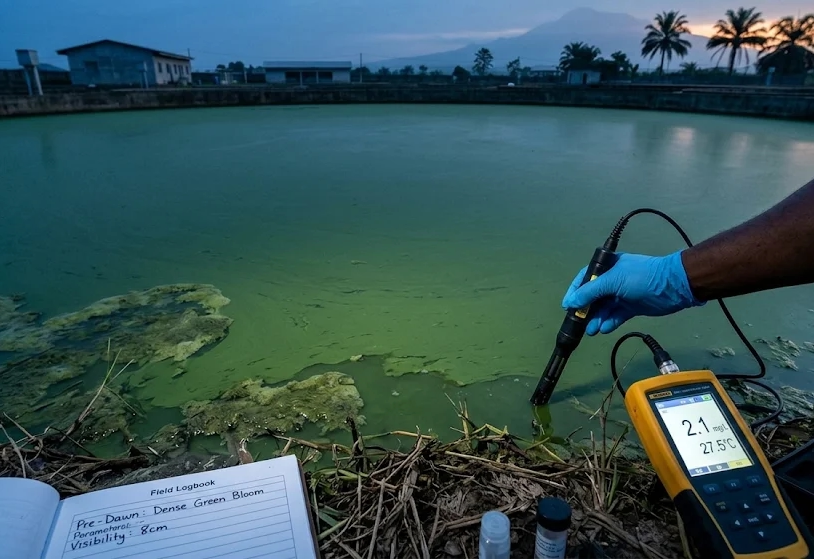
Sudden death in catfish fingerlings can cause significant losses in African catfish farming. When apparently healthy fingerlings begin dying within a short period, farmers need to identify the underlying cause quickly to protect the remaining stock.
Sudden mortality is not always caused by an infectious disease. Low dissolved oxygen, ammonia or nitrite accumulation, abrupt changes in water conditions, handling stress, and acute infections can produce similar outcomes. Several factors may also occur together.
1. Common Causes of Sudden Death in Catfish Fingerlings
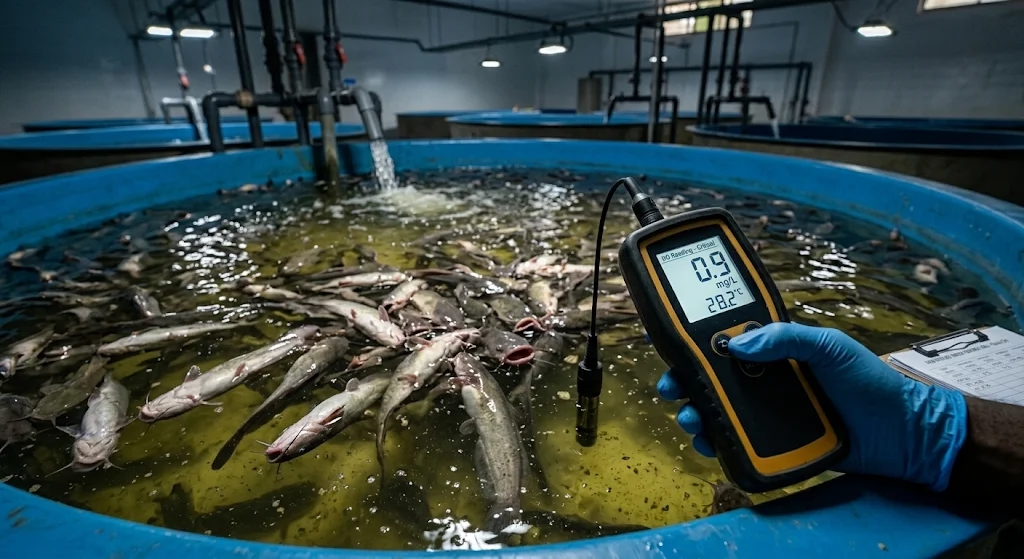
Low Dissolved Oxygen
Low dissolved oxygen is an urgent possibility when many fingerlings become distressed or die within a short period.
Potential contributing factors include:
- Inadequate aeration or water circulation.
- High stocking density.
- Accumulation of organic waste.
- Increased oxygen consumption by fish and microorganisms.
Warning signs: Fingerlings gasping at the surface, rapid gill movement, unusual gathering near water inflows, weakness, and sudden mortality.
Response: Check dissolved oxygen immediately and restore adequate aeration or circulation. Do not delay emergency oxygen management while investigating other possible causes.
Ammonia Poisoning
Ammonia can accumulate when fish waste, uneaten feed, and decomposing organic matter exceed the system’s capacity to process or remove them. Its toxicity is influenced by water chemistry, including pH and temperature.
Possible signs include reduced feeding, abnormal swimming, irritation, and respiratory distress. Severe exposure may result in rapid mortality.
Response: Test ammonia and review feeding, waste removal, stocking density, and water management. Choose corrective measures based on the measured conditions and avoid abrupt changes that could stress the fish further.
Nitrite Poisoning
Nitrite can accumulate when biological waste-processing systems are not functioning effectively or when the system’s capacity is exceeded. Exposure can interfere with oxygen transport in fish.
Fingerlings may become weak, show respiratory distress or die, but visible symptoms alone cannot confirm nitrite poisoning.
Response: Test nitrite, assess the biological filtration or waste-processing system where applicable, and seek technical guidance on correcting the problem.
Sudden Changes in Water Conditions
Rapid changes in temperature, pH, or other water characteristics can stress fingerlings and, in severe cases, contribute to mortality.
Possible causes include:
- Introducing replacement water with substantially different characteristics.
- Transferring fish between systems without suitable acclimation.
- Sudden changes in water supply.
- Unintended chemical contamination.
Response: Compare current water conditions with recent records and investigate any recent water replacement, transfer or treatment.
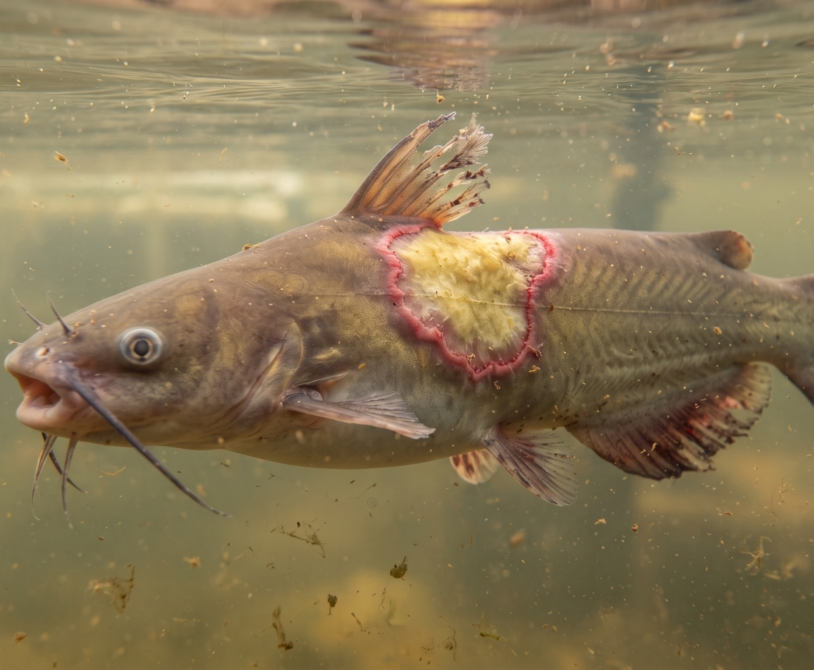
Infectious Diseases
Bacterial, fungal, and parasitic conditions may cause mortality, especially when fish are already stressed by poor water quality or handling.
Possible warning signs include skin lesions, damaged fins, abnormal gill appearance, excessive mucus, unusual swimming and reduced feeding before death.
However, some infections produce few obvious external signs. A fish-health professional may need to examine affected fingerlings or conduct laboratory testing to establish the cause.
Handling and Transport Stress
Sudden deaths may follow grading, stocking, transportation, or transfer between tanks and ponds.
Possible contributing factors include physical injury, crowding during handling, inadequate oxygen during transport, and abrupt changes in water conditions.
Response: Review how the fish were handled and transported, inspect the new environment, and minimize further disturbance while assessing the problem.
Overfeeding and Organic Waste
Excess feed can decompose, increase oxygen demand, and contribute to ammonia accumulation. These effects can become serious when water circulation or waste removal is inadequate.
Response: Review feeding quantities, remove excess feed where practical, and assess oxygen and water-quality parameters.
2. How to Identify the Cause
When fingerlings die suddenly, a systematic investigation is more reliable than selecting a treatment based on symptoms alone.
| Observation | Possible causes to investigate |
|---|---|
| Many fish die within a short period | Oxygen depletion, toxic exposure, or acute disease |
| Fish gasp at the surface | Low oxygen or impaired gill function |
| Deaths follow a water change | Temperature, pH or other water-quality differences |
| Mortality follows transport or stocking | Handling stress, injury or environmental change |
| Fish show skin sores or damaged fins | Injury or possible infectious disease |
| Feeding decreases before deaths begin | Poor water quality, stress, feed problems or infection |
| Problems occur in one tank only | A localized equipment, water-quality or management problem |
| Several tanks are affected simultaneously | A shared water supply, system-wide problem or transmissible condition |
These observations help guide investigation but do not confirm a diagnosis.
3. What to Do Immediately When Fingerlings Die Suddenly
Follow these steps in order, adjusting them to the severity of the situation.
- Observe the remaining fish. Check breathing, swimming, feeding, and the distribution of affected fish.
- Check dissolved oxygen immediately. If oxygen depletion is suspected, restore adequate aeration without delay.
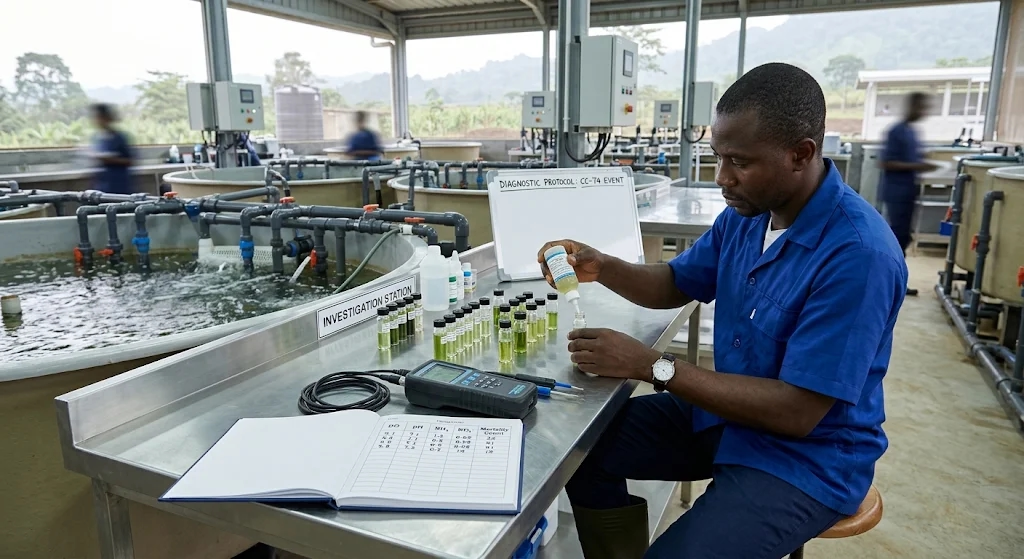
- Test the water. Measure ammonia, nitrite, pH, and temperature alongside dissolved oxygen.
- Inspect equipment and water supply. Check pumps, aerators, filters, inlets, and any recent interruptions.
- Remove dead fingerlings promptly. Dispose of them safely according to local guidance.
- Review recent changes. Record feeding, stocking, water replacement, transport, chemical use, and handling activities.
- Seek professional assistance. If mortality continues, affects multiple tanks, or has no clear explanation, contact an aquaculture specialist or fish-health laboratory.
Avoid applying several chemicals or medicines at once. Unnecessary treatment can worsen water conditions, stress the fish, and make diagnosis more difficult.
4. How to Prevent Sudden Mortality in Catfish Fingerlings
Monitor Water Quality
Test water according to the production system’s needs and maintain records of dissolved oxygen, ammonia, nitrite, pH, and temperature. Regular measurements can reveal deterioration before severe losses occur.
Maintain Adequate Aeration
Ensure aeration and water circulation can support the fish biomass and system conditions. Inspect equipment regularly and prepare for possible equipment failure where practical.
Manage Stocking Density
Avoid stocking more fingerlings than the system can support. Consider fish size, water flow, aeration, waste removal, and filtration capacity when determining stocking levels.
Control Feeding and Waste
Provide suitable feed in appropriate amounts. Remove excess feed where practical and maintain an effective waste-management routine.
Acclimate Fingerlings Carefully
When moving fish between systems, avoid abrupt differences in water temperature and other important conditions. Use handling and acclimation procedures appropriate for the fish and production system.
Practice Biosecurity
Quarantine new stocks where practical, clean equipment appropriately, and avoid transferring water or equipment between batches without suitable hygiene measures.
Keep Daily Records
Record mortality, feed intake, water-test results, stocking events and management changes. These records can help identify recurring problems and establish what happened before an outbreak.
5. When Is Laboratory Diagnosis Necessary?
Professional diagnosis is particularly important when:
- Deaths continue despite correcting obvious water-quality problems.
- Mortality is severe or affects several production units.
- Fish show unusual lesions or gill abnormalities.
- An infectious disease or parasite outbreak is suspected.
- The cause remains unclear after initial investigation.
Laboratory examination may help identify bacterial pathogens, parasites, or other disease processes. The results can support a more appropriate treatment and prevention plan.
Frequently Asked Questions
Why are my catfish fingerlings dying overnight?
Possible causes include oxygen depletion, harmful water-quality conditions, chemical contamination or acute disease. Check dissolved oxygen and water quality as soon as possible. The timing of deaths alone cannot identify the cause.
Can ammonia kill catfish fingerlings suddenly?
Yes. Severe ammonia exposure can cause serious harm and mortality. Test ammonia and consider pH and temperature when assessing the risk.
Should I change the water immediately when fingerlings start dying?
Not automatically. A water change may help in some circumstances, but unsuitable replacement water or abrupt changes can cause additional stress. Test the water, identify the likely problem, and choose a controlled corrective response.
Should I give antibiotics to fingerlings that are dying?
Not without a sound basis for suspecting a bacterial infection and appropriate professional guidance. Antibiotics will not correct low oxygen, ammonia accumulation, or other environmental causes.
How can I tell if the problem is disease or water quality?
Symptoms often overlap. Water testing, recent management records, and examination of affected fish help distinguish possible causes. Laboratory diagnosis may be necessary when the cause remains uncertain.
Conclusion
Sudden death in catfish fingerlings can result from oxygen depletion, ammonia or nitrite exposure, abrupt environmental changes, handling stress or infectious disease. The priority is to address immediate environmental emergencies, test the water, review recent management activities and investigate persistent mortality.
For African catfish farmers, consistent monitoring, proper feeding, effective aeration, suitable stocking density, and good biosecurity are essential for reducing avoidable losses.