Hy-Line International is one of the world’s three dominant commercial layer genetics companies alongside Hendrix Genetics (ISA Brown) and Lohmann Tierzucht. Its two primary commercial products — Hy-Line Brown and Hy-Line W-36 (Silver White) — represent fundamentally different genetic philosophies applied to the same commercial objective: the highest number of saleable eggs per hen housed over the longest practical laying cycle.
Hy-Line Brown competes directly with ISA Brown and Lohmann Brown Classic in the brown-egg commodity and premium segment. Hy-Line W-36 operates in the white-egg segment — a segment that is smaller but growing in urban Cameroonian, Nigerian, and Ghanaian markets where food processing companies, bakeries, and international hotel chains specifically require white-shelled eggs for product appearance standards.
Understanding the genetic potential of both Hy-Line strains — what they are capable of at their ceiling, what conditions allow that ceiling to be reached, and what market segments each serves — requires going beyond the breed management guide’s headline numbers and examining the biological architecture that produces them.
This article does that: it covers the genetics, performance benchmarks, nutritional architecture, heat stress biology, and management requirements of both Hy-Line strains, with specific reference to the West and Central African production context where these breeds are increasingly available through expanding hatchery networks.
Hy-Line Brown: The Brown-Egg Competitor
Genetic Background
Hy-Line Brown is a four-way cross of Rhode Island Red and White Plymouth Rock genetics, selected over multiple generations for commercial egg production efficiency. The selection pressure at Hy-Line International’s Iowa breeding center has historically emphasized:
- Hen-housed egg number (total eggs from day of housing to depopulation)
- Egg mass (total weight of eggs produced — integrating laying rate and egg size)
- Feed conversion per unit of egg mass
- Livability — the ability to survive under commercial density conditions without elevated mortality from stress-related causes
Hy-Line Brown’s genetic architecture produces a hen with a slightly smaller body frame than Lohmann Brown Classic (typically 1,550–1,700g at point of lay vs. 1,600–1,700g for Lohmann Brown) combined with high metabolic efficiency — more eggs per gram of feed consumed, but with narrower nutritional tolerance for deviation from the target.
Documented Performance Benchmarks (Hy-Line International Management Guide, Current)
| Performance Metric | Hy-Line Brown | Comparison: ISA Brown | Comparison: LBB Classic |
|---|---|---|---|
| Age at 50% production (days) | 140–148 | 140–150 | 140–150 |
| Peak production rate | 94–97% | 93–96% | 92–95% |
| Hen-housed egg production (72 weeks) | 310–325 | 305–320 | 300–315 |
| Hen-housed egg production (80 weeks) | 345–365 | 340–360 | 335–355 |
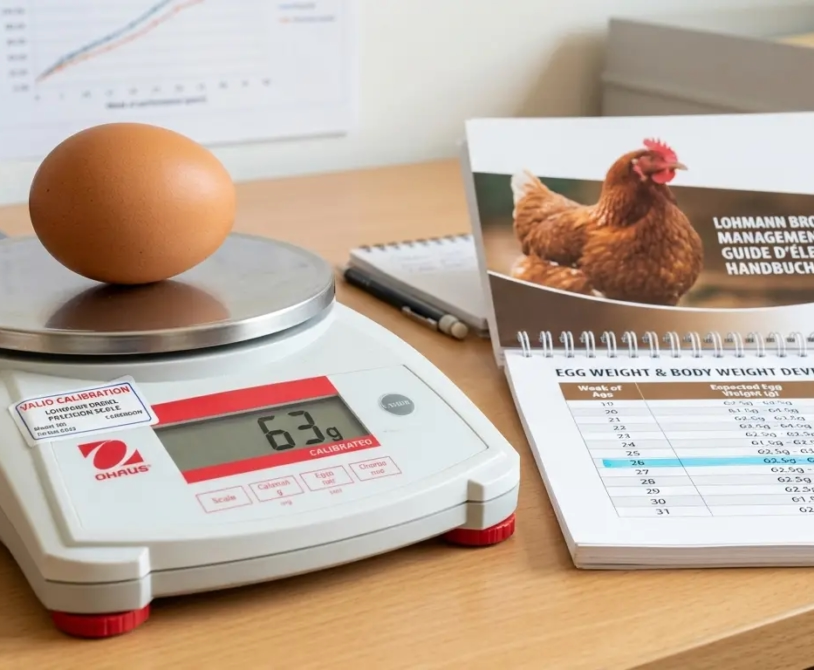
| Average egg weight (peak) | 62–64g | 62–65g | 63–66g |
| Feed intake (peak lay) | 108–115g/day | 110–118g/day | 112–120g/day |
| FCR (kg feed/kg egg mass, peak) | 1.95–2.05 | 2.05–2.15 | 2.00–2.10 |
| Livability (0–72 weeks) | 94–97% | 94–96% | 95–97% |
The most significant documented advantage of Hy-Line Brown over direct competitors is FCR. At 1.95–2.05 kg feed per kg egg mass at peak lay, Hy-Line Brown’s feed efficiency target is measurably better than both ISA Brown (2.05–2.15) and Lohmann Brown Classic (2.00–2.10) under optimal conditions. This difference reflects Hy-Line Brown’s lower daily feed intake (108–115g vs. 112–120g for Lohmann Brown) combined with equivalent or higher egg output.
The financial value of the FCR advantage: At a 1,000-bird farm in Cameroon, a FCR advantage of 0.08 kg feed per kg egg mass over a full 72-week cycle:
- Total egg mass produced: approximately 21,700 kg
- Feed saved: 21,700 × 0.08 = 1,736 kg
- Feed cost saved: 1,736 kg × XAF 350/kg (USD 0.58/kg) = XAF 607,600 (USD 1,013) per cycle
This is real money — approximately XAF 600,000 (USD 1,000) per 1,000-bird cycle — that represents a genuine competitive advantage when the breed reaches its genetic FCR potential under correct management.
The Requirement Side of Hy-Line Brown’s Efficiency Advantage
The FCR advantage comes with a corresponding requirement: Hy-Line Brown’s narrow daily feed intake (108–115g) means the ration must deliver higher nutrient density per gram than a breed with 120g intake. If the ration is deficient in energy, amino acids, calcium, or vitamins, the shortfall per bird per day is proportionally larger for Hy-Line Brown than for breeds with higher intake buffers.
Hy-Line Brown’s key nutritional requirements for optimal performance:
| Nutrient | Hy-Line Brown (Peak Lay) | Practical Implication |
|---|---|---|
| Metabolizable energy | 2,900–2,960 kcal/kg | Higher energy density than most local feed specifications; requires fat supplementation in tropical heat-reduced-intake conditions |
| Crude protein | 16.5–17.5% | Above standard 16% recommendation for most competitors |
| Lysine | 0.88–0.95% | Above standard — reflects higher egg output per unit feed |
| Methionine + Cystine | 0.74–0.80% | Standard range |
| Calcium | 4.0–4.2% | Standard range |
| Available phosphorus | 0.35–0.38% | Standard range |
The higher energy density requirement (2,900–2,960 kcal/kg vs. 2,800–2,850 kcal/kg for standard rations) is the most demanding specification for Cameroonian feed quality conditions. Locally sourced maize with variable moisture content and starch quality frequently delivers ME 5–8% below design specifications. For a breed requiring 2,950 kcal/kg, a 7% shortfall means the bird is receiving 2,744 kcal/kg — below the threshold that supports peak FCR and laying rate performance.
This is the critical Hy-Line Brown risk in Cameroon: The breed’s FCR advantage is real and documentable under laboratory conditions. Capturing it in a Cameroonian production environment requires feed quality management — specifically, laboratory verification of ingredient ME content and fat supplementation to close the energy gap — that is not yet standard practice at most commercial layer farms in the region.

Hy-Line W-36 (Silver White): The White-Egg Alternative
Genetic Background and Market Position
Hy-Line W-36 is a white-feathered, white-egg commercial layer derived from Single Comb White Leghorn genetics. The White Leghorn is the oldest and most extensively selected commercial egg production breed — its genetics have been refined for over 100 years specifically for maximum egg output, early sexual maturity, and minimum body weight for maximum feed conversion efficiency.
Hy-Line International’s W-36 product line represents decades of selection pressure applied to White Leghorn genetics for modern commercial performance. The current W-36 is a four-way cross that produces a bird significantly smaller in body frame than any commercial brown-egg breed — typically 1,300–1,450g at point of lay — with correspondingly lower daily feed intake (88–97g at peak lay) and the highest documented eggs-per-kg-of-feed ratio of any commercially available layer breed.
Why White Eggs? The Market Context
White-shelled eggs represent a minority of consumer preference in West African retail markets, where the dominant consumer association is that brown eggs are more natural, more nutritious (an association driven by yolk color rather than shell color in most cases), and of higher quality than white eggs.
However, specific institutional and industrial buyers specifically require white-shelled eggs:
- Bakeries and food processors: White egg liquid egg or dried egg products require white shells in some processing specifications; white shells are more visually neutral in product manufacturing contexts
- International hotel chains: Some brands standardize on white eggs for kitchen presentation consistency
- Export markets: Some European and Middle Eastern markets have a stronger consumer preference for white-shelled eggs than the West African domestic market
- Institutional catering with imported cooking traditions: Some institutional kitchens in Cameroon and Nigeria serving international clientele specifically request white eggs
The white-egg market in Cameroon is currently 5–8% of commercial production — small but specialized, with significantly less price competition than the brown-egg commodity market because fewer producers supply it.
White egg price premium in Cameroon (2026):
- Standard brown eggs: XAF 100–140 (USD 0.17–0.23) per egg (retail/wholesale blend)
- Premium white eggs (institutional channel): XAF 130–180 (USD 0.22–0.30) per egg
- Typical white egg premium above standard brown: XAF 20–40 (USD 0.03–0.07) per egg in specialty channels
This premium does not exist in all markets — open-air retail markets in most Cameroonian cities do not command white egg premiums and may actually discount white eggs relative to brown. The white egg premium exists specifically in institutional channels with international buyer specifications.
Hy-Line W-36 Performance Benchmarks
| Performance Metric | Hy-Line W-36 | Hy-Line Brown | ISA Brown |
|---|---|---|---|
| Age at 50% production (days) | 134–142 | 140–148 | 140–150 |
| Peak production rate | 95–98% | 94–97% | 93–96% |
| Hen-housed eggs (72 weeks) | 320–340 | 310–325 | 305–320 |
| Hen-housed eggs (80 weeks) | 360–385 | 345–365 | 340–360 |
| Average egg weight (peak) | 58–62g | 62–64g | 62–65g |
| Feed intake (peak lay) | 88–97g/day | 108–115g/day | 110–118g/day |
| FCR (kg feed/kg egg mass) | 1.85–1.95 | 1.95–2.05 | 2.05–2.15 |
| Body weight (point of lay) | 1,300–1,450g | 1,550–1,700g | 1,550–1,650g |
| Livability (0–72 weeks) | 93–96% | 94–97% | 94–96% |
Hy-Line W-36’s documented performance advantages are significant:
- Highest hen-housed egg count of any commercially available layer breed: 320–340 eggs at 72 weeks under optimal conditions
- Lowest feed intake per bird: 88–97g/day at peak vs. 108–118g/day for brown-egg breeds
- Best FCR of any commercial layer: 1.85–1.95 kg feed per kg egg mass
- Earliest sexual maturity: First egg 4–8 days earlier than Hy-Line Brown under equivalent management
The trade-off for these production advantages is smaller egg size (58–62g average vs. 62–66g for brown-egg breeds) and lower body weight at spent hen sale.
The Feed Cost Advantage of W-36 in Quantitative Terms
At a 1,000-bird farm in Cameroon:
Hy-Line W-36 vs. Hy-Line Brown daily feed comparison:
- W-36 daily feed: 1,000 × 92g average = 92 kg/day
- Hy-Line Brown daily feed: 1,000 × 111g average = 111 kg/day
- Daily feed difference: 19 kg/day
- Cost difference: 19 kg × XAF 350/kg (USD 0.58/kg) = XAF 6,650 (USD 11.08) per day
- Annual feed cost saving: XAF 6,650 × 365 = XAF 2,427,250 (USD 4,045) per year
The W-36’s annual feed cost saving of XAF 2.4 million (USD 4,000) relative to Hy-Line Brown is substantial — approximately 10–12% of total annual operating cost. This saving is partially offset by slightly lower egg size revenue (smaller eggs sell for marginally less per egg in some weight-graded channels), but the net economic advantage of the W-36 under correct nutritional management is significant.
Heat Stress Response: How Both Strains Perform in Tropical Climates
The Smaller Body Size Advantage of White-Egg Breeds Under Heat
This is the most important practical performance difference between white-egg and brown-egg breeds in tropical Cameroonian production conditions.
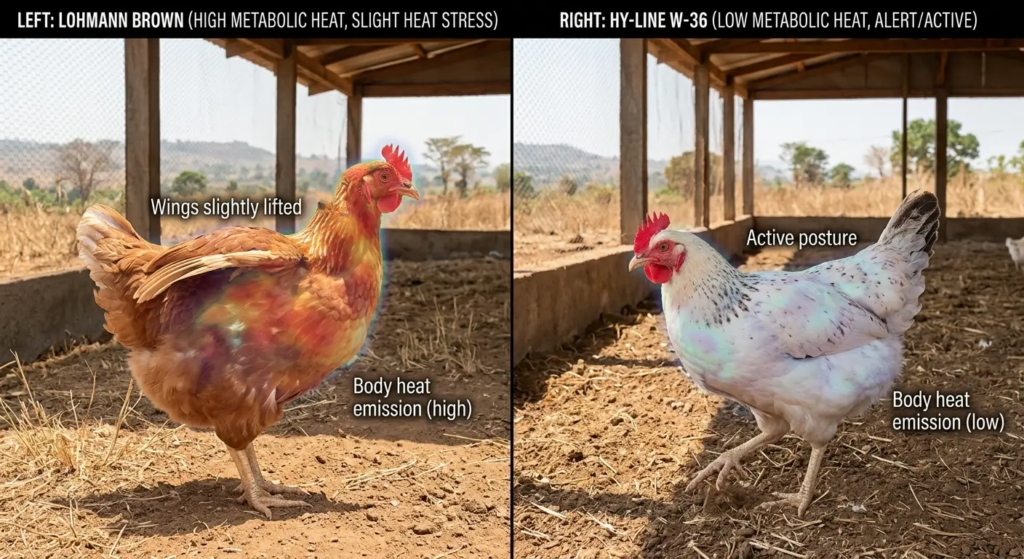
Heat stress in a laying hen is a thermodynamic problem — the bird generates metabolic heat that must be dissipated to the environment. Metabolic heat generation scales with body mass. A Hy-Line W-36 at 1,400g generates approximately 5.8 watts of metabolic heat continuously. A Lohmann Brown Classic at 1,900g generates approximately 7.8 watts. A house of 1,000 W-36 hens generates 5,800 watts of metabolic heat; the same house of 1,000 Lohmann Brown generates 7,800 watts — a 34% difference in heat load that the ventilation system must remove.
In a house with inadequate ventilation — typical of many open-sided houses in lowland Cameroon during peak dry season — the smaller heat load of W-36 means the house temperature climbs more slowly toward the critical threshold (above 32°C) and remains below it for more hours per day. The production consequences are real and measurable: W-36 maintains higher laying rates under sustained heat stress than equivalent-density brown-egg breed flocks in the same house.
The quantified heat stress advantage:
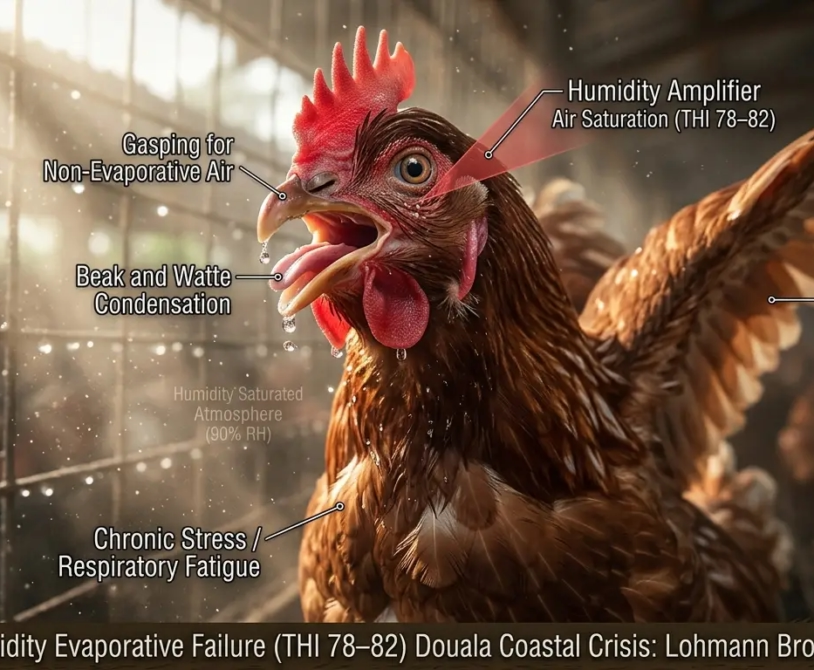
In a Douala peri-urban layer house during the harmattan season (ambient peaks reaching 34–36°C), a brown-egg breed flock reduces feed intake by approximately 18–22% below thermoneutral zone intake. A W-36 flock in the same house reduces intake by approximately 12–15%, because the smaller heat generation load means the thermoregulatory cost of eating is proportionally lower.
At 1,000 birds, the W-36 flock eating 88–97g at peak also has a lower heat increment of digestion — less metabolic heat from digesting food — compared to a brown breed eating 112–120g. This second-order advantage compounds the body size advantage.
Hy-Line Brown Under Heat: Where Its FCR Advantage Diminishes
Hy-Line Brown’s documented FCR advantage (1.95–2.05) assumes feed intake at or near the breed standard (108–115g/day). When heat stress reduces intake to 92–98g/day — the level reached at 33–35°C in an open-sided house — the nutrient shortfall per bird is proportionally larger than for a breed with standard 120g intake.
A Hy-Line Brown receiving 95g/day at 2,950 kcal/kg ME ration is receiving 2,802 kcal — below the 3,200 kcal target daily ME intake. The FCR advantage does not hold when the bird is energy-deficient. Under sustained dry-season heat stress in lowland Cameroon, Hy-Line Brown’s FCR advantage can narrow significantly or disappear relative to breeds with more heat-tolerant intake stability.
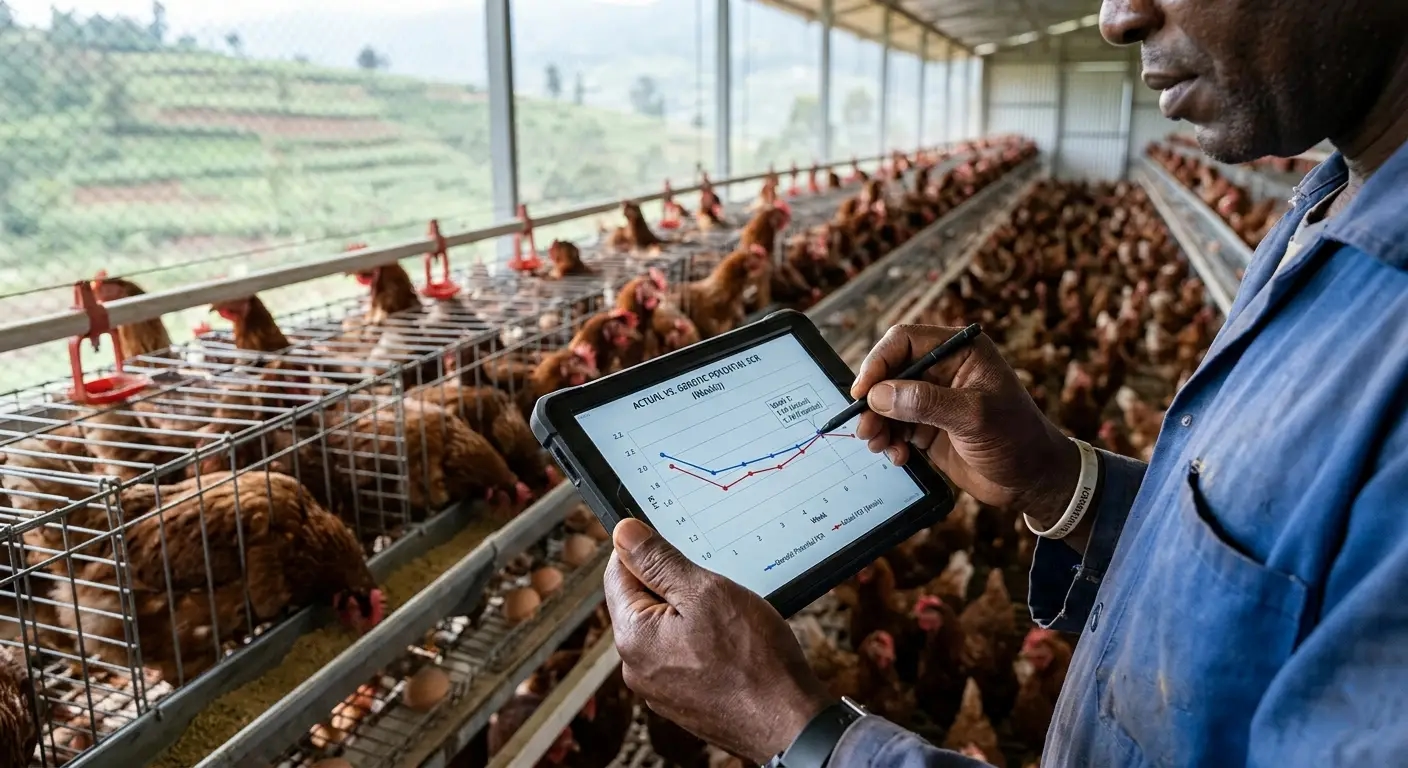
This is the critical practical lesson for breed selection in tropical West Africa: FCR advantages documented at 22°C controlled environment are partially diluted in a 35°C open-sided house. The true FCR advantage of each breed in a specific farm’s environment must be measured from that farm’s actual performance data — not assumed from breed management guide benchmarks.
Chick Availability in Cameroon and the Supply Chain Reality
Both Hy-Line Brown and Hy-Line W-36 have more limited hatchery supply chain presence in Cameroon than ISA Brown or Lohmann Brown. This is the most significant practical constraint on Hy-Line breed adoption in the current market:
Supply chain status (2026):
- ISA Brown: Available from multiple hatcheries in Cameroon with established parent flock operations. High supply reliability.
- Lohmann Brown Classic: Available from multiple hatcheries. High supply reliability.
- Hy-Line Brown: Available from 1–2 hatcheries in Cameroon. Supply reliability is improving, but not yet equivalent to ISA Brown or Lohmann Brown.
- Hy-Line W-36: Very limited availability in Cameroon — primarily from hatcheries importing day-old chicks from regional suppliers (Nigeria, Côte d’Ivoire) or from hatching eggs. Supply reliability is significantly lower than brown-egg breed alternatives.
The supply chain implication for breed selection: A breed that is theoretically superior cannot be practically selected if chick supply is unreliable. A farm planning a January placement that cannot confirm Hy-Line W-36 chick availability until December 15 carries operational risk that a farm with confirmed ISA Brown or Lohmann Brown availability from a local hatchery does not.
Until Hy-Line’s hatchery presence in Cameroon and the broader West African market deepens to the reliability level of its competitors, the practical recommendation for most Cameroonian layer farmers is to consider Hy-Line strains as an upgrade option for the second or third production cycle — when supply chain reliability can be verified through direct hatchery contact — rather than a first-cycle choice.
Who Should Consider Each Hy-Line Strain?
Hy-Line Brown: Best Fit Profiles
Operations that can capture the FCR advantage:
- Farms using laboratory-verified feed from a reputable mill with documented ME content above 2,900 kcal/kg
- Highland climate operations (Bafoussam, Bamenda, Dschang), where ambient temperatures stay below 30°C for the majority of the laying cycle
- Farms with precise FCR tracking (weekly calculation vs. breed standard) and the management discipline to investigate and correct deviations above 2.10
- Farms at Stage 3+ (1,000 birds minimum) where the feed cost saving of XAF 607,600 (USD 1,013) per cycle is financially significant relative to the farm’s capital base
Operations where Hy-Line Brown’s advantage may not be realized:
- Farms sourcing feed from local mills without laboratory ME verification
- Lowland/coastal operations are experiencing sustained dry-season heat stress
- First and second cycle farms are still developing management precision
- Farms where hatchery availability for Hy-Line Brown is not yet established with verified quality
Hy-Line W-36: Best Fit Profiles
Operations where W-36’s advantages are commercially captured:
- Farms supplying institutional channels (international hotels, food processors, export) that specifically require white-shelled eggs
- Farms in lowland tropical climate zones, where the smaller body size advantage under heat stress produces measurably more stable production through the dry season
- High-density operations (40+ kg/m² stocking), where the lower metabolic heat load per bird meaningfully reduces house temperature during peak heat periods
- Operations with confirmed Hy-Line W-36 chick supply from a verifiable hatchery source with parent flock health documentation
Operations where W-36 is not the right choice:
- Farms selling exclusively to open-air retail markets, where white eggs carry no premium or are discounted
- Farms without a specific institutional white-egg buyer relationship established before production begins
- Operations where the Hy-Line W-36 supply chain is unverified or unreliable
The Genetic Potential: What “Optimal” Actually Means
The breed management guides published by Hy-Line International specify performance benchmarks under “optimum management conditions.” A farm evaluating breed selection must understand exactly what “optimum” means in Hy-Line’s context — because it is more demanding than most commercial layer farms in Cameroon currently meet.
Optimum conditions as defined in Hy-Line’s management standards:
- Controlled environment with house temperature maintained at 18–24°C throughout the laying cycle (requires tunnel ventilation + evaporative cooling in tropical climates)
- Ration formulated and laboratory-analyzed with ME above 2,900 kcal/kg and amino acids meeting Hy-Line’s specific higher requirements
- Water quality below 100 CFU/mL bacterial count at the drinker — tested quarterly
- Vaccination program confirmed by post-vaccination serology (HI titer above 4 log₂ for NDV)
- Lighting program at 16 hours, verified by a lux meter, with a battery-backed timer
A 1,000-bird operation with open-sided natural ventilation, locally sourced feed without laboratory verification, an unverified vaccination program, and no water bacterial testing is not operating under “optimum management conditions.” The performance achievable under actual rather than optimum conditions will be below the headline benchmarks — for any breed, not just Hy-Line.
The honest framing for breed selection: the question is not “what are this breed’s optimum benchmarks?” It is “what performance will this breed deliver under the specific conditions of my farm?” That requires not just reading the breed management guide but honestly assessing how closely the farm’s actual conditions match the guide’s “optimum” assumptions.
Building Toward Hy-Line Performance Standards
For Cameroonian layer farmers interested in ultimately capturing Hy-Line Brown’s FCR advantage or Hy-Line W-36’s egg number potential, the path is not breed selection — it is management development toward the conditions that allow those breeds’ genetics to express fully.
The sequential development pathway:
Cycle 1–2: Establish with ISA Brown or Lohmann Brown Classic (stronger local supply chain, more forgiving of management imperfection). Develop the record-keeping, health monitoring, feed tracking, and market channel systems documented in this series.
Cycle 3: Introduce Hy-Line Brown into one house while maintaining ISA/Lohmann in other houses. Run a genuine side-by-side comparison under your specific farm conditions — same feed, same water, same management. Measure actual FCR and production rate difference. Let the data make the breed decision for future cycles.
Cycle 4+: If Hy-Line Brown’s FCR advantage is documented in your actual data, expand its share of the flock. If not — if your conditions are producing equivalent or better performance from Lohmann Brown — continue with the breed whose genetics match your management conditions.
For Hy-Line W-36: Establish a confirmed institutional white-egg buyer relationship with a committed volume and price before stocking W-36. Source chicks from a verifiable hatchery with parent flock health documentation. Run W-36 in one house initially with a parallel brown-egg house for revenue security while the white-egg market relationship is validated.
Summary
Hy-Line Brown and Hy-Line W-36 represent genuinely superior genetics — documented FCR and egg number advantages over direct competitors that, under conditions where those advantages are fully expressed, deliver measurable financial benefit to the farms that operate them.
Hy-Line Brown’s primary advantage is FCR efficiency — XAF 607,600 (USD 1,013) per 1,000-bird cycle in feed cost savings relative to ISA Brown, and XAF 350,000 (USD 583) relative to Lohmann Brown Classic, when both breeds are performing at genetic potential. That advantage is most fully realized in highland climate operations with verified high-quality feed.
Hy-Line W-36’s advantages are exceptional egg number, lowest feed cost per egg produced, and the highest heat-stress production stability of any commercial layer breed — attributes that are most commercially valuable when the white-egg market channel is established, and the lowland tropical climate is the operating environment.
Neither breed’s advantage is automatic. Both require more precise management, higher-quality feed, and more reliable supply chain access than their brown-egg competitors, conditions that are attainable but not yet standard across the Cameroonian commercial layer sector.
The genetic potential is real. The pathway to realizing it is management development, not breed selection alone.