A commercial layer hen did not evolve in a tropical climate. The genetic ancestors of every modern commercial layer breed — Rhode Island Red, White Leghorn, Plymouth Rock, Sussex — were developed in temperate regions of the United States, United Kingdom, and Northern Europe, where ambient temperatures stay below 25°C for the majority of the year and humidity rarely combines with heat to create the thermal load that characterizes tropical West African production conditions.
This matters because the genetic selection that produced today’s commercial layer breeds — 70 years of intensive selection for egg output, feed conversion efficiency, and early sexual maturity — was conducted in environments where heat tolerance was not a selection criterion. The result is a population of commercial layer breeds that are extraordinarily efficient in temperate conditions and progressively less so as ambient temperature rises above their thermoneutral zone.
Heat tolerance is therefore not a binary trait in modern commercial layers — it is not that some breeds are heat-tolerant and others are not. It is a spectrum of physiological and behavioral responses to thermal challenge, where different breeds show different rates of performance decline as ambient temperature rises, different points at which decline accelerates, and different capacities to maintain physiological function under sustained high-temperature and high-humidity conditions.
Understanding where each commercial breed sits on that spectrum, and what physiological mechanisms determine its position, is the information layer farmers in West and Central Africa need to make breed selection decisions that match breed capacity to production environment — not just in temperate-climate research station results but in the actual thermal conditions their flocks will experience 365 days a year.
The Physiology of Heat Stress in Laying Hens
Before comparing breed responses, the physiological mechanisms of heat stress must be established — because breed differences in heat tolerance are differences in how effectively each breed’s physiology manages these mechanisms, not differences in whether the mechanisms operate.
The Thermoregulatory Cascade
A laying hen maintains her core body temperature at approximately 41.5°C through a balance of heat production and heat dissipation. Metabolic heat is generated continuously from digestion, muscular activity, egg formation, and basic cellular function. Under thermoneutral conditions (18–24°C), the hen dissipates this heat passively through radiation and convection from her skin, comb, and wattles.
As ambient temperature rises above the upper critical temperature (UCT — approximately 28°C in laying hens under commercial conditions), passive dissipation becomes insufficient. The hen activates active thermoregulatory responses in a progressive cascade:
28–30°C: Increased respiratory rate (begins panting), peripheral vasodilation, behavioral feed intake reduction begins, water intake increases
30–32°C: Active panting (respiratory rate rising toward 100 breaths/minute), feed intake reduced 8–12%, blood redistributed from visceral organs to peripheral circulation
32–35°C: Panting rate 120–180 breaths/minute, feed intake reduced 15–20%, respiratory alkalosis developing from CO₂ loss, egg production declining, shell quality deteriorating from bicarbonate depletion
Above 35°C: Severe panting (150–250 breaths/minute), feed intake reduced 20–30%, electrolyte imbalance worsening, laying rate significantly suppressed, mortality risk rising
Above 39°C: Heat exhaustion, severe mortality risk, cessation of normal physiological function
The Humidity Amplifier
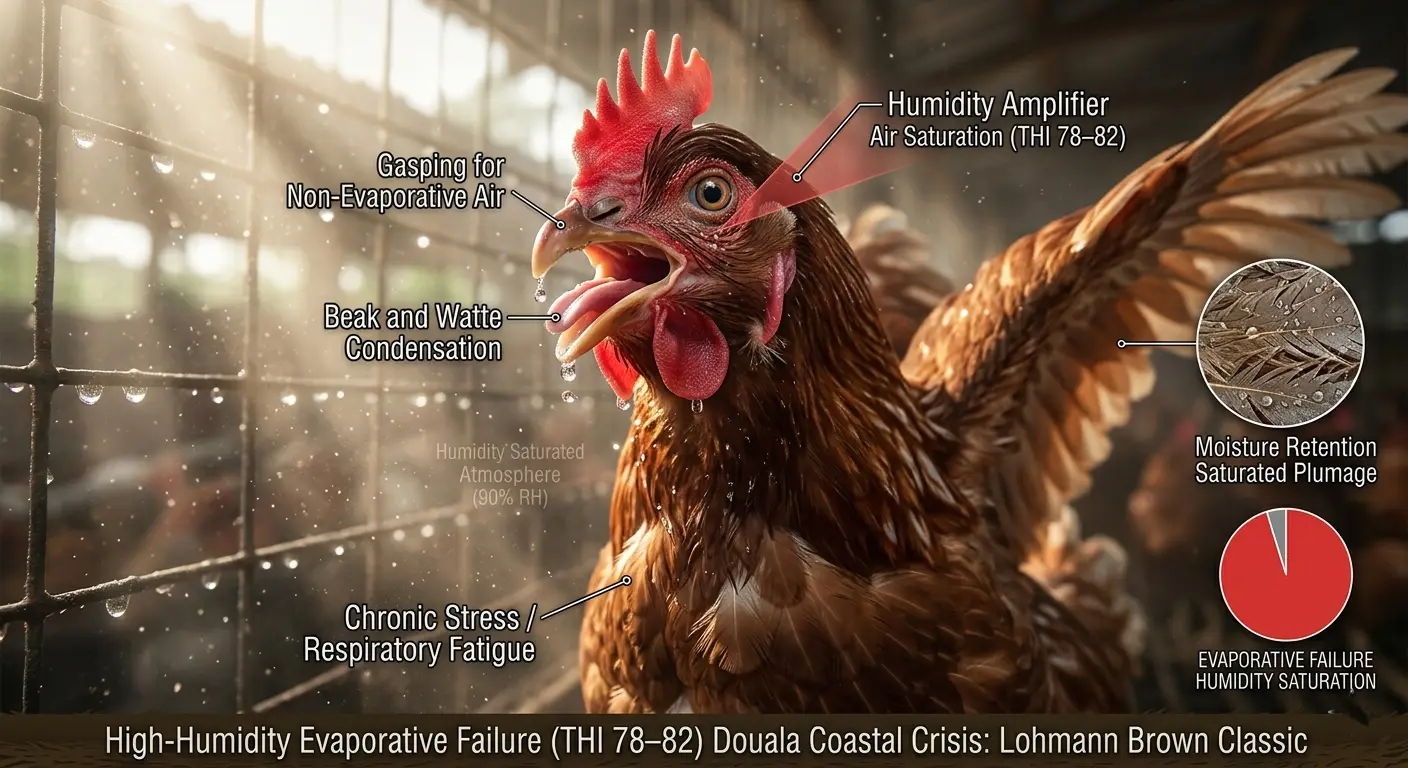
High humidity amplifies the thermal stress at any given temperature because it reduces the efficiency of evaporative cooling. Panting works by evaporating water from the respiratory tract, which removes latent heat. When relative humidity is 80–90% — the condition during rainy seasons in coastal Cameroon, southern Nigeria, and much of the Gulf of Guinea zone — the air is near saturation and cannot absorb significantly more water vapor. Panting produces minimal evaporative cooling. The hen experiences equivalent stress at 30°C and 90% RH as at 34°C and 50% RH.
The Temperature-Humidity Index (THI): A combined index used in livestock management to characterize the combined thermal challenge of temperature and humidity:
THI = (1.8 × Temperature °C + 32) − [(0.55 − 0.0055 × RH%) × (1.8 × Temperature °C − 26)]
| THI Value | Thermal Stress Level | Production Impact |
|---|---|---|
| Below 70 | None | Minimal impact on production |
| 70–74 | Mild | Feed intake begins declining; egg weight may decrease slightly |
| 74–78 | Moderate | 5–10% laying rate decline; FCR worsens; shell quality deteriorates |
| 78–82 | Severe | 10–20% laying rate decline; significant shell quality failure; mortality risk |
| Above 82 | Emergency | Above 20% laying rate decline; high mortality risk; physiological crisis |
In Douala and coastal Cameroon during the rainy season: temperatures of 28–30°C combined with humidity of 85–90% produce THI values of 78–82 — severe stress — even though the air temperature alone would suggest only mild thermal challenge. In Yaoundé and highland zones: temperatures of 22–26°C with lower humidity produce THI values of 65–70 — minimal to no thermal stress.
This THI framework is the basis for understanding why highland and lowland breeds experience fundamentally different thermal environments despite being in the same country — and why breed selection recommendations differ between these zones.
How Breed Genetics Influence Heat Tolerance
The Body Size Relationship
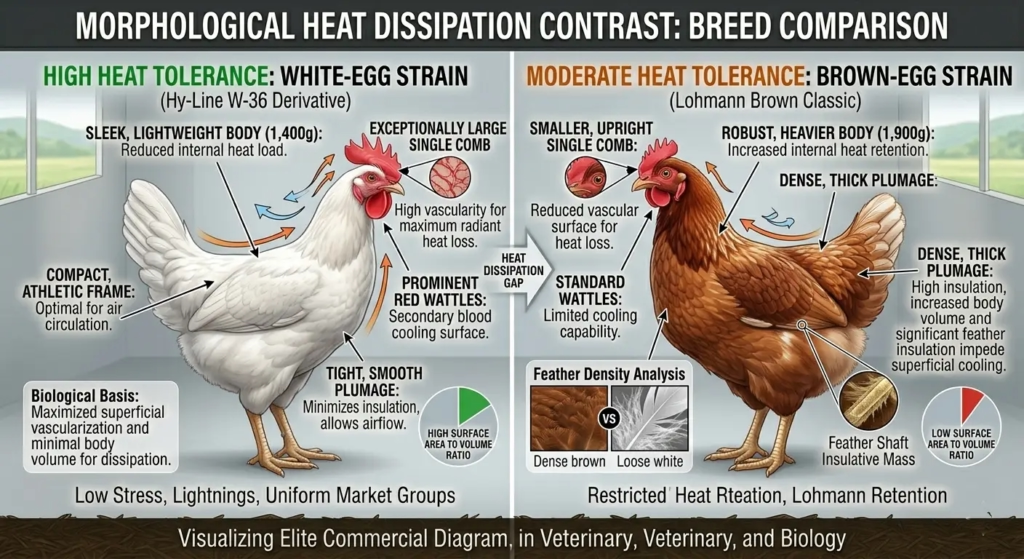
The most consistent genetic factor associated with heat tolerance in poultry is body size. Smaller-bodied birds generate less metabolic heat per bird and have a more favorable surface-area-to-volume ratio for heat dissipation. This is why white-egg breeds (White Leghorn derivatives — 1,300–1,500g at point of lay) are consistently more heat-tolerant than brown-egg breeds (1,600–2,100g at point of lay) under equivalent thermal challenge.
The metabolic heat generation comparison:
Metabolic heat production scales approximately with metabolic body weight (live weight^0.75):
- Hy-Line W-36 at 1,400g: 1,400^0.75 = 219 metabolic weight units
- Lohmann Brown Classic at 1,900g: 1,900^0.75 = 280 metabolic weight units
- Ratio: W-36 generates approximately 78% of the metabolic heat of Lohmann Brown Classic per bird
In a 1,000-bird house, the difference is:
- W-36 house: 219,000 metabolic weight units of heat generation
- Lohmann Brown house: 280,000 metabolic weight units
- The Lohmann Brown house generates approximately 28% more metabolic heat
That 28% difference in house heat load has direct ventilation capacity implications. A ventilation system designed to maintain 30°C in a W-36 flock will maintain 32°C in an equivalent Lohmann Brown flock — a 2°C difference that translates to an additional 6% feed intake reduction and approximately 3% additional laying rate decline under heat stress conditions.
The Comb Size Relationship
Comb size and vascularity determine the hen’s capacity for non-evaporative heat dissipation. The comb is a highly vascularized organ — blood flows through the comb at rates that can dissipate significant metabolic heat through radiation and convection. Large combs (single comb, large blade) dissipate more heat than small combs (rose comb, pea comb, small blade single comb).
Commercial brown-egg breeds (Rhode Island Red heritage) generally have medium-large single combs with good vascularization — adequate for moderate heat loads. Commercial white-egg breeds (White Leghorn heritage) have characteristically large, flopping single combs with exceptional heat dissipation capacity.
Rose comb vs. single comb under heat: Rose comb breeds (some heritage and dual-purpose breeds) show measurably higher heat stress at equivalent temperatures because the reduced comb surface area limits non-evaporative heat dissipation. This is not a factor for the major commercial layer breeds, all of which have single combs, but it is relevant when evaluating dual-purpose or local breed options.
The Feather Coverage Relationship
Naked neck (Turken) genetics — where a gene mutation reduces feather coverage on the neck and breast — improves heat tolerance by exposing more skin surface for radiative heat dissipation. Naked neck lines crossed with commercial layer breeds have been studied extensively in tropical poultry research as a route to improving heat tolerance without sacrificing production genetics.
Current commercial layer breeds do not incorporate naked neck genetics — it is primarily a research and development topic rather than a commercially available trait in mainstream commercial layers. However, some smallholder and dual-purpose operations in West Africa incorporate naked neck crosses that show heat tolerance advantages, though at reduced production efficiency compared to fully feathered commercial lines.
The Genetic Selection for Heat Tolerance in Commercial Breeds
All three major genetics companies (Hendrix Genetics, Lohmann Tierzucht, Hy-Line International) have selection programs that include performance data from tropical production environments. Flocks in Brazil, India, Southeast Asia, and sub-Saharan Africa contribute to selection indexes that give weight to performance under heat stress alongside production metrics.
The result is that contemporary commercial layer breeds perform measurably better under tropical heat conditions than the equivalent breeds of 20–30 years ago — not because heat tolerance per se has become a primary selection criterion, but because flocks performing in tropical environments contribute data to selection decisions, and genes associated with heat-resilient production are being selected alongside the primary egg production and FCR traits.
This genetic improvement in heat performance is real but incremental. The performance gap between thermoneutral and heat-stressed conditions is smaller in 2026 commercial genetics than in 1996 genetics — but it has not closed.
Breed-by-Breed Heat Tolerance Comparison in Tropical Conditions
Hy-Line W-36 (White-Egg Leghorn Derivative)
Heat tolerance rating: Highest of commercial layer breeds
Physiological basis:
- Smallest body weight (1,300–1,450g): lowest metabolic heat generation per bird
- Largest comb relative to body size: maximum non-evaporative heat dissipation capacity
- Lowest daily feed intake (88–97g): lowest heat increment of digestion
- Most favorable surface-area-to-volume ratio for radiative cooling
Documented performance under heat stress conditions (35°C ambient):
- Feed intake reduction: 12–15% below thermoneutral intake (vs. 18–22% for brown-egg breeds)
- Laying rate reduction: 5–8% below thermoneutral rate (vs. 10–15% for brown-egg breeds)
- Shell quality maintenance: better than brown-egg breeds at equivalent temperature, reflecting lower respiratory alkalosis from reduced panting intensity
The practical implication for lowland Cameroon: Hy-Line W-36 in a properly managed open-sided house in Douala during peak dry season will maintain a THI of 78–82 at lower production loss than any brown-egg breed in the same house, ventilated by the same system, under the same management.
The trade-off: W-36’s smaller eggs (58–62g average) and white shell — which carries no premium in most Cameroonian retail markets — partially offset the production volume advantage. The heat tolerance advantage is most economically valuable when paired with an institutional white-egg buyer relationship.
Hy-Line Brown
Heat tolerance rating: Moderate-to-good for a brown-egg breed
Hy-Line Brown’s lower daily feed intake (108–115g vs. 112–120g for Lohmann Brown) reduces its heat increment of digestion compared to heavier-eating brown-egg alternatives. Its body weight (1,550–1,700g at point of lay) is at the lower end of the commercial brown-egg breed range.
Documented performance comparison at 33°C:
- Feed intake reduction: 16–19% below thermoneutral
- Laying rate reduction: 8–12% below thermoneutral
- FCR worsening: +0.18–0.25 above thermoneutral FCR
Hy-Line Brown’s heat response is marginally better than ISA Brown and Lohmann Brown Classic under comparable conditions — a reflection of its lower feed intake and slightly smaller body frame. The difference is measurable in controlled research settings but small in commercial practice.
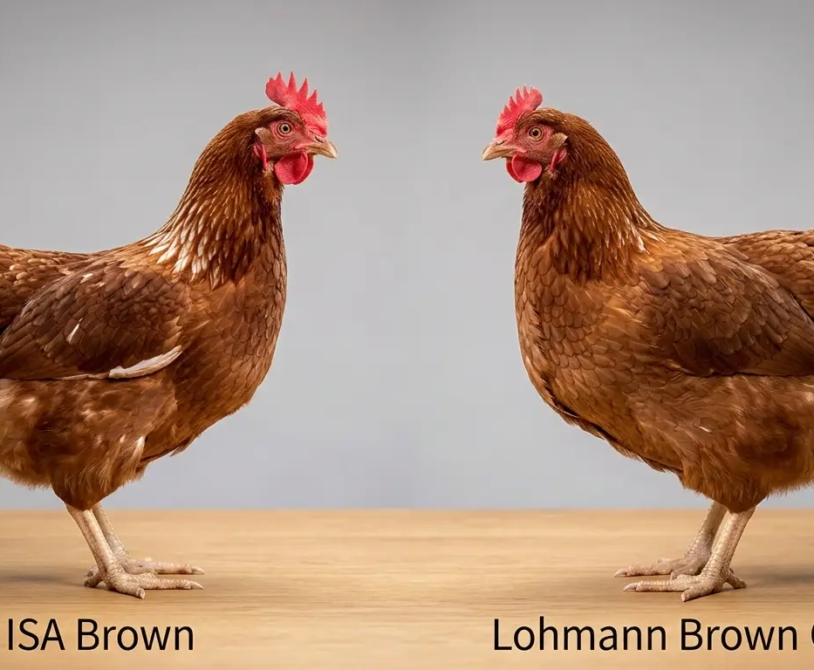
ISA Brown
Heat tolerance rating: Moderate
ISA Brown’s heat response reflects its body weight (1,550–1,650g) and daily feed intake (110–118g) — in the middle of the commercial brown-egg breed range. Neither particularly heat-sensitive nor particularly heat-resilient.
Performance at 33°C:
- Feed intake reduction: 17–21% below thermoneutral
- Laying rate reduction: 9–13% below thermoneutral
- Shell quality: moderate decline, driven by respiratory alkalosis
In highland Cameroonian conditions (THI below 72 for most of the year), ISA Brown’s heat response is minimally relevant — the temperatures that produce significant thermal challenge are rarely sustained. In lowland coastal conditions, the heat response is a meaningful production factor.
Lohmann Brown Classic
Heat tolerance rating: Moderate
Lohmann Brown Classic’s higher body weight (1,600–1,700g at point of lay) and higher daily feed intake (112–120g) produce a marginally greater metabolic heat load per bird than ISA Brown or Hy-Line Brown. Under equivalent heat conditions, Lohmann Brown Classic’s larger body frame also has a less favorable surface-area-to-volume ratio for radiative heat dissipation.
Performance at 33°C:
- Feed intake reduction: 18–22% below thermoneutral
- Laying rate reduction: 10–14% below thermoneutral
- Shell quality: moderate-to-significant decline
The counterbalancing factor: Lohmann Brown Classic’s higher body weight provides greater metabolic reserves — the bird has more stored nutrients to draw on during periods of reduced voluntary intake. This means that while it experiences more heat stress per degree of temperature rise, it is also more resilient to the consequences of that stress (body condition loss, bone reserve depletion) over extended heat events.
The balanced assessment for Cameroon: Lohmann Brown Classic’s higher metabolic reserve from greater body weight makes it more resilient to the physiological consequences of heat stress (reduced shell quality from calcium deficit, body condition loss from energy deficit) even though it experiences more heat stress per bird than lighter breeds. In practice, the two effects partially cancel — leaving Lohmann Brown Classic with comparable overall heat-stress production outcomes to ISA Brown under typical Cameroonian conditions.
Lohmann Brown Extra
Heat tolerance rating: Moderate-to-challenging
Lohmann Brown Extra’s higher production target (additional 10–15 eggs per cycle vs. Classic) is achieved partly through higher metabolic intensity — faster follicular development, more frequent ovulation cycles. This higher metabolic intensity generates more heat per unit time than the Classic line.
In thermoneutral conditions, this metabolic intensity is an asset (more eggs). In heat-stressed conditions, it is a liability — the bird is generating more heat at the same time that heat dissipation is most constrained. Lohmann Brown Extra is best suited to highland climate zones in Cameroon (Bafoussam, Bamenda, Dschang) where the thermal environment allows its metabolic intensity to express as production rather than heat burden.
Local and Dual-Purpose Breeds
The Cameroon local ecotype chicken (village chicken / poulet bicyclette) has developed centuries of genetic adaptation to the West African tropical environment. This adaptation includes:
- Smaller body frame: lower metabolic heat generation
- Sparse feathering in many local lines: increased radiative heat dissipation
- Behavioral adaptation: seeking shade, limiting activity during peak heat hours
- Physiological adaptation: some evidence of a higher upper critical temperature threshold compared to commercial breeds
These adaptations explain why village chickens survive and reproduce in conditions that cause significant mortality in commercial layers. They do not, however, produce eggs at commercial rates — the adaptation to heat tolerance came at the cost of selection for egg production that commercial breeds carry.
IRAD-developed improved local crosses (local ecotype × Sussex or Rhode Island Red) represent an attempt to capture both the heat tolerance of the local ecotype and the improved production efficiency of commercial genetics. Results are variable and depend heavily on the specific cross and the generation of crossing — first-generation crosses show heterosis that lifts production above either parent; subsequent generations become unpredictable without rigorous selection.
Practical Breed Selection for Thermal Zones in Cameroon
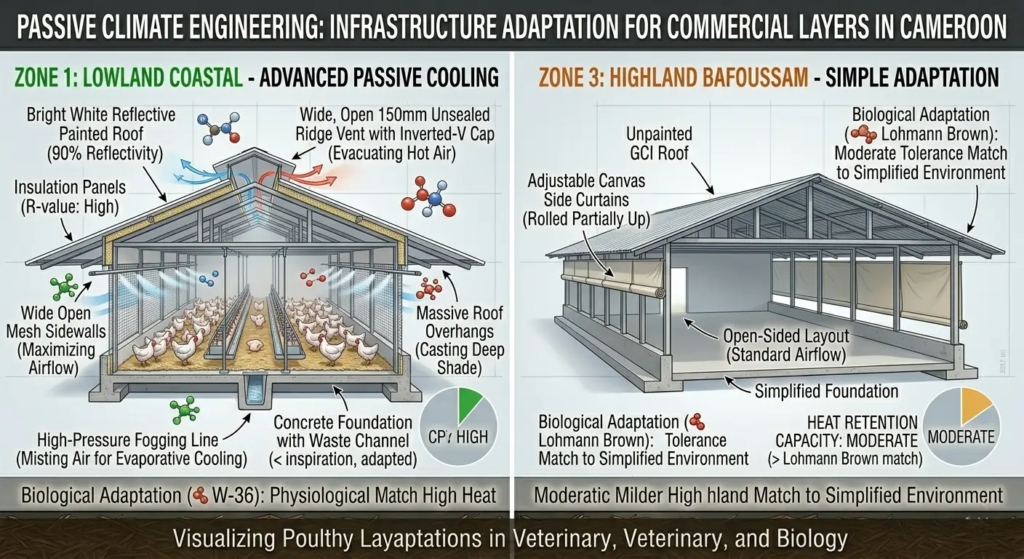
Zone 1: Lowland Coastal and Equatorial (Douala, Limbe, Kribi, Edéa — THI typically 74–84)
Primary thermal challenge: High humidity amplifying moderate-to-high temperatures year-round. THI is rarely below 72; in the rainy season, THI is regularly 78–84.
Recommended breed approach:
- Primary choice: Hy-Line W-36 or white-egg breed for institutional/white-egg market access, where heat tolerance advantage directly reduces production loss during the 5–6 months of severe heat stress
- Alternative primary choice: ISA Brown or Lohmann Brown Classic with full heat stress feeding program (fat supplementation, electrolytes, vitamin C, adjusted calcium, reduced crude protein) and infrastructure investments (reflective roofing, ridge venting, fogging system if available)
- Not recommended without thermal infrastructure: Lohmann Brown Extra (metabolic intensity liability in sustained heat challenge)
Infrastructure requirement to reach breed standard performance in Zone 1:
- Reflective roofing with insulation: reduces internal temperature by 3–5°C
- Continuous ridge ventilation plus side inlet design: enables stack effect passive cooling
- Fogging system (high-pressure): drops perceived temperature by 5–8°C during peak hours
- Shaded access road and perimeter shading: reduces radiant heat load from surrounding surfaces
Zone 2: Inland Humid (Yaoundé, Centre Region, South Region — THI typically 70–78)
Primary thermal challenge: Moderate heat with variable humidity. THI rarely exceeds 80; peak dry season THI 74–78.
Recommended breed approach:
- Primary choice: ISA Brown, Hy-Line Brown, or Lohmann Brown Classic — all perform adequately in this zone without significant heat tolerance limitation
- Optional optimization: Hy-Line Brown’s lower feed intake gives a marginal heat-stress advantage during the annual 4–6 week peak heat period
- Lohmann Brown Extra viable with attentive heat stress feeding management during peak periods
Infrastructure requirement: Open-sided housing with ridge ventilation and adjustable side curtains is adequate. Fogging optional but not required for most of the year.
Zone 3: Highland (Bafoussam, Bamenda, Dschang, Mifi Division, Ngaoundéré — altitude 1,000–2,400m, THI typically 60–72)
Primary thermal challenge: Minimal to none. Temperatures rarely exceed 28°C; humidity is moderate. The temperature is below 70 for most of the year.
Recommended breed approach:
- Primary choice: Lohmann Brown Extra or Hy-Line Brown — the breeds with the highest genetic production ceiling benefit from the highland climate’s consistent thermoneutral conditions
- ISA Brown is also excellent in this zone; marginally less efficient than LBE or Hy-Line Brown FCR
- All breeds perform closest to the breed management guide standards in this zone
Infrastructure requirement: Standard open-sided construction. Supplemental heat during cold harmattan nights (below 15°C): chick brooding and early rearing may require a gas brooder on cold mornings. House design should consider cold-night management as a secondary priority alongside heat management.
Managing Genetic Heat Tolerance Limits with Nutritional and Environmental Support
The breed’s genetic heat tolerance sets a ceiling on performance under thermal challenge. Nutrition and environment management can raise actual performance toward that ceiling — they cannot raise it above it.
The interaction model:
Actual performance under heat stress = (Genetic heat tolerance capacity) × (Nutrition management efficiency) × (Environmental management efficiency)
A Lohmann Brown Classic at 0.75 genetic heat tolerance efficiency × 0.90 nutrition management efficiency × 0.85 environmental management efficiency = 0.574 of thermoneutral performance — approximately 52% laying rate if thermoneutral potential is 92%.
The same Lohmann Brown Classic with improved nutrition management (heat-adjusted ration, 0.95 efficiency) × improved environmental management (fogging + reflective roof, 0.92 efficiency) × same genetics (0.75) = 0.656 of thermoneutral performance — approximately 60% laying rate. A 16% improvement from management — without changing the breed.
A Hy-Line W-36 at 0.90 genetic heat tolerance × 0.90 nutrition × 0.85 environmental = 0.689 of thermoneutral performance — approximately 65% laying rate under identical management to the Lohmann Brown scenario.
The genetic advantage is real. The management amplification is larger. Both matter. The combination matters most.
Summary
Genetic tolerance to tropical heat in commercial layer breeds is a real and quantifiable variable — but it is a spectrum, not a binary. White-egg breeds (Hy-Line W-36) tolerate heat best due to smaller body size, lower metabolic heat generation, and superior heat dissipation per unit of metabolic weight. Brown-egg breeds cluster in the moderate range, with Hy-Line Brown and ISA Brown performing marginally better than Lohmann Brown Classic under severe heat stress due to lower body weight and daily feed intake. Lohmann Brown Extra is most sensitive to sustained heat challenge due to its higher metabolic intensity.
For West and Central African layer farmers, the thermal zone of the farm determines how much weight to give to heat tolerance in the breed selection decision. In highland zones (Bafoussam, Bamenda, Ngaoundéré), heat tolerance is a minor consideration — choose the breed with the highest production ceiling. In lowland and coastal zones (Douala, Limbe, Kribi), heat tolerance is a primary consideration — the breed chosen must be matched to the thermal reality of the production environment.
Nutrition and environmental management can significantly raise actual performance within the limits of genetic heat tolerance. They cannot overcome a fundamental breed-environment mismatch where a high-metabolic-intensity breed is placed in a severe thermal environment without adequate cooling infrastructure.
Choose the breed for your climate zone. Manage it for your season. Measure the result against the breed standard for your conditions — not the thermoneutral benchmark.