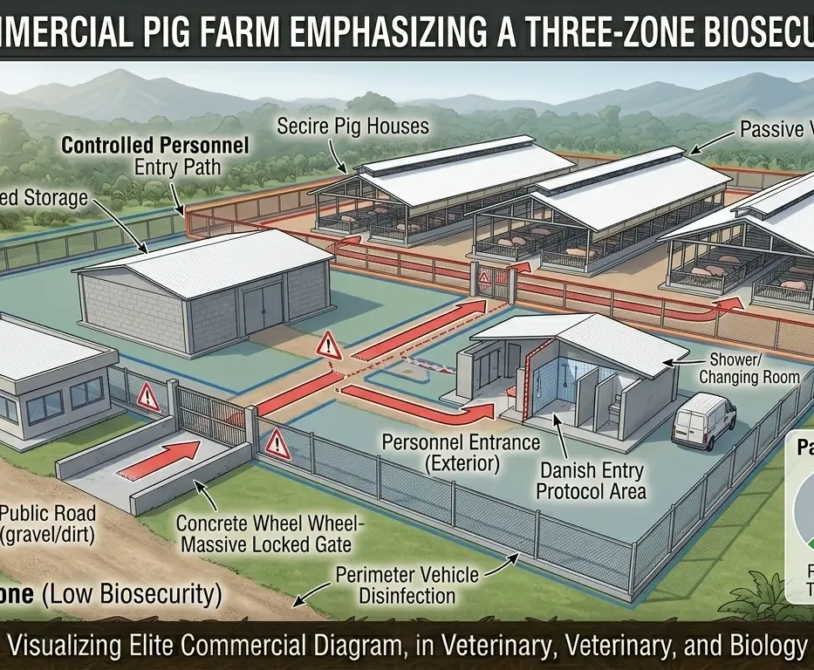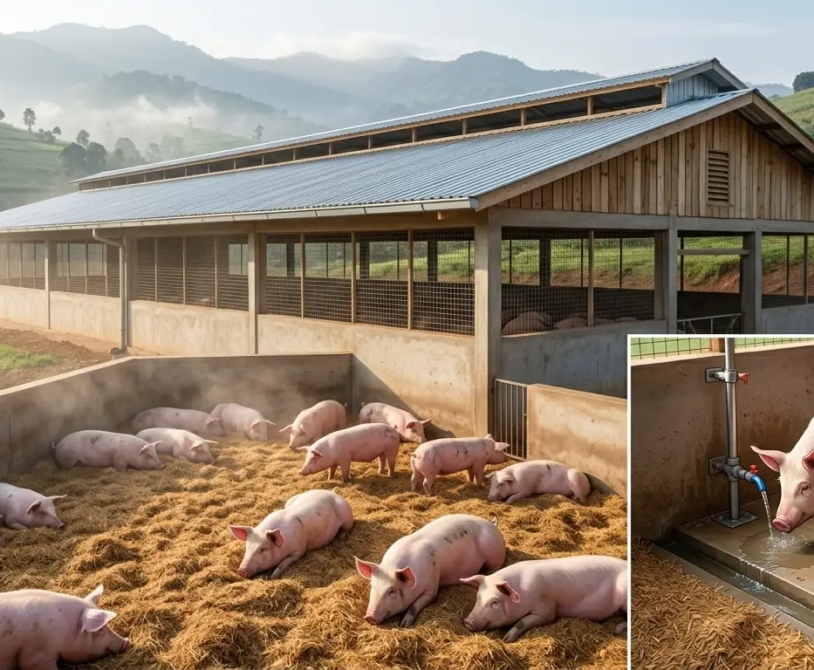
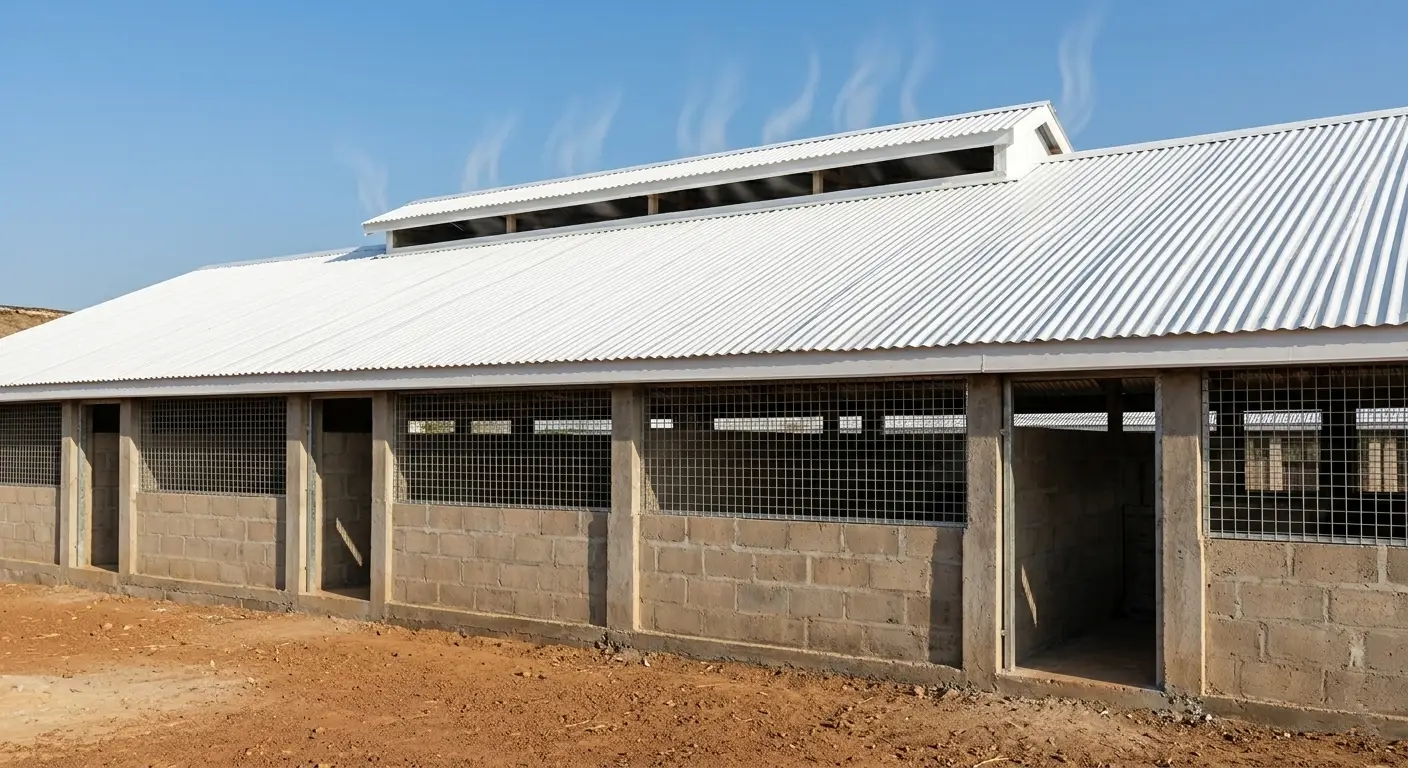
The pig pen built incorrectly costs twice as much. It costs the materials and labor to build it. Then it costs the production losses — from inadequate drainage creating wet litter that generates ammonia, from pen divisions too weak to separate fighting pigs, from roofing that creates heat stress in the dry season, from floors that cause lameness — that accumulate across every production batch housed in it.
The pig pen built correctly requires the same materials and approximately the same labor as the pen built incorrectly. The difference between them is not money spent — it is knowledge applied before the first concrete is mixed. Knowing what the floor slope should be, which direction the ridge vent should open, what the minimum pen division height must resist, and how to position the drinker. Hence, its spillage drains away rather than pooling in the lying area — this is the knowledge that converts the same inputs into a functional pen rather than an expensive mistake.
This guide provides that knowledge in construction-ready format: dimensions, materials specifications, drainage design, foundation and floor construction, pen division options, roofing design, and the assembly sequence that a small-scale farmer with basic construction skills can follow to build pig housing that performs for 15–20 years.
Before You Build: The Five Questions That Determine Your Design
1. How Many Pigs and at What Stage?
Pen size is determined by the number of pigs it will house and their weight at the heaviest point of occupancy. Building a pen for 10 growers at 60 kg requires different dimensions from a pen for 10 finishers at 100 kg — even if the pig count is the same.
Minimum floor space per pig by production stage:
| Stage | Live Weight | Minimum m² Per Pig |
|---|---|---|
| Weanlings | 7–25 kg | 0.35–0.40 m² |
| Growers | 25–60 kg | 0.65–0.75 m² |
| Finishers | 60–110 kg | 0.90–1.10 m² |
| Gestating sows | 140–220 kg | 2.00–2.50 m² |
| Lactating sow + litter | — | 4.50–5.00 m² (farrowing crate) |
| Boar | 200–300 kg | 8.00–10.00 m² |
Practical example: A pen for 10 finisher pigs at 100 kg maximum requires: 10 × 1.0 m² = 10 m² minimum floor area → build to 12 m² (20% buffer)
2. What Construction Materials Are Locally Available?
The optimal pig pen in the context of Bafoussam, with abundant volcanic stone, is not the optimal pen in the context of coastal Douala, where concrete blocks are the most accessible material. Specify your design around what is available at an acceptable cost within 50 km of your site — not around what the textbook recommends.
3. What Is the Prevailing Wind Direction at Your Site?
The long axis of the pig house should run parallel to the prevailing wind direction. This allows cross-ventilation — wind enters through the open sidewalls on both sides, passes through the building, and exits carrying heat and ammonia. A building oriented perpendicular to the prevailing wind has one high-pressure (windward) face and one sheltered (leeward) face — reducing effective ventilation to approximately 40% of what correct orientation provides.
Identify your prevailing wind direction by observing tree lean, dust movement, or asking neighbors. In most of West and Central Africa, the dry season harmattan wind comes from the northeast. The rainy season brings southwest monsoon winds. Orient the building for the prevailing wind during the hot dry season — the period when ventilation is most critical.
4. What Is the Site’s Natural Slope?
The pig pen floor must drain — by gravity — toward the manure collection channel. A site with a natural 2–3% slope in the correct direction simplifies floor drainage design significantly. A flat site requires deliberate floor grading or a raised floor that creates an artificial slope.
Walk the site and identify the low point. The manure collection channel and waste management system go there. The pen buildings go upslope from the waste management area.
5. What Is Your Construction Budget?
The three primary material choices for pig pen construction in West Africa represent different trade-offs between capital cost and durability:
| Construction Type | Capital Cost per m² (XAF) | Capital Cost per m² (USD) | Expected Life |
|---|---|---|---|
| Basic timber frame + corrugated iron | 40,000–60,000 | 67–100 | 8–12 years |
| Concrete block (3 courses) + timber/iron | 65,000–90,000 | 108–150 | 15–20 years |
| Full concrete block + concrete roof | 100,000–140,000 | 167–233 | 25–30 years |
The concrete block construction at the mid-price point offers the best cost-to-durability ratio for most small commercial pig farmers in West and Central Africa.
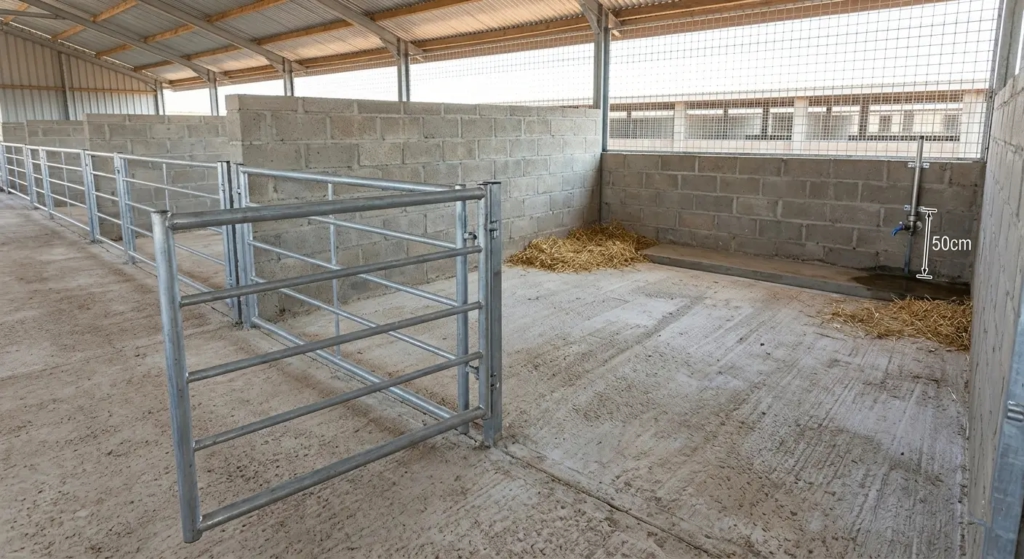
Blueprint 1: Standard 10-Pig Grower/Finisher Pen
This is the reference design for the most common small-scale construction requirement — a single pen housing 10 growing or finishing pigs.
Dimensions
- Internal pen floor area: 4.0 m × 3.0 m = 12 m² (allows 10 pigs at 1.2 m²/pig — 20% buffer above the 1.0 m² minimum for finishers)
- Service aisle: 1.0 m wide running along the front (feeding and collection side) of the pen
- Total building width: 3.0 m pen + 1.0 m aisle = 4.0 m
- Total building length: 4.0 m pen
- Wall height (eaves): 2.0 m at the low side; 2.5–3.0 m at the high side (creating the slope for roof drainage)
- Ridge height: Approximately 3.0–3.5 m above the floor at the center ridge
Floor Design
Materials:
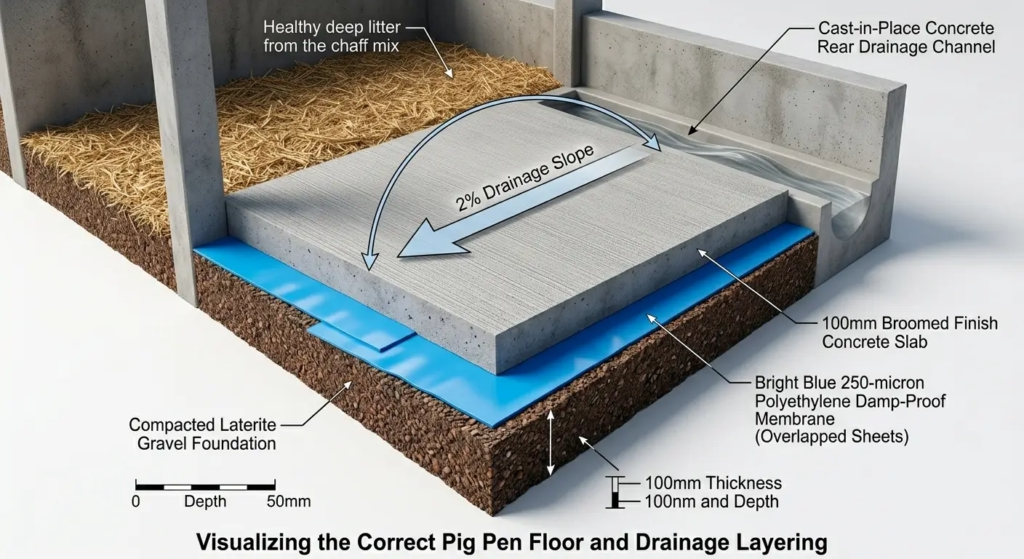
- Hardcore (broken stone or laterite gravel): 150 mm compacted base
- Concrete (1:2:4 mix — 1 cement: 2 sand: 4 aggregate): 100 mm thickness
- Surface finish: broomed or grooved texture applied while the concrete is green (not yet set)
Construction sequence:
- Excavate the pen area to 250 mm below finished floor level. Remove all topsoil — organic material in the subgrade causes differential settlement that cracks concrete floors over time.
- Compact the subgrade with a hand rammer or plate compactor. Test: drop a 1 kg stone from 1 m height — if it leaves an impression deeper than 5 mm, the subgrade is not adequately compacted.
- Lay 150 mm of compacted hardcore. Water and compact in two 75 mm layers.
- Apply a damp-proof membrane (heavy polyethylene sheeting, minimum 250 micron) over the compacted hardcore. This prevents ground moisture from wicking upward through the concrete — the primary cause of perpetually wet floors in pig housing without damp-proofing.
- Mix concrete at a 1:2:4 ratio with a maximum water-cement ratio of 0.5 (the concrete should be stiff, not sloppy — high water content weakens the finished concrete). Pour to 100 mm depth.
- Level with a screed board to the planned drainage slope: 2% minimum — 2 cm drop per linear meter toward the drainage channel. For a 3.0 m wide pen draining to a channel at the rear wall, the front of the pen (at the aisle wall) should be 6 cm higher than the rear drainage channel.
- While the concrete surface is still wet (within 2 hours of pouring), apply the surface texture:
- Broomed finish: Draw a stiff-bristle broom across the surface perpendicular to pig movement direction (parallel to the long axis of the pen), creating parallel grooves 3–5 mm deep. This is the simplest acceptable non-slip finish.
- Grooved finish: Draw a V-shaped grooving tool at 100 mm spacing across the concrete perpendicular to pig movement, creating 5 mm × 5 mm grooves for maximum traction in the aisle and feeding areas.
- Cure the concrete for a minimum of 7 days before pig occupancy. Cover with wet hessian sacking or polyethylene sheeting and water daily. Concrete gains 70% of its design strength in 7 days and 95% in 28 days — do not load the floor with pig weight before 7 days of curing.
- Apply acid wash after curing (if surface is too rough): 10% hydrochloric acid in water, applied with a brush, left 10 minutes, then thoroughly rinsed with clean water. This dissolves sharp aggregate protrusions that would abrade pig hooves excessively.
Drainage Channel Design
Position: Along the rear wall of each pen — the lowest point of the sloped floor.
Dimensions:
- Width: 30 cm interior
- Depth: 20 cm interior
- Length: Full width of pen (4.0 m for the reference design)
- Slope along channel length: 1–2% toward the collection sump at the end of the building
Construction: Cast-in-place concrete channel with 1:2 cement: sand mortar finish on interior surfaces (smooth surface prevents manure buildup and simplifies cleaning).
Connection: The drainage channel connects at one end to a larger collection pipe (minimum 150 mm diameter PVC) that carries liquid waste to the settling tank or biogas digester. The channel invert (bottom) must be lower than the collection pipe invert — verified during design by checking that the planned floor slope, channel depth, and waste management system inlet elevation are compatible.
Channel cover options:
- Concrete cover slabs (precast, removable for cleaning): lowest cost; heaviest
- Steel grating (50 mm × 50 mm bar grating): allows continuous drainage without removing cover; requires periodic cleaning of accumulated solids on grating surface
- Cast iron grating: most durable; highest cost
Blueprint 2: Four-Pen Building for 40 Pigs
The most practical small commercial construction is a multi-pen building — four pens sharing two long walls and a single roof, with a central aisle providing access to all pens.
Building Configuration
Layout: 4 pens arranged in 2 rows of 2 pens, separated by a central service aisle
[Pen 1 - 4.0m × 3.0m] | [Pen 2 - 4.0m × 3.0m]
         [Central Aisle - 1.2m wide]
[Pen 3 - 4.0m × 3.0m] | [Pen 4 - 4.0m × 3.0m]
- Total internal width: 3.0 m + 1.2 m + 3.0 m = 7.2 m
- Total building length: 4.0 m × 2 pens + shared pen division = 8.3 m
- Pen floor area each: 12 m² (10 finisher pigs at 1.2 m²/pig)
- Total pigs: 40
Wall Construction (Concrete Block)
Materials for pen division walls and perimeter walls:
Hollow concrete block (200 mm × 400 mm × 200 mm — the standard West African commercial block):
For pen perimeter walls (exterior walls):
- Foundation: 2 courses of 200 mm block on a 300 mm × 300 mm concrete strip footing (1:2:4 mix, cast in a trench minimum 300 mm deep below ground level)
- Wall: 5 courses of block from floor level to the top of the solid wall section = 1,000 mm (1.0 m)
- Above 1.0 m: wire mesh panel (50 mm × 50 mm galvanized weld mesh, 2.5 mm wire minimum) infill to eaves — provides ventilation while maintaining pen security
Block mortar specification: 1 part cement: 5 parts sand. Weaker mixes (1:6 or more) are commonly used in West Africa to reduce cost, but are inadequate for pig housing where walls are subjected to regular impacts from pig movement.
Block count for one standard 4.0 m × 3.0 m × 1.0 m solid wall section:
- Perimeter: 2 × (4.0 + 3.0) m = 14.0 m wall length
- 1 course = 14.0 m ÷ 0.40 m per block = 35 blocks per course
- 5 courses = 175 blocks per pen perimeter solid section
- Mortar: approximately 1 bag cement + 5 bags sand per pen perimeter
Pen division walls (between adjacent pens — shared walls):
- Must resist the combined lateral pressure of pigs pushing from both sides simultaneously
- Minimum construction: 150 mm solid wall (use 150 mm concrete blocks or two leaves of 75 mm brick with a 50 mm collar joint) for strength
- Height: 1.2 m solid from floor level; weld mesh above to eaves if ventilation across pens is acceptable, or solid wall to eaves for disease segregation between pen groups
Pen Gate/Door Design
Each pen requires at minimum one access point wide enough to move:
- A pig on a catching board or in a crate
- A feed trolley or feed sack
- A person with cleaning equipment
Minimum gate opening: 0.9 m wide × 1.2 m high
Gate construction options:
Option A — Pipe gate (recommended): Weld a rectangular frame from 40 mm × 40 mm steel angle iron. Infill with 25 mm diameter mild steel pipe rails at 200 mm spacing. Hang on 100 mm gate hinges welded to a steel post or embedded in the block wall. Fit with a pig-proof latch (pigs can lift simple hook latches — use a pin-and-chain combination that requires two separate movements to open).
Cost per gate: approximately XAF 25,000–45,000 (USD 42–75), fabricated by a local welding workshop.
Option B — Timber-framed gate: 100 mm × 50 mm hardwood frame, infilled with 75 mm × 25 mm hardwood horizontal rails at 150 mm spacing. Timber must be treated with wood preservative (copper chrome arsenate or equivalent food-safe timber treatment) before installation — untreated timber in a pig pen environment deteriorates within 2–3 years from moisture and manure contact.
Gate position within the pen: Position gates at the front of the pen (aisle side) rather than at the rear. Pigs being chased escape toward the rear of the pen, which allows the catcher to work from the rear toward the front with the gate as the exit point — without having to pass the pig to open a rear-positioned gate.
Roofing Design for Tropical Conditions
The roof’s thermal performance is the most important structural feature for pig welfare in West African conditions. A poorly designed roof creates an oven — ambient temperatures of 28°C at 08:00 become 38–42°C inside a poorly ventilated, uninsulated tin roof enclosure by 14:00, even when the building’s sidewalls are fully open.
Roof Material Options
Galvanized corrugated iron (GCI): The most common roofing material in West Africa. Durable (15–25 years), readily available, relatively inexpensive. The primary thermal limitation: bare galvanized steel absorbs approximately 90% of incident solar radiation, raising roof surface temperature to 70–90°C at peak sun, which radiates heat downward into the building continuously.
Thermal treatment for GCI:
- White or silver roof paint (reflective): Apply a minimum of 2 coats of white or aluminum-pigmented roof paint. This reduces solar absorptance from 90% to 30–45%, reducing peak roof surface temperature by 25–35°C and internal building temperature by 4–8°C. Cost: XAF 800–1,500 (USD 1.33–2.50) per m² of roof area for paint. Return: measurable pig performance improvement from reduced heat stress.
- Insulation board beneath the roof sheet: Fixing 25 mm polyurethane foam boards or rockwool batts to the underside of the GCI roofing (supported by the roof purlin structure) creates a thermal barrier that reduces heat transmission from the hot roof surface to the building interior by 60–80%. Cost: XAF 5,000–12,000 (USD 8.33–20) per m² installed. Justified in lowland high-temperature operations where heat stress is a major production constraint.
Aluminum roofing sheets: Lower emissivity than galvanized steel — better inherent thermal performance without painting. Significantly more expensive than GCI. Appropriate where thermal performance is the primary roof criterion, and budget allows.
Roof Pitch and Ridge Vent Design
Minimum roof pitch: 25° (approximately 1:2 slope). Lower pitches reduce ridge vent effectiveness and increase the risk of water ingress at the ridge opening during heavy rainfall.
Ridge vent design: The single most important ventilation element in the building. The ridge vent allows hot air, ammonia, and moisture — all lighter than ambient air — to escape from the highest point of the building by stack effect regardless of wind conditions.
Ridge vent specifications:
- Opening width: minimum 150 mm (15 cm) clear opening along the full length of the building ridge
- Ridge cap: an inverted-V profile cap positioned above the opening that prevents rain entry while allowing air escape. The gap between the roof sheets and the ridge cap on each side should be unobstructed — wire mesh to exclude birds only
- Do not fit ridge caps that seal against the roof sheets — this eliminates the stack effect ventilation the ridge vent is designed to provide
Overhang: Roof overhang beyond the external walls provides shade on the sidewalls — reducing radiant heat gain through the wall and the building’s open sides. Minimum overhang: 0.5 m each side. Preferred overhang: 0.8–1.0 m, particularly on the east and west faces exposed to early morning and late afternoon sun.
Farrowing Pen Construction (Modified Design)
The farrowing pen requires a different design from the standard grower/finisher pen because it must simultaneously accommodate the sow’s large body, protect neonatal piglets from crushing, and create distinct thermal zones for the sow (cool) and piglets (warm).
Farrowing Crate Frame Construction
A simple farm-built farrowing crate can be constructed from steel pipe and angle iron by a local welding workshop at significantly lower cost than imported commercial crate systems.
Materials for one farrowing crate (DIY welded steel):
| Item | Specification | Quantity |
|---|---|---|
| Rectangular steel pipe (main frame) | 40 mm × 40 mm × 3 mm wall | 15 meters |
| Round pipe (sow guard rails) | 32 mm diameter × 3 mm wall | 8 meters |
| Flat bar (piglet guard rails) | 30 mm × 5 mm | 6 meters |
| Angle iron (pen division) | 40 mm × 40 mm × 3 mm | 6 meters |
| Hinge (gate) | Heavy-duty, 100 mm | 4 pieces |
| Chain and pin latch | — | 1 set |
| Total steel weight approximately | — | 35–45 kg |
Fabrication cost at local welding workshop: XAF 35,000–70,000 (USD 58–117) per crate for fabrication labor. Material cost at current steel prices in Cameroon: XAF 80,000–130,000 (USD 133–217).
Total cost per farm-built farrowing crate: XAF 115,000–200,000 (USD 192–333) — approximately 40–60% of the cost of an imported commercial farrowing crate.
Critical dimensions for the DIY farrowing crate:
- Sow confinement zone width: 60–65 cm (narrow enough that the sow cannot turn and must lie down lengthwise — protecting piglets from being crushed under a turning sow)
- Total crate length: 220–230 cm (sow: 200 cm + 20–30 cm clearance)
- Piglet creep width on each side: 60–70 cm (each side of the sow confinement zone)
- Total crate width: 60–65 cm (sow) + 60–70 cm (creep each side) = 180–205 cm
- Sow guard bar height from floor: 20–25 cm (this bar prevents the sow from rolling directly onto piglets — the most common neonatal mortality cause in farrowing)
- Sow guard bar setback from the sow zone boundary: 10–15 cm into the creep area
Materials List and Cost Estimate: One 10-Pig Finisher Pen
Use this list as a starting point and adjust quantities and unit costs for your local market. Prices are indicative for Cameroon/Nigeria 2026.
| Item | Quantity | Unit Cost (XAF) | Total (XAF) | Total (USD) |
|---|---|---|---|---|
| Cement (50 kg bags) — floor, foundation, mortar | 15 bags | 8,000 | 120,000 | 200 |
| Sand (tonnes) | 3.0 | 25,000 | 75,000 | 125 |
| Aggregate/gravel (tonnes) | 2.0 | 20,000 | 40,000 | 67 |
| Hardcore/laterite (tonnes) | 2.5 | 10,000 | 25,000 | 42 |
| Polyethylene damp-proof membrane (m²) | 15 | 500 | 7,500 | 13 |
| Concrete block 200 mm (pieces) | 200 | 500 | 100,000 | 167 |
| Galvanized weld mesh 50×50mm (m²) | 12 | 3,500 | 42,000 | 70 |
| GCI roofing sheets (m²) | 20 | 4,500 | 90,000 | 150 |
| Timber purlins 50×50mm (meters) | 30 | 1,500 | 45,000 | 75 |
| Ridge cap (meters) | 5 | 2,000 | 10,000 | 17 |
| Steel pipe gate (fabricated) | 1 | 35,000 | 35,000 | 58 |
| Nipple drinker + supply pipe | 2 | 8,000 | 16,000 | 27 |
| Roof paint (reflective white) | 5 liters | 3,000 | 15,000 | 25 |
| Miscellaneous (hardware, nails, wire) | 1 lot | 20,000 | 20,000 | 33 |
| Materials Total | 640,500 | 1,068 | ||
| Construction labor (skilled + unskilled) | 8 days | 15,000/day | 120,000 | 200 |
| Total Cost — One 10-Pig Pen | 760,500 | 1,268 |
Cost per pig place: XAF 76,050 (USD 126.80)
For comparison: a 40-pig four-pen building shares walls and roofing, reducing per-pig-place cost to approximately XAF 55,000–65,000 (USD 92–108) — the efficiency of multi-pen construction.
Common Construction Mistakes and How to Avoid Them
Mistake 1 — Insufficient floor slope: A floor slope of less than 2% does not drain reliably. Test after pouring: pour 2 liters of water anywhere on the floor — it should flow visibly toward the drain channel within 30 seconds. If water ponds, the slope is insufficient. Correction after curing requires a grinding machine and rescreeding — expensive. Prevention: Check the slope during pouring with a spirit level and tape measure.
Mistake 2 — No damp-proof membrane under floor: Concrete without a damp-proof membrane draws ground moisture upward by capillary action, keeping the floor surface perpetually cool and damp. This moisture wets pig lying areas, promotes hoof disease, and in deep litter systems destroys the aerobic decomposition environment. A single layer of 250-micron polyethylene sheeting laid on compacted hardcore before concrete pouring prevents this permanently.
Mistake 3 — Pen divisions too low: A 0.8 m pen division wall between grower pens is a pen division that mature pigs will jump over within the first week. Minimum pen division height for finisher pigs: 1.2 m. For sows: 1.4 m. For boars: 1.6 m solid wall. Underestimating the height pigs can reach when motivated by a nearby sow in heat, by competition for resources, is one of the most common construction errors.
Mistake 4 — Sealed ridge (no ridge vent): A ridge cap sealed directly against the roof sheets provides weather protection but eliminates the primary passive ventilation pathway. Internal temperatures in a sealed-ridge building in tropical conditions exceed external ambient by 8–15°C on hot days — enough to drive severe heat stress regardless of open sidewalls. Every ridge must have a clear 150 mm gap between the roof sheets and the cap along the full building length.
Mistake 5 — Drinker positioned over the lying area: A nipple drinker positioned over the front (lying) section of the pen deposits all its spillage onto the area where pigs sleep — creating a perpetually damp lying surface. Position drinkers over the drainage channel or the sloped rear third of the pen where spillage flows toward the drain.
Mistake 6 — No aisle between pens: Pens with no service aisle force the farmer to enter the pen to feed, water, inspect, treat, and catch pigs — requiring the farmer to compete for space with the animals being managed. Minimum aisle width: 0.9 m. Preferred: 1.2 m. An aisle from which all management can be performed without entering the pen is the single feature that most reduces daily labor time and injury risk.
Mistake 7 — Pen gates opening inward: A gate that opens inward into the pen is one that pigs can block by pressing against it. Always hang pig pen gates to open outward into the aisle. This allows the gate to open even when pigs are pressed against it from the inside.
Construction Sequence: Building One Pen from Start to Finish
Week 1 — Site preparation and foundation:
- Clear vegetation, strip topsoil to 250 mm depth across pen footprint
- Mark out pen dimensions with string lines and pegs
- Excavate foundation trenches: 300 mm deep × 300 mm wide at all wall positions
- Compact trench bottom, lay hardcore, pour foundation concrete (1:2:4), level, and cure
Week 2 — Floor construction:
- Lay a hardcore base to a 150 mm compacted depth within the pen footprint
- Lay a damp-proof membrane across the entire pen floor area with a 300 mm overlap onto the foundation
- Pour a concrete floor to a 100 mm thickness with 2% drainage slope toward the channel
- Form a drainage channel along the rear wall simultaneously with the floor pour
- Apply surface texture while the concrete is green
- Cover and cure for 7 days
Week 3 — Wall construction:
- Build block walls from foundation to 1.0 m solid height
- Install gate post (embedded steel pipe, 100 mm diameter, 1.5 m length, set in concrete in a prepared hole)
- Install weld mesh infill from 1.0 m to eaves height (fix with wire ties to block wall top course)
Week 4 — Roof structure and sheeting:
- Fix roof timber frame (ridge beam, rafters at 1.0 m centers, purlins at 0.5 m centers)
- Fix GCI roofing sheets with correct overlap (150 mm side lap, 2 corrugation end lap minimum)
- Fix the ridge cap with a 150 mm clear opening on each side (do not seal against the roof sheets)
- Apply reflective roof paint (2 coats)
Week 5 — Finishing:
- Hang gate, fit latches
- Install nipple drinker supply pipe and nipples (test flow rate)
- Install feeder fittings or feed trough
- Final inspection checklist:
- Floor drainage: pour test with 2 liters of water
- Ridge vent: hold hand above ridge, confirm airflow on a day with any wind
- Gate: opens outward, latches pig-proof
- Drinker: positioned over drainage channel, correct height, flow rate verified
- No sharp edges on gate, pen division, or weld mesh
Summary
A pig pen built to the specifications in this guide provides the physical foundation that all other pig management practices depend on: a floor that drains correctly prevents the litter moisture and ammonia problems that compromise respiratory health; a roof that reflects and ventilates reduces heat stress that suppresses feed intake; a pen division that holds prevents the injuries that come from uncontrolled pig mixing; a gate that opens outward makes daily management faster and safer.
The total cost of a correctly built 10-pig finisher pen in West and Central Africa — materials and labor, concrete block construction with reflective-painted GCI roof — is approximately XAF 760,000–900,000 (USD 1,267–1,500). At 10 pig places, that is XAF 76,000–90,000 (USD 127–150) per pig place. A pig that grows from 25 kg to 100 kg on a correctly designed floor, in a correctly ventilated building, drinks from a correctly positioned nipple drinker, and exits through a correctly hung gate generates revenue of XAF 150,000–225,000 (USD 250–375) per cycle.
The pen pays for itself in one pig’s productive life. Build it correctly, and it will house pigs for 20 years. The knowledge in this guide costs nothing. The concrete and steel cost the same whether the design is correct or not.
Build it correctly once.