A commercial pig farm is one of the most financially rewarding agricultural enterprises available in West and Central Africa — and one of the most unforgiving of the startup decisions made before the first pig arrives. The decisions made in the planning phase — site selection, scale, genetics, housing design, market relationships — are largely permanent. Concrete cannot be re-poured at a different slope. A site too close to a residential area cannot be moved. A sow herd built on poor genetics cannot be upgraded without culling and replacement cost. A market relationship that pays commodity prices cannot suddenly pay premium prices because the farm has learned to produce premium pork.
The startup sequence matters as much as any individual decision within it. A farm that secures premium market relationships before investing in Berkshire genetics is taking the right risk in the right order. A farm that builds the farrowing house before the gestation housing is built is creating a logistics problem that will constrain every subsequent production cycle. A farm that begins with 100 sows before the owner has managed 20 is taking on management complexity before the operational foundation is established.
This guide covers the complete startup pathway for a commercial pig farm in West or Central Africa — from the feasibility assessment that determines whether to proceed, through the sequential decisions that build the operation, to the operational management that sustains it. It is not a summary of the detailed technical guidance covered in the articles that precede it in this series — it is the integration layer that shows how those decisions connect into a coherent startup plan.
Feasibility Assessment — Answering the Questions That Determine Whether to Proceed
The Three Feasibility Questions
Before any capital is committed, three questions must be answered with honest, market-specific data — not with industry average figures from a different country or with optimistic projections:
Question 1: Is there a viable market for pork at a price that supports profitability?
The local pork market in most West and Central African cities is real and growing. But the specific price achievable — and the specific channel through which you will sell — determines whether the business model works. Commodity wholesale prices and premium hotel/restaurant prices are not interchangeable assumptions; the business model that works at XAF 4,000/kg does not work at XAF 1,800/kg with the same cost structure.
The market research required before proceeding:
- Visit the nearest live pig markets and wholesale pork buyers. What are they paying per kilogram live weight today? What did they pay 12 months ago? Is the trend stable, rising, or volatile?
- Visit hotels, restaurants, and supermarkets that purchase pork. What are they paying per kilogram for fresh cuts? Do they have existing suppliers? What quality specifications do they require?
- Identify your three most likely initial buyers and confirm (in writing where possible) that they would purchase from a new supplier at a specific price and specific volume. A market analysis based on observed prices without confirmed buyer intent is not a sufficient foundation for a capital investment.
Question 2: Can feed ingredients be sourced at prices and quality levels that support the margin?
Feed represents 60–70% of pig production operating cost. The feed cost available in the specific farm location — maize price, soybean meal price, availability of cost-effective alternative ingredients — determines the cost structure within which the business must operate. A farm in a maize-surplus zone with access to low-cost cassava has a fundamentally different cost structure than a farm in an area where all feed ingredients must be transported long distances.
The feed sourcing research required:
- Obtain current prices from at least three feed ingredient suppliers for maize, soybean meal, and any locally available alternative ingredients
- Verify year-round supply consistency — seasonal price spikes in feed ingredients have destroyed the profitability of pig farms whose feasibility analysis used only the low-season price
- Determine the nearest commercial feed mill (if purchasing rather than mixing on-farm) and confirm they supply the ration specifications required for commercial pig production
Question 3: Does the capital available match the scale and infrastructure required for the chosen production model?
Undercapitalization is the most common cause of commercial pig farm failure. A farm that runs out of capital before the infrastructure is complete, or before the production cycle has had sufficient time to generate positive cash flow, fails regardless of the quality of its technical planning. The startup capital requirement must be calculated realistically — including all infrastructure, initial breeding stock, initial feed inventory, operating costs through the first production cycle, and a contingency reserve for the unexpected.
The Business Model Decision — Choosing the Production Model Before Building Anything
The Four Commercial Production Models
Model 1: Farrow-to-finish (most common) The complete production cycle — from breeding sows through farrowing, weaning, growing, and finishing to market weight. Requires the most diverse infrastructure (gestation housing, farrowing house, weanling room, grower and finisher pens) and the broadest management skill set. Provides maximum control over the full production cycle and maximum revenue per pig.
Best for: Operations with sufficient capital for complete infrastructure, experienced management or a commitment to developing that experience, and market access to sell finished pigs at appropriate prices.
Model 2: Farrow-to-wean produces weaned piglets (at 21–28 days) for sale to grower operations. Requires a farrowing house and minimal growing space. Provides income more rapidly (21–28 days per litter rather than 150–170 days for farrow-to-finish) but depends on consistent demand from reliable piglet buyers at acceptable prices.
Best for: Operations in areas with established demand for weaner piglets, or as a first-phase entry point for farms that plan to add growing capacity in a second phase.
Model 3: Wean-to-finish (feeder pig finishing) Purchases weaned piglets from farrowing operations and grows them to market weight. Requires growing and finishing pen infrastructure but no farrowing house. Capital requirements are lower, but the operation is dependent on consistent piglet supply at stable prices — a supply chain risk that farrowing operations do not carry.
Best for: Operations in areas with consistent, quality piglet supply; or as a first-phase entry while the more complex farrow-to-finish infrastructure is established.
Model 4: Niche/premium specialty production Berkshire or other heritage breed production for premium markets; certified organic pork; “free-range” or welfare-certified production for specific retail or export channels. Requires confirmed premium buyer relationships before investment — as detailed in the heritage breeds vs. commercial hybrids article in this series, the premium market must exist and be secured before the production model is built around it.
Best for: Operations with confirmed premium market relationships and the management capacity to deliver the quality and traceability standards those markets require.
Choosing the Starting Scale
The recommended startup scale for most first-generation commercial pig farms in West Africa:
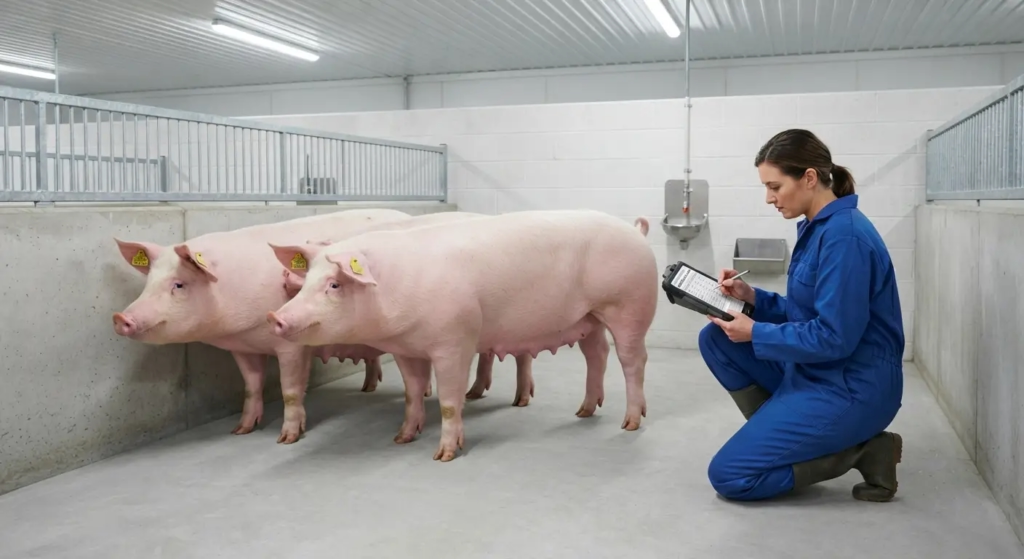
10–20 sows (farrow-to-finish model) is the appropriate starting scale for an operation where the owner is also the primary manager and has not previously managed pigs at commercial scale. This range:
- Is large enough to generate meaningful revenue and operational learning
- Is small enough that management errors (which every new operation makes) have proportionally smaller financial consequences
- Requires capital investment of approximately XAF 30,000,000–60,000,000 (USD 50,000–100,000) for complete infrastructure and initial operating costs — substantial but manageable without institutional financing for most committed entrepreneurs
- Produces approximately 400–500 market pigs per year at target PSY of 20–25, generating gross revenue of approximately XAF 60,000,000–90,000,000 (USD 100,000–150,000) per year at commodity market pricing
The temptation to start larger than management capacity justifies:
Many first-time pig farm investors target 50–100 sows from startup — a scale that requires either experienced farm management staff (which must be sourced, trained, and retained at high ongoing cost) or the owner’s own full-time professional management commitment. A 50-sow farm that is managed at 50-sow scale but with 20-sow management capacity will perform worse in every production metric than a 20-sow farm managed with full attention and appropriate skill — and the financial consequences of underperformance at 50 sows are 2.5× as large.
The expansion pathway: Start at 10–20 sows, develop operational competence through the first two to three production cycles, then expand to 50–100 sows using the cash flow and demonstrated operational knowledge from the initial phase. This sequencing produces better outcomes than attempting the larger scale from the outset without operational experience.
Site Selection — The Permanent Decisions
The Five Site Selection Criteria
As detailed in piggery design guidance in this series, site selection determines the farm’s environmental impact management, operational logistics, biosecurity capability, and regulatory risk for the life of the operation. The five criteria that must all be satisfied:
1. Distance from sensitive receptors: Minimum 300–500 meters from residential properties, schools, hospitals, and markets. Pig farms generate odor that is manageable with correct waste management systems but directional in its impact on neighbors. A site that is too close to a residential area creates neighbor conflict that, over time, may result in regulatory action regardless of how well the farm is managed.
2. Site drainage and slope: A gentle slope (2–5% grade) that allows natural gravity drainage of wastewater away from production buildings. Low-lying sites that flood during rainy season, or sites with seasonally high water tables, create year-round management problems that no amount of drainage engineering fully resolves at reasonable cost.
3. Road access: All-weather road access capable of supporting a loaded 5-tonne delivery truck from the nearest tarred road. Feed delivery disruptions from impassable rainy-season roads have caused production losses and animal welfare events on many West African farms that looked viable in the dry season feasibility assessment.
4. Water supply: A reliable borehole or other water source delivering the volume required for the planned sow number (approximately 20–30 liters per sow per day plus approximately 10 liters per pig in the growing population per day). Verify year-round yield, not only wet-season yield — boreholes that deliver adequately during the rainy season can produce insufficient flow during the dry season when the water table drops.
5. Proximity to feed supply: Within practical transport distance from the feed ingredients or commercial feed mill that will supply the operation — 30–50 km for weekly delivery operations, up to 100 km for bi-weekly delivery with adequate on-farm storage.
What to Avoid
Avoid sites where you do not own the land or have a secure long-term lease: A commercial pig farm built on rented land without a long-term formal lease agreement is vulnerable to displacement at any point — potentially at a time when animals cannot be immediately moved and infrastructure cannot be relocated.
Avoid sites adjacent to existing intensive livestock operations: The proximity of poultry farms, other pig farms, or cattle feedlots increases the ambient pathogen pressure the operation faces and creates biosecurity challenges (cross-contamination via shared air, shared wildlife vectors, and shared staff who work across multiple operations) that a more isolated site avoids.
Genetics Selection — The Foundation Decision
The Genetics Decision Framework
As detailed in the breed comparison, commercial pig breeds comparison, and heritage vs. commercial hybrids articles in this series, the genetics decision follows directly from the market model decision:
For commodity/wholesale market positioning:
- Foundation breeding stock: Large White × Landrace F1 hybrid gilts (maternal line)
- Terminal sire: commercial Duroc boar or semen
- Source: verified multiplier farm with documented health status and production records
- This three-way cross system produces market pigs with FCR of 2.4–2.7 and lean yield of 56–62% — appropriate for commodity market specification
For premium fresh pork market positioning (with confirmed buyer relationships):
- Foundation breeding stock: Large White × Landrace F1 hybrid gilts
- Terminal sire: eating quality selection line Duroc with documented IMF targets above 3.5%
- Source: verified genetics company or their regional distributor, with specific line documentation
For artisan/heritage breed specialty positioning (with committed premium buyers at 2–3× commodity price):
- Foundation breeding stock: verified Berkshire or eating quality heritage breed
- Market relationship must be confirmed before this genetics investment is made
The herd foundation purchase — what to buy first:
For a 20-sow startup farrow-to-finish operation:
- 20 replacement gilts (F1 hybrid Large White × Landrace, 130–140 kg, confirmed bred or ready for first breeding, from a verified source)
- 1–2 Duroc boars (for natural service) OR confirmed semen supply arrangement from a Duroc AI center
- Do not purchase gilts and boars from the same source population — genetic diversity between the sow line and sire line is essential for the crossbreeding heterosis benefit that F1 dam × Duroc sire programs depend on
Source selection — the most important quality criterion:
The genetics supplier’s herd health status (specifically PRRS status, Mycoplasma status, and general health certification) determines whether the animals being purchased will introduce new pathogens to the farm along with their genetics. As detailed in biosecurity and quarantine guidance in this series, all incoming breeding stock undergo 21–28 days of quarantine regardless of source — but health documentation from the source (confirming the animals did not originate from a diseased population) is the primary screen before the quarantine investment is made.
Questions to ask any breeding stock supplier before purchase:
- What is the herd’s PRRS status (positive or negative, confirmed by PCR testing)?
- When was the last health screening of the source herd, and what pathogens were tested?
- Can you provide references from three farms currently using animals from this source, with contact details for direct verification?
- What vaccination protocols have the animals received, and what documentation is provided?
A supplier who cannot answer questions 1, 2, and 3 specifically should not supply foundation breeding stock for a new operation.
Infrastructure — The Build Sequence
The Correct Construction Sequence
As established in the production model discussion, infrastructure should be built in the sequence that matches production priority:
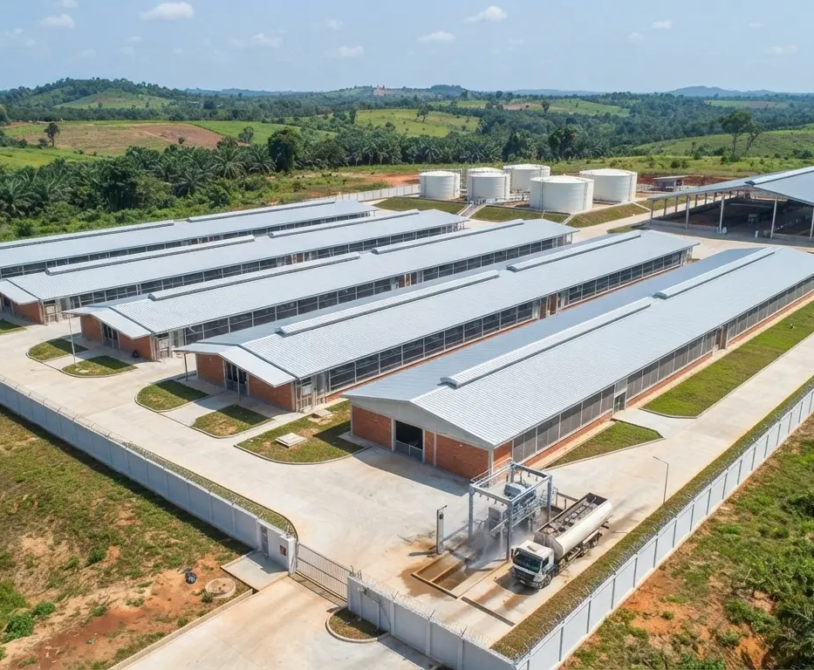
Phase 1 (Before first animals arrive):
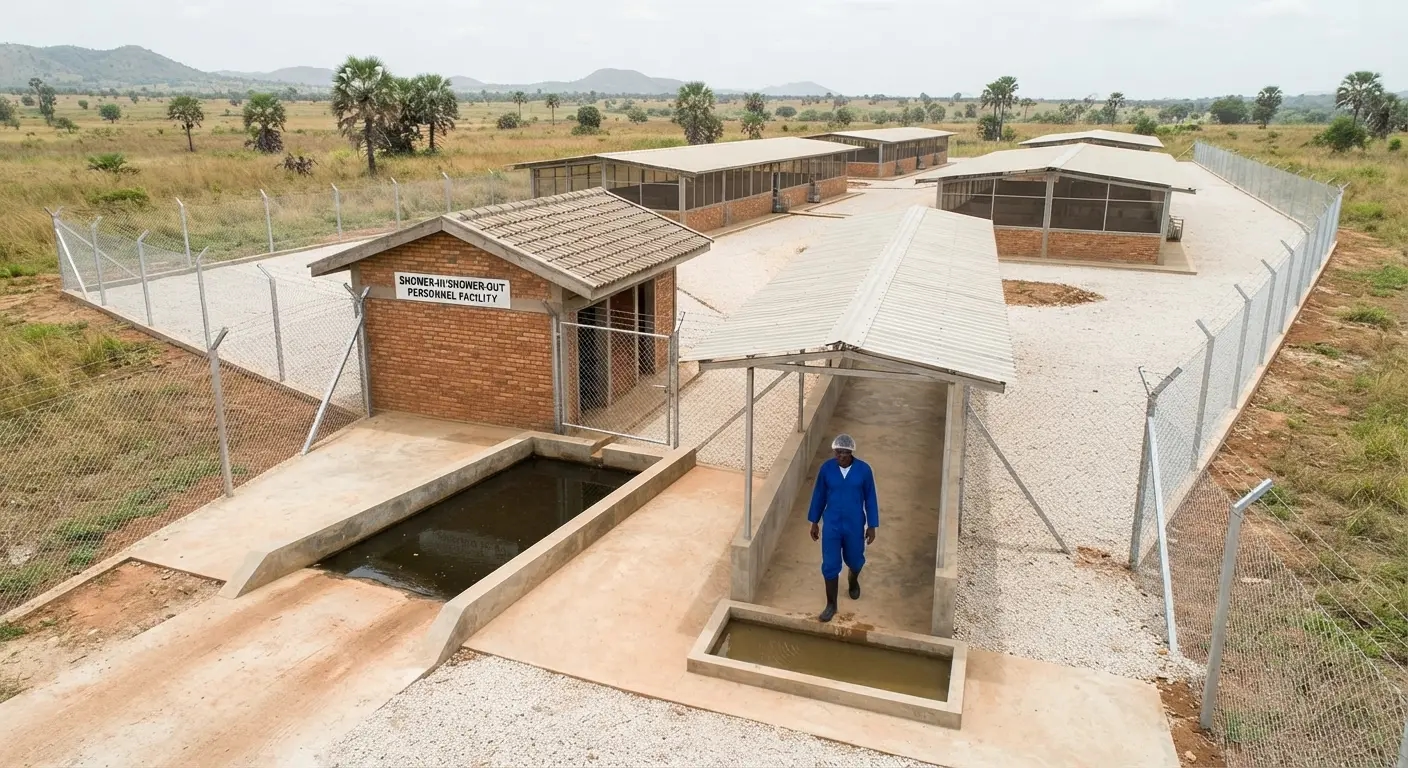
- Perimeter fence (the biosecurity boundary that defines the farm)
- Personnel changing room and entry footbath (the zone transition infrastructure)
- Quarantine facility (required before any animals enter the site)
- Water supply infrastructure (borehole, storage, distribution to pen positions)
- Feed storage
- Office and record-keeping space
Phase 2 (Ready before breeding stock enter the production zone):
- Gestation housing (where purchased gilts will live until farrowing)
- Farrowing house (ready at the appropriate capacity for the first farrowing batch)
- Service area (boar pen or AI collection area)
Phase 3 (Ready before first litters are weaned):
- Weanling room (sized to accommodate the first farrowing batch’s weaned output)
- Grower housing
Phase 4 (Ready before first piglets reach grower weight):
- Finisher housing
- Loading ramp and market connection infrastructure
Why this sequence matters: Building in production priority order prevents the situation where a farm invests in finisher housing before having the farrowing house that produces the pigs to fill it, or has gestation housing but no quarantine facility for the breeding stock that will occupy it.
Infrastructure Cost Benchmarks (2026, West/Central Africa)
For a 20-sow farrow-to-finish operation — the recommended startup scale:
| Infrastructure Element | Estimated Cost (XAF) | Estimated Cost (USD) |
|---|---|---|
| Perimeter fence (500m perimeter) | 3,000,000 | 5,000 |
| Personnel facilities (changing room, shower, office) | 2,000,000 | 3,333 |
| Quarantine facility (3 pens) | 4,000,000 | 6,667 |
| Water supply (borehole, pump, storage, distribution) | 3,500,000 | 5,833 |
| Gestation housing (20 sow stalls or group pens) | 6,000,000 | 10,000 |
| Farrowing house (8 crates) | 8,000,000 | 13,333 |
| Weanling room (2 AIAO rooms) | 4,000,000 | 6,667 |
| Grower housing (4 pens × 10 pigs) | 5,000,000 | 8,333 |
| Finisher housing (6 pens × 10 pigs) | 7,000,000 | 11,667 |
| Feed storage and service zone | 2,500,000 | 4,167 |
| Waste management (biogas or lagoon) | 3,000,000 | 5,000 |
| Electrical installation and generator | 2,000,000 | 3,333 |
| Total infrastructure | 50,000,000 | 83,333 |
Operating Capital Requirement (First Production Cycle)
In addition to infrastructure investment, the first production cycle (approximately 6–7 months from breeding to first market pig sales) requires operating capital for:
| Operating Cost Category | Estimated 6-Month Cost (XAF) | Estimated 6-Month Cost (USD) |
|---|---|---|
| Foundation breeding stock (20 gilts + 2 boars) | 8,000,000 | 13,333 |
| Feed (gestation + farrowing + growing period) | 15,000,000 | 25,000 |
| Veterinary, vaccination, medications | 1,500,000 | 2,500 |
| Staff (1 full-time stockperson) | 3,000,000 | 5,000 |
| Utilities and fuel | 1,000,000 | 1,667 |
| Contingency (10%) | 2,850,000 | 4,750 |
| Total operating capital (6 months) | 31,350,000 | 52,250 |
Total startup capital requirement (20-sow farrow-to-finish): XAF 50,000,000 (infrastructure) + XAF 31,350,000 (operating capital) = XAF 81,350,000 (USD 135,583)
The first market pig sales begin at approximately month 6–7. Cash flow becomes positive (sales revenue exceeding ongoing operating costs) typically at month 8–12, depending on the market price achieved and the feed costs incurred. The operating capital must bridge this gap — an undercapitalized farm that runs out of operating funds before cash flow turns positive faces a crisis that typically requires distressed asset sale or complete closure.
The Management System — Record-Keeping, Performance Monitoring, and Decision-Making
The Minimum Records System
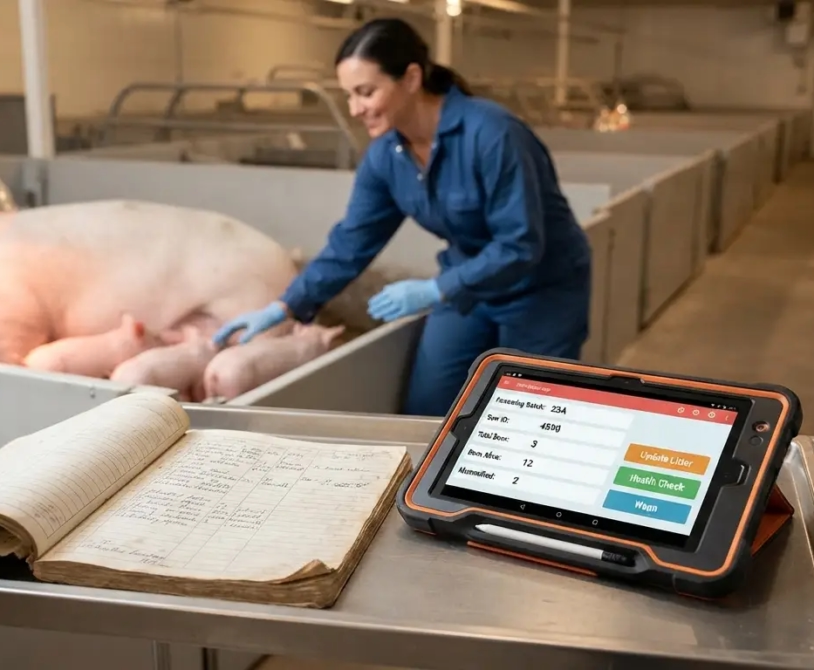
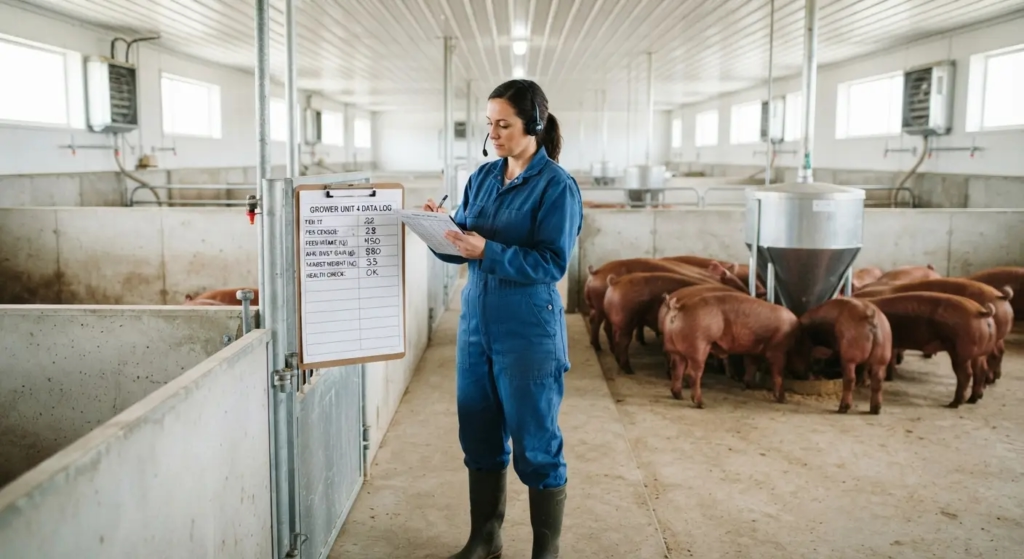
A commercial pig farm without records is a farm that cannot manage — it can only react. The minimum records that must be maintained from the first day of operation:
Sow records:
- Individual sow identification (permanent — ear tag or ear notch as detailed in processing guidance)
- Breeding date, boar/semen used, expected farrowing date
- Farrowing date, litter size born alive, litter size weaned, weaning date
- Any health events, treatments administered, and outcomes
- Parity number and cumulative production record
Pig inventory:
- Weekly pen-level count and average weight (sampled, minimum 10–15 per pen)
- Feed delivered to each pen (by weight, not by bag count)
- Mortality events (date, pen, estimated cause)
Feed records:
- Feed purchased (date, product, supplier, price per kg, quantity)
- Feed delivered to production areas (by building or pen)
- Feed remaining in storage (weekly inventory)
Health records:
- Vaccination events (date, product, batch number, animals covered)
- Treatment events (date, animal, medication, dose, reason, outcome)
- Mortality post-mortem findings (even basic farm-level assessment)
Financial records:
- Every expenditure (feed, veterinary, staff, utilities, capital items)
- Every sale (date, number of pigs, weight, price per kg, buyer)
- Monthly profit and loss summary
The Performance Metrics That Drive Management Decisions
| Metric | Target | Calculation |
|---|---|---|
| PSY (pigs per sow per year) | 20–25 | Pigs weaned annually ÷ average sow inventory |
| Pre-weaning mortality | Below 10% | Deaths before weaning ÷ born alive × 100 |
| Farrowing rate | Above 85% | Farrowings ÷ services × 100 |
| Grower-finisher FCR | 2.4–2.8 | Feed consumed ÷ weight gain |
| Days to market weight | 155–175 | Average days from weaning to 100 kg market weight |
| Feed cost per kg of gain | XAF 780–840 (USD 1.30–1.40) | Total feed cost ÷ total kg live weight produced |
Review these metrics monthly. A metric trending in the wrong direction for two consecutive months warrants investigation and diagnosis — not waiting for a third month to confirm the trend.
The Market Relationship — Building Revenue Before Production Begins
Why Market Development Precedes Production
The most common commercial pig farm failure mode is not technical — it is market failure: a farm that produces pigs efficiently but cannot sell them at a price that covers costs, because the market relationships were not built before production began.
The time between site selection and first pig sales — typically 8–12 months — is the market development window. During this period, while infrastructure is being built and breeding stock is being quarantined and bred, the farm owner should be:
Building buyer relationships:
- Regular visits to target hotel purchasing managers, restaurant owners, and supermarket buyers
- Providing samples where possible (from other farms or market sources) to establish quality standards
- Negotiating preliminary supply agreements with agreed price mechanisms and volume commitments
Establishing the product offering:
- Defining the product specification: live weight delivery vs. carcass weight delivery; whole pig vs. primal cuts; fresh vs. chilled
- Pricing the product appropriately: at commodity prices for wholesale buyers, at premium prices for hotel and restaurant buyers who receive documented quality and reliable supply
Identifying the market mix:
A diversified market portfolio — not dependent on any single buyer for more than 30–40% of sales volume — protects against the price pressure that any single large buyer can exert when they know you have no alternative. The target market mix for a 20-sow startup:
- 40–50% hotel and restaurant supply (premium pricing, relationship-intensive, volume-limited)
- 30–40% retail butcher supply (moderate pricing, good volume, reliable but price-sensitive)
- 15–20% direct farm gate/community sales (highest margin, limited volume, unpredictable timing)
The Price and Cost Structure Verification
Before committing to full production, verify that the achievable market price covers the production cost:
Break-even price calculation (20-sow farm, first full year):
Total annual operating cost (feed, veterinary, staff, utilities, overhead): approximately XAF 35,000,000 (USD 58,333). Annual pigs produced (20 sows × PSY 22 × 90% survival to market): approximately 396 pigs. Market weight: 100 kg live
Break-even price = XAF 35,000,000 ÷ (396 pigs × 100 kg) = XAF 884/kg live weight (USD 1.47/kg)
At current West African commodity pig prices of XAF 1,200–1,800/kg live weight (USD 2.00–3.00/kg), the margin above break-even ranges from XAF 316–916/kg — sufficient for viable profitability at commodity prices.
At premium hotel/restaurant pricing of XAF 3,000–4,500/kg for fresh cuts, the margin is substantially higher — but requires the processing capability and buyer relationships to access this channel.
The First-Year Operational Calendar
Month 1–2: Site Establishment
- Complete land legal documentation (ownership or lease)
- Begin perimeter fence construction
- Begin borehole drilling and water supply installation
- Register the farm with MINEPIA (Cameroon) or the relevant State Ministry of Agriculture (Nigeria) — compliance from the beginning avoids the regulatory complications that informal operations face when they attempt to access formal market channels
Month 2–4: Infrastructure Construction
- Complete personnel facilities, changing room, quarantine facility
- Complete farrowing house and gestation housing
- Install electrical system and water distribution
- Complete feed storage
- Source and confirm breeding stock (gilts and boars or AI supply arrangement) while quarantine facility is finishing
Month 3–4: Breeding Stock Arrival and Quarantine
- Breeding stock arrives and enters quarantine (21–28 days)
- Vaccination catch-up protocol executed during quarantine
- Strategic deworming administered
- Breeding begins at the end of quarantine for gilts that meet the gilt preparation criteria detailed in gilt selection guidance
Month 4–7: First Gestation and Farrowing
- First farrowing expected approximately 115 days after first breeding
- Farrowing house final preparation verified 7 days before expected first farrowing
- First litters born, processed, and managed per farrowing cluster guidance in this series
- Continue weanling room and growing housing construction (if not yet complete)
Month 6–10: First Market Sales
- First market pigs reach market weight (approximately 155–175 days from weaning)
- Initial market sales begin — execute the market relationships developed during the construction phase
- Monitor production performance against targets
- Adjust management protocols based on first-cycle learning
Month 10–12: First Full Cycle Assessment
- Review all production metrics against targets
- Assess financial performance against the feasibility projections
- Identify the two or three highest-priority management improvements for the second production cycle
- Make the scale expansion decision based on first-cycle performance and capital position
The Most Common Startup Failures — And How to Avoid Them
Failure 1: Undercapitalization
Committing to a scale that requires more capital than is available, resulting in incomplete infrastructure, inadequate operating reserves, or inability to respond to first-cycle unexpected costs.
Prevention: Calculate the full startup capital requirement using the benchmarks in this guide, add 20% contingency, and confirm the full amount is available or secured before site construction begins.
Failure 2: Poor Genetics from Unverified Sources
Purchasing breeding stock at the lowest available price from an unverified source, introducing disease or poor production genetics that undermine every subsequent management investment.
Prevention: Pay the premium for verified, health-documented genetics from a referenced supplier. The genetics decision is the single highest-leverage decision in the startup — getting it right costs more upfront and costs far more in the long run if gotten wrong.
Failure 3: Inadequate Management Attention in the First Year
Treating the first production cycle as a passive investment rather than an active management commitment — checking on the farm weekly rather than daily, delegating critical decision-making to undertrained staff, and failing to respond to problems before they escalate.
Prevention: The owner or a specifically employed and trained farm manager must be on-site daily in the first year. Commercial pig production at any scale requires daily professional management attention. Remote management of a startup pig farm produces remote management outcomes.
Failure 4: Market Failure — Selling Into One Channel at Commodity Prices
Producing pigs without established buyer relationships, selling entirely to a single wholesale buyer at the lowest available market price, and being unable to access premium channels because no relationships were built during the construction phase.
Prevention: The market development work in Part 7 must begin during construction, not after first pig sales. By the time the first pigs are ready to sell, the buyers should already be waiting.
Failure 5: Biosecurity Negligence in the First Year
Introducing breeding stock directly to the production population without quarantine, allowing visitors unrestricted access to production areas, and accepting disease introductions that devastate the first production cycle.
Prevention: Implement the complete biosecurity framework detailed in this series from day one. The quarantine facility must be complete before breeding stock arrives — not constructed after the fact.
Summary
Starting a commercial pig farm in West or Central Africa is a viable, financially rewarding enterprise when the startup decisions are made in the right sequence with the right information. The market opportunity is real — growing urban populations, increasing per-capita incomes, and consistent demand for animal protein that local production does not yet adequately supply. The financial return is achievable — a well-managed 20-sow operation at commodity market pricing generates gross revenue of XAF 60,000,000–90,000,000 (USD 100,000–150,000) per year, with net margins of 25–40% for operations that manage feed cost and production performance effectively.
The risks are also real — undercapitalization, poor genetics, inadequate management, market failure, and disease introduction are the four causes of commercial pig farm failure that recur across the industry, and each is preventable with the decisions and disciplines this guide describes.
The entire technical content of this series — piggery design, genetics and breeding, nutrition, biosecurity, health management, farrowing management, and production management — exists to support the operational execution that follows a correctly structured startup. None of that technical knowledge produces value without the right site, the right scale, the right genetics from verified sources, the right market relationships, and the right capital structure underneath it.
Start correctly. Scale after the first cycle proves you can manage what you have. The pigs will tell you, clearly and financially, whether you did.