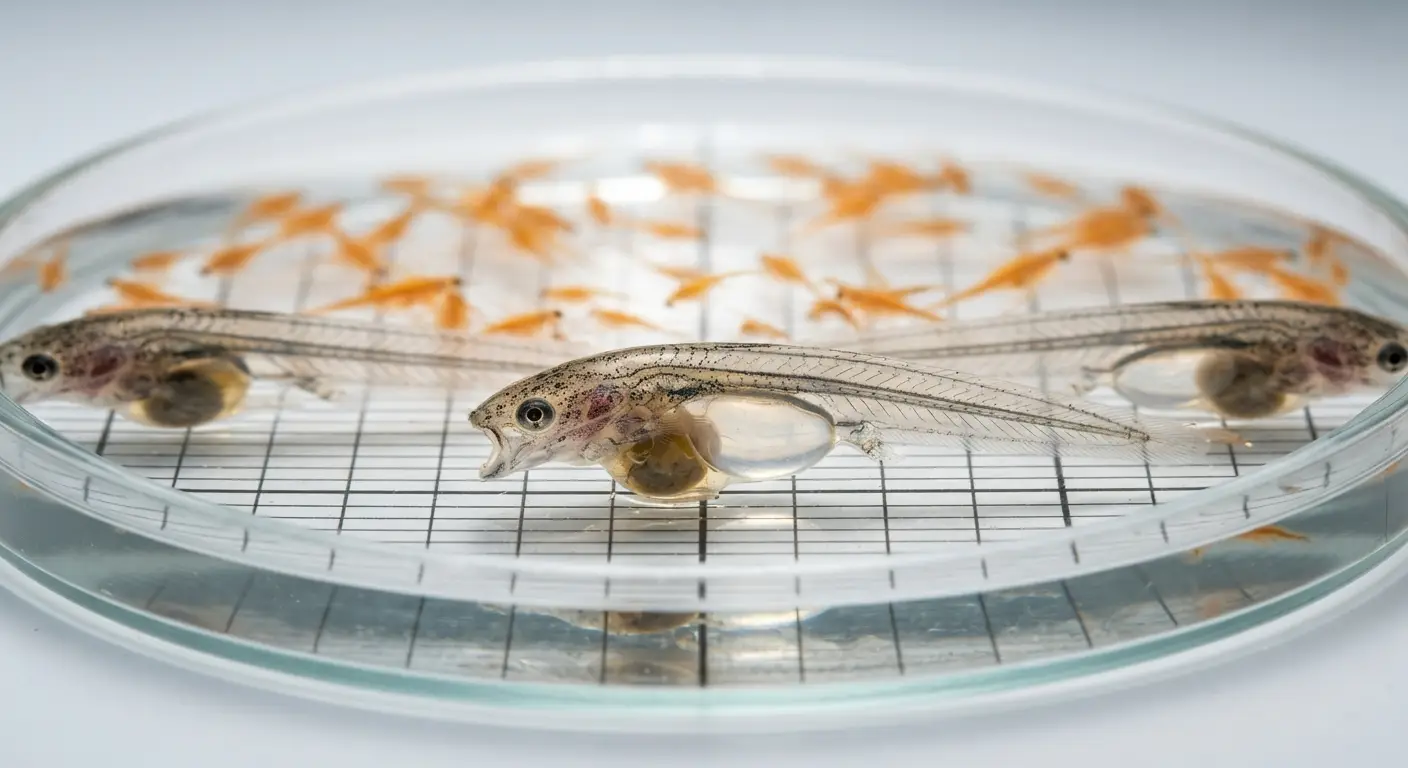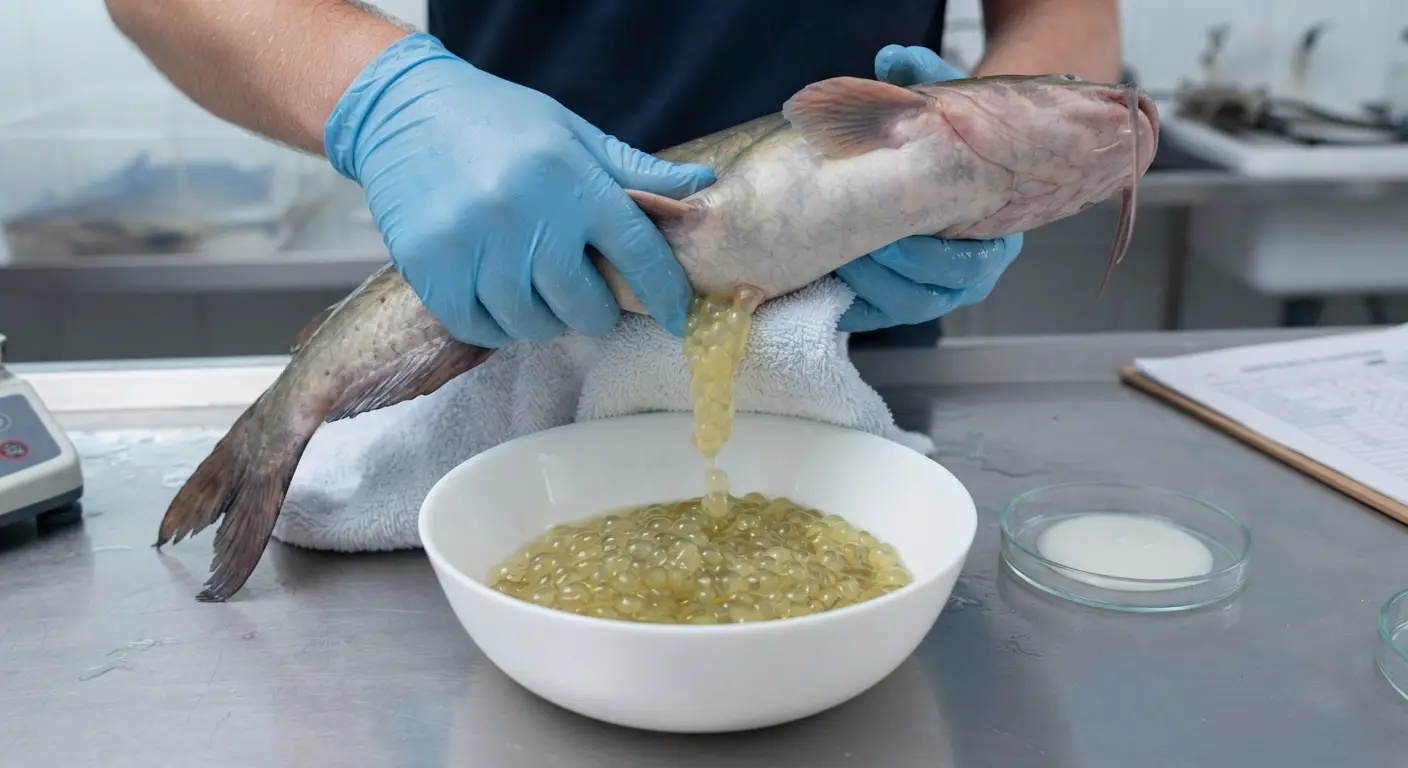
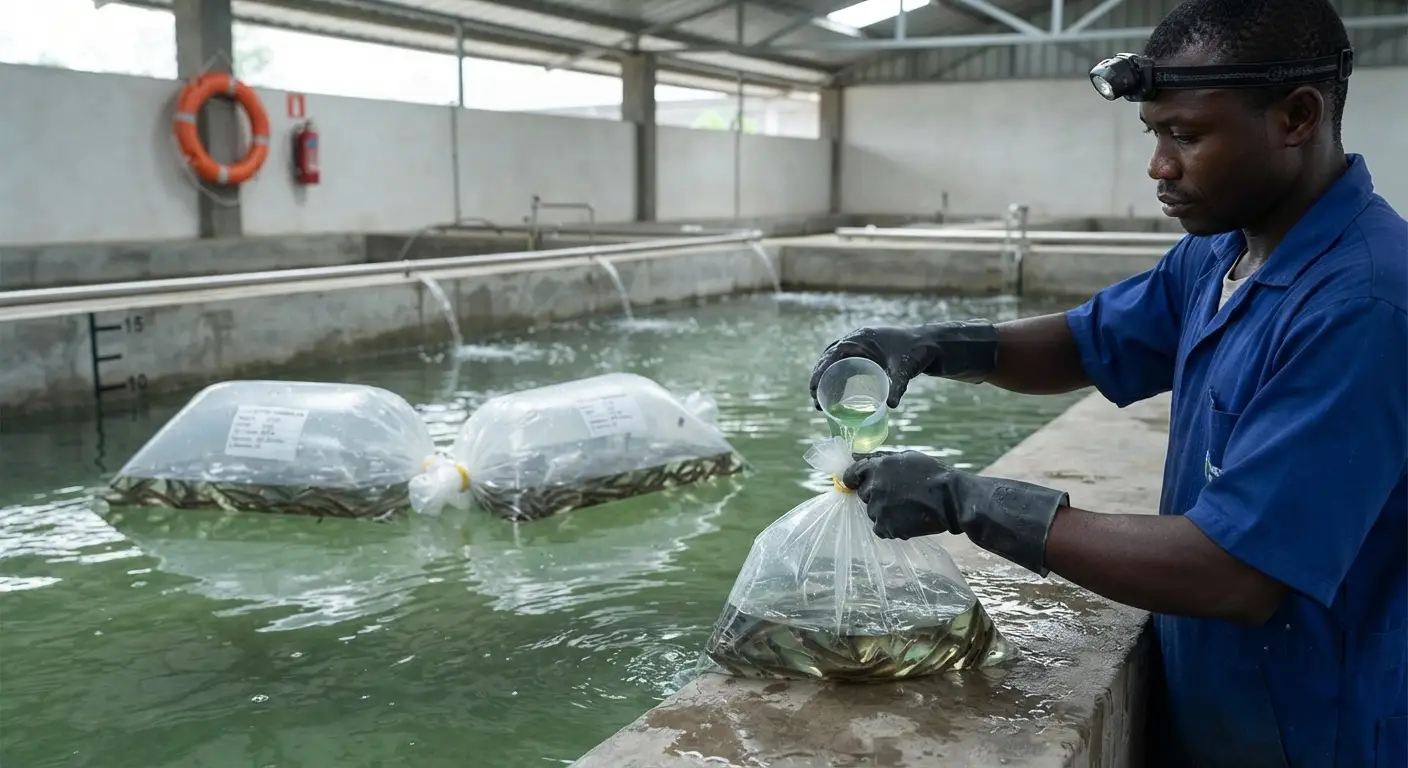
Every catfish grow-out operation begins with fingerling stocking — and the decisions made in the 72 hours surrounding that stocking event influence production performance for the entire grow-out cycle that follows. A fingerling stocked in poor condition — stressed from inadequate transport, damaged from rough handling, carrying a disease load from a poorly managed source hatchery, or acclimated incorrectly to the temperature and water chemistry of its new environment — does not perform at its genetic potential regardless of how well it is fed and managed afterward. The physiological stress of a poor transport and stocking experience takes 1–3 weeks to fully recover from, during which feed intake is suppressed, immune function is compromised, and growth rate is below the trajectory that determines whether the grow-out cycle reaches market weight on schedule.
The fingerling is both the most important input in the catfish production system and the one whose quality receives the least systematic evaluation. Feed quality is assessed by crude protein analysis. Water quality is measured with calibrated instruments. Fingerling quality is typically evaluated by the buyer looking at the fish in a bag and estimating whether they look “healthy” — a highly subjective assessment that misses most of the quality indicators that actually predict grow-out performance.
This guide provides a systematic approach to fingerling quality evaluation, transport management, and stocking practice that replaces subjective impression with documented criteria — giving the grow-out operator the basis for consistent, informed stocking decisions rather than hoping that this batch performs better than the last one.
Evaluating Fingerling Sources
Why Source Quality Determines Grow-Out Outcome
Two fingerling batches of the same species, same weight, purchased at the same price from different sources can produce dramatically different grow-out outcomes — 1 kg fish in 5 months from one source, 1 kg fish in 7 months from another, with different mortality rates, FCR, and uniformity at harvest. The difference is not post-stocking management — it is the genetic quality, health status, conditioning, and nutritional history that the fingerlings carry from the hatchery into the grow-out system.
Genetic quality: Fingerlings from a hatchery with a structured broodstock selection program — selecting for growth rate, body conformation, and disease resistance as described in the broodstock management article — carry superior production genetics compared to fingerlings from unselected wild-caught or random broodstock. This genetic advantage compounds through the entire grow-out cycle — a faster-growing fingerling reaches market weight sooner, consuming less feed to do so.
Health status: Fingerlings from a hatchery with suboptimal water quality, inadequate biosecurity, or undetected pathogen carriage can introduce Aeromonas hydrophila, Columnaris (Flavobacterium columnare), Trichodina, and other pathogens into a clean grow-out system. The consequences are not always immediate — subclinical pathogen carriage from fingerling introduction may only manifest as elevated mortality and reduced growth weeks after stocking, when the connection to fingerling source is less obvious.
Nutritional history: Fingerlings that have been underfed or fed inadequate protein diets during the hatchery phase show stunted body development and impaired digestive capacity. These nutritional deficits are partially compensable with correct grow-out nutrition but never fully recovered — the trajectory of growth through the production cycle is set partially by the nutritional foundation established in the hatchery.
Hatchery Source Evaluation Criteria
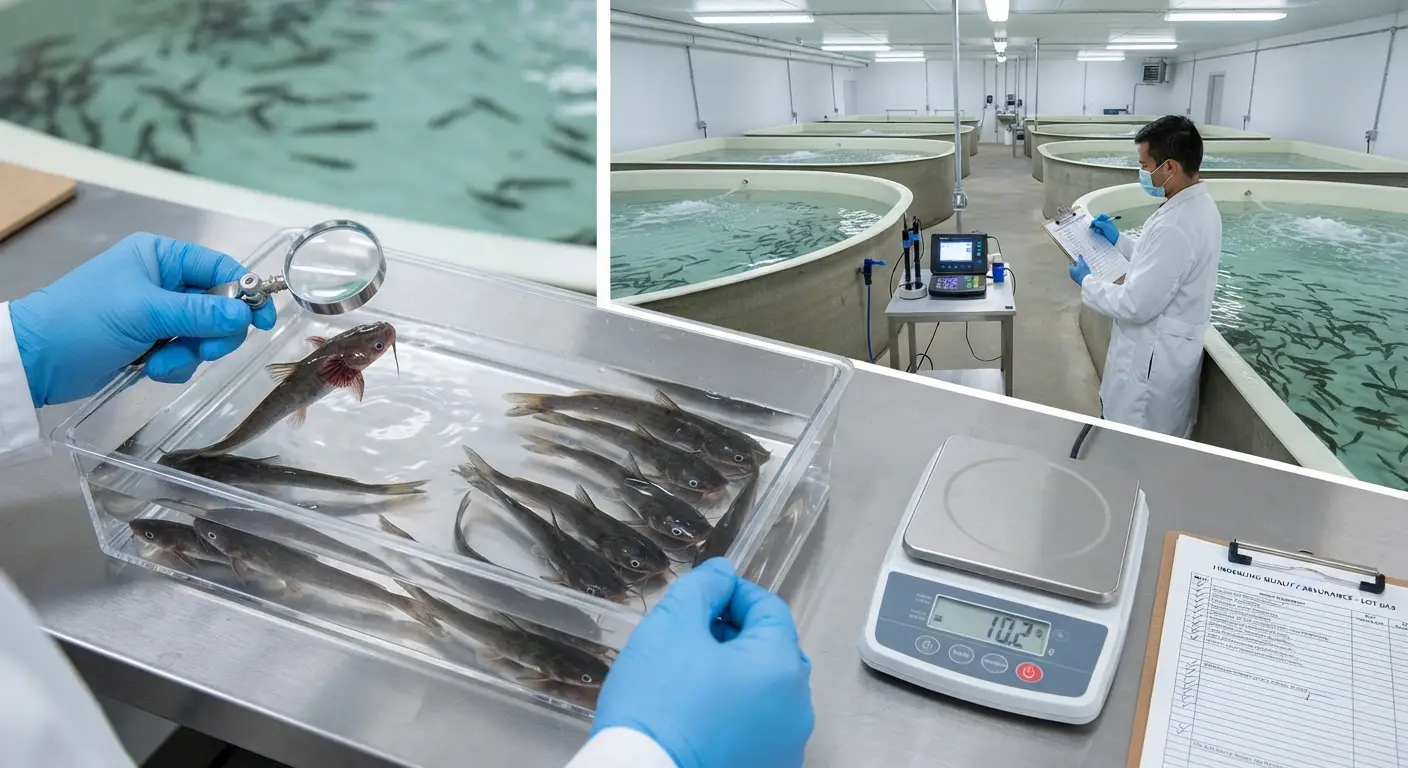
Before committing to a fingerling supplier, evaluate the source against the following criteria:
Hatchery visit (strongly recommended for first-time suppliers):
A physical visit to the hatchery before purchase allows direct observation of management quality that cannot be assessed from a photograph or verbal description:
- Water quality in larval and fingerling tanks: clear water, visibly healthy fish, no foam or turbidity indicating excessive organic loading
- Tank stocking density: tanks should not appear grossly overcrowded — fish that barely have room to move in the fingerling tanks have been conditioned to chronic stress and competition
- Feeding management: are fish being fed? Is feed quality appropriate? Is uneaten feed accumulating?
- Staff competence: does the hatchery operator know the water quality parameters in their system? Can they show grading records and mortality data?
- Biosecurity: is there any form of pathogen exclusion management, or is the hatchery completely open to visitors, wild birds, and wildlife?
Documentation that verifies hatchery quality:
- Spawning records showing hatch rates above 70% and larval survival above 40%
- Water quality logs from the fingerling holding tanks
- Feed records showing appropriate feeding rates and diet specifications
- Health records showing the absence or successful treatment of disease events in the most recent 30 days
- Broodstock history — source and selection criteria for the parent fish
The fish itself — what to assess before purchase:
- External appearance: Body surface should be free of ulcers, lesions, raised scales, or areas of lost mucus. Fins should be intact and erect, not ragged or clamped. Eyes should be clear and bright, not cloudy or sunken.
- Behavior: Active, responsive fish that react quickly to the approach of a hand or net in the tank. Fish that move slowly, congregate passively near the surface, or show listless behavior indicate poor condition, oxygen stress, or disease.
- Uniformity: Size uniformity within the batch indicates proper grading management — a well-graded batch from a competent hatchery shows fish whose individual weights are within 20–30% of the average. A batch with 50%+ size variation has not been graded and will exhibit the cannibalism problems in grow-out that should have been managed in the hatchery.
- Feeding response: Ask the hatchery operator to feed the tank while you observe. A healthy, well-conditioned fingerling cohort should approach the feed aggressively and consume it rapidly. Slow, disinterested, or absent feeding response in a batch offered its normal feed is the most sensitive single indicator of poor condition.
- Gill color: If practical (requires sampling a few fish with a hand net and gently lifting one gill cover), the gills of healthy catfish should be dark red, uniform in color, with no pale patches, excessive mucus, or parasitic organisms visible to the naked eye.
The Physiology of Transport Stress
What Happens to Fish During Transport
Understanding the physiological response to transport allows management interventions that minimize stress and its production consequences — rather than simply “transporting carefully” without knowing which specific aspects of transport cause damage.
The primary stressors of transport:
Crowding: Confinement at high density in transport containers triggers the hypothalamic-pituitary-interrenal (HPI) axis stress response — the fish equivalent of the mammalian hypothalamic-pituitary-adrenal axis. Cortisol is released, driving the characteristic stress response: elevated blood glucose, protein catabolism, immune suppression, and behavioral agitation. The magnitude of the cortisol response is proportional to the degree of crowding and the duration of confinement.
Hypercapnia and ammonia accumulation: At transport densities, fish respiration rapidly elevates dissolved CO₂ and ammonia in the confined transport water. CO₂ acidifies the water and impairs blood pH regulation; ammonia directly damages gill tissue and impairs ion regulatory function. Both compounds accumulate faster than the small transport water volume can buffer — particularly at the elevated temperatures typical of West African ambient conditions.
Hypoxia: At high transport densities, oxygen consumption by the fish rapidly depletes the DO in the transport water. For African catfish, the air-breathing adaptation provides a partial buffer — fish can supplement gill respiration with atmospheric oxygen gulped from the surface or the airspace above the water in a transport bag. However, if the bag is too full of water with insufficient airspace, or if the bag is sealed without adequate oxygen supplementation, hypoxia can still cause stress or mortality.
Thermal shock: Loading fish into transport water that is significantly different in temperature from the holding tank water causes thermal shock — the fish’s enzymatic systems and metabolic processes are calibrated to the holding temperature and cannot immediately accommodate a large temperature shift.
Mechanical injury: Rough handling during netting, loading, and transit causes physical damage — scale loss (which in catfish manifests as mucus damage), fin abrasion against container walls, and internal injury from excessive crowding pressure.
The Post-Transport Recovery Period
After stocking, fish that have experienced transport stress require a recovery period before they can resume normal feeding and growth. The duration of this recovery period is proportional to the severity of the transport stress:
- Well-managed, short-duration transport (under 4 hours): 2–5 days recovery before normal feed intake resumes
- Poorly managed or long-duration transport (above 6 hours): 7–14 days recovery, with elevated disease susceptibility during this period
The decision to begin feeding immediately after stocking versus waiting 24–48 hours depends on observed fish behavior — fish that begin active swimming behavior and show interest in feed particles within hours of stocking have recovered adequately for immediate feeding to begin. Fish that remain lethargic on the tank bottom for more than 4 hours after stocking should be monitored before feeding is initiated, as overfeeding stressed fish that cannot digest normally contributes to water quality degradation without nutritional benefit.
Transport Management — From Source to Farm
Preharvest Preparation at the Source Hatchery
Feed withdrawal: Withhold feed from fingerlings for 12–24 hours before harvesting for transport. A fish with full gut contents produces more ammonia and fecal waste during transport — increasing the rate of water quality deterioration. A fish that has been fasted for 12–24 hours produces less waste and tolerates transport stress better. The fasting period should not exceed 24 hours — extended fasting weakens the fish and reduces transport survival.
Water quality in holding tanks: Ensure source hatchery water quality is good (DO above 5 mg/L, TAN below 0.5 mg/L) in the final 24 hours before transport. Fish transported from already-stressed water quality conditions arrive at the destination in poorer condition than fish transported from good conditions.
Harvesting: Net fish carefully, minimizing the time they spend crowded in the net before transfer to transport containers. Avoid dropping fish significant distances or allowing them to become entangled in the net mesh. Transfer directly from net to transport container — minimize handling time at each transfer.
Transport Container Options
Polythene bags with oxygen:
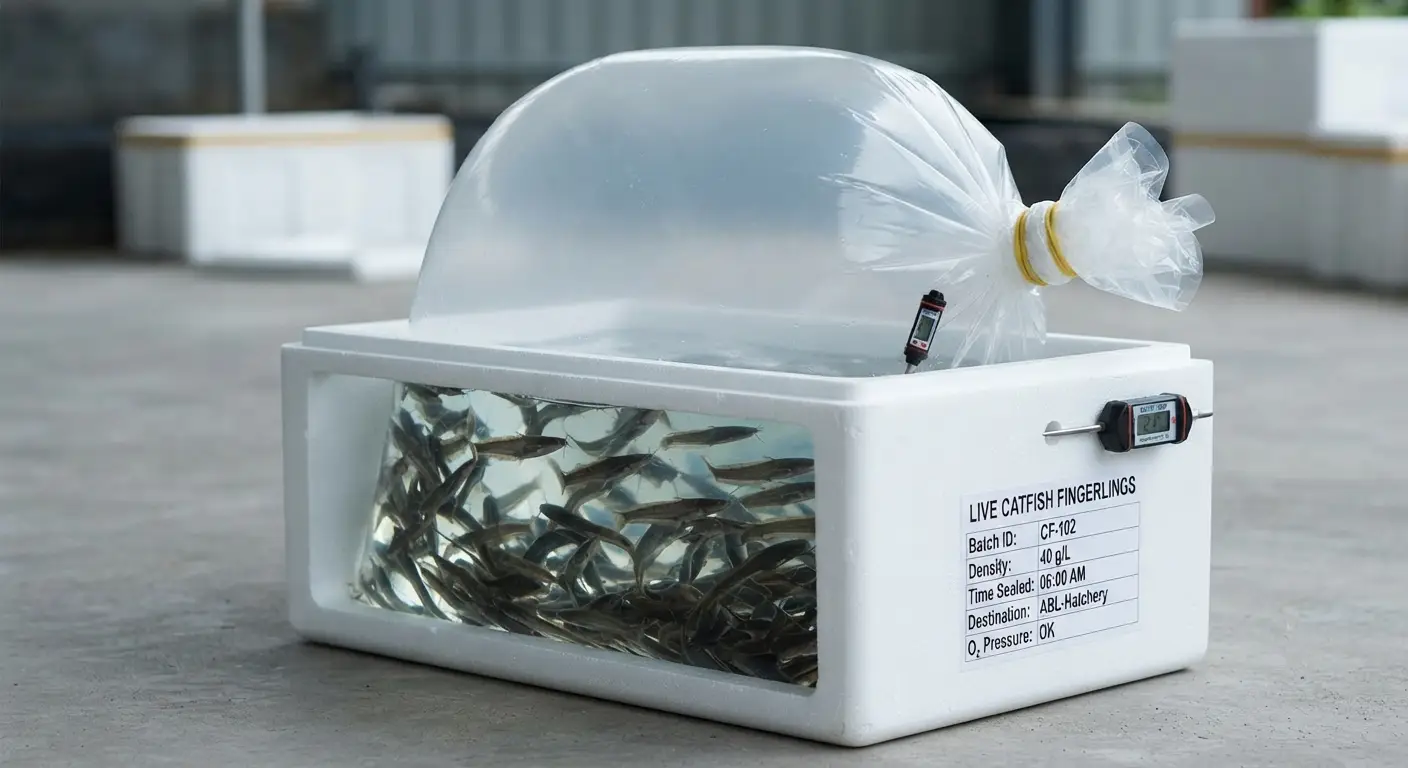
The most widely used transport method for fingerlings in West Africa — standard polythene bags (typically 60 × 90 cm or 70 × 100 cm) partly filled with water, fish added, and the remaining airspace replaced with pure oxygen before sealing:
Water-to-oxygen ratio: One-third water, two-thirds oxygen by volume — this provides sufficient dissolved oxygen for the fish while maximizing the oxygen reservoir that supports respiration through the transport period. Do not fill the bag more than one-third with water.
Sealing: Twist the bag above the water level, fold the twisted section, and secure with two strong rubber bands or seal with a heat sealer. The bag must hold its inflation for the entire transport duration — a bag that slowly deflates exposes fish to oxygen depletion.
Insulation: Place sealed bags in foam boxes (styrofoam coolers) for transport — the foam insulation moderates temperature fluctuation, protecting the fish from the temperature swings that occur when bags sit in direct sun or in the back of a hot vehicle.
Transport duration limit: Properly packed bags in insulated boxes can safely transport fingerlings for 4–8 hours depending on loading density and ambient temperature. Beyond 8 hours, oxygen depletion becomes a risk and water quality deterioration from ammonia accumulation begins to compromise fish condition.
Plastic drums and tanks with aeration:
For larger volumes or longer transport distances — plastic drums (100–200 liter capacity) or purpose-built fish transport tanks (500–2,000 liter) with a battery-operated air pump or liquid oxygen injection:
Advantages: Suitable for larger fish (above 10 g) where bag transport is impractical; allows longer transport duration with proper aeration and water exchange; more stable temperature than bags
Requirements: Battery or generator power for aeration pump; monitoring of DO during transport; provision for waste water removal during long trips (siphoning out 20–30% of tank water every 2–3 hours and replacing with fresh water dilutes ammonia accumulation)
Transport density in aerated tanks: 50–80 kg fish per 1,000 liters for transport durations of 4–8 hours with good aeration; 30–50 kg/1,000 L for longer duration transport
Loading Density Calculation for Bag Transport
The loading density for bag transport determines whether fish survive the journey in good condition — too high leads to oxygen depletion and ammonia toxicity; too low wastes transport capacity without improving fish condition.
Standard loading density for African catfish fingerlings (bag transport, 1:3 water-to-oxygen ratio):
| Fingerling Size | Loading Density | Fish per Standard 60×90 cm Bag (15L water) |
|---|---|---|
| 1–3 g | 50–80 g/L | 250–600 fish |
| 3–5 g | 40–60 g/L | 150–300 fish |
| 5–10 g | 30–50 g/L | 50–150 fish |
| 10–20 g | 20–35 g/L | 20–50 fish |
| 20–50 g | 15–25 g/L | 10–20 fish |
Adjust downward by 20–30% for:
- Transport duration above 4 hours
- Ambient temperature above 32°C
- Water temperature at loading above 30°C
- Fish in poor condition at harvest
Add anesthetic at transport density: For high-density transport exceeding 4 hours, addition of a mild anesthetic (clove oil at 10–20 mg/L, or MS-222 at 50–100 mg/L where available) reduces the stress response and metabolic rate of fish during transport, reducing oxygen consumption and ammonia production. Fish should be briefly immobilized (not fully anesthetized) by the treatment — active but calmer than untreated fish.
Water Acclimatization Protocol at Stocking
Why Acclimatization Is Non-Negotiable
The temperature and water chemistry of the transport water at arrival will differ from the conditions in the grow-out tank or pond — sometimes by a small margin, sometimes substantially. Abruptly transferring fish from transport water into significantly different grow-out water causes thermal and osmotic shock that adds to the stress already imposed by transport. A proper acclimatization protocol allows the fish’s physiology to adjust gradually to the new conditions, reducing the net stress burden of the stocking event.
Temperature Acclimatization Protocol
Step 1 — Float transport bags in the receiving tank or pond for 15–20 minutes:
Place sealed transport bags (or open containers) into the destination tank or pond and allow them to float. Heat exchange between the transport water inside the bag and the destination water outside gradually equalizes temperatures — the fish experience a slow temperature shift rather than a sudden change.
Required temperature equalization time:
| Temperature Difference (transport vs. destination) | Required Float Time |
|---|---|
| Less than 1°C | 10 minutes — minimal acclimatization needed |
| 1–3°C | 15–20 minutes |
| 3–5°C | 25–35 minutes |
| Above 5°C | 40–60 minutes — or temper the water before floating |
Step 2 — Add destination water to the transport container:
After temperature equalization, gradually add small amounts of destination water to the transport container — mixing the destination water chemistry (pH, hardness, alkalinity) with the transport water chemistry over a period of 10–15 minutes. This allows the fish to acclimate to the new water chemistry without sudden osmotic shock.
Add destination water in 3–4 increments, with 5 minutes between each addition:
- First addition: add 10–15% of transport water volume in destination water
- Second addition: add another 15–20% of transport water volume
- Third addition: add another 20% of transport water volume
- Release fish into tank after the third addition
Step 3 — Release and observation:
Gently tip or net the fish from the transport container into the destination tank. Do not pour directly from a height — fish that free-fall more than 20–30 cm experience impact stress. Lower the transport container or use a soft net for transfer.
Observe fish behavior for the first 30–60 minutes after release:
- Fish that immediately begin active swimming, distribute across the tank, and respond normally to disturbance have acclimated well
- Fish that remain on the tank bottom, show listing behavior, or continue rapid opercular movement for more than 30 minutes after stocking require monitoring and investigation of the possible causes (excessive temperature differential, poor transport water quality, disease)
Stocking Density for Grow-Out — Matching Density to System Capacity
Why Stocking Density Is a System-Specific Calculation
The “correct” stocking density for African catfish cannot be stated as a single universal number — it depends on the specific production system’s capacity: the water quality management capability, the aeration capacity, the feed delivery precision, and the management quality of the farm. A stocking density that produces excellent results in a well-managed, high-exchange concrete tank system would produce oxygen depletion, ammonia toxicity, and disease outbreaks in a poorly managed system with the same physical dimensions.
Stocking density must be calculated from the system’s carrying capacity — the maximum fish biomass per unit volume or area that the system can support at the target water quality parameters — and then set at a fraction of that carrying capacity to provide the management safety margin that allows the farm to respond to performance variation without immediately hitting the physiological limit.
Calculating Carrying Capacity for Concrete Tank Systems
Oxygen-based carrying capacity:
Daily oxygen supply (from aeration + water exchange) ÷ per-fish oxygen demand = maximum fish number at that biomass
At 28°C, African catfish oxygen consumption ≈ 300 mg O₂/kg fish/hour
For a 50 m³ tank with:
- Continuous diffused aeration at 2 kg O₂/hour delivery
- 20% daily water exchange (10 m³/day = 417 L/hour × 8 mg/L DO in exchange water = 3.3 g O₂/hour from exchange water)
- Total oxygen supply = 2,000 g/hour + 3.3 g/hour = 2,003 g/hour
Maximum biomass at 300 mg/kg/hour consumption = 2,003 g/hour ÷ 0.3 g/kg/hour = 6,677 kg
This theoretical maximum assumes 100% aeration efficiency and uniform distribution — practical carrying capacity should be set at 60–70% of theoretical maximum = 4,000–4,700 kg for this system.
Ammonia-based carrying capacity:
Daily TAN production ≈ 0.03 kg TAN per kg feed fed
At FCR 1.4, producing 1 kg of fish requires 1.4 kg feed and generates 0.042 kg TAN
At 20% daily water exchange of 50 m³ (10 m³/day = 10,000 L/day): Maximum safe TAN in outflow water: 1.0 mg/L (0.001 g/L) Maximum daily TAN production that can be removed = 10,000 L/day × 0.001 g/L = 10 g/day = 0.010 kg/day
Maximum fish biomass at this TAN production rate: 0.010 kg TAN/day ÷ 0.042 kg TAN/kg fish produced = limited to approximately 0.24 kg fish production per day
This reveals that water exchange rate is often the binding constraint on stocking density at the ammonia parameter — not the oxygen parameter. Increasing water exchange rate or adding biofilter capacity directly increases the allowable stocking density.
Practical Stocking Density Reference for Common Systems
| System Type | Fingerling Stocking Density | Target Harvest Biomass |
|---|---|---|
| Earthen pond, basic aeration | 2–3 fish/m² | 2–3 kg/m² |
| Earthen pond, intensive aeration | 4–6 fish/m² | 4–6 kg/m² |
| Concrete tank, 15% daily exchange | 30–50 fish/m³ at 10 g | 20–40 kg/m³ |
| Concrete tank, 25% daily exchange + biofilter | 60–100 fish/m³ at 10 g | 40–80 kg/m³ |
| RAS, full biological filtration + O₂ injection | 100–200 fish/m³ at 10 g | 60–150 kg/m³ |
The stocking density safety margin: Set the initial stocking density at 70–80% of the system’s calculated carrying capacity at the expected harvest biomass. This margin accommodates mortality losses (which reduce biomass below the stocked number) and the variation in growth rate that affects actual vs. projected harvest dates.
Stocking Uniformity — Size Matching for the Grow-Out System
The average stocking weight matters less than the uniformity of stocking weight for grow-out performance. A tank stocked with 1,000 fish averaging 10 g but ranging from 3 g to 40 g will produce a harvest of fish ranging from 400 g to 1.5 kg — requiring multiple partial harvests at different times, complex marketing of mixed sizes, and ongoing size-related competition and cannibalism that suppresses the overall growth rate of the batch.
The same tank stocked with 1,000 fish averaging 10 g ranging from 8 g to 12 g produces a uniform harvest at a predictable time — manageable in a single harvest event, uniform in presentation to buyers, and free of the cannibalism and competition dynamics that the size-mixed batch generates.
Minimum size uniformity standard at stocking: 80% of fish within ±25% of the average weight. Fish outside this range (very large or very small individuals) should be separated into a different tank or held for a separate production cycle rather than mixed into the main batch.
Post-Stocking Management — The First Two Weeks
The Acclimation Period Management Protocol
Days 1–2 (no feeding): Observe fish behavior without feeding — this allows assessment of stocking success without the confounding variable of feed-related activity. Fish that are swimming actively and distributing normally across the tank by Day 2 are acclimating well. Continue monitoring water quality hourly for the first 24 hours — stocking significantly increases the biological oxygen demand and ammonia load in the tank, and the system’s water quality parameters need to be confirmed stable before normal management resumes.
Days 2–5 (reduced feeding, 50% of normal ration): Introduce feed at half the normal ration for the first few days — fish that are still recovering from transport stress have reduced digestive capacity and overfeeding unstressed fish creates uneaten feed accumulation that degrades water quality. Observe feeding response: well-recovered fish will consume the reduced ration rapidly and appear to seek more; fish still recovering will show disinterest or sluggish feeding behavior.
Day 5–7 onward (full normal ration): Transition to the full calculated feeding rate once the batch is confirmed feeding actively and water quality parameters remain stable. Document the first week’s daily feed consumption as a baseline for monitoring feeding behavior through the grow-out cycle.
Health Monitoring in the First Week Post-Stocking
The first week after stocking is the highest disease risk period in the grow-out cycle — the combined stress of transport, new environment, new social group formation, and water chemistry acclimatization suppresses immune function and creates vulnerability to the opportunistic bacterial pathogens that are present in any production environment.
Daily first-week health check:
- Count and collect all mortalities — express as percentage of stocked number per day
- Examine mortalities for external signs: body lesions, ulcers, hemorrhage at fin bases, unusual mucus
- Observe behavior in all tanks for early warning signs (surface breathing, lethargy, abnormal swimming posture)
- Measure water quality (DO, TAN, pH, temperature) in all tanks — post-stocking water quality change is the most common cause of first-week mortality
Acceptable first-week mortality: Below 1% cumulative over the first 7 days post-stocking. Above 1% cumulative in the first week warrants investigation of transport quality, source hatchery health status, and post-stocking water quality.
Treatment decisions in the first week: Avoid prophylactic antibiotic treatment as a routine response to any post-stocking mortality — this practice promotes antibiotic resistance and masks the specific diagnosis that would identify whether the mortality is transport stress-related (self-limiting, no treatment needed) or pathogen-related (requires specific treatment). Diagnose before treating.
Summary
The fingerling stocking event is the foundation on which each grow-out production cycle is built — and the quality of that foundation is determined by decisions made before a single fish enters the grow-out system: the evaluation of the source hatchery, the management of transport conditions, the precision of the acclimatization protocol, and the matching of stocking density to the specific system’s verified carrying capacity.
Each of these decisions has specific, implementable criteria rather than subjective judgments: the hatchery visit checklist provides documented evidence of source quality rather than verbal assurance; the loading density calculation ensures transport conditions match the species’ physiological tolerance rather than hoping the fish will survive whatever density fills the transport bag; the temperature equalization protocol gives fish the physiological adjustment time their enzyme systems require; and the carrying capacity calculation based on oxygen supply and ammonia removal capacity matches stocking density to system capability rather than to industry average numbers that may not apply to the specific farm’s infrastructure and management quality.
The next article moves into the catfish nutrition cluster — covering the nutritional and protein requirements that determine the feed specification for each production stage.