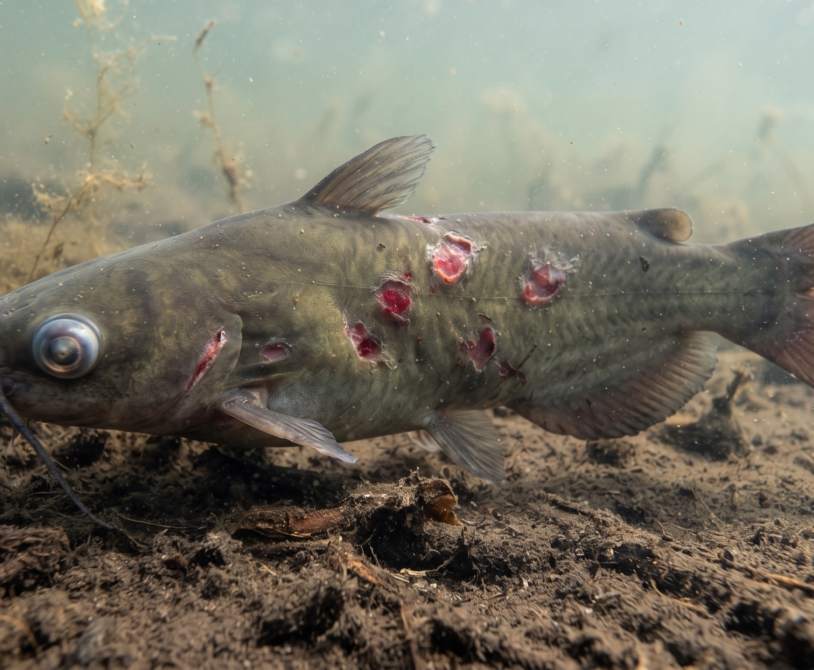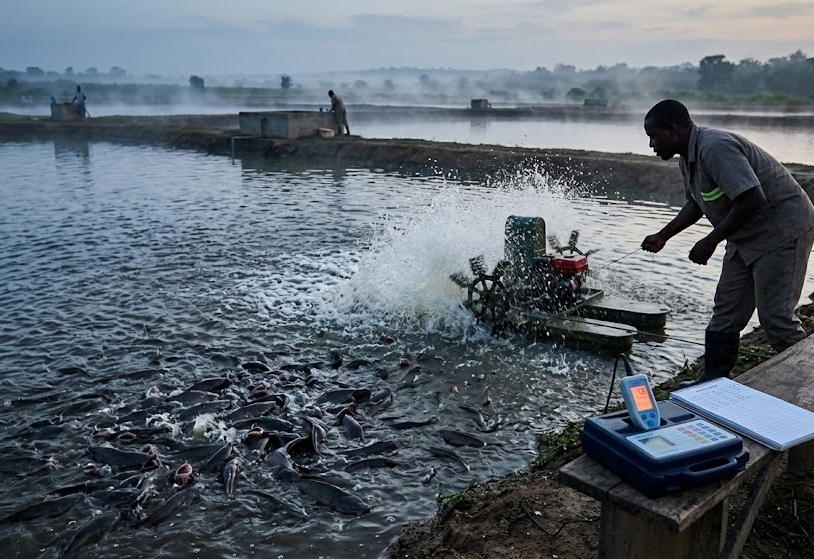
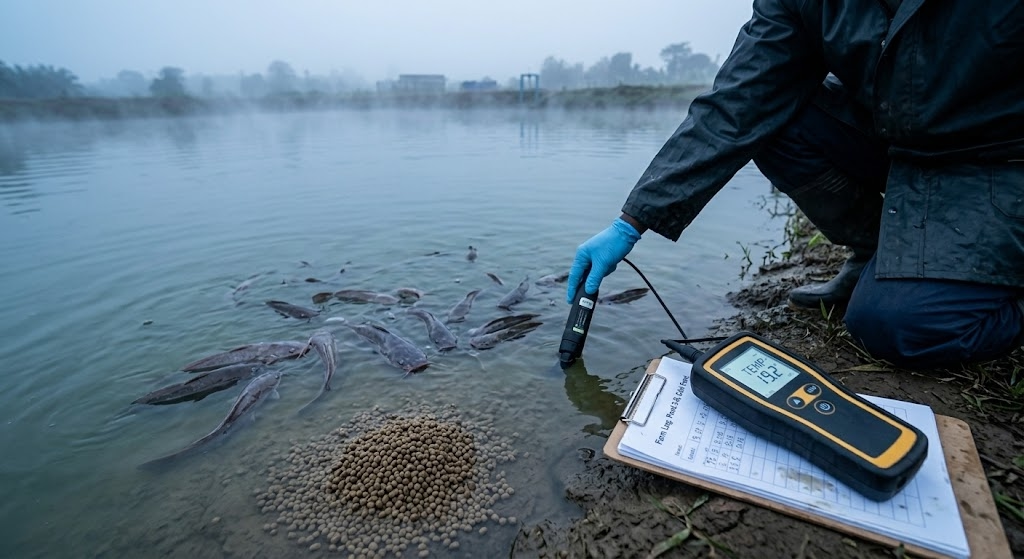
Water temperature plays an important role in catfish health because it influences fish metabolism, immune responses, pathogen activity and water quality. In African catfish farming, unsuitable temperatures can increase physiological stress and contribute to conditions that make disease problems more difficult to manage.
Temperature alone does not determine whether catfish develop a disease. Disease outcomes also depend on the pathogen involved, fish condition, stocking density, nutrition, and the quality of the water.
How Water Temperature Influences Catfish Health
African catfish (Clarias gariepinus) are adapted to warm freshwater environments, but they still require suitable and reasonably stable water conditions.
Temperature affects catfish health in several ways:
- Metabolism: Changes in temperature influence energy use, digestion, and feeding activity.
- Immune function: Temperatures outside suitable conditions can affect the fish’s ability to respond to pathogens.
- Pathogen activity: The growth and reproduction of some disease-causing organisms depend on temperature.
- Oxygen availability: Warmer water holds less dissolved oxygen, potentially increasing stress.
- Water chemistry: Temperature influences ammonia toxicity and interacts with other water quality parameters.
These factors can operate together, making temperature management an important part of disease prevention.
How Low Water Temperature Can Affect Catfish Disease
When water temperatures fall below the preferred range for African catfish, fish may become less active and feed less frequently. Changes in metabolism and physiological function can affect their ability to cope with environmental stress.
Potential consequences include:
- Reduced feeding and slower growth.
- Increased stress during sudden temperature changes.
- Changes in immune function.
- Reduced resilience when fish are exposed to pathogens.
- Poor recovery when another health problem is present.
Low temperature does not automatically cause an infection. However, unsuitable conditions can contribute to disease risk when fish are also exposed to pathogens or other stressors.
How High Water Temperature Can Affect Catfish Disease
High water temperature can create several challenges in intensive catfish farming.
As water warms, dissolved oxygen availability generally decreases. Fish may also require more oxygen as metabolic activity increases. If aeration and water circulation are inadequate, this can contribute to respiratory stress.
High temperatures may also influence the activity of certain bacteria, parasites and other pathogens, although the effect differs among organisms.
Possible consequences include:
- Increased physiological stress.
- Reduced feeding when temperatures become unsuitable.
- Greater risk of oxygen-related problems.
- Changes in pathogen activity.
- Increased ammonia toxicity when temperature and pH are elevated.
- More complicated disease management when several stressors occur together.
Farmers should avoid assuming that every disease outbreak during hot weather is caused directly by temperature. Water quality testing and appropriate disease diagnosis remain necessary.
The Relationship Between Temperature and Common Catfish Diseases
Different disease-causing organisms respond differently to environmental conditions. Temperature may influence disease development, but it should not be used as the sole diagnostic indicator.
| Health problem | How temperature may be relevant |
|---|---|
| Bacterial infections | Temperature may influence bacterial activity and the fish’s response to infection |
| Fungal infections | Environmental conditions, fish injury and the organism involved affect disease development |
| Parasitic infections | Temperature may affect the life cycle and activity of some parasites |
| Gill disease | Temperature can contribute to stress and interact with oxygen and other water quality problems |
| Water quality-related illness | Warm conditions can worsen oxygen limitations and increase the proportion of toxic un-ionized ammonia |
The specific cause of a disease must be established before selecting treatment. Similar symptoms can occur in unrelated conditions.
How Sudden Temperature Changes Stress Catfish
Rapid temperature changes can place additional stress on fish, particularly when they are already weakened by transport, handling, poor nutrition or unsuitable water quality.
Sudden changes may occur during:
- Water exchange using water at a different temperature.
- Heavy rainfall or abrupt weather changes.
- Transfer between tanks or ponds.
- Poorly controlled heating or cooling systems.
- Moving fingerlings between different production environments.
To reduce risk, measure the temperature of both the existing water and incoming water before significant transfers or exchanges. Avoid abrupt changes and follow suitable acclimation procedures when moving fish.
Signs of Temperature-Related Stress in Catfish
Temperature stress does not produce one unique set of symptoms. Farmers should watch for changes in normal behaviour and feeding patterns.
Possible warning signs include:
- Reduced appetite.
- Unusual swimming behaviour.
- Sluggishness or reduced activity.
- Increased respiratory movement.
- Fish gathering near water inflows or areas with better circulation.
- Poor growth or inconsistent feeding.
- Increased susceptibility to other health problems.
These signs can also indicate low dissolved oxygen, ammonia or nitrite poisoning, parasites, bacterial infections, or other problems.
Do not diagnose a disease from temperature-related symptoms alone. Measure the water temperature and test other relevant parameters before deciding on corrective measures.
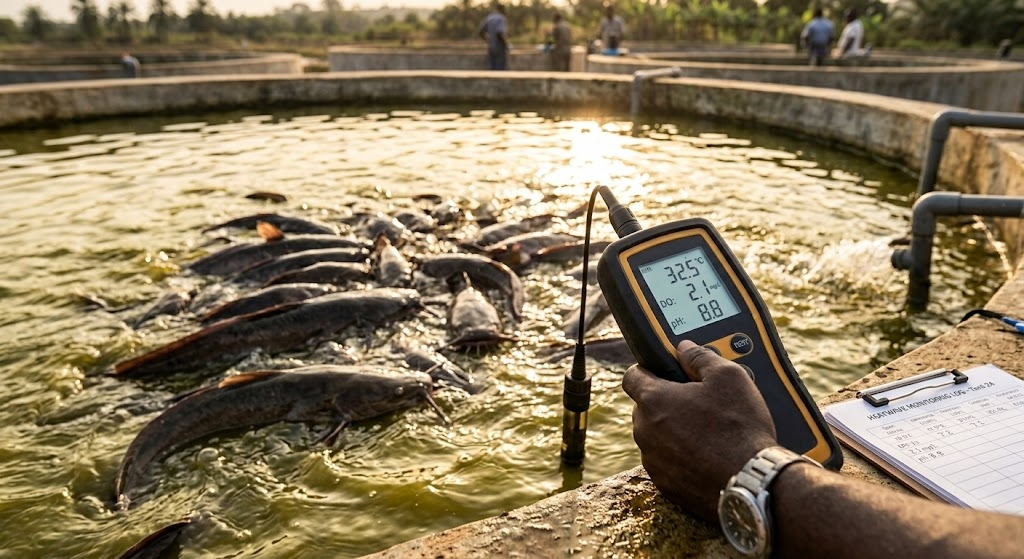
How to Prevent Temperature-Related Disease Problems
1. Maintain suitable water temperatures
For many African catfish grow-out systems, approximately 26–30°C is a practical warm-water management range. The appropriate range depends on fish size, farming conditions, and other water quality factors.
2. Monitor temperature regularly
Use a suitable thermometer to measure water temperature directly. Record readings consistently so that sudden changes and recurring patterns can be identified.
3. Maintain adequate dissolved oxygen
Monitor oxygen levels, particularly during hot weather and in heavily stocked systems. Ensure that aeration and circulation equipment are functioning correctly.
4. Control ammonia and nitrite
Test nitrogenous waste compounds regularly. Warm conditions can increase ammonia toxicity, while inadequate biological filtration can contribute to nitrite accumulation.
5. Avoid unnecessary handling
Handling and transferring fish can add stress, especially when water conditions are unstable. Plan transfers carefully and minimise avoidable disturbance.
6. Adjust feeding to fish behaviour
Observe appetite and remove uneaten feed where practical. Avoid maintaining the usual feeding quantity when fish are eating poorly or water quality has deteriorated.
7. Maintain good stocking and waste management
Match stocking density to the system’s aeration, filtration and water-management capacity. Remove dead fish and manage organic waste promptly.
8. Investigate unusual mortality
If deaths increase or symptoms persist, assess water quality and seek appropriate aquatic animal health advice. Do not rely on temperature adjustment alone when an infectious disease or toxic exposure may be involved.
How to Investigate a Catfish Disease Outbreak During Temperature Changes
When disease symptoms appear after a temperature change, use a structured investigation.
- Measure water temperature: Confirm the current reading and compare it with previous records.
- Test dissolved oxygen: Determine whether fish are experiencing oxygen stress.
- Measure ammonia and nitrite: Identify possible toxic water quality conditions.
- Check pH: Consider how pH and temperature may affect ammonia toxicity.
- Observe the affected fish: Record feeding changes, swimming behaviour, gill appearance, and mortality.
- Review recent farm activities: Check water exchange, transport, handling, feeding, and equipment changes.
- Seek a diagnosis: If symptoms continue, obtain professional assessment to distinguish infection from environmental stress.
This approach helps farmers identify contributing factors without incorrectly attributing every outbreak to temperature.
Frequently Asked Questions
Does cold water cause catfish disease?
Cold water does not automatically cause disease, but unsuitable temperatures can stress fish and affect their physiological responses. Disease risk depends on the fish, the pathogen, and other environmental conditions.
Does hot water increase bacterial infections in catfish?
Temperature can influence the activity of some bacteria, but the effect varies by organism. High temperature can also create oxygen and water quality problems that add to fish stress.
Can temperature changes kill catfish?
Severe or abrupt temperature changes can harm fish, particularly when combined with low oxygen or other water quality problems. The risk depends on the magnitude and duration of the change and the condition of the fish.
What temperature should farmers maintain to prevent disease?
A practical grow-out management range for African catfish is approximately 26–30°C, but no single temperature prevents all diseases. Stable water quality, suitable feeding, good biosecurity, and early diagnosis are also important.
Should farmers use antibiotics when catfish become stressed by temperature?
Temperature stress alone is not a reason to use antibiotics. First, investigate the water quality and determine whether a bacterial infection is present. Any antimicrobial treatment should follow an appropriate diagnosis and applicable veterinary guidance.
Conclusion
Temperature affects catfish disease risk through its influence on fish physiology, pathogen activity, dissolved oxygen, and water chemistry. Both unsuitable temperatures and sudden fluctuations can contribute to stress, particularly in intensive farming systems.
Effective prevention combines regular temperature monitoring, adequate aeration, waste management, controlled feeding, and prompt investigation of unusual symptoms. When disease develops, temperature should be assessed alongside other environmental conditions rather than treated as the only possible cause.