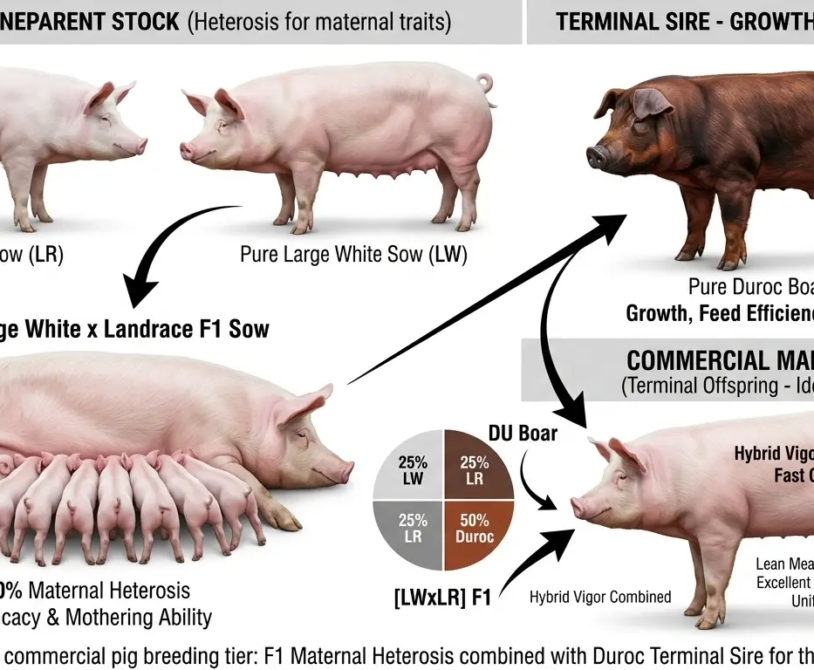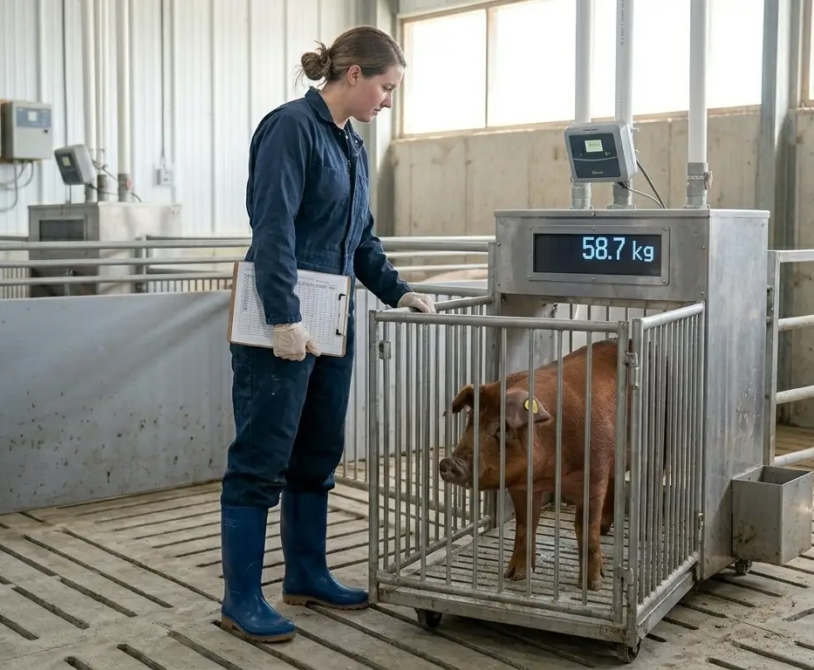
Artificial insemination (AI) has transformed commercial pig breeding from a system constrained by which boars a farm happens to own into a system where any farm — regardless of size — can access the genetic merit of the world’s best terminal sire and dam line boars. A single Duroc boar ejaculate processed correctly produces 20–30 insemination doses. A farm using AI exclusively never bears the cost of housing, feeding, and managing a boar, never faces the injury risk of boar handling, and never has its genetic improvement capped by what one or two on-farm boars can provide.
But AI is not simply “buying semen instead of owning a boar.” It is a technical skill that depends on correctly identifying when a sow is in standing heat, correctly timing insemination relative to ovulation, correctly handling semen to preserve sperm viability, and correctly executing the insemination technique itself. Each of these steps has a specific biological basis, and errors at any step reduce conception rates measurably — sometimes catastrophically.
This guide builds AI competency from the foundational biology through to practical troubleshooting: understanding the sow’s reproductive cycle, recognizing standing heat, sourcing and handling semen correctly, executing the insemination procedure, and diagnosing the most common causes of AI failure.
Part 1: The Biological Foundation — Understanding the Sow’s Estrus Cycle
Successful AI depends entirely on correctly identifying where the sow is in her reproductive cycle — because insemination timed incorrectly relative to ovulation fails regardless of semen quality or technique.
The Estrous Cycle
The sow’s estrous cycle averages 21 days (range 18–24 days) and consists of four phases:
Proestrus (days 1–2): Follicles begin developing under the influence of rising estrogen. The vulva begins to swell and redden, but the sow does not yet show standing heat behavior.
Estrus (standing heat, days 2–3 of the cycle, lasting 40–70 hours): Estrogen reaches peak levels. The sow exhibits standing heat behavior — she stands rigid and immobile when pressure is applied to her back, particularly in the presence of a boar or boar pheromone. This is the period during which insemination must occur.
Ovulation (typically 24–48 hours after the onset of standing heat, closer to two-thirds through the standing heat period): The mature follicles rupture, releasing eggs into the oviduct where fertilization occurs if viable sperm are present.
Metestrus and diestrus (days 4–20): The corpus luteum forms and produces progesterone, which maintains pregnancy if fertilization occurred, or regresses after approximately 14–16 days if the sow did not conceive, allowing the cycle to begin again.
Why Ovulation Timing Is the Critical Variable
Sperm deposited in the sow’s reproductive tract remain viable and capable of fertilization for approximately 24 hours. Eggs released at ovulation remain viable for fertilization for only 8–12 hours. This asymmetry — sperm survive much longer than eggs — is why insemination must be timed to occur before ovulation, allowing sperm to be present and waiting in the oviduct when ovulation occurs, rather than attempting to inseminate after ovulation when the egg’s fertile window has already begun closing.
The optimal insemination window: 0–24 hours before ovulation. Since ovulation occurs at approximately two-thirds through the standing heat period (which lasts 40–70 hours), the optimal insemination timing is:
- First insemination: 12 hours after the onset of standing heat is detected
- Second insemination: 24 hours after the first (i.e., 36 hours after onset of standing heat)
- Third insemination (if standing heat persists): 24 hours after the second
This multiple-insemination protocol — rather than a single insemination — accounts for the variability in exactly when each individual sow ovulates relative to the onset of her standing heat, ensuring that viable sperm are present in the reproductive tract regardless of whether that particular sow ovulates early or late within the typical range.
Part 2: Detecting Standing Heat — The Skill That Determines Everything Else
The Boar-Assisted Heat Check (Gold Standard Method)
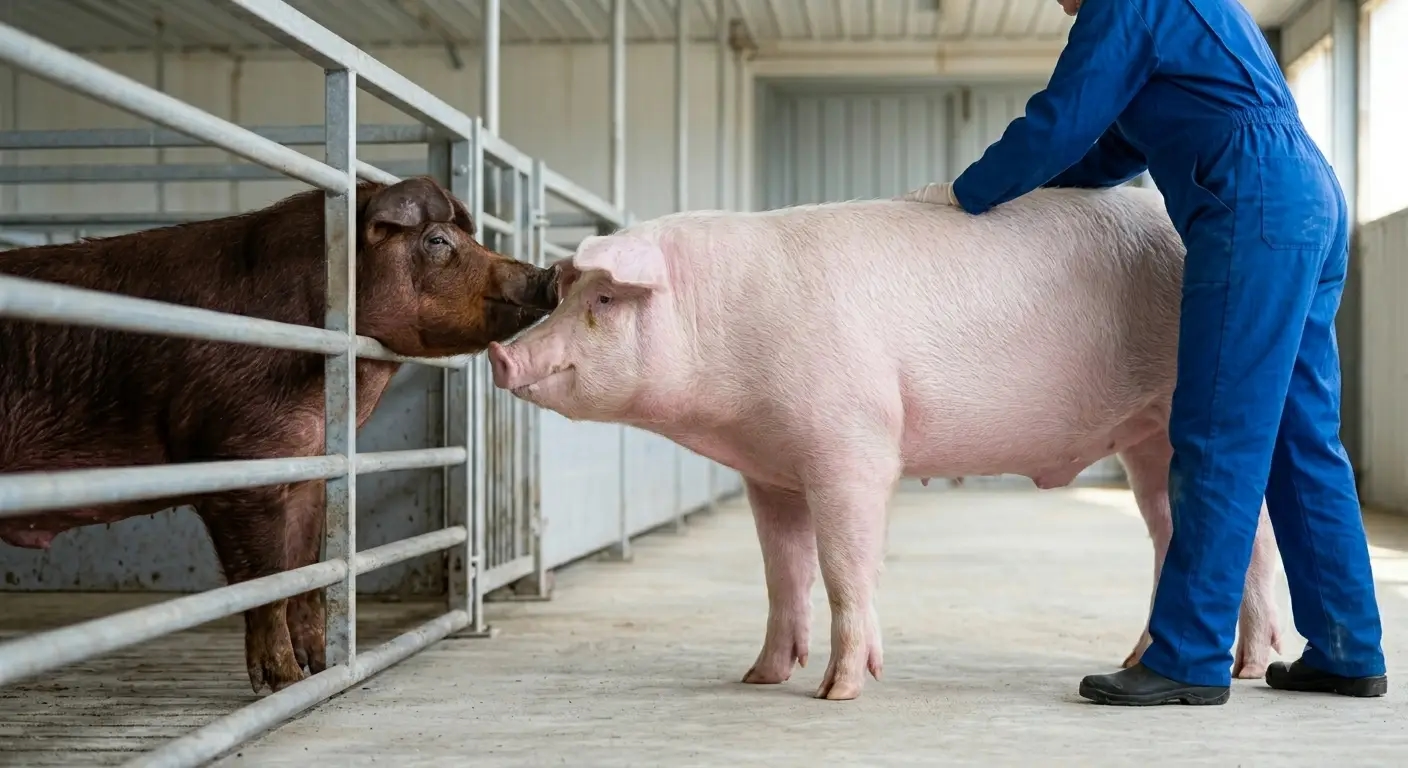
The most reliable method for detecting standing heat uses direct contact with a mature boar — his pheromones (specifically androstenone in his saliva) and vocalizations trigger the sow’s lordosis (standing) reflex more reliably than any other stimulus.
Procedure:
- Move the boar to a position where he has nose-to-nose contact with the candidate sow through a fence or pen divider — direct physical contact is not required and is often avoided to prevent injury
- While the boar is present and vocalizing (the characteristic “chant” courtship grunting), apply firm pressure to the sow’s back, simulating the pressure a mounting boar would apply
- Observe the sow’s response:
Standing heat confirmed: The sow stands rigid, ears may prick up or become alert (“flop ears” in some breeds), tail may move to the side, and she resists movement away from the pressure. This rigid, immobile stance — the lordosis reflex — is the definitive sign of standing heat.
Not in standing heat: The sow moves away from pressure, walks off, or shows no behavioral change. She may still show vulva swelling (proestrus) without standing heat.
The Back Pressure Test (Without Boar Present)
In the absence of a boar, the back pressure test alone is less reliable but still useful, particularly when checked twice daily:
Apply firm, sustained pressure to the sow’s lower back/loin area while standing beside her. A sow in standing heat will exhibit the lordosis reflex even without boar stimulation, though the response is generally less pronounced and less reliable than with boar-assisted checking.
Visual and Physical Signs Supporting Heat Detection
While not sufficient alone for accurate timing, these signs support the assessment:
- Vulva swelling and reddening: Increases through proestrus, peaks around the onset of standing heat, and begins subsiding during standing heat itself
- Mucus discharge: Clear, thin mucus discharge from the vulva, most visible during proestrus and early estrus
- Restlessness and vocalization: Increased activity, mounting other sows, increased vocalization in the 24–48 hours before standing heat onset
- Reduced feed intake: Many sows show a transient decline in feed intake around standing heat onset
- Mounting behavior: Sows in proestrus or early estrus frequently attempt to mount pen-mates (though sows being mounted are not necessarily themselves in standing heat — only the mounting behavior of the sow herself is informative)
Heat Check Frequency and Schedule
Twice daily checking, 12 hours apart, beginning at weaning (for weaned sows, who typically return to estrus 4–7 days post-weaning) or at the expected next-cycle date (for previously bred sows that did not conceive, expected approximately 21 days after the previous unsuccessful service).
The reason for 12-hour intervals: Standing heat lasts 40–70 hours. Checking every 12 hours captures the onset of standing heat within a maximum 12-hour error window — adequate precision for the insemination timing protocol described above. Checking only once daily risks missing the optimal insemination window entirely for sows with shorter standing heat duration.
Part 3: Semen — Sourcing, Storage, and Quality Verification
Types of Semen Available
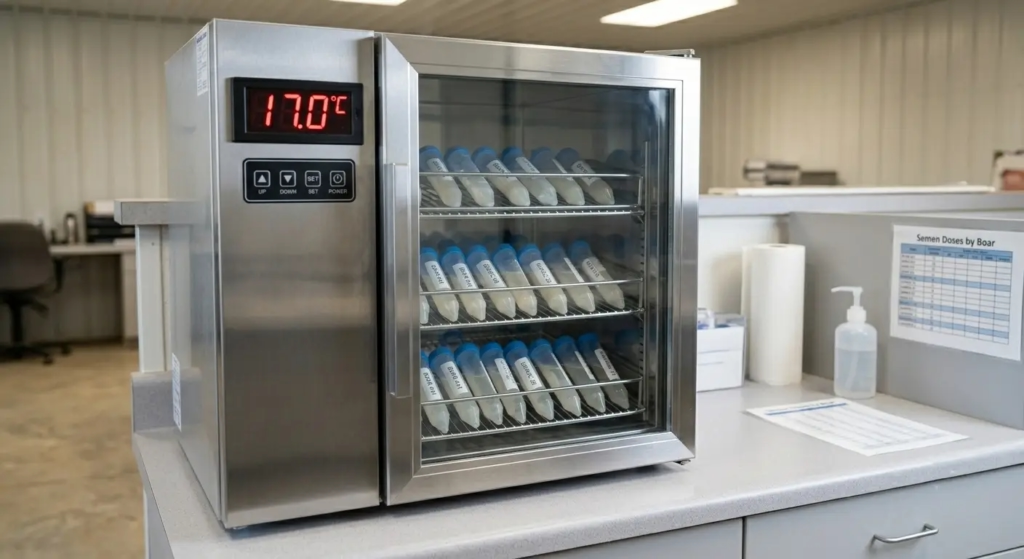
Fresh/extended liquid semen: Collected from a boar, diluted with extender solution (which provides nutrients, buffers pH, and protects sperm membrane integrity), and stored at 15–18°C (never refrigerated at standard refrigerator temperatures, which damages boar sperm). Viable for 3–5 days when correctly stored. This is the most commonly used semen type in commercial pig AI globally, including in West Africa, where AI centers process and distribute extended fresh semen.
Frozen semen: Cryopreserved at -196°C in liquid nitrogen. Indefinite storage life but significantly lower post-thaw conception rates (70–82%) compared to fresh extended semen (85–92%) due to cryodamage to the sperm membrane during the freeze-thaw process. Used primarily for importing specific high-value genetics not available as fresh semen in the local market — eating quality Duroc lines, verified halothane-negative Pietrain, or specific genetics company terminal sire lines.
Evaluating Semen Quality Before Purchase
From a reputable AI center or genetics company distributor, request:
- Collection date and expiry date: Fresh extended semen should be used well within its stated viability window — request semen collected within 24–48 hours of your planned use for maximum conception rate
- Motility assessment record: A quality AI center provides a motility percentage (the proportion of sperm showing forward progressive movement under microscopic examination) at the time of processing — target above 70% motility at collection
- Concentration per dose: Standard commercial doses contain 2.5–3.0 billion sperm cells in 80–100 mL extender volume
- Boar identification and genetic documentation: Confirm the specific boar’s identity, breed, and (where relevant) selection line — this is the only way to verify you are receiving the eating quality Duroc or verified Hal-negative Pietrain genetics you intended to purchase, rather than generic stock of the same breed name
Semen Storage on the Farm
Temperature control is the single most important storage variable. Extended liquid boar semen must be stored at 15–18°C — significantly warmer than refrigerator temperature (typically 2–6°C) and significantly cooler than ambient tropical temperature (often 28–35°C in West Africa).
Practical storage solutions for West African farms:
- Dedicated semen storage cabinet: A small thermoelectric or compressor-based cabinet specifically designed to hold 15–18°C, available from livestock equipment suppliers. Cost: XAF 300,000–600,000 (USD 500–1,000). The most reliable solution for farms doing regular AI.
- Insulated cooler box with temperature monitoring: For farms doing occasional AI or receiving semen via courier, an insulated cooler box with ice packs positioned to avoid direct contact with semen bottles (direct ice contact can drop temperature below the safe range) can maintain acceptable temperature for 24–48 hours. Check the temperature with a thermometer placed inside the box, not relying on an assumption.
- Gentle rotation: Semen doses should be gently rotated (not shaken) once or twice daily during storage to prevent sperm from settling and to maintain even extender distribution. Vigorous shaking damages sperm membranes.
Never:
- Store semen in a standard refrigerator at 4°C — this temperature causes irreversible cold shock damage to boar sperm membranes, destroying fertility potential
- Expose semen to direct sunlight or temperatures above 25°C, even briefly
- Use semen that has been frozen accidentally (visible ice crystals in the extender) — discard
Part 4: The Insemination Procedure — Step by Step
Equipment Required
- AI catheter (disposable spiral-tip or foam-tip catheter, sized for sow or gilt as appropriate)
- Semen dose (warmed to room temperature before use — never insert cold semen directly from storage)
- Lubricant (water-based, non-spermicidal — never use petroleum-based lubricants, which damage sperm)
- Clean paper towels or wipes
- Boar (present for stimulation during insemination, or boar pheromone spray as an alternative)
Pre-Insemination Preparation
Step 1 — Clean the vulva: Wipe the vulva and surrounding area with a clean, dry paper towel to remove visible debris, dried discharge, or bedding material. Do not use water or disinfectant solutions on the vulva immediately before insemination — these can be carried into the reproductive tract by the catheter and may have spermicidal or irritant effects.
Step 2 — Confirm standing heat: Re-confirm the sow is in standing heat immediately before insemination using the back pressure test, ideally with the boar present or boar pheromone spray applied near the sow’s snout. A sow that does not show the standing reflex at the moment of insemination is unlikely to be at the optimal point in her cycle for successful fertilization, regardless of when standing heat was first detected.
Step 3 — Prepare the semen dose: Remove the semen dose from storage and gently warm to approximately room temperature (20–25°C) by holding it or placing it in a pocket for several minutes — never use hot water or direct heat sources, which can kill sperm through thermal shock. Gently invert the bottle 2–3 times to resuspend any settled sperm without vigorous shaking.
Insemination Technique
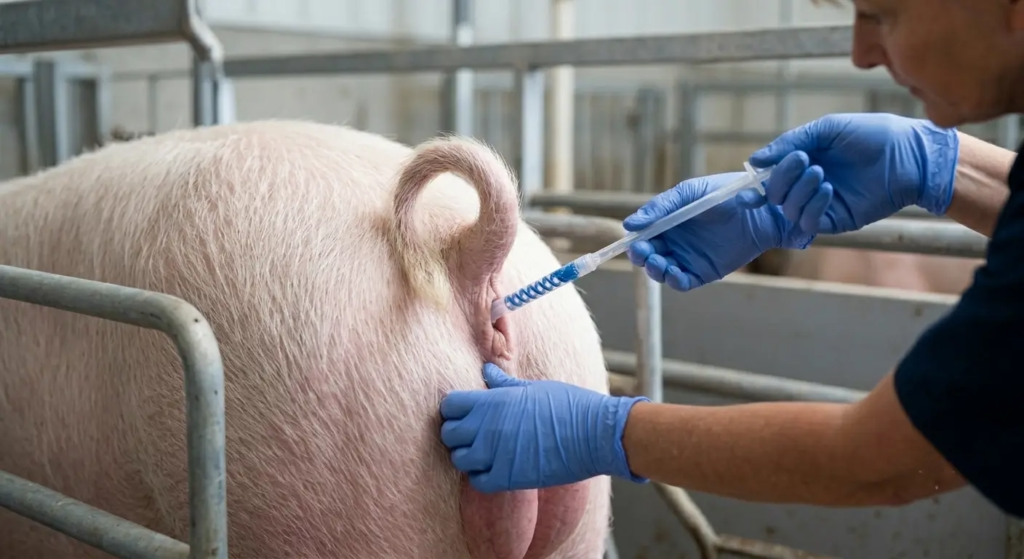
Step 4 — Insert the catheter: With the sow standing and showing the lordosis reflex, lubricate the catheter tip lightly. Insert the catheter into the vulva at a slight upward angle (approximately 30–45° from horizontal) to navigate around the bladder, then advance horizontally once past the initial angle.
Step 5 — Navigate to the cervix: Continue advancing the catheter gently with a slight rotating motion (clockwise for spiral-tip catheters) until resistance is felt as the catheter tip engages with the cervical folds. This typically occurs at 20–30 cm of insertion depth in an adult sow (shorter in gilts, approximately 15–20 cm).
The critical skill: The catheter should never be forced. If resistance is met before the expected depth, withdraw slightly and adjust the angle — forcing the catheter through resistance can cause tissue damage and introduce infection risk. With practice, the “locked” sensation of correct cervical engagement becomes a recognizable tactile feedback.
Step 6 — Connect the semen dose: Once the catheter is locked in the cervix, attach the semen bottle or bag to the catheter’s connection point.
Step 7 — Deliver the semen: Allow gravity flow (gentle elevation of the semen container above the sow) or apply very gentle, slow pressure if using a plunger-style delivery system. Total delivery time should be 3–5 minutes — semen delivered too quickly can be expelled back out due to uterine contractions triggered by rapid pressure changes, while delivery that is too slow risks the catheter losing its cervical lock.
Step 8 — Maintain stimulation during delivery: Continued boar presence, back pressure, or flank stimulation during the insemination process helps maintain the sow’s oxytocin release, which assists in the transport of semen through the cervix and uterus via uterine contractions.
Step 9 — Withdraw the catheter: After semen delivery is complete, leave the catheter in place for 1–2 minutes to prevent immediate backflow, then withdraw gently with a slight counter-rotation.
Step 10 — Post-insemination observation: Minor backflow of semen-extender mixture immediately after withdrawal is normal and does not indicate failure — the majority of the sperm dose has already been deposited at the cervix/uterine body junction. Allow the sow to stand calmly for 10–15 minutes post-insemination before returning her to group housing, avoiding activities that increase stress in this immediate post-insemination period.
Part 5: The Insemination Schedule
Standard Protocol for Weaned Sows
| Day | Action |
|---|---|
| Day 0 | Weaning |
| Day 3–5 | Begin twice-daily heat checks |
| Day 4–7 | Standing heat onset expected |
| Onset + 12 hours | First insemination |
| Onset + 36 hours | Second insemination |
| Onset + 60 hours (if still in standing heat) | Third insemination |
Standard Protocol for Gilts
Gilts should be inseminated at their second or third observed estrus rather than their first, for the litter size benefits discussed in gilt management. The insemination timing protocol within the chosen cycle is identical to that for sows.
Part 6: Troubleshooting Low Conception Rates
A well-managed AI program should achieve an 85–92% farrowing rate (confirmed pregnancies that proceed to farrowing) with extended fresh semen and correct technique. When farrowing rates fall below 80%, systematic troubleshooting is required.
Diagnostic Framework
Step 1 — Review semen handling records: Was semen stored at the correct temperature throughout? Was it used within the stated viability window? Was the motility percentage at collection documented and acceptable (above 70%)?
Step 2 — Review heat detection records: Was standing heat confirmed (not just inferred from vulva appearance) before each insemination? Was the boar-assisted method used, or only the less reliable back-pressure test alone?
Step 3 — Review insemination timing: Were inseminations performed at the correct intervals (12 hours and 36 hours after standing heat onset)? Late detection of standing heat onset (missing the early hours) shifts the entire insemination schedule later relative to ovulation, reducing the probability that viable sperm are present when ovulation occurs.
Step 4 — Review technique consistency: Is the same person performing inseminations, or is there variation in technique between different staff members? Technique variability — particularly in catheter placement depth and semen delivery rate — is a common and under-recognized cause of inconsistent conception rates.
Step 5 — Assess sow-side factors: Body condition score at breeding (too thin or too fat reduces conception); recent illness or fever (elevated body temperature in the days around breeding damages developing oocytes and can cause early embryonic loss); heat stress (ambient temperature above 30°C around the time of breeding measurably reduces conception rates and increases early embryonic mortality — a particularly relevant factor in West African lowland production environments)
Common Specific Failure Patterns
Pattern: Conception rate is good in the cool season, poor in the hot season. Diagnosis: Heat stress affects conception. Sows bred during periods of sustained ambient temperature above 30°C show measurably reduced conception rates and increased early embryonic mortality due to both direct thermal effects on the oocyte and indirect effects through reduced feed intake and altered hormonal signaling. Solution: Where possible, schedule breeding to avoid the hottest months, or implement cooling interventions (drip cooling, increased ventilation, breeding during the coolest hours of the day) for sows around the breeding period.
Pattern: First-time AI users show poor conception, which improves over subsequent months. Diagnosis: Technique learning curve. Catheter placement accuracy and semen delivery timing improve measurably with practice. Solution: Have an experienced AI technician demonstrate and supervise the first 10–20 inseminations. Consider training with intramammary or vaginal infusion equipment using saline before progressing to live insemination if uncertainty about the technique persists.
Pattern: Specific semen batches show poor conception across multiple sows. Diagnosis: Semen quality issue at the source — either collection, processing, or transport/storage failure before the semen reached the farm. Solution: Contact the supplying AI center with the batch identification number. Request motility verification for that specific batch. If a pattern of poor performance from a specific supplier is confirmed across multiple batches, consider changing semen sources.
Pattern: Service returns consistently 18–24 days after insemination (regular return interval). Diagnosis: Fertilization is occurring, but early embryonic loss or implantation failure is preventing pregnancy maintenance. This pattern (regular return to estrus, as opposed to irregular or delayed return) suggests the problem is in early pregnancy maintenance rather than in the insemination process itself. Solution: Investigate nutritional status, mycotoxin contamination in feed (zearalenone specifically mimics estrogen and disrupts early pregnancy), and disease screening (PRRS, Leptospira) that affect early embryonic survival.
Part 7: The Economic Case for AI Over Natural Service
Cost Comparison
Natural service (boar ownership):
- Boar purchase: XAF 400,000–800,000 (USD 667–1,333)
- Annual feed, housing, and health cost: XAF 600,000–900,000 (USD 1,000–1,500)
- Boar productive life: 2–3 years average
- Annualized cost per boar: approximately XAF 750,000–1,100,000 (USD 1,250–1,833) per year
- Sows served per boar per year: 20–25
- Cost per sow served: XAF 30,000–55,000 (USD 50–92)
Artificial insemination:
- Cost per dose: XAF 8,000–20,000 (USD 13–33) for locally sourced fresh extended semen; XAF 25,000–60,000 (USD 42–100) for imported frozen semen
- Doses per sow per cycle (3-insemination protocol): 3 doses
- Cost per sow served: XAF 24,000–60,000 (USD 40–100) for fresh semen; XAF 75,000–180,000 (USD 125–300) for frozen semen
The Genetic Access Value
The direct cost comparison shows AI with locally sourced fresh semen is roughly comparable to natural service in cost per sow served — sometimes marginally cheaper, sometimes marginally more expensive depending on local boar and semen pricing.
The decisive factor is genetic access, not direct cost. A 20-sow farm using natural service is limited to the genetic merit of the one or two boars it can afford to purchase and house. A 20-sow farm using AI can access semen from the highest-genetic-merit Duroc, Pietrain, or specialty eating quality lines available in the regional or international market — without bearing the capital cost of boar ownership for genetics that may only be needed for a portion of the breeding program.
The practical recommendation: Most commercial operations benefit from a hybrid system — natural service for routine breeding using a moderate-quality on-farm boar, supplemented with AI using premium genetics (eating quality Duroc, verified Hal-negative Pietrain) for a defined portion of the herd targeting specific market segments. This captures the cost efficiency of natural service for baseline production while assessing the genetic improvement that AI uniquely enables for premium market positioning.
Summary
Artificial insemination is a technical skill built on a clear biological foundation: accurate standing heat detection, correctly timed insemination relative to the 24–48 hour ovulation window following heat onset, properly handled semen maintained at 15–18°C, and a careful, unforced insemination technique that delivers semen at the cervix over 3–5 minutes with appropriate stimulation to support uterine transport.
Conception rates of 85–92% are achievable with the correct execution of every step in this protocol. Conception rates below 80% indicate a specific, diagnosable failure point — semen handling, heat detection timing, technique, or sow-side factors like heat stress or body condition — that systematic troubleshooting can identify and correct.
The technology gives any commercial pig farm, regardless of scale, access to genetics that would otherwise require boar ownership and the associated capital, housing, and management investment. For West African commercial pig producers building premium market positioning around eating quality genetics like specialty Duroc lines, AI is frequently the only practical pathway to that genetic access.
Learn biology. Master the technique. Keep the records that let you diagnose problems systematically rather than guessing. The genetics are available — the skill to use them correctly is what determines whether that genetic potential becomes pigs in the pen.