African Swine Fever is categorically different from every other pig disease in this guide series. Newcastle disease, PRRS, Mycoplasma, Salmonella — all have vaccines, treatments, or management strategies that allow recovery of a productive herd after an outbreak. African Swine Fever has none of these. There is currently no commercially available vaccine. There is no treatment. A farm that experiences a confirmed ASF outbreak faces the mandatory culling of its entire pig population, the destruction of contaminated materials, and a prolonged period of restocking prohibition while the environment is decontaminated.
In West and Central Africa — where ASF is enzootic across the region, where wild warthogs and bush pigs serve as reservoir hosts that maintain the virus in the environment permanently, where informal pig marketing chains create high-risk contact between pigs from different disease-status farms, and where the detection-to-response time is often weeks rather than days — ASF is not a hypothetical risk to be managed alongside other disease concerns. It is the existential threat to commercial pig production that demands a specific, dedicated, uncompromising prevention protocol distinct from the general biosecurity framework that other diseases share.
This article builds that specific protocol: the virology and transmission biology that explains why ASF is uniquely difficult to exclude, the transmission routes that matter specifically in West and Central African commercial production contexts, and the step-by-step bio-exclusion measures that, taken together, create the biosecurity barrier that prevents ASF from crossing the farm boundary.
No single measure on this list alone provides adequate protection. ASF’s resilience — its ability to survive in contaminated meat for months, in soil for weeks, and through wide swings of temperature and pH — means that every gap in the biosecurity barrier is a genuine entry pathway. The protocol works as a system. Its weakest element determines its protective level.
Understanding the Virus — Why ASF Demands a Dedicated Protocol
Virological Properties That Drive Prevention Strategy
Taxonomic identity: African Swine Fever virus (ASFV) is a large, enveloped double-stranded DNA virus — the only member of the family Asfarviridae and the only known DNA arbovirus (a DNA virus transmitted by arthropod vectors). Its size, complex structure, and specific genomic architecture give it properties that distinguish it sharply from most RNA viruses:
Extraordinary environmental persistence: Unlike most RNA viruses that are fragile and rapidly inactivated outside a living host, ASFV can survive:
- In contaminated pig blood at room temperature: up to 18 weeks
- In refrigerated (4°C) pork meat: months
- In frozen pork: years (indefinitely under ideal freezing conditions)
- In cured, smoked, or dried pork products: weeks to months depending on processing method
- In infected soil at ambient temperature: up to 11 weeks
- On contaminated wooden surfaces: up to several weeks
- In contaminated blood-soaked soil or litter: several weeks
The direct consequence for prevention: Contaminated meat, meat products, and any material that has contacted ASF-infected blood or secretions remains infectious for far longer than intuition would suggest. A fomite (contaminated inanimate object) that has been visually “clean” for weeks may still carry viable ASFV under the right conditions.
No vaccine exists (as of 2026): Multiple research programs globally have been working toward ASF vaccine development for decades. Several candidate vaccines have shown partial protection in controlled challenge studies, but no commercially available vaccine with demonstrated field efficacy has been licensed for use. Prevention through biosecurity is not merely the primary tool — it is currently the only tool.
Wild reservoir hosts: In sub-Saharan Africa, including West and Central Africa, ASFV circulates in wild warthogs (Phacochoerus africanus), bush pigs (Potamochoerus porcus), and the soft tick Ornithodoros moubata that feeds on these animals in burrows — a sylvatic cycle (wildlife transmission cycle) that is completely independent of domestic pig populations. Wild boar (Sus scrofa) also serve as a reservoir in parts of Africa and Europe, though this species is less prevalent in the West African context than warthogs and bush pigs.
The sylvatic cycle implication: Unlike most commercial pig diseases, ASF cannot be eliminated from the environment surrounding a farm through any farm-level intervention. The virus will continue to circulate in the local wildlife population indefinitely. Prevention therefore requires maintaining a permanent, uncompromising barrier between the wildlife reservoir and the domestic pig population — not achieving a disease-free environment, but maintaining a protected population within a contaminated landscape.
ASF-Specific Transmission Routes
Route 1: Direct contact with infected pigs. The most efficient transmission route — pig-to-pig contact with an infected animal shedding ASFV in blood, secretions (nasal, oral, fecal), and urine. Dose required for infection is low; exposure duration required is brief.
Route 2: Contaminated pig products (the “swill feeding” route). Feeding pigs kitchen waste, restaurant waste, or food processing waste containing uncooked or incompletely cooked pork products from ASF-infected animals is the most commonly documented transmission route in outbreaks across Africa and, historically, across Europe and Asia. A single contaminated pork scrap fed to one pig can initiate a farm outbreak.
This route has been responsible for the majority of documented ASF farm introductions in West Africa — the combination of informal pork product distribution chains, the tradition of swill feeding in smallholder and peri-urban pig systems, and the lack of systematic ante-mortem and post-mortem inspection in informal slaughter channels creates a high-risk transmission circuit that formal commercial operations must explicitly exclude from their feeding programs.
Route 3: Mechanical vectors (ticks, insects, fomites). The soft tick Ornithodoros spp. can transmit ASFV biologically (the virus replicates within the tick and is transmitted during subsequent feeding). Flies and other insects serve as mechanical vectors. Contaminated clothing, footwear, equipment, and vehicles mechanically transport infected blood and secretions.
Route 4: Contact with wildlife reservoir hosts: Direct contact between domestic pigs and warthogs, bush pigs, or infected soft ticks (carried by these wildlife hosts) that enter the pig housing area. This route is most significant for operations with outdoor access or inadequate fencing that allows wildlife contact.
Route 5: Contaminated human traffic: People who have handled infected pigs, visited infected farms, or handled infected pork products without appropriate decontamination between farm contacts. The mechanical transfer via footwear, clothing, skin, and equipment is sufficient to initiate infection.
The Risk Landscape in West and Central Africa
Why the Regional Context Creates Elevated ASF Risk
Endemic wildlife reservoir: Warthogs and bush pigs are distributed across the region, including in peri-urban and agricultural landscapes. The boundary between wild habitat and farm boundary is frequently permeable.
Informal pig marketing chains: A significant proportion of pig marketing in West and Central Africa moves through informal channels — live pig markets where animals from multiple farms commingle, unlicensed slaughter facilities without veterinary inspection, and the movement of live pigs by traders who may not disclose the source farm or health status of the animals they are selling.
Swill feeding prevalence: Feeding kitchen waste, food processing waste, and restaurant scraps to pigs remains common in smallholder and peri-urban pig production contexts — a practice that creates a direct pathway for ASF from infected pork products to susceptible pigs.
Limited official surveillance capacity: The detection of ASF outbreaks in the region relies heavily on farmer reports and clinical observation rather than systematic active surveillance — meaning outbreaks in the livestock population may be circulating for weeks before official detection and response.
Cross-border livestock movement: Borders between regional countries are permeable to informal livestock trade, and ASF status varies between countries and regions — pigs entering from an ASF-active area may introduce the virus to farms in areas where the disease had not recently been present.
Current ASF Status (As of 2026)
ASF has been documented in pig populations across West and Central Africa, including Nigeria, Cameroon, Côte d’Ivoire, Ghana, Benin, Togo, and the Democratic Republic of Congo, at various points in recent years. The specific current status by country and region is dynamic — always verify the current regional situation with national veterinary authorities (MINEPIA in Cameroon, FMARD in Nigeria) rather than relying on information in this guide, which cannot be updated in real time.
The Bio-Exclusion Protocol — Step by Step
Eliminate Swill Feeding — Non-Negotiable
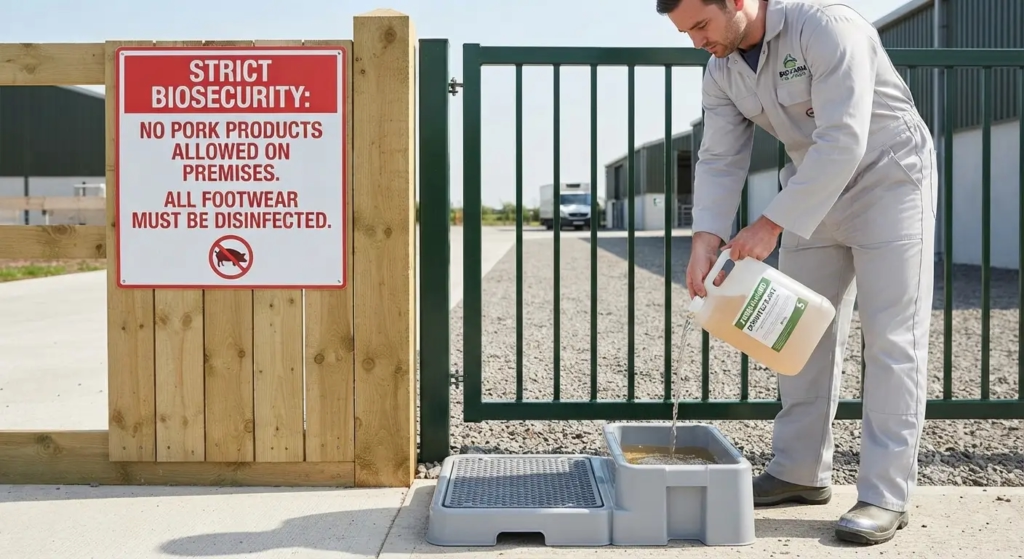
No kitchen waste, restaurant waste, food processing waste, or any material containing pork or pork products should ever be fed to pigs on a commercial farm. This is the single most impactful ASF prevention measure available, and it is entirely within the farm’s direct control.
The specific prohibitions:
- Restaurant and hotel kitchen waste (contains cooked and uncooked pork scraps that may have originated from ASF-infected animals)
- Abattoir and slaughterhouse waste (blood, offal, and processing residues from animals whose ASF status was not confirmed)
- Meat processing factory waste (sausage offcuts, cured product trim, processed meat residues)
- Household kitchen scraps (contain family pork preparation residues)
- Any material of unknown composition where pork product presence cannot be excluded
What is acceptable: Vegetable and fruit waste of known composition, agricultural crop residues (maize stover, cassava peel — with appropriate processing as discussed in alternative feed ingredients guidance), and brewery or food processing waste that is verified to contain no meat or meat-derived products.
Implementation: This must be a written farm policy, communicated to all staff, and reinforced in initial and ongoing training. Staff who bring personal food to the farm (including food containing pork) should not handle or store it near feed preparation areas or pig housing.
Wildlife-Proof the Farm Perimeter
Warthog and bush pig exclusion:
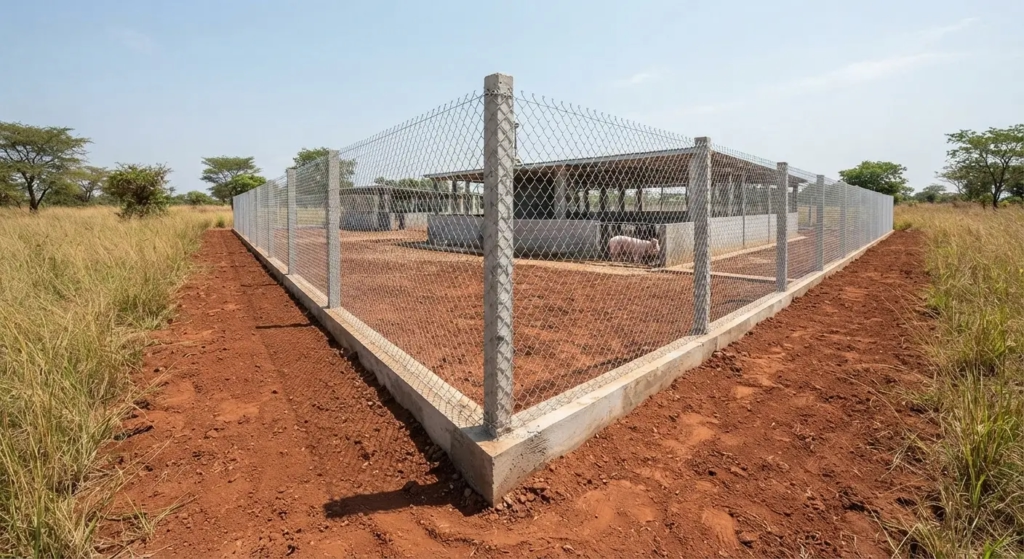
The farm perimeter fence must be designed and maintained to physically prevent access by warthogs (up to 80 kg, capable of pushing through weakened fencing) and bush pigs (similar size, capable of digging under inadequately buried fence bases):
- Fence height: Minimum 1.2 meters for warthog exclusion; warthogs do not typically jump but can push under or through weak base sections
- Fence base: Buried 30–40 cm below ground surface, or with an outward-angled apron of chain-link buried horizontally at the base — prevents burrowing entry
- Fence integrity: Regular (minimum monthly) perimeter inspection to identify and immediately repair any damage, gaps, or undercutting that could allow wildlife access
- Vegetation management: Clear vegetation for 2–3 meters inside and outside the fence line — dense grass and shrub cover adjacent to the fence provides cover for wildlife approaching the fence and makes inspection difficult
Tick exclusion (relevant where Ornithodoros ticks are present in the local environment):
The soft tick Ornithodoros moubata is the primary arthropod vector of ASFV in the sylvatic cycle. These ticks live in soil and burrows — their presence in pig housing or burrow systems beneath pig housing creates a direct viral transmission pathway.
- Prevent warthog and bush pig access (they are the primary hosts that introduce Ornithodoros ticks to farm-adjacent environments)
- Concrete or sealed concrete block flooring in all pig housing prevents tick burrow establishment beneath housing structures
- Regular acaricide treatment of pig housing perimeters and bedding areas in known tick-endemic zones, following veterinary guidance on appropriate products and application protocols
Implement the Highest-Level Personnel Protocol for ASF Risk
Standard general biosecurity personnel protocols (as detailed in the biosecurity framework article preceding this one) are the baseline — the ASF-specific additional requirements are:
48-hour rule for high-risk contact: Personnel who have visited informal pig markets, unlicensed slaughter facilities, other pig farms (particularly farms of unknown health status), or areas known to be experiencing ASF outbreaks should not enter the production zone for 48 hours after that contact. Where operational requirements make this impractical, full shower (hair, body) and complete clothing change (including undergarments) before farm entry is the minimum alternative.
Prohibition on bringing pork products onto the farm: Staff should not bring pork or pork products (including packed lunch containing pork) onto the farm premises. This eliminates the risk pathway of staff inadvertently contaminating their hands, clothing, or the farm environment with potentially infected pork from informal market sources.
Burial or incineration of personal waste: Any food waste from staff meals on the farm — including packaging that contacted pork products purchased from informal market channels — should be disposed of by burial or incineration within the farm’s waste management system, not simply discarded in open waste areas accessible to pigs or wildlife.
Family members and farm workers’ households: Where farm workers live on or immediately adjacent to the farm, the household’s own pig ownership (backyard pigs) creates a direct ASF risk pathway. Where possible, staff residence areas should be physically separated from production areas and staff who own or have access to backyard pigs should be subject to the most stringent personal decontamination protocol before entering production zones.
Step 4: Vehicle Traffic Management Specific to ASF
Live pig transport vehicles — the highest-risk vehicle category:
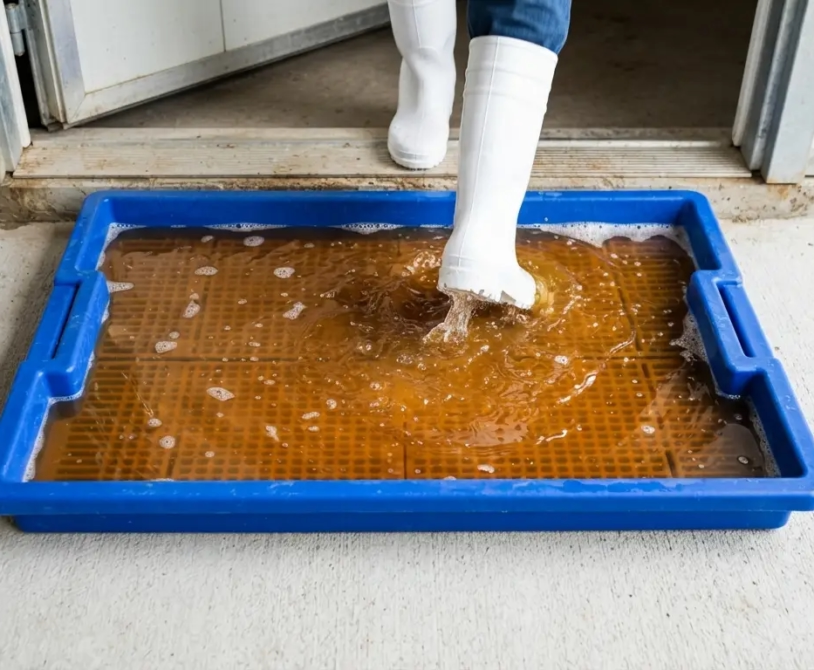
Live pig transport vehicles that have moved pigs from informal markets, other farms, or slaughter facilities may carry infectious ASFV on wheels, undercarriages, loading ramps, and interior surfaces. The standard wheel dip at the farm gate is insufficient for ASF — ASFV contamination can be present at concentrations that survive wheel dip contact times under field conditions.
ASF-specific vehicle protocol:
- Live pig transport vehicles do not enter Zone 2 — animals are unloaded at a Zone 1-Zone 2 boundary loading facility with the transport vehicle remaining outside the farm perimeter
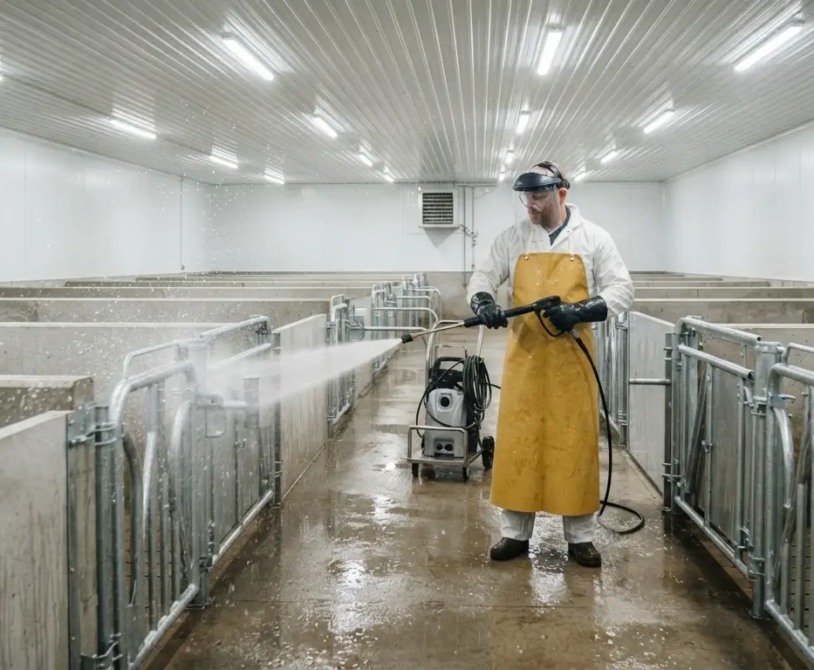
- The transport vehicle must be thoroughly washed (high-pressure) and disinfected at a wash facility before approaching the farm loading area — ideally at a designated vehicle wash station positioned at the farm boundary, or at a commercial vehicle wash facility before the vehicle approaches the farm
- The driver remains in the vehicle cab during unloading — does not enter Zone 2 or Zone 3
Feed delivery vehicles:
The same wheel disinfection protocol as described in the general biosecurity framework applies — but with specific attention to vehicles that have delivered to other farms before arriving at this farm, particularly farms of unknown biosecurity or health status.
Vehicle wash station design:
A concrete pad at the Zone 1-Zone 2 boundary, with drainage that does not flow toward Zone 2 or Zone 3, equipped with a high-pressure water connection and disinfectant spraying equipment, provides the infrastructure for effective vehicle decontamination. Cost for a basic functional vehicle wash station: XAF 800,000–2,000,000 (USD 1,333–3,333) — a capital investment that is straightforward to justify relative to the cost of a single ASF outbreak.
Sourcing Replacement Animals — ASF-Specific Requirements
General biosecurity guidance requires quarantine of all incoming animals — for ASF, additional requirements apply:
Source verification:
- Purchase replacement gilts and boars only from farms with documented ASF-free status, ideally farms that have been closed (no incoming animals from outside) for a defined period and with documented negative ASF testing
- Request health certificates with specific ASF testing results (PCR negative from blood samples) from the source herd within 7 days of purchase
- Know the source farm’s history — has it recently purchased animals from informal markets or other unknown-status farms?
Transport:
- Animals should be transported directly from the source farm to your isolation facility without stopping at live animal markets, other farms, or any location where contact with other pigs is possible
- The transport vehicle used for this purpose should be dedicated to this single journey — not a vehicle that was carrying other pigs earlier in the same day
Isolation testing:
- Where diagnostic laboratory access permits, test incoming animals specifically for ASF (PCR on whole blood samples) within the first week of isolation — early detection of an infected incoming animal before it contacts the production herd is the quarantine protocol’s primary value for ASF
- Maintain the full 21–28 day isolation period regardless of negative PCR results — PCR can be negative during the incubation period before sufficient viral replication has occurred for detection
Feed and Water Source Security
Feed ingredients from informal or unverified sources:
Any feed ingredient purchased from informal grain merchants or small traders who cannot document supply chain provenance — particularly grain that may have passed through informal storage shared with pork products, or cassava or other produce that has been transported in vehicles also used for live pig or pork product transport — represents an indirect ASF risk pathway through contaminated vehicle surfaces or shared handling equipment.
While this risk is lower than the direct routes described above, in an ASF-active environment every potential pathway warrants consideration.
Water source security:
Surface water sources (streams, ponds, open channels) that drain from areas with wild pig activity or from neighboring farms can theoretically carry ASFV — though waterborne transmission is considered a lower-probability route compared to the fomite and direct contact routes described above. Borehole water sources that are properly capped and sealed against surface contamination are preferred over open surface water sources in ASF-risk environments.
Establish and Maintain ASF Early Warning Indicators
Behavioral and clinical indicators to monitor specifically for ASF:
While definitive ASF diagnosis requires laboratory confirmation, the clinical syndrome is sufficiently distinctive that an experienced pig manager who knows what to look for should recognize a suspicious presentation:
Peracute form (2–4 day death without warning): Pigs in excellent condition die suddenly with minimal premonitory signs. Internal hemorrhage visible at post-mortem. Rectal temperature elevated (up to 42°C) in the immediate pre-mortem period.
Acute form (3–10 day course): High fever (41–42°C), severe lethargy, anorexia, huddling, reluctance to move. Reddening and purplish discoloration of skin (cyanosis) particularly visible at ear tips, snout, feet, and ventral abdomen (classic “blue-ear” presentation). Vomiting, bloody diarrhea. Respiratory distress. Hemorrhage from natural orifices. Mortality 90–100% in naive populations.
Subacute and chronic forms: More variable clinical presentation, lower but still significant mortality, weight loss, intermittent fever, joint swelling, skin ulcers. More difficult to recognize clinically as ASF and more likely to be confused with other conditions.
The critical action when ASF is suspected:
- Immediately isolate any pig showing suspicious signs from all other pigs — restrict all movement of pigs, people, equipment, and vehicles within and out of the affected area
- Do not slaughter or move any pigs — movement of clinically affected or potentially exposed pigs is the primary mechanism for spreading ASF to additional farms
- Contact the national veterinary authority immediately (MINEPIA in Cameroon at the nearest regional livestock service; FMARD or State Ministry of Agriculture in Nigeria) — ASF is a notifiable disease and official notification is legally required, practically necessary for accessing diagnostic support, and epidemiologically essential for containing spread
- Contact your veterinarian for immediate professional assessment
- Do not attempt to sell, process, or bury affected animals without authority guidance — official direction is required for safe disposal of ASF-suspected carcasses
The sampling and diagnostic protocol:
Where official authority response is delayed, basic samples that can be submitted to the veterinary diagnostic laboratory for priority testing:
- Whole blood (EDTA anticoagulant tube) from acutely sick pigs with high fever
- Spleen, lymph node, and tonsil tissue from freshly dead animals
- Maintain samples refrigerated (not frozen) and transport to the laboratory as quickly as possible
Communication and Community Biosecurity
Why Individual Farm Biosecurity Is Not Sufficient Alone
ASF in a neighborhood or region is not solely a farm-level problem — it is a community-level animal health problem. A farm that maintains excellent internal biosecurity but is surrounded by farms with no biosecurity, actively feeding swill, and selling pigs through informal markets faces an ongoing risk level that no amount of internal biosecurity can fully eliminate when the external environment continuously reseeds pathogen pressure.
The community dimension:
- Share basic ASF awareness information with neighboring farm operators — not as charity but as self-interest, since infected neighboring farms are a persistent source of environmental contamination and market-chain risk
- Participate in any regional surveillance and early warning programs organized by national veterinary authorities — contributing mortality reports and suspicious clinical presentations to the official network improves regional detection speed, which reduces the time any given outbreak spends expanding before intervention
- Support local engagement with veterinary authority programs for ASF surveillance, movement control, and response — programs that protect the regional herd are also programs that protect your farm
Staff Training on ASF Recognition
Every person who works with pigs on a commercial farm should be able to:
- Recognize the specific clinical signs of acute ASF (fever, skin discoloration, sudden death)
- Know the farm’s immediate response protocol when suspicious signs are observed
- Know who to contact (farm manager, farm veterinarian, veterinary authority contact number)
- Understand why the “do not move animals” principle is critical when ASF is suspected
This knowledge should be part of initial staff onboarding and refreshed annually — not because staff frequently forget the clinical signs, but because the protocol, including contact information that may change, needs periodic verification.
The No-Treatment, No-Recovery Reality — Why Prevention Is the Only Investment
The financial case for ASF-specific bio-exclusion investment is different from the case for general biosecurity in one critical respect: there is no partial outcome. General biosecurity reduces the frequency and severity of disease events — a farm with good general biosecurity may still experience a Mycoplasma introduction, but it may present as a subclinical production performance issue rather than a clinical outbreak, and it can be managed with vaccination and treatment to restore herd health. The investment in prevention reduces the probability and severity of an outcome that can still be managed after the fact.
ASF has no “after the fact” management. An ASF-confirmed farm faces:
- Mandatory culling of the entire pig population (all ages, all health status, all production stages)
- Destruction of all potentially contaminated organic material (litter, bedding, feed)
- Thorough decontamination of all buildings and equipment
- A regulatory restocking prohibition period (varying by country and severity assessment, typically 30–90+ days after decontamination is verified)
- Market closure during and after the outbreak (neighboring farms in movement restriction zones may also be prohibited from selling animals or pork products during the investigation and response period)
Financial consequence at a 50-sow commercial farm:
| Loss Category | XAF | USD |
|---|---|---|
| Culled breeding herd (50 sows + 5 boars, XAF 200,000/animal) | 11,000,000 | 18,333 |
| Culled production animals (all stages, estimated 300 pigs) | 27,000,000 | 45,000 |
| Decontamination and site clearance | 5,000,000 | 8,333 |
| Restocking cost after prohibition period | 15,000,000 | 25,000 |
| Revenue loss during prohibition period (90 days) | 18,000,000 | 30,000 |
| Total ASF outbreak cost estimate | 76,000,000 | 126,667 |
The annual cost of the ASF-specific bio-exclusion measures described in this guide — swill feeding elimination (zero additional cost for farms already purchasing commercial feed), wildlife fencing upgrade, enhanced personnel protocols, vehicle wash station — is estimated at XAF 3,000,000–6,000,000 (USD 5,000–10,000) per year for a 50-sow farm, including the amortized capital cost of infrastructure upgrades.
A single ASF outbreak costs more than 12–25 years of the prevention program that would have prevented it.
Summary
African Swine Fever represents the single highest-consequence disease risk in West and Central African commercial pig production — a risk that is non-negotiable in the response it demands, because the consequence of failure is not production loss that can be recovered but the destruction of the production population and infrastructure followed by a mandatory exclusion period from production.
The bio-exclusion protocol in this guide closes each of the specific, documentable transmission routes through which ASF crosses from the contaminated external environment into the protected farm population: swill feeding elimination removes the most commonly documented introduction route, wildlife-proof fencing closes the sylvatic reservoir pathway, the enhanced personnel protocol closes the human traffic route, vehicle management closes the fomite transport route, and source animal verification closes the live animal introduction route.
None of these measures is technically complex. None requires technology or equipment unavailable in West African commercial production contexts. All require sustained, uncompromising management discipline — the willingness to maintain every protocol consistently, on every day, regardless of the convenience cost of doing so.
ASF does not respect good intentions or generally good biosecurity. It rewards only the specific closure of each specific entry route, maintained without exception, every day that the farm is in operation. The protocol described in this guide is that closure. Its implementation is the only investment in ASF prevention that is actually available — because the alternative investment, in treatment or recovery, does not exist.