Every disease outbreak that devastates a commercial pig farm arrives through a specific pathway. A purchased replacement gilt that was not quarantined. A feed delivery truck whose wheels tracked manure from an infected farm across the entry area. A stockperson who visited a neighbor’s pig farm in the morning and returned to work in the afternoon without changing clothes or showering. A wild bird that landed in the feed storage area. A rat that moved between a neighboring farm’s refuse pit and this farm’s feed bins.
These pathways are not random or unpredictable. They are specific, identifiable, and closeable. Biosecurity is the systematic closure of these pathways — the physical infrastructure, the operational protocols, and the monitoring discipline that together prevent pathogens from crossing the boundary between the farm’s external environment and its production population.
The financial case for biosecurity investment is unambiguous in principle but frequently underweighted in practice, because its benefit is invisible when it works. A biosecurity program that prevents a Newcastle disease introduction into a 1,000-bird layer flock creates no observable event — the birds continue producing, the farm continues operating, and the prevention value (XAF 5,000,000–10,000,000 / USD 8,333–16,667 in avoided mortality, treatment cost, and production loss) is never counted because the loss never occurred. The biosecurity failure, by contrast, is highly visible, financially devastating, and often triggers the investment in biosecurity infrastructure that the prevention case would have justified from the beginning.
This guide builds the complete piggery biosecurity framework for West and Central African commercial pig operations: the three-zone physical architecture, the specific pathogen entry routes that each protocol element addresses, the documentation and monitoring systems that verify the framework is functioning, and the response protocols for when a disease event is suspected despite the preventive framework.
The Core Concept — Pathogen Entry Routes
Before designing or evaluating any biosecurity measure, identify the specific pathways through which pathogens can enter the production population. Every biosecurity protocol is a closure mechanism for one or more of these pathways. Protocols without identified pathways are theater — visible activities that may not address the actual routes of introduction specific to a farm’s situation.
The Six Primary Pathogen Entry Routes
Route 1: Live animal introduction. Purchased replacement gilts, boars, feeder pigs, and any live animal entering the production population from an external source carry pathogen risk from the source farm’s health status. This is historically the most significant single route of disease introduction for the highest-impact pathogens (PRRS, Mycoplasma hyopneumoniae, Aujeszky’s Disease) — animals that are clinically healthy at purchase but shedding pathogens that the purchasing farm’s naive population has never encountered.
Route 2: People: Personnel who have had contact with other pig populations (neighboring farms, markets, slaughterhouses, their own backyard pigs) can carry pathogens mechanically on clothing, footwear, skin, and hair, or in their own respiratory tracts (as potential carriers of respiratory pathogens that can infect pigs and people bidirectionally, including Influenza strains). Visitors, delivery personnel, veterinarians, and sales representatives are all potential vectors.
Route 3: Vehicles and equipment. Feed delivery trucks, live animal transport vehicles, carcass collection vehicles, and maintenance equipment that have contacted other farms or livestock environments carry environmental contamination on wheels, undercarriages, and surfaces. Manure, soil, and organic debris on vehicle surfaces are efficient transmission vehicles for enteric and respiratory pathogens.
Route 4: Feed and water. Contaminated feed ingredients (as discussed in mycotoxin and feed quality guidance) can carry mold spores, and in some cases pathogens; water sources contaminated with fecal material from upstream land use or wildlife can introduce enteric pathogens; improperly stored feed that allows wildlife or rodent access becomes a contamination vehicle.
Route 5: Airborne transmission. Several significant pig pathogens — PRRS virus, foot and mouth disease virus, Aujeszky’s disease virus, Influenza — can be transmitted aerially over meaningful distances under favorable conditions (cold temperatures, high humidity, specific wind patterns). This route is most significant for densely populated livestock areas where multiple farms exist in close proximity.
Route 6: Wildlife, rodents, and insects. Wild boar carry many of the same pathogens as domestic pigs (African Swine Fever, Classical Swine Fever, PRRS, Aujeszky’s Disease, various enteric pathogens) and represent a significant biosecurity threat where range or outdoor management allows contact. Rodents serve as mechanical vectors and in some cases biological hosts for pathogens including Salmonella, Leptospira, and various enteric organisms. Insects — particularly flies — carry pathogens mechanically between farms, from carcass areas to feed surfaces, and from manure to pigs in quantities sufficient to initiate infection under the right circumstances.
The Three-Zone Biosecurity Architecture
The physical infrastructure of farm biosecurity is organized around three zones with progressively higher biosecurity status — the same framework introduced in piggery design guidance elsewhere in this series, applied here with specific attention to the pathogen control function of each zone boundary.
Zone 1 — Public Zone (Outside the Farm Perimeter)
Everything outside the farm perimeter fence exists in Zone 1 — the uncontrolled external environment where pathogens from neighboring farms, markets, wildlife, and the general environment circulate freely. The farm has no control over Zone 1 biosecurity status; its only tool is to control what crosses from Zone 1 into Zone 2.
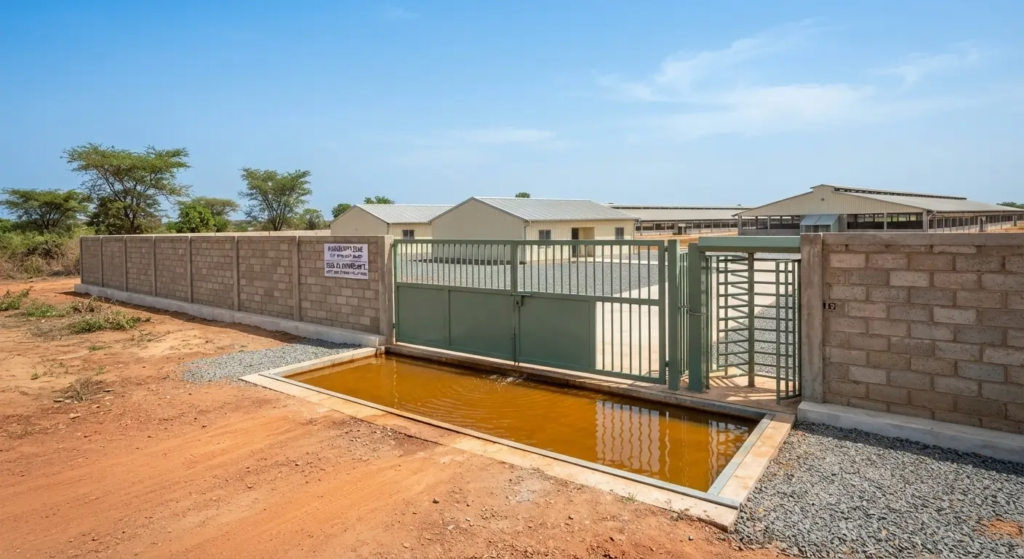
The perimeter fence: A physical boundary that defines where Zone 1 ends and Zone 2 begins. Its function is not primarily to keep pigs in — it is to:
- Prevent unauthorized human access (which would bypass entry biosecurity protocols)
- Exclude stray dogs, wildlife, and feral pigs from the farm area
- Create a defined boundary that makes every Zone 1 entry a deliberate, controllable event
Perimeter fence specifications:
- Continuous chain-link, block wall, or wire mesh fence of sufficient height to prevent dog access (minimum 1.5 m) and ideally sufficient depth at the base (buried 30 cm below ground) to prevent burrowing entry by rodents
- Single controlled entry gate (all vehicle and personnel traffic through one point, which is the biosecurity control point)
- No gaps, holes, or informal entry points that would allow uncontrolled access
Zone 2 — Farm Service Zone (Inside the Perimeter, Outside Production Buildings)
Zone 2 is the controlled area inside the perimeter fence but outside the production buildings themselves. This zone accommodates:
- Feed storage and delivery area
- Staff facilities (changing rooms, showers, vehicle parking)
- Veterinary service and treatment area
- Dead animal storage and collection point
- Visitor reception (visitors who do not need to enter Zone 3)
- Farm management infrastructure (office, electricity, water supply)
The Zone 1-to-Zone 2 transition is the primary external biosecurity control point. All incoming people, vehicles, and materials are subjected to biosecurity protocols at this transition:
- Personnel: footwear change or disinfection, hand washing, visitor log registration
- Vehicles: wheel disinfection at the entry point
- Materials: visual inspection and, for feed, quality verification
Zone 3 — Production Zone (Pig Housing and Their Immediate Surrounding Areas)
Zone 3 is the highest biosecurity zone — the area where the production pig population lives and where pathogen introduction has direct, immediate consequences. Access to Zone 3 requires passing through the Zone 2-to-Zone 3 transition protocol, which is more stringent than the Zone 1-to-Zone 2 transition.
The Zone 2-to-Zone 3 transition: Dedicated footwear change (footwear worn in Zone 2 is not worn in Zone 3; Zone 3 footwear never leaves Zone 3 in normal operation), outer clothing change or addition of Zone 3 overalls over Zone 2 clothing, and in higher-risk periods or for high-risk visitors, a full shower in/shower out protocol.
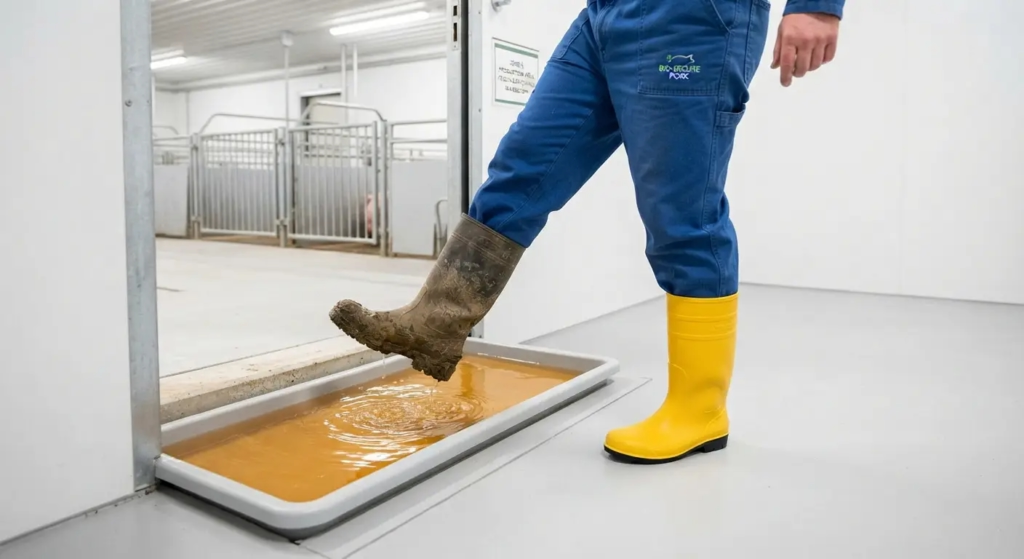
Within Zone 3, house-level biosecurity: Each production building within Zone 3 has its own entry footbath and, where AIAO management is practiced, its own biosecurity identity as a unit that is completely emptied, cleaned, and disinfected between groups.
The Entry Protocol System
Personnel Entry Protocols
Farm staff daily entry:
- Vehicle park in Zone 1 or designated Zone 2 staff parking — personal vehicles never enter Zone 3; ideally do not enter Zone 2 either, as vehicle wheels carry environmental contamination from staff members’ home areas and roads traveled
- Change into farm clothing and footwear in the Zone 1-Zone 2 changing facility — farm-designated boots, overalls, and headwear that never leave the farm remain in the changing facility; personal clothing goes into a designated locker
- Hand washing at the changing facility before proceeding into Zone 2
- Additional footwear and overalls change at the Zone 2-Zone 3 boundary when entering production buildings — dedicated Zone 3 footwear that never leaves Zone 3
- House-specific footbath at each building entry — active disinfectant (quaternary ammonium compound or iodophor at labeled concentration) changed at minimum daily
Visitor protocols:
The fundamental principle: minimize visitor access to Zone 3, and for all visitors who require Zone 3 access, apply the full entry protocol regardless of their professional status or relationship to the farm management.
- All visitors: register in the visitor log (name, contact details, date, purpose of visit, previous pig farm contact in the past 72 hours)
- Visitors who need Zone 3 access: full overalls and boot change as per staff protocol; supervised throughout; post-visit clothing disposal or bagging for laundry
- 72-hour rule: Ideally, personnel who have had contact with other pig farms, markets, or slaughterhouses within 72 hours should not access Zone 3 during that period. Where this creates operational difficulties (regular veterinary visits, essential supplier visits), showering and complete clothing change at the farm before Zone 3 entry is the minimum required alternative
Staff personal animals: Farm staff who own pigs, poultry, or other livestock at home represent a specific risk pathway that is often underappreciated — staff members who care for their own pigs in the evening and arrive at work the following morning without showering or changing clothes are the epidemiological equivalent of a farm visitor coming from another pig farm. Where possible, farm employment contracts should address staff members’ personal livestock ownership — minimally requiring the farm protocol (shower, complete clothing change) before arriving at work.
Vehicle and Delivery Protocols
Feed delivery vehicles:
Feed delivery vehicles are among the highest-risk vehicles accessing the farm — they may have visited multiple farms during their delivery route, carrying contamination from each previous stop on their wheels and undercarriage.
Protocol:
- All feed delivery vehicles stop at the Zone 1-Zone 2 boundary at the entry gate
- Driver remains in the vehicle cab — does not enter Zone 2 or Zone 3
- Wheel disinfection: high-pressure spray of disinfectant (2% Virkon or equivalent broad-spectrum disinfectant) applied to all tires and undercarriage accessible surfaces before the vehicle proceeds to the feed offloading point in Zone 2
- Feed offloading into farm storage without the delivery driver entering the storage facility — farm staff operate the offloading process in Zone 2
Live animal transport vehicles:
Any vehicle that has transported live pigs is among the highest biosecurity risks accessing the farm — pig transport vehicles accumulate enormous quantities of manure, urine, and respiratory secretions from the animals they carry, and the pathogens in those secretions can survive on vehicle surfaces for hours to days under favorable conditions.
- Live animal transport vehicles must not enter Zone 3 under any circumstances
- The loading ramp or receiving area for live animals (incoming gilts/boars) should be positioned at the Zone 2 perimeter — animals are unloaded from the transport vehicle into the isolation facility without the transport vehicle crossing the Zone 2-Zone 3 boundary
- Between each use, the loading/unloading ramp must be cleaned and disinfected before the next use
Veterinary vehicles and service vehicles:
Apply the same protocols as other Zone 2 visitors — veterinarians frequently visit multiple farms in a single day and should be treated as a high-risk entry regardless of their professional status.
Materials Entry Protocols
Medications, vaccines, and veterinary supplies:
Outer packaging from medications and supplies arriving from a supplier warehouse (which may itself have received deliveries from multiple farm sources, or be accessible to farm visitors) should be removed in Zone 2, with only the inner contents (clean vials, syringes, medication bottles) transferred to Zone 3. This prevents contaminated outer packaging from serving as a mechanical pathogen vector into the production area.
Equipment and tools:
Any equipment borrowed from another farm, purchased secondhand, or sourced from a supplier that also serves other farms should be cleaned and disinfected before entry to Zone 3. Equipment that has been on another farm’s production floor is as potentially contaminated as the farm’s own equipment would be if moved between a lower-biosecurity and higher-biosecurity area.
The Isolation and Quarantine Protocol — The Most Critical Preventive Measure
As discussed in breeding management guidance across multiple articles in this series, the introduction of purchased animals directly into the production herd without a defined quarantine period is the single highest-risk routine event in commercial pig farm biosecurity. It is also the pathway through which the most economically devastating pathogens — PRRS, Mycoplasma hyopneumoniae, Swine Influenza, Classical Swine Fever, Aujeszky’s Disease — are most frequently introduced.
The Isolation Facility
Physical requirements:
- Completely separate building from all production buildings — minimum 50 meters from any production building, ideally downwind and downslope
- Separate personnel entry protocol — staff working in isolation wear dedicated isolation clothing that never enters Zone 3 production areas; isolation is worked last in the daily routine, after all production animals are managed
- Separate equipment — feeders, waterers, tools, and all equipment used in isolation are dedicated to that facility only; nothing moves from isolation to production
- Separate drainage — waste from isolation does not flow toward production buildings
Quarantine Duration and Protocol
Minimum quarantine period: 21–28 days for all incoming animals
The 21–28 day duration is not arbitrary — it represents the incubation period of most significant pig pathogens. An animal that was exposed to infection on the day of purchase and is clinically healthy at purchase will typically develop clinical signs (or shed pathogen detectable by diagnostic testing) within this window if it is incubating a disease.
What happens during quarantine:
Week 1–2:
- Daily observation for clinical signs (coughing, diarrhea, lethargy, reduced feed intake, lameness, reproductive signs)
- Body temperature measurement at least twice during the first week (rectal temperature above 39.5°C is a fever indicator warranting veterinary assessment)
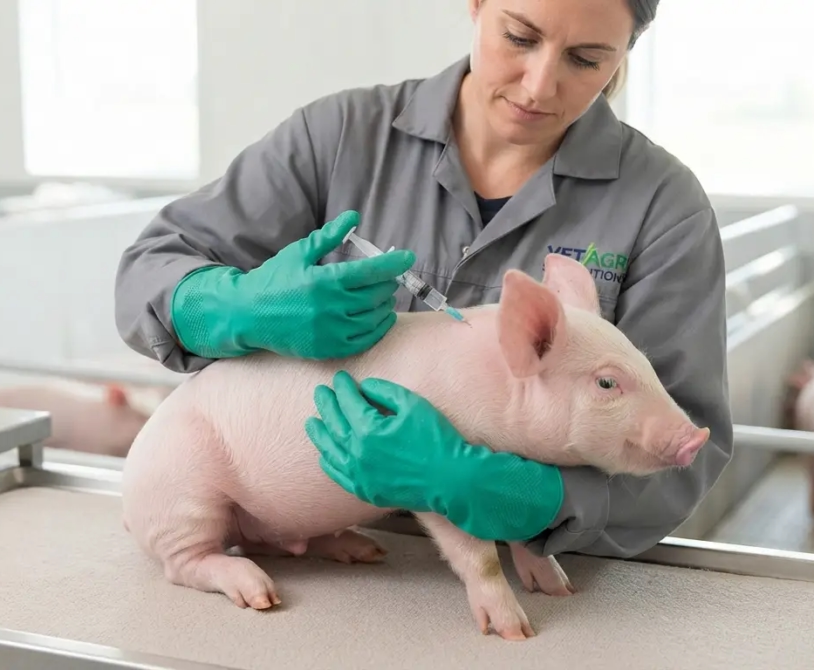
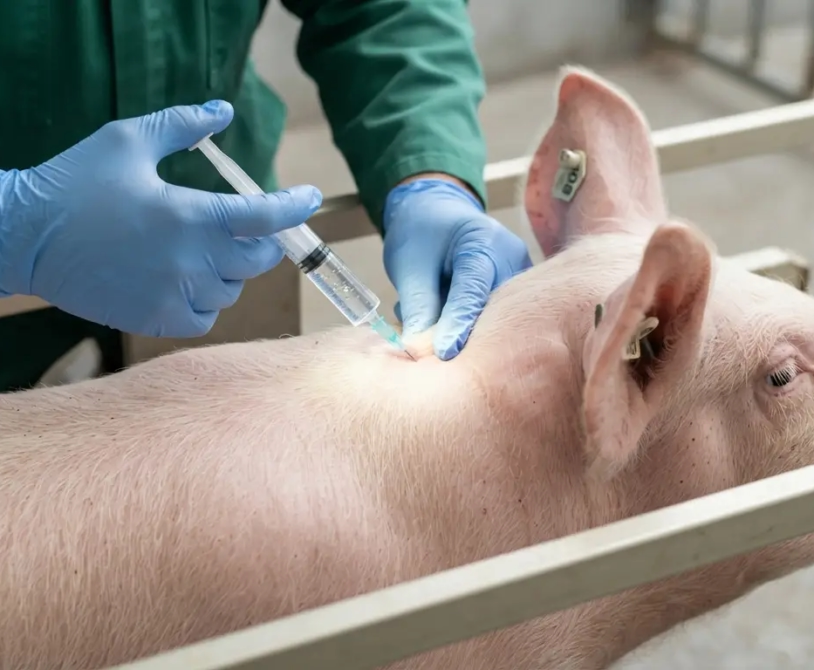
- Vaccination catch-up: administer any vaccines the incoming animals have not received that are part of the production herd’s vaccination schedule (allowing immune development time before the animal contacts the production population)
Week 3–4:
- Continue daily observation
- Nasal swab or blood sampling for key pathogen testing where diagnostic laboratory access supports this (PRRS PCR, ELISA for Aujeszky’s Disease antibodies, Salmonella screening) — particularly important for purchased gilts or boars from external sources where herd health certificates are unavailable or unverified
- Deliberate “acclimation” exposure to the existing herd’s pathogen environment: placing used litter, feces, or a cull sow from the production population into the isolation pen exposes the incoming animal to the production herd’s endemic pathogen environment before the animal enters the herd — allowing it to develop immunity (or reveal susceptibility) while still contained in isolation
The critical documentation: Record the source farm, health certificate status, vaccination history, and daily observation findings for every animal in isolation. This record is the primary evidence for retrospective epidemiological investigation if a disease event occurs after the animal enters the production herd.
All-In/All-Out Management — The Intra-Farm Biosecurity Core
As referenced in housing design guidance and FCR management guidance throughout this series, all-in/all-out (AIAO) management — filling each building or room with a single group of pigs at the same time, then emptying the entire building or room before cleaning, disinfecting, and resting it before the next group — is the most operationally significant intra-farm biosecurity practice.
Why AIAO Matters for Disease Transmission
In continuously occupied housing:
- Pathogen populations accumulate over successive occupancy cycles
- Older animals (with developed immunity) continuously shed pathogens that infect younger, naive animals entering the building
- The building’s environmental pathogen burden (in floors, walls, pen furniture, ventilation systems) increases with each cycle
- Disease challenge increases for each successive group, creating the escalating disease pattern that characterizes farms where new pigs are continuously introduced to the same building as existing pigs
In AIAO-managed buildings:
- Each new group enters a cleaned, disinfected, pathogen-reduced environment
- The group is uniform in age and immune status, eliminating the age-mixing transmission dynamic
- Any pathogen introduced by the group is contained to that group’s occupancy period
- The cleanout between groups breaks the pathogen accumulation cycle
The AIAO Cleaning and Disinfection Protocol
Step 1 — Remove all pigs (complete emptying): The fundamental AIAO requirement. Any pig remaining in the building contaminates the cleaned environment — “mostly empty” AIAO is not AIAO.
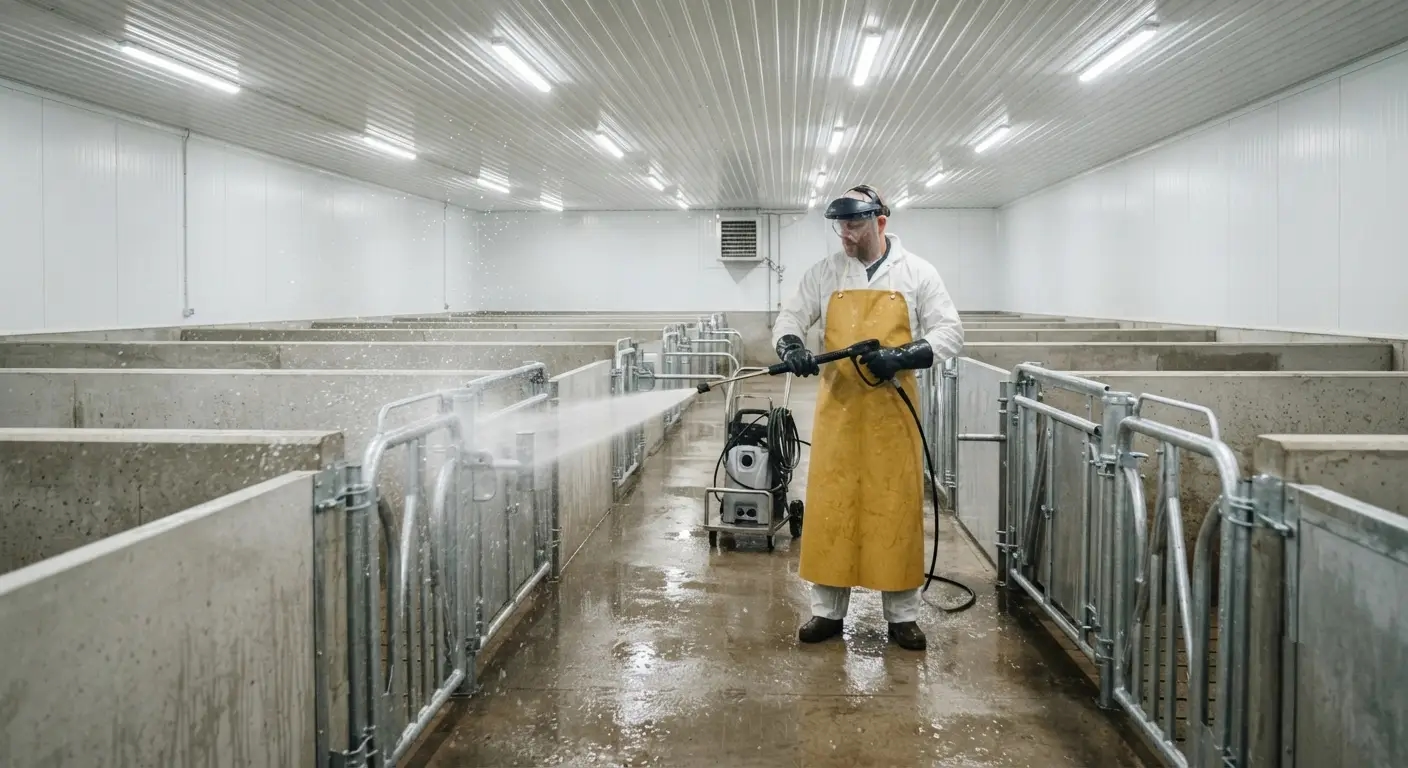
Step 2 — Remove organic matter: Manure, bedding, feed residues — all organic material must be physically removed before disinfection. Disinfectants applied to organic-contaminated surfaces are inactivated by the organic matter before they contact the pathogens beneath it. This step is the most labor-intensive, and the one most commonly executed inadequately — insufficient organic matter removal is the primary reason disinfection appears to fail.
Step 3 — Wet and soak: Apply water (low-pressure, high-volume) to all surfaces and allow to soak for 20–30 minutes to soften remaining adherent organic material. Do not proceed to high-pressure washing until this softening step is complete — high-pressure washing of dry organic matter creates aerosol containing concentrated pathogen material.
Step 4 — High-pressure wash: All surfaces — floors, walls, pen furniture, feeders, drinkers, ventilation inlets, drainage channels — to visible cleanliness. “Visible cleanliness” means the surface looks like a clean surface, not merely “better than before.”
Step 5 — Dry: Allow the building to dry completely before disinfectant application — most disinfectants are significantly less effective on wet surfaces because water dilutes the active chemical and prevents proper contact with the surface.
Step 6 — Apply disinfectant: At the manufacturer-specified concentration and contact time, to all surfaces. Common disinfectants for livestock housing:
| Disinfectant Class | Examples | Effective Against | Notes |
|---|---|---|---|
| Quaternary ammonium compounds | Virucide, Tego, Cetrimide | Bacteria, enveloped viruses | Inactivated by organic matter — surfaces must be visibly clean |
| Iodophors (iodine-based) | Iodosol, Betadine diluted | Bacteria, viruses, some fungal spores | Brown color allows visual verification of coverage |
| Phenolics | TH4, various | Bacteria, some viruses | Effective in organic matter; residual activity |
| Glutaraldehyde-based | Parvocide, various | Bacteria, viruses including non-enveloped | Effective against parvovirus; corrosive — handle with PPE |
| Lime wash (calcium hydroxide 2%) | Agricultural lime in water | Bacteria; some antifungal | Low cost; useful for floor and wall surfaces; not on metal |
Step 7 — Rest period: Minimum 7 days between disinfection and restocking. This rest period serves two functions: allowing any residual disinfectant to dissipate (preventing chemical irritation to incoming animals) and providing additional time for pathogen die-off on surfaces — most significant pig pathogens’ survival time on dry, clean surfaces is measured in hours to days, meaning a 7-day rest period after disinfection leaves essentially no viable pathogen on building surfaces.
Step 8 — Pre-occupancy inspection: Before restocking, verify that the building is physically dry, that no organic matter is visible on any surface, that equipment (feeders, drinkers) is functioning correctly, and that the building environment is suitable for the incoming animals.
Rodent, Pest, and Wildlife Control
The Rodent Problem
As introduced in Part 1, rodents are significant biosecurity threats through their roles as mechanical vectors of Salmonella, Leptospira, and various enteric pathogens, and through their contamination of feed stores, drinker systems, and pen environments with feces and urine.
The farm-wide rodent control program:
- Physical exclusion first: Block all entry points to buildings — gaps at wall-floor junctions, pipe entry penetrations, roof vent gaps, doors that do not seal flush with the floor. A mouse can enter through a gap of approximately 6mm diameter; a rat through approximately 12mm. Regular inspection for and sealing of new gaps is a higher-value intervention than reactive baiting without exclusion.
- Bait stations: Permanent rodenticide bait stations positioned at regular intervals along building perimeters, along fence lines, and at strategic points within the farm service zone. Bait stations should be tamper-resistant (sealed to prevent access by non-target animals and children), checked weekly, and replenished when bait consumption indicates active rodent pressure.
- Population monitoring: Tracking bait consumption from bait stations over time provides an indirect measure of rodent population pressure — increased consumption indicates population growth or new source population pressures that warrant intensified control effort.
Wild Bird Control
Wild birds — particularly those species that access pig housing through open ventilation systems or damaged roofing — carry enteric pathogens and represent an Avian Influenza transmission risk in the context of swine production (Influenza viruses can exchange genetic material between avian and swine strains under conditions of shared exposure).
- Install wire mesh (maximum 25mm gauge) over all open ventilation inlets and ridge vents to prevent bird entry into production buildings
- Eliminate roosting opportunities on building structures (horizontal surfaces, exposed beams within buildings) that make the farm an attractive permanent habitat for wild bird populations
- Secure feed storage against bird access (sealed storage, closed entry points)
Fly Control
Flies serve as mechanical vectors of enteric pathogens between pigs, between pens within a farm, and between farms in proximity to each other. Their control during peak fly season (the rainy season and immediately post-rainy season in most West African locations) reduces the load of pathogens circulating within the farm environment.
- Larval control at manure sources: Applying larvicides (insect growth regulators or organophosphate-based products) to manure accumulation points reduces fly emergence at the primary breeding site
- Adult fly control: Pyrethroid-based residual sprays applied to walls and surfaces where flies rest reduce adult fly populations; sticky traps provide monitoring and some direct control
- Carcass management: Rapid removal and correct disposal of dead animals (as detailed in carcass disposal guidance elsewhere in this series) eliminates a major fly breeding and feeding attractant
Disease Surveillance and Early Detection
Why Surveillance Is Part of Biosecurity
Biosecurity is preventive — it closes entry pathways before pathogens arrive. Surveillance is detective — it identifies disease events that have occurred despite preventive measures, at the earliest possible point in the event’s development, before it expands from a single affected animal to the entire production population.
The Minimum Surveillance Program
Daily:
- Observation of all pigs during the morning feeding round for behavioral, postural, or clinical abnormalities (as described in the health monitoring guidance that follows this article in the series)
- Recording of any abnormal observation in the farm health log with date, pen/building, animal number, and observation description
Weekly:
- Mortality review: Is the current week’s mortality rate above the farm’s historical baseline? Above 0.05% per day in finisher pigs or 1% pre-weaning mortality per week in farrowing warrants investigation
- Review of production performance indicators: Is FCR, feed intake, or growth rate for any specific pen or building tracking below its expected trajectory? (Respiratory disease and PRRS, in particular, produce FCR and growth rate deterioration before obvious clinical signs are visible)
- Reproductive performance review: Any unusual pattern in returns to service, conception rate, litter size, or stillbirth rate that might indicate reproductive pathogen pressure
Monthly:
- Veterinary health visit and clinical assessment of a representative sample of pigs across all production stages
- Review of the month’s health log for any pattern that individual daily observations might not reveal in isolation
The Post-Mortem Examination
Every pig that dies and whose cause of death is not immediately obvious should be subject to a basic post-mortem examination — ideally by or in consultation with the farm veterinarian. Post-mortem findings:
- Establish the cause of death (disease vs. management vs. nutritional vs. trauma)
- Identify the presence of specific pathogens through characteristic gross lesions (Mulberry heart disease, pleuropneumonia lesions, swine erysipelas diamond-skin pattern, salmonellosis lesions in the intestine)
- Provide early warning of disease pressure before clinical signs are widespread in the live population
A farm that consistently sends dead pigs to the carcass disposal pit without post-mortem examination is systematically missing early diagnostic information that would allow faster and cheaper disease event containment.
Disease Response Protocol — When Prevention Has Not Been Sufficient
No biosecurity framework prevents all disease events. The response when a disease event is suspected despite preventive measures determines whether the event is contained to minimal impact or expands to herd-wide consequence.
The Immediate Response Sequence
Step 1 — Increase biosecurity level immediately: Before diagnosis is confirmed, treat the situation as a potential highly infectious disease event. Increase Zone 3 access restriction (no non-essential personnel), increase footbath frequency (change disinfectant every 4 hours in affected buildings), move equipment between buildings only if essential.
Step 2 — Isolate affected animals: Move clinically affected animals to isolation or a designated hospital pen away from the main production population, reducing the shedding load in the production environment. Do not mix affected pigs with healthy pigs from other pens or buildings.
Step 3 — Contact the veterinarian: Professional diagnosis is the precondition for appropriate treatment. Treating empirically (medicating without diagnosis) may address the clinical signs without addressing the underlying pathogen, delaying the diagnostic investigation that would allow targeted management.
Step 4 — Notify the relevant authority for notifiable diseases: Classical Swine Fever, African Swine Fever, Foot and Mouth Disease, and other notifiable diseases require immediate notification to national veterinary authorities (MINEPIA in Cameroon, FMARD/State Ministries of Agriculture in Nigeria). Failure to notify is a legal violation in most regional jurisdictions and, more practically, delays the access to official support (laboratory testing, culling compensation, quarantine enforcement on neighboring farms) that official notification triggers.
Step 5 — Document the timeline: Record when the first abnormal animal was observed, when additional animals developed signs, which pens and buildings are affected, what animals have had contact with affected animals, and which recent biosecurity events (new animal introductions, unusual visitor activity, feed or equipment changes) preceded the event. This timeline is the epidemiological evidence that allows tracing the entry route of the pathogen — information essential for preventing recurrence once the event is resolved.
Step 6 — Review the entry pathway: Once the outbreak is controlled, conduct a systematic review of the biosecurity events in the weeks preceding the first detection to identify the probable entry pathway. Every outbreak provides evidence about which specific biosecurity element failed or was absent — evidence that should drive improvement to the biosecurity framework, not simply be filed as an unfortunate event.
The Financial Investment Case for Biosecurity
Building the Cost-Benefit Analysis
Biosecurity infrastructure and program annual cost estimate (100-sow commercial farm):
| Element | Annual Cost (XAF) | Annual Cost (USD) |
|---|---|---|
| Perimeter fence (amortized over 15 years) | 350,000 | 583 |
| Disinfectants (entry footbaths, building disinfection) | 600,000 | 1,000 |
| Rodent control program (bait, stations, inspection) | 300,000 | 500 |
| Personnel training and PPE (overalls, boots) | 400,000 | 667 |
| Diagnostic testing (routine monitoring) | 500,000 | 833 |
| Quarantine facility operation | 300,000 | 500 |
| Total annual biosecurity program cost | 2,450,000 | 4,083 |
Single disease event cost avoided (PRRS introduction, 100-sow farm estimate):
| Loss Category | Cost (XAF) | Cost (USD) |
|---|---|---|
| Increased mortality (15% above baseline, 3 months) | 4,500,000 | 7,500 |
| Reduced PSY (5 pigs/sow reduction × 6 months × XAF 90,000/pig) | 27,000,000 | 45,000 |
| Treatment costs | 2,000,000 | 3,333 |
| Reduced growth performance (10% FCR worsening × 6 months) | 6,000,000 | 10,000 |
| Total single PRRS event cost | 39,500,000 | 65,833 |
The case in plain numbers: The biosecurity program costs XAF 2,450,000 per year. A single PRRS introduction event costs XAF 39,500,000. The biosecurity program can be funded for 16 years from the avoided cost of a single disease introduction it prevents.
This is the calculation most farm investment decisions do not make explicit — because the cost of the biosecurity program is real and payable now, while the benefit is hypothetical and future. The disease event that does not happen because biosecurity was in place leaves no invoice and generates no performance record. This cognitive asymmetry systematically leads to underinvestment in biosecurity across the industry — and it is precisely why making the financial calculation explicit, as above, is the most persuasive approach to securing the management commitment and capital that a functioning biosecurity framework requires.
Summary
Biosecurity is not a collection of hygiene practices performed when convenient — it is a systematic, documented framework for controlling pathogen entry and intra-farm transmission through specific, identified routes. Its value is preventive and therefore invisible when successful; its cost is concentrated and visible; and this asymmetry is the primary reason most commercial pig operations in West and Central Africa are underinvested in biosecurity relative to what the financial case would justify.
The framework in this guide — three-zone physical architecture, personnel and vehicle entry protocols, animal quarantine, AIAO management with full cleaning and disinfection, rodent and wildlife control, active disease surveillance, and structured response protocols — addresses all six primary routes of pathogen entry with specific, implementable measures.
No single measure alone provides adequate protection. The perimeter fence without a quarantine protocol still allows pathogen entry through purchased animals. The quarantine protocol without AIAO management allows intra-farm accumulation and spread. The AIAO protocol without disease surveillance allows an introduced pathogen to expand before it is detected. The framework functions as a system — the weakest element determines the system’s overall biosecurity level, just as the weakest link determines the strength of a chain.
Build the framework. Document its implementation. Monitor its function. The XAF 2,450,000 annual investment required to maintain it is the smallest line item in the farm’s budget relative to the production value it protects.