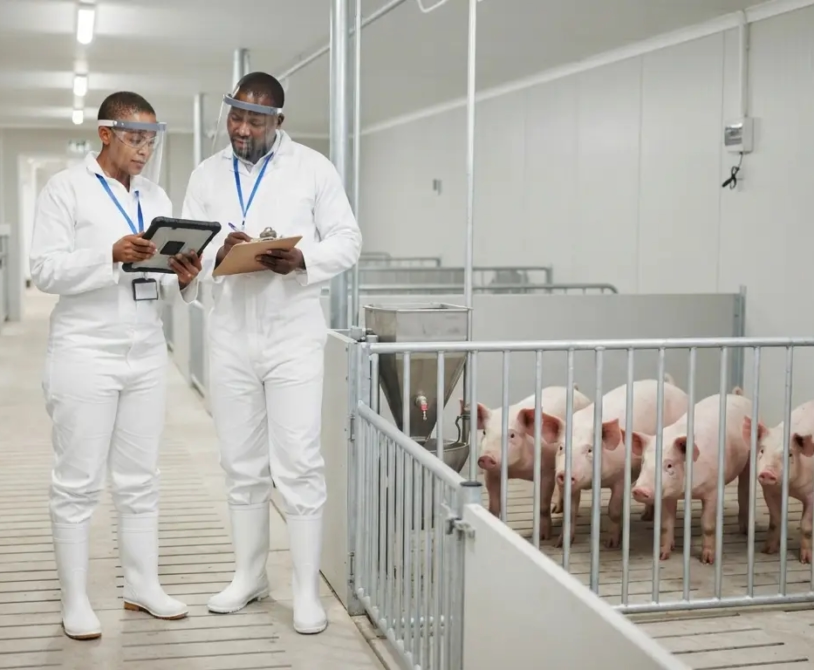
Every disease-specific guide in this series — African Swine Fever, PRRS, internal parasites, the general biosecurity framework — converges on the same recommendation: quarantine incoming animals, isolate sick animals, do not let either category have unrestricted contact with the healthy production population. This recommendation is repeated so consistently because it addresses the single highest-leverage intervention point in disease control: the moment before a pathogen has spread, when isolation can contain it completely, versus the moment after it has spread, when containment becomes vastly more difficult and costly.
But “quarantine the new animals” and “isolate sick pigs” are instructions that mean nothing without a physical facility designed to execute them — a building or pen with the specific characteristics that make quarantine actually function as quarantine, rather than a notional designation applied to whatever empty pen happens to be available when an incoming gilt or a sick finisher pig needs somewhere to go.
This guide builds the complete quarantine facility: the site selection and construction specifications that create genuine physical separation from the production population, the equipment and supply requirements for both the new-stock quarantine function and the sick-animal hospital function, the operating protocols that maintain the facility’s biosecurity integrity, and the practical management of running what is, in effect, two distinct facility functions — new animal isolation and sick animal care — within a shared physical space without compromising either.
Why Quarantine Requires Dedicated Infrastructure, Not a Spare Pen
The Failure Mode of Informal Quarantine
The most common quarantine failure on commercial pig farms is not the absence of any quarantine practice — it is the use of an inadequate substitute: an empty pen at the end of a production building, separated from neighboring pens only by a standard pen divider wall, sharing the same airspace, the same staff traffic pattern, the same equipment, and often the same drainage as the production pigs it is supposed to be protecting them from.
This arrangement provides essentially no meaningful biosecurity separation. Airborne pathogens (PRRS, Influenza, Mycoplasma) move freely through shared airspace regardless of solid pen dividers. Staff who handle the “quarantined” pig and then move directly to handling production pigs without any decontamination step are a direct mechanical transmission pathway. Shared drainage carries fecal material — and the pathogens it contains — from the quarantine pen toward or through areas the production population’s waste also flows through.
A functional quarantine facility requires genuine physical separation across every transmission pathway — airspace, personnel, equipment, drainage, and physical animal contact — not merely a labeled pen within the existing production building structure.
The Dual Function: New Stock and Sick Animal Care
Most commercial pig operations, particularly smaller and medium-scale farms, cannot justify two completely separate dedicated facilities for incoming animal quarantine and sick animal isolation. The practical solution is a single quarantine facility designed to serve both functions — with management protocols that prevent the two populations (incoming healthy-but-unverified animals, and sick animals from the existing production population) from contacting each other within the shared facility, since cross-contamination between these two groups would defeat the purpose of isolating either of them.
This guide addresses both functions within a unified facility design, with specific protocols for managing the situation where both functions are needed simultaneously.
Site Selection and Physical Specifications
Location Requirements
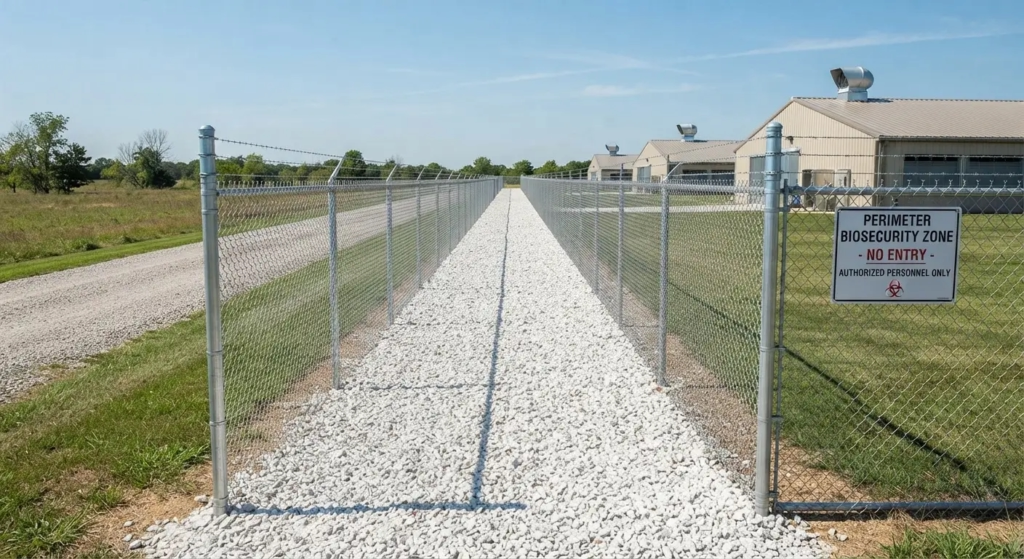
Minimum distance from production buildings: 50 meters, following the same principle established in piggery design guidance elsewhere in this series — this distance reduces the airborne transmission risk for pathogens capable of aerosol spread over short distances, and creates a meaningful physical and psychological separation that reinforces the biosecurity discipline required when moving between the quarantine facility and production areas.
Position relative to prevailing wind: Downwind from production buildings — any airborne pathogen shed by quarantine animals is carried away from the production population rather than toward it.
Position relative to drainage: Downslope from production buildings, with its own independent drainage and waste collection system that does not connect to or flow through the production area’s drainage infrastructure.
Access: A separate access route from the production buildings’ access pathway — ideally, the quarantine facility can be reached without passing through or near the production zone, allowing personnel and incoming animal transport to access the quarantine facility without any contact with the production area during that visit.
Building Specifications
Capacity: Sized to accommodate 10% of the farm’s total pig population simultaneously — this allows the facility to handle a meaningful incoming gilt/boar group alongside a reasonable allowance for sick animal cases without overcrowding compromising the facility’s function.
Construction:
- Solid, washable walls (concrete block, minimum 1.0 m height for general quarantine pens) that can be effectively cleaned and disinfected between uses
- Solid concrete floor with appropriate drainage slope (2% minimum, as detailed in general construction guidance in this series), directing waste to the facility’s own independent collection point
- Roof providing weather protection and appropriate ventilation — the same fundamental housing principles (adequate airflow, protection from direct solar heat load, rain exclusion) apply to quarantine housing as to any other pig housing
- Multiple separate pens within the facility (minimum 2–3 pens) rather than a single large undivided space — allowing separation between different groups of quarantined animals (for example, separating an incoming gilt group from a sick finisher pig under treatment, even within the same overall facility) and supporting the all-in/all-out cleaning discipline between different quarantine occupancies
Pen specifications within the facility:
| Pen Type | Purpose | Specifications |
|---|---|---|
| Incoming stock pen(s) | New gilts, boars, or purchased feeder pigs | Standard group housing specifications appropriate to the animals’ production stage (per space allowance guidance elsewhere in this series) |
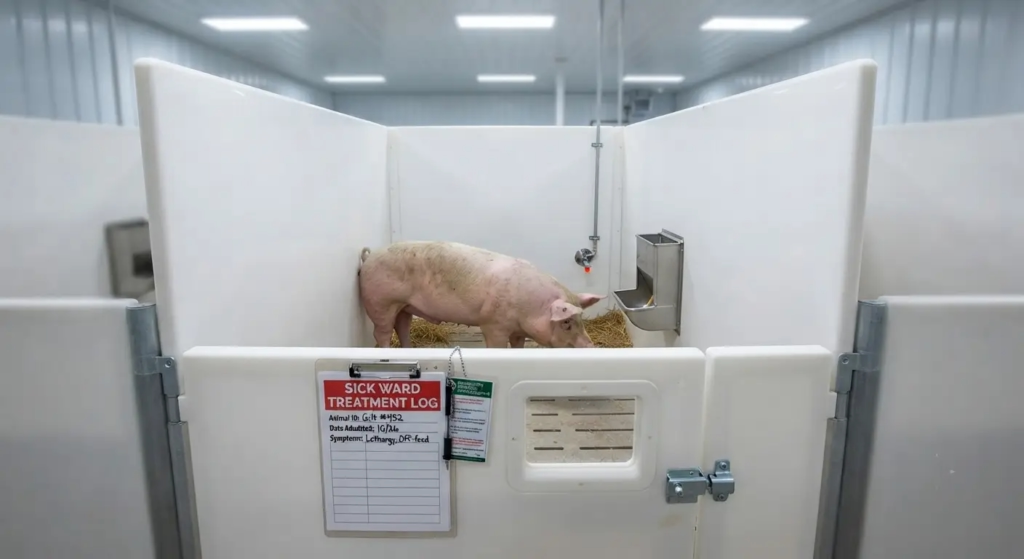
| Hospital/sick pen(s) | Individual sick animal isolation and treatment | Smaller individual or small-group pens (1.5–2.5 m² minimum per animal) allowing close observation and easy access for treatment |
| Observation/buffer pen | Animals transitioning out of quarantine before full herd integration, or animals under diagnostic observation without confirmed illness | Flexible-use space |
Independent Utilities
Water supply: A separate tap or connection point, ideally from the same farm water source but with its own delivery line that does not require crossing through the production zone, and with its own storage (small header tank) if continuous supply cannot be guaranteed from the independent line.
Electricity: Independent circuit if heating, lighting, or other powered equipment is required in the facility — particularly relevant if the facility will be used for neonatal or young animal hospital care requiring supplemental heat.
Feed storage: A small, dedicated feed storage point at the quarantine facility — feed for quarantined and sick animals should not be drawn from the same storage bins used for production feed without specific protocols preventing cross-contamination (clean scoops, separate containers), and dedicated quarantine feed storage eliminates this risk.
Equipment and Supplies Dedicated to the Quarantine Facility
The Principle of Dedicated Equipment
Every piece of equipment used in the quarantine facility — feeders, drinkers, cleaning tools, treatment supplies, even the boots and clothing worn by staff while working in the facility — should be physically dedicated to that facility and should never move to the production zone. This is the practical application of the “nothing moves from dirty to clean without decontamination” principle established in the dirty-clean zone system guidance in this series, applied specifically to the highest-risk zone on the farm.
Required Equipment List
Feeding and watering:
- Dedicated feeders (appropriate to the pen design and animal categories housed)
- Dedicated nipple drinkers or water troughs, following the same flow rate and ratio specifications detailed in water management guidance elsewhere in this series
- A dedicated feed scoop/container that never enters the main feed storage area
Cleaning and disinfection:
- Dedicated broom, shovel, and pressure washer attachment (or, at minimum, a dedicated hose nozzle if sharing a farm pressure washer unit, with thorough disinfection of the shared equipment between uses)
- Dedicated disinfectant supply, stored at the facility rather than requiring transport from central farm disinfectant storage
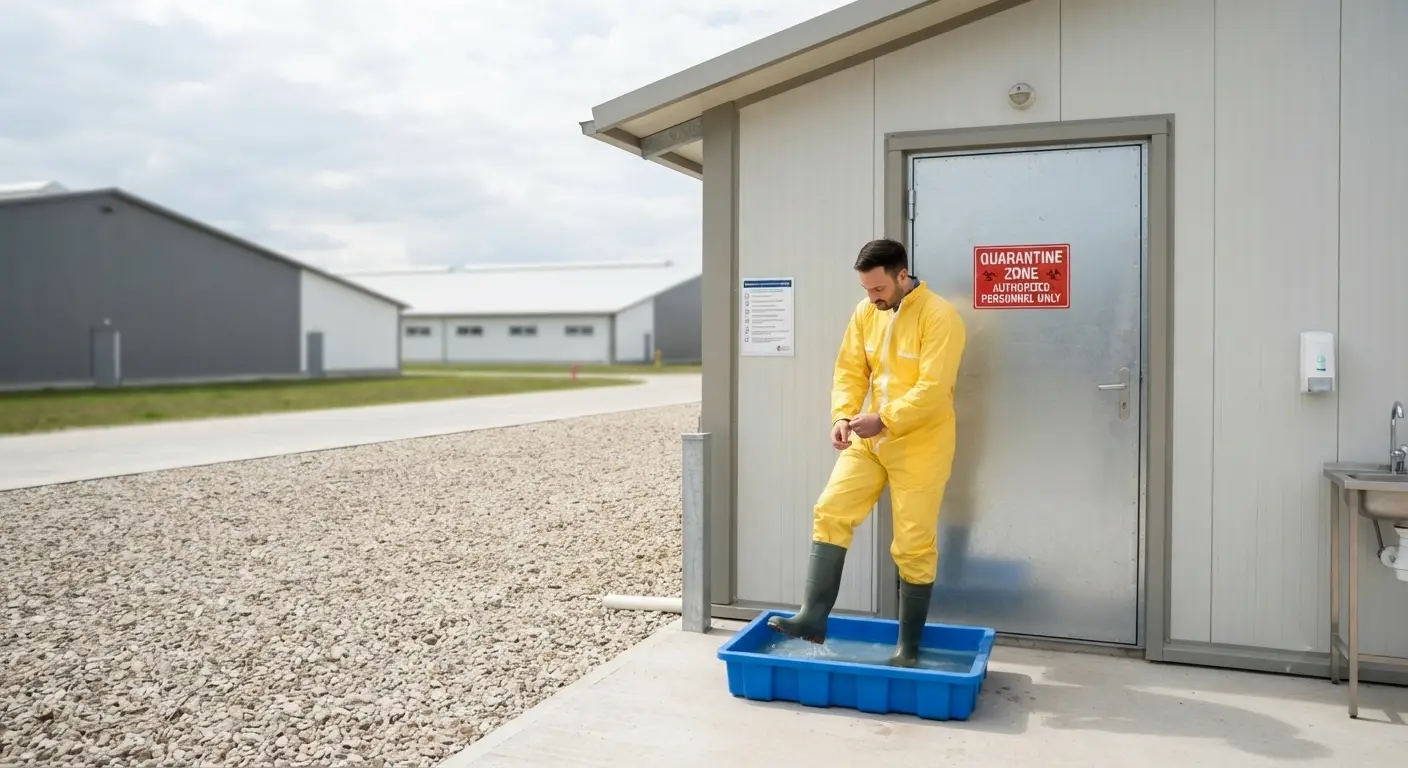
- Footbath at the facility entrance, maintained to the same standard as production building footbaths (daily disinfectant change, as detailed in biosecurity guidance in this series)
Personal protective equipment:
- Dedicated coveralls and boots, stored at the facility, used only when working in the quarantine area, and never worn into the production zone
- Disposable gloves for handling sick or newly arrived animals
- A dedicated handwashing station at the facility entrance/exit
Treatment supplies:
- A basic version of the first-aid kit (as detailed in the piggery first-aid kit guide in this series) dedicated to the quarantine facility — duplicate stock of the most commonly needed items (thermometer, basic antibiotics, electrolyte powder, injection equipment) rather than borrowing from the central farm kit, which would require movement between zones
- A dedicated thermometer, weighing scale, and basic diagnostic tools
Why Duplication, Not Sharing, Is the Correct Approach
The cost of duplicating basic equipment for the quarantine facility — a second thermometer, a second set of feeders, a dedicated first-aid kit subset — is modest relative to the biosecurity value it provides. The alternative, sharing equipment between the quarantine facility and the production zone with disinfection between each use, introduces both a compliance risk (the disinfection step being skipped under time pressure or inconvenience) and an operational friction (the time required to properly disinfect equipment between zones) that duplication eliminates.
Operating Protocol — Incoming Animal Quarantine
The 21–28 Day Standard Protocol
As established in breeding management and biosecurity guidance throughout this series, all incoming animals — purchased gilts, boars, or feeder pigs — undergo a minimum 21–28 day quarantine period before any contact with the production population. The quarantine facility is where this protocol is executed.
Day 0 (Arrival):
- Animals are received directly into the quarantine facility — the transport vehicle does not enter the production zone or even the general Zone 2 service area if avoidable; ideally, the quarantine facility has its own access point that allows the delivery vehicle to unload without crossing through other farm zones
- Initial health assessment: visual examination for any obvious signs of illness, injury, or distress from transport
- Body weight recording (establishing baseline for monitoring growth/condition through the quarantine period)
- Identification: permanent ID (ear tag) applied if not already present, with full documentation of source farm, purchase date, and any accompanying health certificate information
Days 1–7:
- Daily clinical observation: feed intake, water intake, general behavior, any signs of respiratory distress, lameness, diarrhea, or other abnormality
- Body temperature check on at least 2–3 occasions during the first week (random sampling if the group is large, or all animals if the group is small enough for practical individual monitoring)
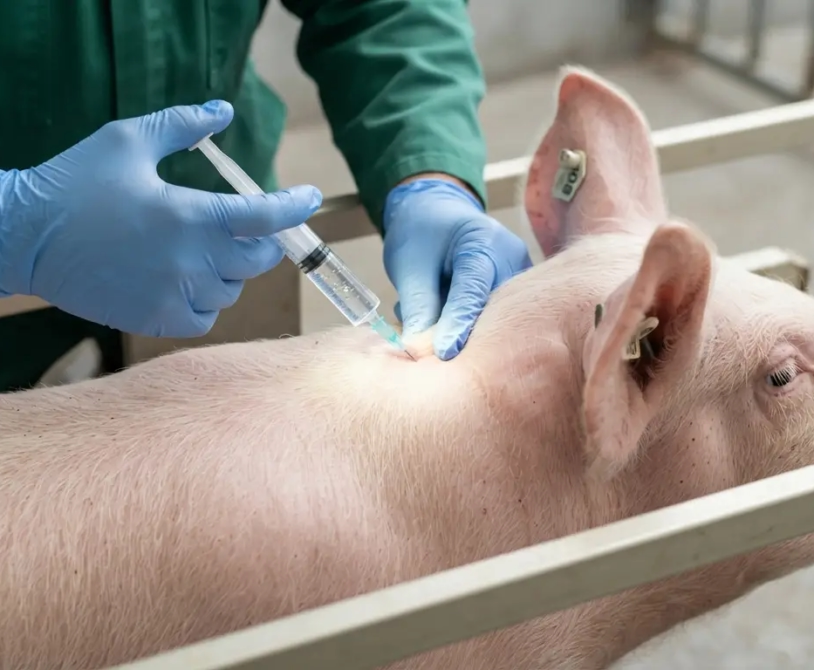
- Begin vaccination catch-up protocol as detailed in vaccination guidance elsewhere in this series — administering any vaccines the animals have not previously received that are part of the destination herd’s standard program
- Strategic deworming treatment (as detailed in parasite control guidance) — addressing both the possibility that incoming animals carry a parasite burden from their source farm and providing a clean starting point before the animals contact the destination herd’s environment
Days 8–14:
- Continued daily observation
- Where diagnostic laboratory access supports this, blood sampling for key pathogen testing (PRRS PCR, relevant serology for the destination herd’s specific disease concerns) — providing laboratory confirmation alongside the clinical observation data
- Second-stage vaccination boosters where the vaccination protocol requires a multi-dose course
Days 15–21:
- Continued daily observation
- “Acclimation” exposure protocol (optional but recommended, as detailed in biosecurity guidance): introducing material from the existing production herd’s environment (used litter, a sample of manure, or — in more developed acclimation protocols — direct contact with a cull animal from the production herd under controlled conditions) into the quarantine pen, exposing the incoming animals to the destination herd’s endemic pathogen environment while they remain physically separated, allowing them to develop immunity or reveal susceptibility before full integration
Days 21–28 (or longer if any concern remains):
- Final clinical assessment
- Review of all observation records, vaccination completion status, and any diagnostic test results
- The integration decision: Only after this complete review confirms no signs of illness, appropriate vaccination completion, and (where used) acceptable diagnostic test results should the animals be approved for movement from quarantine into the production population
- If any concern exists — incomplete vaccination course, any clinical sign during the observation period, any pending diagnostic result — extend the quarantine period rather than proceeding with integration on the originally planned schedule
Documentation for Incoming Animal Quarantine
A dedicated record should be maintained for every quarantine group, including:
- Source farm and any accompanying health documentation
- Date of arrival and date of planned/actual release to production population
- Daily observation log
- Vaccination administered (product, batch number, date) — cross-referenced to the vaccination record-keeping system detailed in vaccination guidance
- Any treatment administered during the quarantine period
- Diagnostic test results where applicable
- Final clearance decision and the basis for that decision
This documentation serves both the immediate quarantine management function and the retrospective biosecurity investigation value described in biosecurity framework guidance — if a disease event occurs in the production herd after a quarantine group’s integration, this record is the primary evidence for assessing whether the quarantine protocol was correctly followed and whether the incoming animals are a plausible source.
Operating Protocol — Sick Animal Isolation
When to Move a Sick Animal to the Quarantine/Hospital Facility
Not every sick animal requires removal from its production pen — minor, clearly non-infectious conditions (a minor injury from pen-mate aggression with no signs of systemic illness, for example) may be appropriately treated in place. The decision to move an animal to the hospital pen should be based on:
- Suspected infectious disease: Any presentation consistent with a transmissible condition — fever, respiratory signs, diarrhea, unexplained lethargy affecting an individual animal while pen-mates remain normal — warrants isolation to prevent potential spread to the rest of the pen
- Severity requiring intensive individual care: An animal too weak or compromised to compete effectively for feed and water access in its normal pen, where individual hospital pen housing allows more controlled feeding and monitoring
- Diagnostic uncertainty: Where the cause of illness is unclear and could represent a significant disease risk (as detailed in the PRRS/Influenza identification guidance and the ASF bio-exclusion protocol in this series), isolation pending diagnosis is the appropriate precautionary action
The Hospital Pen Protocol
Movement to isolation:
- Move the animal using a dedicated transport method (a small trailer, cart, or — for smaller animals — direct carrying) that does not require walking the animal through other production areas where possible
- Document the date, animal identification, clinical signs observed, and the pen of origin
Daily care:
- Twice-daily observation minimum (more frequently for severely ill animals) — temperature, feed/water intake, general condition, any change in clinical signs
- Treatment as indicated by veterinary guidance or, for clearly identified common conditions, the first-aid kit protocols
- Record-keeping: treatment administered (medication, dose, route, date), clinical progression observations
The recovery or culling decision:
- Animals showing clear, sustained improvement over several days can be considered for return to the production population — but only after a clean break from clinical signs (typically a minimum of 3–5 days symptom-free, depending on the specific condition) and ideally with veterinary input on the appropriate timing for the specific condition treated
- Animals showing no improvement, deteriorating condition, or conditions with poor prognosis should be assessed for humane culling rather than prolonged, likely futile treatment — both for animal welfare reasons and to avoid the hospital pen becoming a chronic, ongoing pathogen reservoir from a non-recovering animal
Return-to-herd protocol:
- Before returning a recovered animal to its production pen, confirm complete resolution of clinical signs
- Where the original illness raised concern about a specific transmissible pathogen, consider whether the animal should return to its original pen (if that pen’s other occupants were already potentially exposed before isolation) or whether a different reintegration approach is warranted based on veterinary guidance specific to the suspected condition
Managing Simultaneous New-Stock and Sick-Animal Use
When the quarantine facility must simultaneously house an incoming gilt group and a sick animal from the production herd, the multi-pen design specified in Part 2 becomes essential:
- House the two groups in physically separate pens within the facility, ideally with the maximum possible separation the facility’s layout allows
- Use separate equipment (feeders, drinkers, cleaning tools) for each pen — even within the already-dedicated quarantine facility equipment set, cross-contamination between the incoming stock group and the sick animal group should be prevented
- Service the healthier population (incoming stock quarantine) before the sick animal pen during daily care rounds, following the same “youngest/healthiest first” principle applied to general farm biosecurity traffic patterns — minimizing the risk of carrying pathogen from the sick animal to the incoming stock group
- Change outer protective clothing (a disposable apron or dedicated secondary coverall) when moving between the two pen types within the same facility visit, if both must be serviced in the same session
Cleaning and Disinfection Between Uses
The All-In/All-Out Principle Applied to Quarantine
As detailed in biosecurity framework guidance, the quarantine facility should follow the same all-in/all-out cleaning discipline as production housing — each pen is completely emptied, cleaned, disinfected, and rested before the next occupant (whether the next incoming stock group or the next sick animal case) is introduced.
The cleaning sequence (following the protocol detailed in biosecurity framework guidance):
- Complete removal of all animals and organic material (manure, bedding, feed residue)
- Wet and soak to soften remaining organic debris
- High-pressure wash to visible cleanliness
- Allow to dry
- Apply disinfectant at manufacturer-specified concentration and contact time
- Rest period — minimum 7 days, ideally longer for the quarantine facility specifically given its function as the highest-risk entry point for new pathogens
Why the quarantine facility’s cleaning standard should be at least as rigorous as production building cleaning: This facility, by design, houses animals of unverified or actively compromised health status — its surfaces represent the highest pathogen contamination risk on the farm. A quarantine facility that is cleaned less rigorously than production buildings (the opposite of what its function would suggest) undermines the entire purpose of the quarantine protocol by allowing pathogen accumulation in the one facility specifically designed to contain and prevent pathogen spread.
Staff Protocol for the Quarantine Facility
The “Last Stop” Principle
Quarantine facility work should always be the last task in any staff member’s daily routine, after all production zone work has been completed. This sequencing ensures that any pathogen present in the quarantine facility cannot be mechanically transported to the production population via staff movement later in the same work session.
Where this sequencing is impractical (for example, if quarantine facility work is genuinely urgent and cannot wait until the end of the day), the staff member working in the quarantine facility should not return to production zone work for the remainder of that day, or should complete a full decontamination protocol (shower, complete clothing change) before any subsequent production zone access.
Dedicated Personnel (Where Farm Scale Allows)
On larger operations, designating specific staff members whose primary responsibility includes quarantine facility care — rather than rotating this responsibility among all production staff — reduces the number of individuals moving between the quarantine facility and production zones, simplifying biosecurity management and reducing the number of potential transmission pathways.
On smaller operations where dedicated personnel is impractical, the “last stop” sequencing principle combined with strict equipment and clothing dedication (Part 3) provides the practical alternative.
The Financial Case for Proper Quarantine Infrastructure
Construction Cost
A functional quarantine facility for a small-to-medium commercial farm (50–100 sow equivalent scale):
| Item | Cost (XAF) | Cost (USD) |
|---|---|---|
| Building structure (3 pens, basic concrete block construction, roofed) | 4,500,000 | 7,500 |
| Independent water supply line and storage | 800,000 | 1,333 |
| Drainage and waste collection (independent system) | 1,200,000 | 2,000 |
| Dedicated equipment (feeders, drinkers, cleaning tools, PPE) | 600,000 | 1,000 |
| First-aid kit duplication for the facility | 400,000 | 667 |
| Total construction and equipment cost | 7,500,000 | 12,500 |
The Cost of Inadequate Quarantine
As established in the biosecurity framework and ASF guidance elsewhere in this series, a single significant disease introduction event — PRRS at XAF 39,500,000 (USD 65,833) for a 100-sow operation, or ASF at XAF 76,000,000 (USD 126,667) — represents a cost many multiples of the complete quarantine facility construction investment. The quarantine facility is not merely one component of the overall biosecurity framework’s cost — it is specifically the infrastructure addressing the single most commonly documented disease introduction pathway (purchased animal introduction without adequate quarantine), making it one of the highest-priority biosecurity investments a commercial pig operation can make.
A farm that has invested in excellent general biosecurity — perimeter fencing, vehicle wash stations, personnel protocols — but continues to introduce new breeding stock directly into the production population without genuine quarantine has left open the single pathway responsible for more documented disease introductions than any other route covered in this series’ biosecurity guidance.
Summary
A quarantine facility that exists as policy without adequate physical infrastructure provides minimal genuine biosecurity protection — the appearance of a precaution without its substance. The facility specifications in this guide — genuine physical separation (distance, airspace, drainage, access route) from the production zone; dedicated equipment that never crosses between the quarantine facility and production areas; the structured 21–28 day incoming animal protocol with its specific observation, vaccination, and diagnostic milestones; and the parallel sick-animal hospital function with its own movement, treatment, and reintegration protocols — together constitute the infrastructure that makes “quarantine the new animals” and “isolate sick pigs” operationally real rather than aspirational.
The investment — approximately XAF 7,500,000 (USD 12,500) for a complete, functional facility at small-to-medium commercial scale — addresses the single most commonly documented pathway for significant disease introduction in commercial pig production, at a cost that is recovered many times over by even one prevented introduction event.
Build the facility to genuinely separate, not merely to label. Maintain its equipment dedication without exception. Follow the observation and clearance protocol completely, every time, regardless of operational pressure to integrate new animals faster. The facility’s value depends entirely on the discipline with which its protocols are followed — infrastructure alone, without operational discipline, is no more protective than the spare pen it was built to replace.