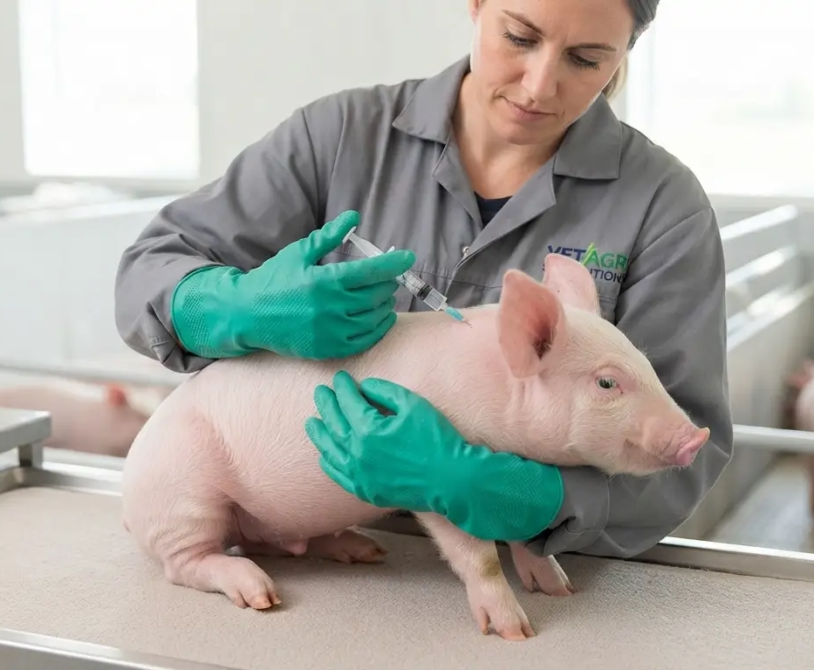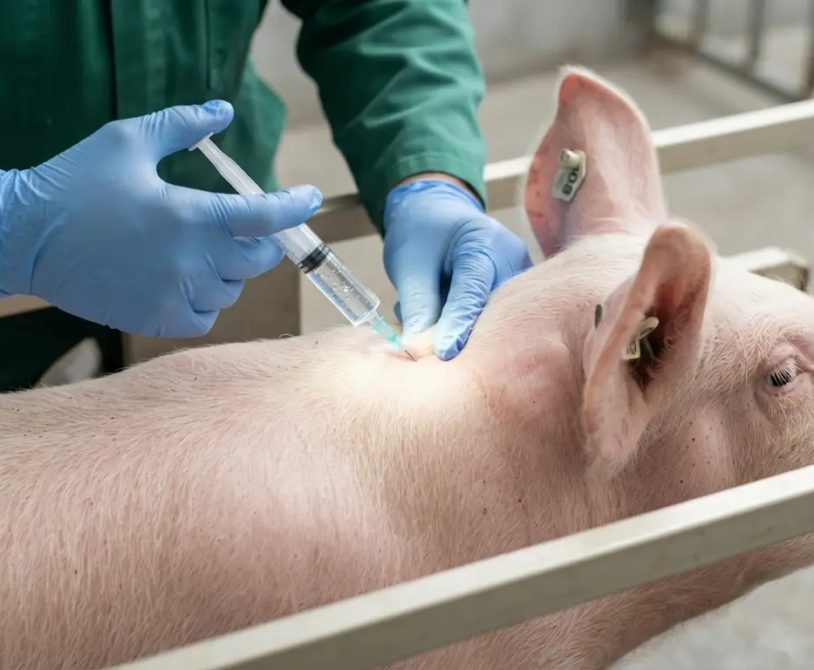
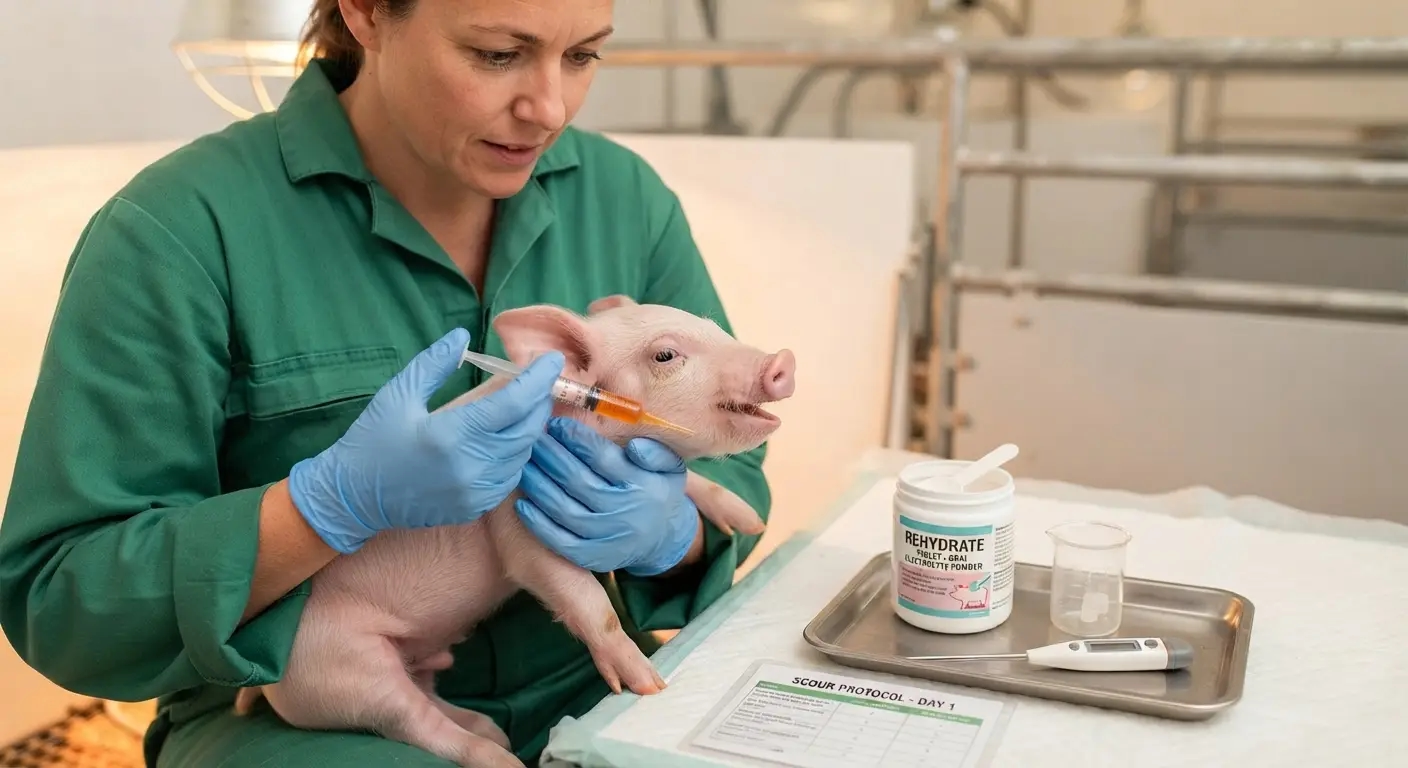
The gap between recognizing a problem and treating it is where pigs are lost. A farm manager who correctly identifies a piglet in respiratory distress from hypothermia, a sow showing early signs of mastitis, or a finisher pig with a fresh wound from pen-mate aggression has done the diagnostic work — but that diagnosis only translates into a saved animal if the correct treatment is immediately available, not three days away pending a trip to the nearest agro-veterinary supplier in town.
A well-stocked piggery first-aid kit is not a luxury for farms that can afford it — it is one of the highest-return investments available in commercial pig production, because the items in it are individually inexpensive and the production losses they prevent are individually substantial. A XAF 3,000 (USD 5) bottle of oxytocin that resolves a prolonged farrowing before the sow exhausts herself and the remaining piglets in the litter die from extended birth intervals is worth multiples of its cost in a single use. A XAF 8,000 (USD 13) supply of electrolyte powder that prevents dehydration deaths in a scouring litter of piglets pays for itself many times over in a single outbreak.
This guide builds the complete kit systematically — organized by the categories of problems a commercial pig farm will encounter, with the specific medications, dosing reference points, and instruments that address each category, the storage and organization principles that keep the kit functional and accessible in an emergency, and the restocking discipline that ensures the kit is never depleted exactly when it is needed most.
Kit Organization Principles
Why Organization Matters As Much As Contents
A first-aid kit with every correct item but no organizational system is functionally equivalent to having no kit at all during an actual emergency — when a sow is in farrowing distress at 2 AM, the person responding does not have time to search through an unsorted box of medications and equipment to find the right item.
The recommended organizational structure:
- Category-based storage: Separate containers or clearly labeled sections for injectable medications, wound care supplies, instruments, and oral/feed-administered treatments
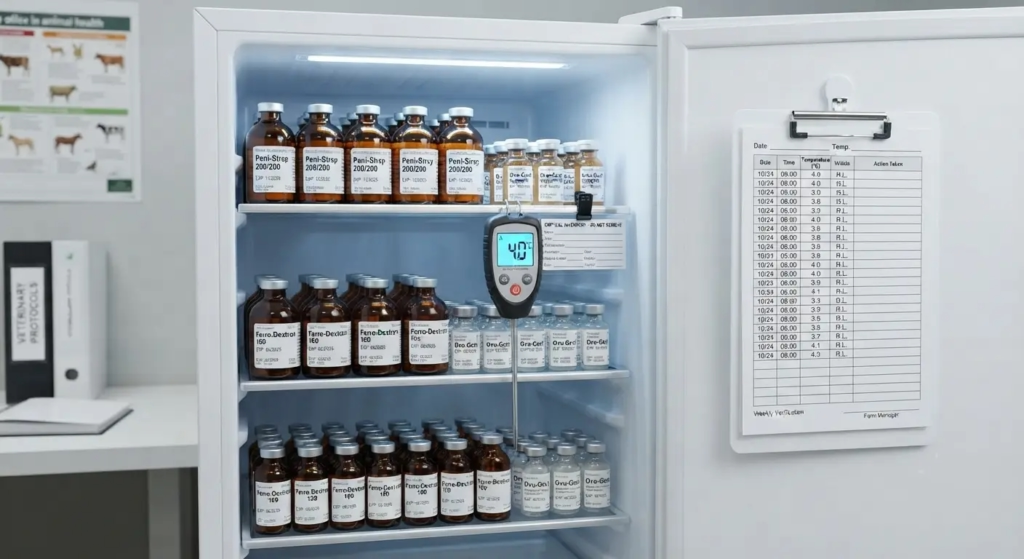
- Cold chain separation: Items requiring refrigeration (most vaccines, some antibiotics, oxytocin) stored in a dedicated refrigerator separate from items that can be stored at ambient temperature
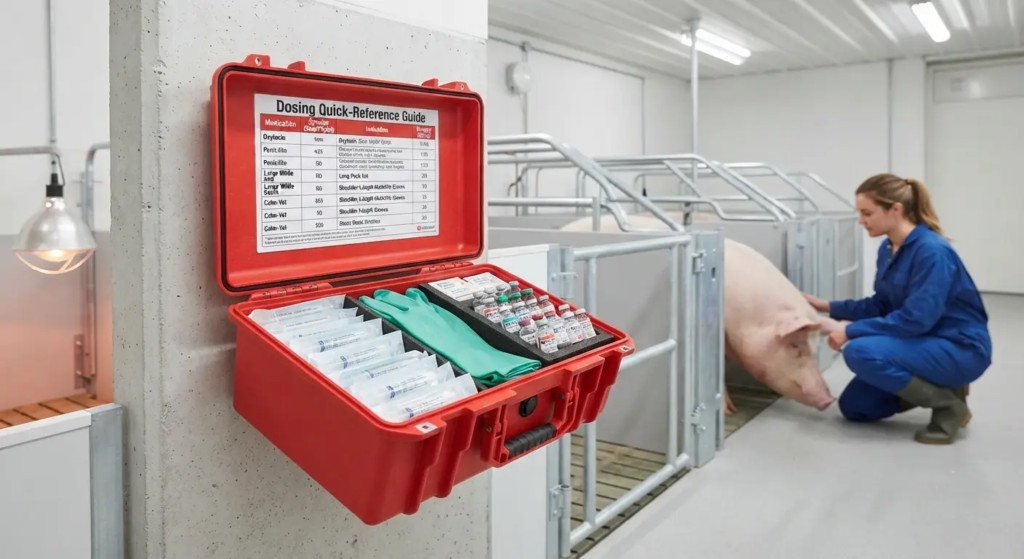
- Dosing reference card: A laminated card attached to or stored with the kit, listing the standard dose (mg/kg or mL/kg) for every medication in the kit, by weight category (piglet, weanling, grower, finisher, sow, boar) — eliminating the need to calculate doses under emergency time pressure
- Expiry tracking: A simple log or labeling system that flags items approaching their expiry date, allowing rotation before expiration rather than discovering an expired critical medication at the moment it is needed
Kit Accessibility
The kit (or, more practically, multiple smaller kits) should be positioned for rapid access from the areas where emergencies are most likely to occur:
- Farrowing house kit: The highest-priority location, given the time-sensitive nature of farrowing complications — oxytocin, basic resuscitation supplies, and wound care items specific to neonatal and sow farrowing complications
- Central farm kit: The comprehensive kit covering all categories, positioned centrally (office, treatment room) and accessible to all production areas within a few minutes
- Isolation facility kit: A separate, smaller kit dedicated to the isolation facility, reducing the temptation to move equipment between the isolation facility and the main production area (a biosecurity violation, as detailed in biosecurity guidance elsewhere in this series)
Injectable Medications
Antibiotics
Penicillin/Streptomycin combination (procaine penicillin G + dihydrostreptomycin):
- Use: Broad-spectrum first-line treatment for many common bacterial infections — Erysipelas, many respiratory bacterial pathogens, wound infections, and general bacterial sepsis presentations
- Dose reference: Typically 1 mL per 10–15 kg body weight (verify against the specific product label, as concentration varies by formulation)
- Storage: Refrigerated (2–8°C)
- Withdrawal period: Verify against product label — typically several days to weeks depending on formulation; critical to track for any animal nearing slaughter date
Oxytetracycline (long-acting injectable):
- Use: Broad-spectrum coverage including some pathogens not covered by penicillin; useful for respiratory disease, some enteric infections, and as a general-purpose treatment when the specific pathogen is unknown
- Dose reference: Typically 1 mL per 10 kg body weight for long-acting formulations (verify product-specific concentration)
- Storage: Many long-acting formulations are stable at room temperature, but verify against the specific product — some require refrigeration
- Note: Long-acting formulations provide extended treatment coverage (3–4 days) from a single injection, reducing handling stress compared to multiple-dose short-acting alternatives
Ceftiofur (third-generation cephalosporin):
- Use: Reserved for more severe or treatment-resistant bacterial infections, particularly respiratory disease complex cases where first-line antibiotics have shown inadequate response; valuable in neonatal piglet treatment due to its safety profile and effectiveness against common neonatal bacterial pathogens
- Dose reference: Typically 1 mL per 15–20 kg body weight (verify product label)
- Storage: Refrigerated
- Note: This is a higher-tier antibiotic that should be used judiciously to preserve its effectiveness and limit resistance development — appropriate veterinary guidance on when escalation to this drug class is warranted is recommended rather than routine first-line use
Reproductive and Farrowing Support
Oxytocin:
- Use: Stimulates uterine contraction to assist prolonged or stalled farrowing, and stimulates milk letdown in sows with delayed or inadequate milk release (agalactia)
- Dose reference: Typically 1–2 mL (10–20 IU) per sow, intramuscular injection
- Critical caution: Oxytocin should only be administered when the birth canal is confirmed clear (no piglet lodged in the birth canal causing the delay) — administering oxytocin to stimulate contractions against an obstruction can cause uterine rupture. Manual examination to rule out obstruction should precede oxytocin administration whenever feasible
- Storage: Refrigerated
- Onset: Rapid — effects typically visible within 5–10 minutes of injection
Calcium borogluconate (injectable calcium):
- Use: Treatment for hypocalcemia-related farrowing complications (uterine inertia from inadequate calcium for muscle contraction) and post-farrowing weakness in sows
- Dose reference: Typically 50–100 mL per sow, slow intravenous or subcutaneous injection (verify product concentration and route recommendation)
- Storage: Room temperature typically acceptable; verify product label
- Caution: Rapid intravenous administration can cause cardiac arrhythmia — slow administration with monitoring is essential where IV route is used; subcutaneous route is safer for less experienced handlers
Anti-Inflammatory and Pain Management
Flunixin meglumine (NSAID):
- Use: Reduces fever, inflammation, and pain associated with various conditions including mastitis, lameness, and post-surgical pain (castration, tail docking complications); particularly valuable in mastitis-metritis-agalactia (MMA) complex treatment in sows, where reducing inflammation and fever supports recovery of normal milk production
- Dose reference: Typically 1.1–2.2 mg/kg body weight, intramuscular injection
- Storage: Room temperature typically acceptable
- Withdrawal period: Verify against label
Meloxicam (NSAID, alternative to flunixin):
- Use: Similar applications to flunixin — pain and inflammation management, often preferred for its longer duration of action allowing less frequent dosing
- Dose reference: Typically 0.4 mg/kg body weight
- Storage: Room temperature
Injectable Vitamins and Supportive Care
Vitamin B-complex injectable:
- Use: Supportive treatment for pigs showing reduced appetite, weakness, or recovering from illness or stress events — supports general metabolic recovery
- Dose reference: Typically 2–5 mL per adult pig, 0.5–1 mL per piglet, intramuscular
- Storage: Protect from light; room temperature typically acceptable
Vitamin E/Selenium injectable combination:
- Use: Emergency treatment for suspected acute selenium/vitamin E deficiency presentations (sudden death with mulberry heart disease suspicion, white muscle disease signs) as detailed in nutritional deficiency guidance in this series
- Dose reference: Verify product label carefully — selenium has a narrow safety margin; overdose causes toxicity
- Storage: Room temperature typically acceptable; protect from light
- Critical caution: Do not exceed labeled dose — selenium toxicity is a real risk with this product class
Iron dextran:
- Use: Standard neonatal piglet anemia prevention, as detailed in nutritional deficiency guidance — this is the single most frequently used injectable in the entire kit given its application to every piglet born on the farm
- Dose reference: 200 mg (typically 1–2 mL depending on concentration) per piglet, intramuscular, at 2–5 days of age
- Storage: Room temperature typically acceptable
Antiparasitic Injectables
Ivermectin or Doramectin (injectable):
- Use: Strategic deworming and mange treatment, as detailed extensively in the parasite control guidance in this series
- Dose reference: 0.3 mg/kg body weight, subcutaneous (ivermectin) or intramuscular (doramectin)
- Storage: Room temperature typically acceptable; protect from light
- Withdrawal period: Typically 28 days for meat — critical to track relative to planned slaughter dates
Topical and Wound Care Supplies
Wound Cleaning and Disinfection
Povidone-iodine solution (10% concentrate, dilutable):
- Use: General wound cleaning and disinfection for cuts, abrasions, and post-procedural wound care (after castration, tail docking, ear notching)
- Application: Dilute to 1% working solution for wound flushing; full strength for surface application to intact skin around a wound
Chlorhexidine solution:
- Use: Alternative or complementary disinfectant to iodine-based products; some practitioners prefer chlorhexidine for its residual antimicrobial activity
Hydrogen peroxide (3%):
- Use: Initial cleaning of heavily contaminated wounds (debris removal through the foaming action); should not be used repeatedly on healing tissue as it can impair healthy tissue regeneration with prolonged use — appropriate for initial cleaning, not ongoing wound management
Topical Treatments
Antiseptic/antibacterial wound spray or powder (containing an agent such as gentian violet, oxytetracycline spray, or a commercial wound powder product):
- Use: Applied to clean wounds, surgical sites (castration, tail docking), and umbilical cords at birth to prevent bacterial colonization
- Application: Directly to the cleaned wound surface
Fly repellent ointment/spray (for wound protection in fly season):
- Use: Preventing flystrike (myiasis — fly larvae infestation) in open wounds during high fly-pressure periods, particularly relevant in West African conditions during and after rainy season
Hoof and skin treatment (for lameness-associated lesions, mange-affected skin):
- A topical antiseptic/antifungal combination product for treating localized hoof lesions (white line disease, heel erosion as detailed in flooring and hoof health guidance in this series) and localized skin lesions
Bandaging and Wound Closure Supplies
- Gauze pads and rolls (various sizes) for wound dressing
- Elastic bandage wrap (cohesive, self-adhering type works well for pig limbs given the difficulty of taping to bristled skin)
- Surgical tape
- Wound closure strips or, where the operator has appropriate training, suture material and needles for larger wound closure (suturing should generally be reserved for veterinary-trained personnel or under veterinary guidance, given the complexity and welfare implications of incorrect technique)
Oral and Feed-Administered Treatments
Electrolyte and Rehydration Products
Oral electrolyte powder/solution:
- Use: The single most important treatment for any scouring (diarrhea) condition in piglets and weanlings — rehydration and electrolyte replacement is frequently more important to survival than treating the underlying infectious cause, since dehydration is the proximate cause of death in most severe scour cases regardless of the original pathogen
- Application: Mixed into drinking water at the labeled concentration, or administered directly via oral syringe/drench to severely affected individual piglets unable to drink independently
- Storage: Powder form is stable at room temperature if kept dry; mixed solution should be used within 24 hours
Antiparasitic Oral Treatments
Fenbendazole (in-feed or oral paste):
- Use: Alternative or complementary anthelmintic to injectable ivermectin, particularly useful for treatment of pregnant sows where in-feed administration avoids handling stress, and for situations where individual injection of a large group is impractical
- Dose reference: 5–10 mg/kg body weight per day for 5–10 consecutive days, as detailed in parasite control guidance
- Storage: Room temperature
Toltrazuril or Diclazuril (coccidiosis prevention):
- Use: Oral drench for neonatal piglets to prevent Isospora suis coccidiosis, as detailed in vaccination and neonatal management guidance
- Dose reference: Verify product-specific concentration; typically administered as a single oral dose at 3–7 days of age
Probiotic and Digestive Support
Oral probiotic paste or powder (Lactobacillus, Bacillus species products):
- Use: Supporting gut microbiome recovery following antibiotic treatment, scour events, or significant stress (weaning, transport)
- Application: Oral drench for individual treatment or mixed into water/feed for group application
Pain and Fever Management (Oral)
Oral aspirin or paracetamol-based products formulated for livestock use (where available and appropriate):
- Less commonly used than injectable NSAIDs in commercial settings but may be relevant for mixed-feed group treatment of mild fever/discomfort conditions affecting larger groups where individual injection is impractical
Instruments and Equipment
Injection Equipment
- Disposable syringes: Range of sizes — 1 mL (for piglets and precise small-volume dosing), 3 mL, 5 mL, 10 mL, 20 mL/35–60 mL (for larger volume treatments in sows)
- Needles: As detailed in vaccination guidance — range from 20 gauge/1.5 cm (piglets) through 16–18 gauge/2.5–3.8 cm (finishers, sows), maintained in adequate quantity for the “change every 20 injections, or immediately if contaminated” protocol
- Needle disposal container (sharps container): For safe disposal of used needles — prevents accidental needle-stick injury to staff and prevents needle fragments from entering the food chain if a needle breaks during use
Diagnostic and Monitoring Tools
- Digital or mercury-free thermometer (livestock-rated, rectal): Essential for fever assessment in any suspected illness — the single most informative basic diagnostic measurement available without laboratory access
- Stethoscope: Useful for assessing respiratory sounds (crackles, wheezes indicating pneumonia) and, with training, cardiac assessment
- Weighing scale or weight band/tape: For accurate dosing calculation — medication doses calculated from estimated rather than measured weight are a common source of under- or over-dosing
- Magnifying glass or hand lens: Useful for skin examination (mange mite visualization, though formal skin scraping and microscopy remains the definitive diagnostic) and parasite egg/larvae identification support
Birthing and Farrowing Assistance Equipment
- Obstetric lubricant (non-spermicidal, water-based): Essential for manual assistance during difficult farrowing — examining for and resolving birth canal obstructions
- Long obstetric gloves (shoulder-length, disposable): For hygienic manual examination and assistance during farrowing complications
- Piglet resuscitation supplies: A bulb syringe or suction device for clearing airways of newly born piglets showing respiratory distress; a clean towel for vigorous rubbing stimulation; in well-equipped operations, a small heat lamp or warming box for immediate post-birth thermal support of weak or chilled neonates
Handling and Restraint Equipment
- Hog snare (nose snare): For brief restraint of larger pigs for examination, injection, or minor procedures
- Handling board: As detailed in boar management guidance, useful for directing and protecting against larger, potentially aggressive animals during examination or treatment
- Castration/processing instruments: Scalpel or castration knife (sterilizable or single-use), ear notching pliers, tail docking equipment — maintained sterile/clean for routine processing and minor surgical procedures
Disinfection and Hygiene Supplies
- Surgical/exam gloves (disposable, non-sterile, for general handling): Maintaining hand hygiene and reducing disease transmission risk during examination and treatment of multiple animals
- Hand sanitizer or surgical scrub solution: For hand hygiene between animal examinations, particularly important when moving between potentially infectious cases
- General-purpose disinfectant (concentrate, for instrument and surface cleaning): Quaternary ammonium or iodophor-based product for cleaning instruments between uses and treatment area surfaces
The Dosing Reference Card — A Practical Template
A laminated card stored with the kit should provide quick-reference dosing for the most commonly used medications, organized by weight category to eliminate calculation under time pressure:
| Medication | Piglet (2 kg) | Weanling (15 kg) | Grower (40 kg) | Finisher (90 kg) | Sow (200 kg) |
|---|---|---|---|---|---|
| Penicillin/Strep (per label conc.) | 0.2 mL | 1.0–1.5 mL | 3–4 mL | 6–9 mL | 13–20 mL |
| Oxytetracycline LA | 0.2 mL | 1.5 mL | 4 mL | 9 mL | 20 mL |
| Flunixin meglumine | 0.2–0.4 mL | 1.5–3 mL | 4–8 mL | 9–18 mL | 20–40 mL |
| Ivermectin (1% inj.) | 0.06 mL | 0.45 mL | 1.2 mL | 2.7 mL | 6 mL |
| Iron dextran | 1–2 mL (fixed dose) | — | — | — | — |
| Vitamin B-complex | 0.5 mL | 1–2 mL | 2–3 mL | 3–5 mL | 5 mL |
Critical reminder embedded on the card: “Verify dose against the specific product label — concentrations vary between manufacturers and formulations. This card is a starting reference, not a substitute for label verification.”
Storage, Maintenance, and Restocking Discipline
The Refrigeration Requirement
As detailed in vaccination cold chain guidance in this series, many medications in this kit — oxytocin, calcium borogluconate (some formulations), penicillin-streptomycin, vitamin E/selenium, and others — require refrigerated storage at 2–8°C. The first-aid kit refrigerator should be:
- Dedicated to medical supplies, not shared with food storage that creates frequent door-opening temperature disruption
- Equipped with a calibrated thermometer, checked and logged daily
- Backed up with a generator or battery system in areas with unreliable grid power, given the financial and welfare consequences of losing refrigerated medication stock to a power outage
Inventory and Expiry Management
The monthly inventory check:
- Physically verify every item in the kit is present in the expected location (items moved and not returned are a common cause of kit failure at the moment of need)
- Check expiry dates on all medications — flag any item expiring within the next 60 days for priority use or replacement
- Verify adequate stock levels against the farm’s typical consumption rate for each item
- Test that instruments (thermometer, scale) are functioning correctly
The restocking trigger: Establish a minimum stock threshold for each critical item (for example, “reorder oxytocin when stock falls to 3 vials”) rather than waiting until an item is completely exhausted — the lead time for restocking from agricultural veterinary suppliers in West and Central Africa can be days to weeks depending on location and item availability, and a farm that waits until complete depletion to reorder risks being without a critical medication during exactly the emergency that would require it.
Documentation of Use
Every time a medication from the kit is used, record:
- Date, animal identification (pen/individual), medication used, dose administered, route, and the condition being treated
- This record serves multiple functions: tracking withdrawal periods for animals approaching slaughter, providing the treatment history that supports veterinary diagnosis if a condition recurs or worsens, and providing the consumption data that informs restocking decisions
Knowing the Limits — When the First-Aid Kit Is Not Enough
The Critical Distinction Between First Aid and Definitive Treatment
A well-stocked first-aid kit allows immediate stabilization and treatment of common, well-understood conditions. It is not a substitute for veterinary diagnosis and treatment in situations involving:
- Any suspected notifiable disease (African Swine Fever, Classical Swine Fever, Foot and Mouth Disease) — as detailed in ASF-specific guidance in this series, suspected cases require immediate veterinary and regulatory authority notification, not farm-level treatment attempts
- Surgical emergencies beyond basic wound care (significant lacerations requiring complex suturing, suspected internal injury, dystocia that does not resolve with basic manual assistance and oxytocin)
- Disease presentations that do not respond to first-line treatment within an appropriate timeframe (typically 24–48 hours) — persistent or worsening signs despite appropriate first-aid treatment indicate the need for professional diagnostic investigation
- Any presentation where the farm manager is uncertain of the diagnosis — treating empirically without diagnosis risks both ineffective treatment and the masking of signs that would otherwise support correct diagnosis
The standing veterinary relationship: A first-aid kit is most effective when paired with an established relationship with a veterinarian familiar with the farm’s specific production system, disease history, and management practices — allowing rapid phone consultation for guidance on whether a presentation is appropriate for first-aid-level treatment or requires immediate professional intervention. Establishing this relationship before an emergency occurs, rather than searching for veterinary support during a crisis, is itself a component of complete farm emergency preparedness.
Summary
The piggery first-aid kit is the physical translation of the diagnostic and treatment knowledge covered throughout the health management guidance in this series into immediately actionable capability — the medications, instruments, and supplies that allow a farm to respond to common emergencies within minutes rather than days, at the moment when rapid response most determines the outcome.
The kit’s value depends on three factors working together: correct contents (the specific medications and instruments that address the conditions a commercial pig farm will actually encounter), correct organization (category-based storage with dosing reference that allows rapid, confident use under time pressure), and correct maintenance (cold chain compliance, expiry tracking, and restocking discipline that ensures the kit is functional precisely when it is needed).
None of the individual items in this kit is expensive. The complete kit, fully stocked, represents a total investment of approximately XAF 400,000–800,000 (USD 667–1,333) for a comprehensive farm kit covering all the categories described — a fraction of the value of even a single sow saved from a farrowing complication that oxytocin and basic obstetric assistance resolve, or a single litter saved from a scour outbreak that electrolyte therapy and appropriate antibiotic treatment address before dehydration losses accumulate.
Build the kit. Organize it for speed. Maintain its readiness. The difference between a treatable emergency and a lost animal is frequently nothing more than whether the right item was on the shelf when it was needed.