By the time a commercial pig operation’s farm manager notices an obvious respiratory disease event — multiple pigs coughing visibly, a cluster of unexplained abortions, a sudden mortality spike — the pathogen responsible has typically already been circulating in the herd for one to three weeks. This delay between actual introduction and recognized clinical presentation is not a failure of attentiveness. It is the specific epidemiological signature of PRRS and Swine Influenza, the two respiratory pathogens responsible for the largest production losses in commercial pig operations globally, and the two diseases whose early clinical presentation is most easily confused with ordinary management variation.
PRRS (Porcine Reproductive and Respiratory Syndrome) and Swine Influenza share enough clinical overlap — fever, reduced feed intake, respiratory signs, reproductive disruption in breeding animals — that field differentiation between them, and between either of them and a dozen other possible causes of similar signs, requires systematic clinical observation and a diagnostic approach that goes beyond “the pigs look a bit off.”
The financial stakes of early identification are substantial. PRRS introduction into a naive breeding herd costs XAF 39,500,000 (USD 65,833) at 100-sow scale, as detailed in the biosecurity framework guidance in this series — a figure that assumes reasonably prompt recognition and response. The cost compounds significantly when recognition is delayed by weeks because early signs were attributed to feed quality, weather, or routine production variation rather than investigated as a potential disease introduction.
This guide builds the clinical recognition framework: the specific early signs of PRRS and Swine Influenza by production stage, the differentiation logic between them and from other common causes of similar presentations, the diagnostic sampling protocol that confirms suspicion, and the critical first-response actions that determine whether an introduction is contained or allowed to expand through the herd.
PRRS — The Disease That Hides in Plain Sight
Why PRRS Is Uniquely Difficult to Recognize Early
PRRS virus has a specific biological characteristic that makes it the most consistently underrecognized significant pig pathogen: it preferentially infects and replicates within alveolar macrophages and other cells of the immune system, producing a disease whose primary effect is immune dysfunction rather than the dramatic, visually obvious clinical signs associated with many other significant pig diseases.
This means PRRS’s earliest and most consistent effect across a herd is not a specific, recognizable syndrome — it is a general decline in performance and increased susceptibility to everything else. A PRRS-naive herd experiencing introduction typically shows, in the first 1–3 weeks:
- Modestly reduced feed intake across multiple production stages simultaneously (not isolated to one pen)
- Modestly elevated respiratory disease incidence — but presenting as “more colds than usual” rather than a dramatic outbreak
- Modest reduction in growth rate that, in isolation, looks like ordinary production variation
- In breeding animals: the syndrome that gives PRRS its name becomes apparent — reproductive failure
This combination of subtle, distributed, multi-system signs is precisely the pattern that gets attributed to “a rough patch” rather than investigated as a specific disease introduction.
The Reproductive Presentation — Usually the First Unmistakable Sign
In a naive breeding herd, the reproductive consequences of PRRS infection are typically the first presentation dramatic enough to trigger investigation:
Late-term abortion storm: PRRS virus crosses the placenta and infects the fetus, particularly in late gestation (after approximately 90 days). Infected sows in late gestation show:
- Premature farrowing (before 110 days gestation)
- Increased stillbirth rate within otherwise normal litters
- Mummified fetuses of varying gestational ages within the same litter (a hallmark finding — mummies of different sizes within one litter indicates the infection occurred at different points and affected different fetuses at different developmental stages)
- Weak-born piglets that die within the first days of life despite apparently normal birth weight
The “abortion storm” pattern: Unlike sporadic individual reproductive failures that occur at low background rate in any herd, PRRS introduction typically produces a cluster — multiple sows farrowing prematurely or showing increased stillbirth/mummification within a 2–4 week window, as the virus spreads through the susceptible breeding population. A single isolated abortion is a normal background event; three or more sows showing the pattern within the same farrowing group within a short window is a PRRS red flag.
Sow systemic signs accompanying reproductive failure:
- Fever (39.5–40.5°C, sometimes higher)
- Anorexia and lethargy in the days preceding farrowing complications
- In some strains/severity levels: the characteristic blue discoloration of ears (the historical name “blue ear disease” for PRRS in some regions) from cyanosis — though this sign is variably present and should not be relied upon as a defining feature, since many PRRS cases never show it
The Respiratory and Growth Presentation in Growing Pigs
In growing pigs (weanling through finisher), PRRS produces a less dramatic but financially significant presentation:
Early signs (first 1–2 weeks of an introduction event):
- Mild to moderate increase in coughing incidence across multiple pens
- Slightly reduced feed intake at the group level — visible in feed consumption records before it is visible in individual pig appearance
- Mild fever in a proportion of animals (not universal)
- Slightly increased mortality, often attributed initially to “normal” causes (crushing in farrowing, occasional finisher deaths) rather than recognized as elevated above baseline
The secondary infection cascade — usually what actually triggers recognition: PRRS’s immune-suppressive effect on alveolar macrophages dramatically increases susceptibility to secondary bacterial respiratory pathogens — Pasteurella multocida, Actinobacillus pleuropneumoniae, Streptococcus suis, and Haemophilus parasuis all show increased clinical severity in PRRS-compromised pigs. In most field cases, what is actually recognized and diagnosed first is the secondary bacterial pneumonia, not the underlying PRRS infection that created the susceptibility. This is a critical diagnostic trap: treating the secondary bacterial infection with antibiotics produces partial clinical improvement (because the bacterial component responds to treatment) while the underlying PRRS infection — and the ongoing immune suppression and viral shedding it represents — continues untreated and unaddressed, allowing the introduction to continue spreading through the herd.
PRRS Diagnostic Approach
When to suspect PRRS specifically (rather than “some respiratory problem”):
- Reproductive failure cluster (described above) in breeding animals
- Respiratory disease that responds only partially to appropriate antibiotic treatment (suggesting an underlying viral component the antibiotic cannot address)
- Respiratory and growth performance decline occurring simultaneously across multiple, otherwise unconnected production stages
- Any reproductive failure cluster combined with respiratory signs in growing pigs within the same time period — the combination is more suggestive of PRRS than either presentation alone
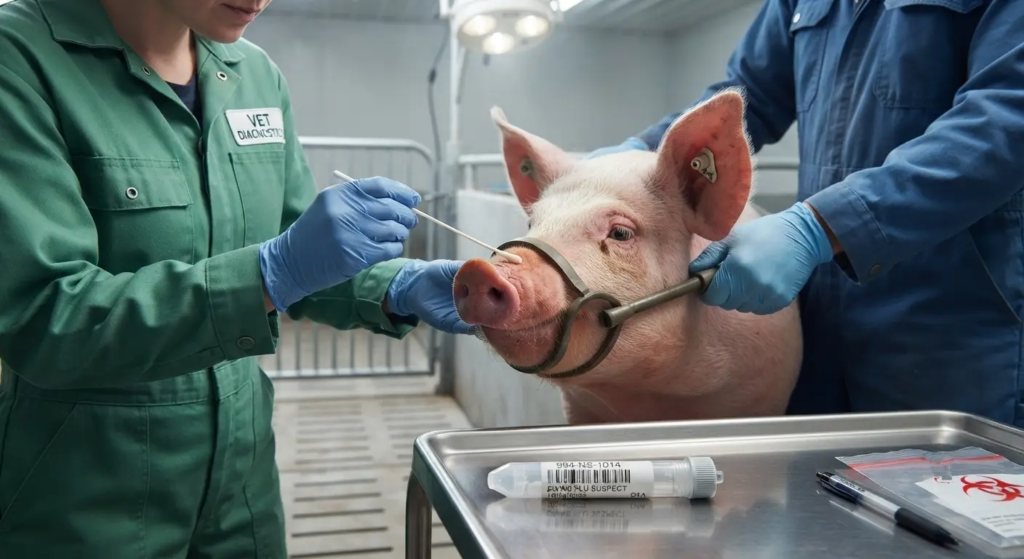
Diagnostic sampling:
- Blood samples (serum) from affected sows and growing pigs for PRRS ELISA (antibody detection) — detects exposure but takes 2–4 weeks post-infection for reliable seroconversion
- Blood samples (whole blood, EDTA) or oral fluid samples for PRRS PCR (viral RNA detection) — detects active infection earlier than antibody testing, making it the preferred test in the acute phase of a suspected introduction
- Tissue samples from aborted fetuses or stillborn piglets (lung, lymph node, spleen) for PCR testing — fetal tissue PCR is often the most reliable diagnostic sample in a reproductive failure presentation
- Sample from multiple animals across multiple pens/groups — PRRS prevalence within an affected herd at the time of sampling is variable, and single-animal sampling risks a false negative if that particular animal’s infection timing does not align with the test’s detection window
Swine Influenza — The Rapid-Onset, High-Morbidity Disease
How Swine Influenza Differs From PRRS in Presentation
Where PRRS characteristically presents as a slow-building, distributed, easily-missed pattern, Swine Influenza (caused by Influenza A virus strains adapted to swine) typically presents in the opposite manner: rapid onset, high morbidity (a large proportion of the affected group becomes clinically ill within a short period), but generally lower mortality than PRRS in uncomplicated cases.
The Classic Swine Influenza Presentation
Onset: Explosive — in a naive group, clinical signs can appear in the majority of animals within 24–48 hours of the first case, reflecting the virus’s efficient respiratory transmission and short incubation period (typically 1–3 days).
Clinical signs:
- Sudden, marked fever (40–41.5°C — often higher and more acute in onset than typical PRRS fever)
- Severe lethargy — affected pigs huddle, pile, show marked reluctance to move, and may refuse feed almost entirely during the acute phase
- Pronounced coughing — typically more severe and more universally present across the affected group than the milder, more variable coughing pattern associated with early PRRS
- Nasal discharge — clear initially, potentially becoming mucopurulent (thicker, cloudy) if secondary bacterial infection develops
- Conjunctivitis (eye inflammation/discharge) in some cases
- Labored or rapid breathing (dyspnea/tachypnea) in moderate to severe cases
- Sneezing
The defining epidemiological pattern: Within an affected pen or building, the majority of pigs (often 80–100%) show clinical signs within a 3–5 day window — a pattern of high morbidity with rapid spread that is the most reliable field indicator distinguishing Influenza from the typically slower, more variable presentation of PRRS or other respiratory pathogens.
The recovery pattern: In uncomplicated cases (without significant secondary bacterial infection), affected pigs typically show clinical improvement within 5–7 days, with most animals returning to apparently normal behavior and feed intake within 7–10 days of initial onset. This relatively rapid self-limiting course, with generally low mortality in uncomplicated cases (typically under 1–2% in growing pigs without secondary complications), is another distinguishing feature from PRRS, whose effects — particularly reproductive consequences and the secondary infection susceptibility — persist over a longer timeframe.
Influenza in Breeding Animals
Sows infected with Influenza during pregnancy can show:
- Fever-associated abortion (the fever itself, rather than direct viral effects on the fetus, is generally considered the primary mechanism — high fever during pregnancy can trigger abortion through prostaglandin-mediated mechanisms independent of direct fetal infection)
- Reduced milk production in lactating sows during the acute febrile phase, affecting piglet growth during that period
- Generally less severe and less specifically patterned reproductive consequences than PRRS — Influenza-associated reproductive loss tends to be more directly correlated with fever severity and timing rather than producing the specific mummification pattern characteristic of PRRS
The Zoonotic and Public Health Dimension
Swine Influenza viruses can, under specific circumstances, exchange genetic material with human and avian influenza strains when co-infection occurs in the same host (a phenomenon called reassortment) — historically significant in the emergence of pandemic influenza strains. While the routine risk from typical swine influenza strains circulating in commercial production is generally low, this dimension underscores why:
- Farm workers showing flu-like symptoms (fever, cough, body aches) should avoid close contact with pigs during their illness where possible, as bidirectional transmission between humans and pigs is documented
- Any unusual severity or unusual presentation in a swine influenza event should be reported to veterinary and, where indicated, public health authorities
- Personal protective equipment (masks, in particular) for personnel working with actively coughing, febrile pig groups during a suspected influenza event reduces bidirectional transmission risk
Swine Influenza Diagnostic Approach
When to suspect Influenza specifically:
- Rapid onset with high morbidity (most of a pen affected within days) — the single most distinguishing clinical pattern from PRRS
- Pronounced fever and coughing as the dominant signs, with relatively rapid (5–10 day) self-limiting course in the absence of secondary complications
- Seasonal pattern — in many regions, influenza incidence shows some seasonal clustering, often associated with cooler, more humid periods or transitions between dry and wet seasons that may favor virus survival and transmission
Diagnostic sampling:
- Nasal swabs from acutely febrile, actively coughing pigs in the early clinical phase (first 2–4 days of signs) for Influenza PCR — viral shedding is highest in this early window and declines as the animal’s immune response clears the infection
- Paired serum samples (acute phase and 2–3 weeks later, convalescent phase) for antibody titer comparison — a four-fold or greater rise in titer between acute and convalescent samples confirms recent infection
- Lung tissue from any pig that dies during the acute phase, particularly if secondary bacterial pneumonia is suspected to be contributing to severity
The Differential Diagnosis Challenge — Distinguishing PRRS, Influenza, and Other Causes
The Overlap Problem
Fever, reduced feed intake, coughing, and lethargy are nonspecific signs shared by PRRS, Swine Influenza, Mycoplasma-associated respiratory disease, various bacterial pneumonias, and several other conditions. Field differentiation based on clinical signs alone is frequently unreliable — definitive differentiation requires laboratory diagnostic confirmation. However, the pattern of presentation provides meaningful clues that should guide both the urgency of response and the diagnostic sampling priority.
Comparative Clinical Pattern Reference
| Feature | PRRS | Swine Influenza | Mycoplasma (Enzootic Pneumonia) |
|---|---|---|---|
| Onset speed | Gradual (1–3 weeks to recognize) | Explosive (24–72 hours) | Gradual (weeks to months, chronic) |
| Morbidity within affected group | Variable, often moderate (30–60%) | High (often 80–100%) | High but low-grade (chronic cough in majority) |
| Mortality (uncomplicated) | Variable; higher in neonates and reproductive cases | Low (under 1–2% typically) | Low (chronic, rarely directly fatal) |
| Fever | Variable, moderate | Marked, acute (40–41.5°C) | Mild or absent |
| Reproductive impact | Severe — abortion storms, mummification, stillbirth | Mild — fever-associated, less specific pattern | Minimal direct reproductive impact |
| Coughing character | Variable, often mild initially | Pronounced, often dominant sign | Chronic, persistent, “dry” cough |
| Recovery course | Prolonged; secondary infections common | Relatively rapid (5–10 days) if uncomplicated | Chronic, persists across the growth period |
| Typical first recognition trigger | Reproductive failure cluster, or secondary bacterial pneumonia | Sudden high-morbidity respiratory event | Persistent chronic cough across a cohort, poor FCR |
The Practical Decision Framework
If the first noticeable sign is a cluster of reproductive failures (abortions, stillbirths, mummification) in breeding sows: Prioritize PRRS testing, while keeping Influenza (fever-associated abortion) and other reproductive pathogens (Leptospira, Parvovirus) in the differential.
If the first noticeable sign is rapid-onset, high-morbidity respiratory disease across a pen or building within days: Prioritize Influenza testing, while considering PRRS (particularly if accompanied by any reproductive signs in the breeding herd at the same time) and bacterial pneumonia pathogens as differentials.
If the first noticeable sign is gradual performance decline (FCR, growth rate) without dramatic clinical signs, persisting over weeks: Consider PRRS, Mycoplasma, parasitic burden (as detailed in deworming guidance in this series), and nutritional/feed quality issues (mycotoxin contamination, amino acid deficiency) as differentials — this presentation pattern is the least specific and requires the broadest diagnostic and management review.
The combined presentation — respiratory signs in growers AND reproductive failure in sows within the same timeframe: This combination is more specifically suggestive of PRRS than either presentation alone, since PRRS is one of the few pathogens that characteristically affects both the respiratory system in growing pigs and the reproductive system in breeding animals simultaneously.
The Critical First 72 Hours — Response Protocol
Why Speed of Response Determines Outcome
Both PRRS and Influenza spread through direct and indirect contact within a herd — the longer an infected group continues normal contact patterns with the rest of the herd before isolation measures are implemented, the larger the proportion of the herd that becomes exposed before containment is achieved. The first 72 hours after suspicious clinical signs are first recognized are the highest-leverage window for limiting the ultimate scope of the introduction.
Step 1: Immediate Isolation (Hours 0–6)
- Identify the affected pen(s) or building(s) precisely
- Restrict all movement of pigs into or out of the affected area
- Restrict personnel movement: designate specific staff to work only in the affected area for the duration of the investigation, using dedicated equipment and protective clothing that does not move to unaffected areas
- If the affected animals are in a building shared with other pens (common airspace), recognize that airborne transmission may already be occurring to adjacent pens even before physical contact — treat the entire building, not just the specifically affected pen, as the isolation unit where building design does not provide separate airspace
Step 2: Heightened Biosecurity Across the Entire Farm (Hours 0–24)
- Increase footbath disinfectant change frequency in all buildings
- Suspend non-essential visitor access entirely until the situation is clarified
- Restrict movement of equipment between buildings
- Brief all staff on the situation and reinforce strict adherence to the dirty-clean zone protocols (as detailed in the zone system guidance in this series) — disease events are when biosecurity discipline matters most and is most tempting to relax under operational pressure
Step 3: Veterinary Consultation and Diagnostic Sampling (Hours 0–48)
- Contact the farm veterinarian immediately with a clear, factual description of observed signs, the timeline of onset, the number and location of affected animals, and any recent farm events (new animal introductions, visitor activity, feed changes) that preceded the signs
- Collect diagnostic samples as guided by veterinary assessment — the specific samples depend on the clinical presentation pattern observed (see diagnostic sampling guidance in Parts 1 and 2 above)
- Submit samples to the diagnostic laboratory with appropriate urgency — same-day or next-day submission where laboratory access allows, maintaining the cold chain for sample transport
Step 4: Document the Timeline and Preceding Events (Ongoing)
- Record exact dates and details of: first abnormal observation, progression of signs, number of animals affected over time, any deaths and their circumstances
- Review the 2–4 weeks preceding the first signs for any biosecurity-relevant events: new animal introductions and their source, unusual visitor activity, any deviation from normal biosecurity protocol, recent feed deliveries from new sources
- This timeline serves the dual purpose of supporting clinical diagnosis (the pattern of onset and progression assists differential diagnosis) and supporting the retrospective biosecurity investigation that should follow any confirmed disease introduction
Step 5: Notification Where Required (Within Required Timeframe)
While PRRS and most regional Swine Influenza strains are not typically classified as notifiable diseases requiring mandatory government reporting in most West and Central African jurisdictions (verify current local regulatory status, as this can change), any presentation that could represent a notifiable disease — particularly any signs consistent with African Swine Fever, Classical Swine Fever, or Foot and Mouth Disease, which share some overlapping early signs with PRRS and Influenza — must trigger immediate notification to the national veterinary authority regardless of the farm’s confidence in a specific diagnosis. The clinical overlap between ASF and PRRS in early presentation (fever, lethargy, reduced feed intake) means that any suspicious systemic illness event should include ASF in the initial differential consideration until specifically ruled out, given the catastrophic and irreversible consequence of failing to identify ASF promptly, as detailed in the ASF-specific guidance in this series.
Part 5: Production Performance Surveillance as Early Warning
Why Performance Data Often Reveals Disease Before Clinical Signs Are Obvious
As emphasized throughout the FCR and production management guidance in this series, FCR, growth rate, and feed intake records function as leading indicators of disease pressure — frequently declining measurably before clinical signs are visually obvious to casual observation, particularly for PRRS, whose primary early effect is the subtle, distributed performance decline described in Part 1.
The practical surveillance discipline:
- Weekly review of feed intake records by pen — a pen showing feed intake decline of more than 10% below the trailing average without an identified cause (feeder malfunction, water access issue, recent pen mixing) warrants closer clinical observation
- Weekly mortality tracking against the farm’s historical baseline — any week showing mortality meaningfully above baseline (even if each death has a plausible explanation) warrants pattern review across the affected pens
- Monthly reproductive performance review — tracking farrowing rate, litter size, stillbirth rate, and return-to-service rate against the herd’s historical baseline allows early identification of the reproductive failure cluster pattern characteristic of PRRS before it becomes obvious through individual case observation alone
This data-driven surveillance approach is the practical implementation of the “leading indicator” principle — using objective production metrics, which are less subject to the normalization bias that can cause gradual clinical changes to go unnoticed through subjective day-to-day observation, as an early warning system that triggers investigation before the disease event has fully expressed itself clinically.
Summary
PRRS and Swine Influenza represent two distinct clinical patterns that together account for a substantial proportion of significant respiratory and reproductive disease events in commercial pig production. PRRS’s gradual, distributed, multi-system presentation — modest performance decline across multiple stages, secondary bacterial infection susceptibility, and the characteristic reproductive failure cluster in breeding animals — makes it the disease most likely to be present for weeks before recognition, while Swine Influenza’s explosive, high-morbidity, rapid-course presentation makes it more readily recognized but still requires laboratory confirmation for definitive diagnosis and appropriate differentiation from other causes of similar acute respiratory signs.
The practical response framework — clinical pattern recognition guiding diagnostic priority, immediate isolation and heightened biosecurity within the first 72 hours of suspicion, veterinary consultation and laboratory confirmation, and the production performance surveillance system that provides earlier warning than clinical observation alone — together constitute the early identification capability that determines whether a disease introduction remains a contained, manageable event or expands into the herd-wide production catastrophe that both PRRS and, less commonly, Influenza are capable of producing in naive populations.
The financial stakes justify the surveillance investment: the difference between recognizing PRRS introduction within the first week (when isolation and biosecurity escalation can meaningfully limit spread) and recognizing it three weeks later (when the introduced virus has already circulated through the susceptible population) is measured in millions of XAF in avoided production loss. Early recognition is not a luxury — it is the single highest-leverage intervention available once a pathogen has already crossed the farm’s external biosecurity barrier.