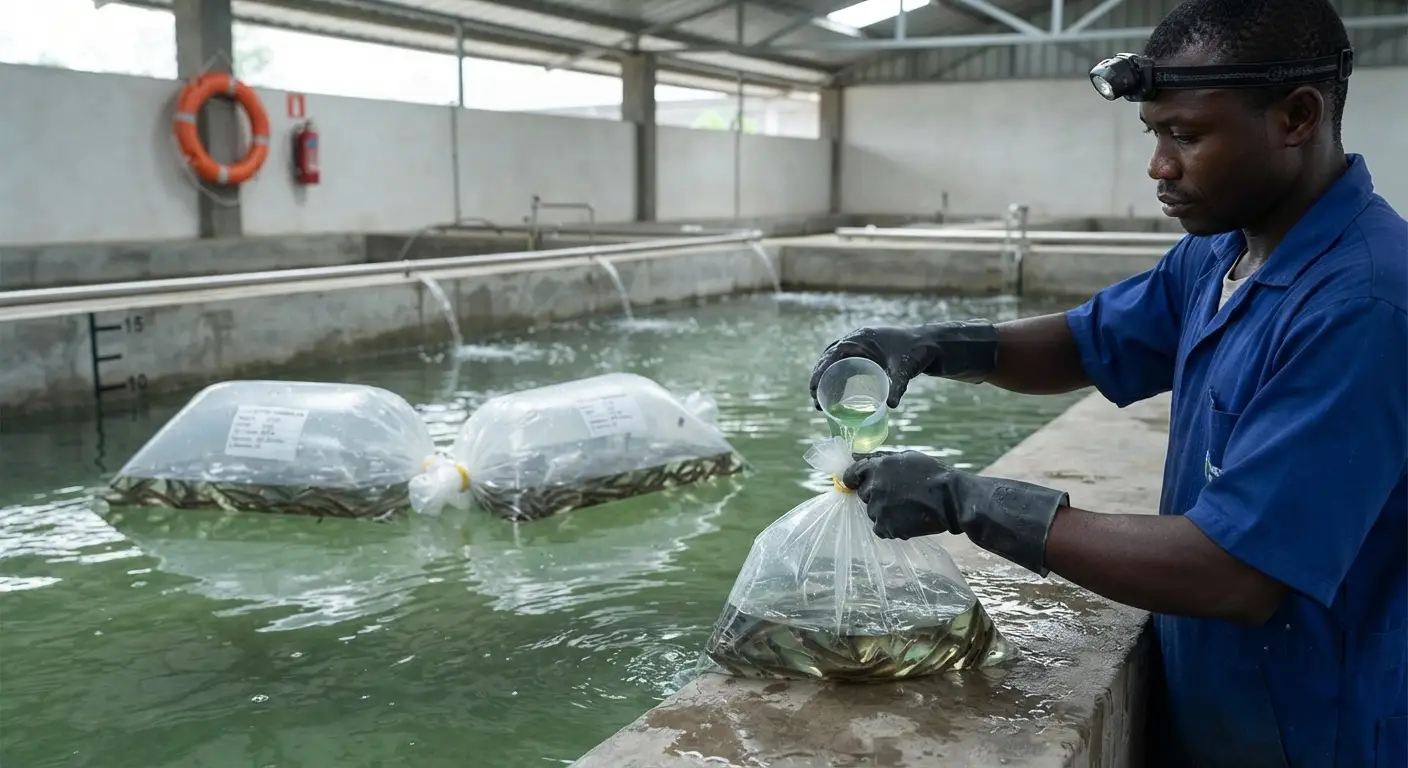
A catfish hatchery is only as good as its broodstock. This is not a vague statement about genetics — it is a specific, quantifiable relationship between the condition and quality of the broodstock fish and the yield, quality, and genetic merit of the fingerlings they produce. A female African catfish in optimal spawning condition (correctly conditioned body weight, correctly developed ovarian maturity, optimal hormonal responsiveness) will respond predictably to hormonal induction, release a full egg complement, and produce larvae with high survival rates through the critical first-feeding transition. The same female in poor condition — underweight, over-ripe or under-ripe, immunologically stressed — will respond poorly to hormonal induction, release a partial egg complement of inferior quality, and produce larvae with poor hatchability and high early mortality.
Commercial catfish hatcheries that consistently produce high-quality fingerlings in predictable volumes do so because they manage their broodstock as the business’s primary productive asset — maintaining each animal in optimal physical condition, monitoring reproductive development closely, managing health proactively, and keeping the records that allow each animal’s production history to inform decisions about its continued use in the breeding program.
This article covers everything that determines broodstock quality: species-specific selection criteria, the physical characteristics of sexually mature and spawning-ready fish, the conditioning program that brings broodstock to optimal spawning readiness, sex identification techniques, health management specific to broodstock, and the record-keeping system that converts individual fish histories into a continuously improving breeding population.
Broodstock Selection Criteria
Why Selection Criteria Matter
Commercial catfish hatcheries that select broodstock based only on “large fish available” rather than specific performance criteria progressively degrade the genetic quality of their fingerling output. The fish with the highest growth rate, the best feed conversion, the highest disease resistance, and the largest reproductive output are not necessarily the largest fish available — and selecting only for size can inadvertently select against the productive traits that matter commercially.
The traits worth selecting for in African catfish broodstock:
Growth rate: Select individuals that reached their current body weight in the shortest documented time from a known stocking date. Fast-growing parents produce fast-growing offspring — the heritability of growth rate in Clarias gariepinus is moderate to high (h² = 0.3–0.5), meaning a meaningful proportion of the parent’s growth advantage is transmitted to offspring.
Body conformation: Select fish with deep, well-muscled body conformation rather than thin, elongated individuals of the same weight. Body depth relative to body length is a proxy for lean muscle mass — fish with favorable conformation convert feed to muscle more efficiently and produce higher meat yield at slaughter.
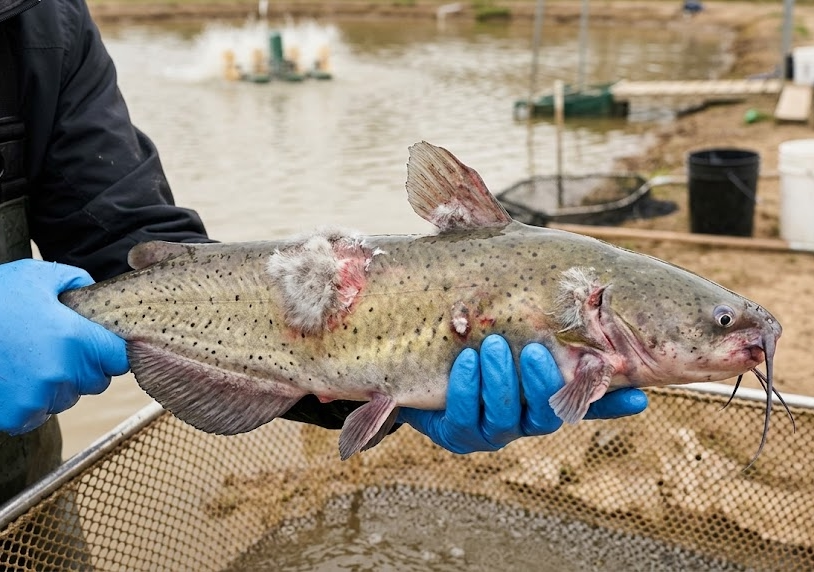
Disease history: Any fish that has shown significant disease episodes, required antibiotic treatment, or shown persistent external lesions should be excluded from broodstock regardless of its size. Disease susceptibility has a heritable component — selecting resistant animals from a population that has experienced disease pressure produces offspring that are more disease-resistant than offspring from susceptible parents.
Behavioral characteristics: Calm, non-aggressive fish that respond to feeding and handling predictably are easier to manage as broodstock and produce offspring with more manageable behavior. Extreme aggression in broodstock fish (particularly males) increases the stress of handling during induced spawning procedures.
Origin: Where possible, source broodstock from a certified genetics program or from a hatchery with documented performance records — not from wild-caught fish or uncharacterized farm sources. Wild-caught fish introduce unknown disease history, potentially lower growth genetics, and may carry internal parasites that require treatment before they can safely be maintained in a closed hatchery broodstock system.
Physical Selection Standards for Female Broodstock
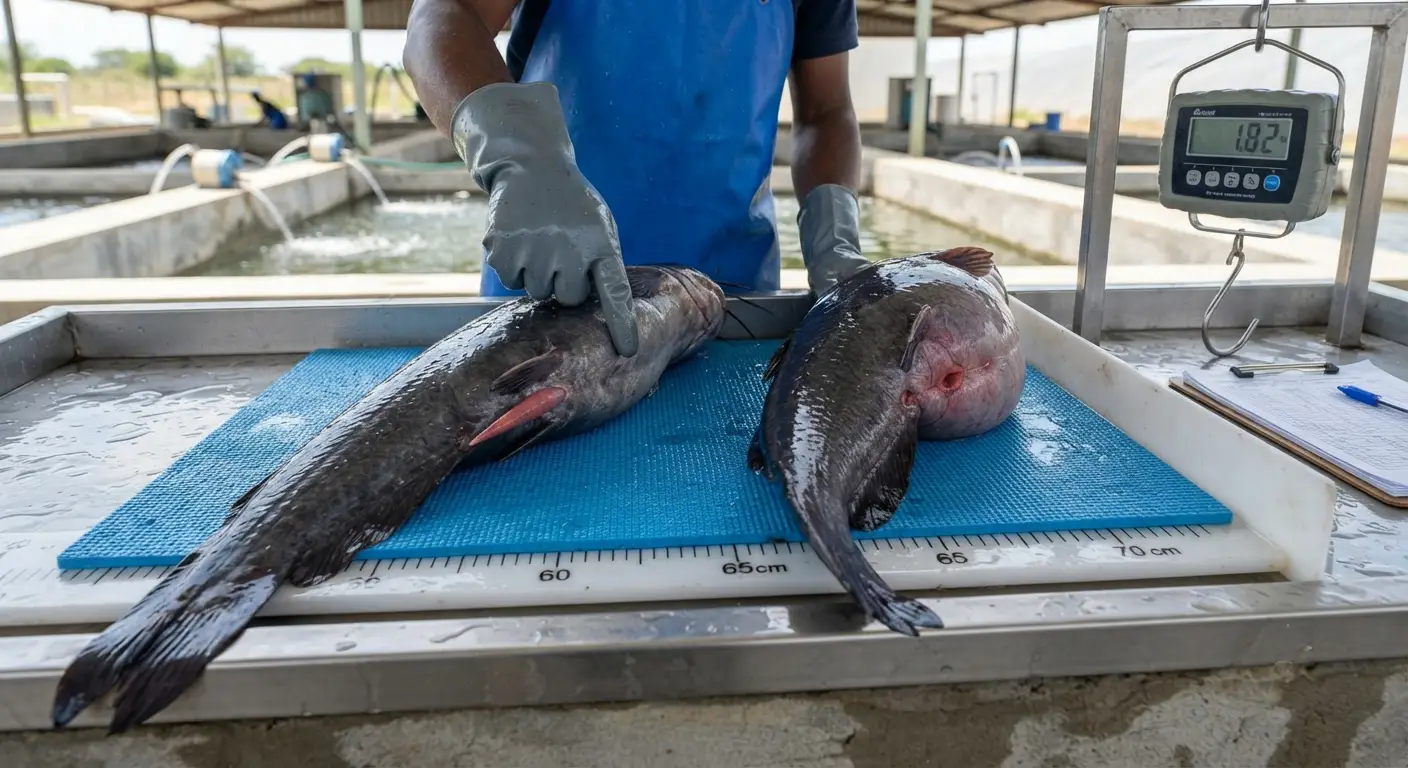
Minimum weight for first spawning use: 600–800 g for African catfish — females below this weight produce smaller egg complements, and the stress of hormonal induction on a small female is proportionally higher.
Optimal weight range for production broodstock: 1.0–3.0 kg. Above 3 kg, handling difficulty increases without proportional improvement in egg quality. Very large females (above 4 kg) can produce large egg volumes but handling stress during stripping procedures increases.
Age at first use: 9–14 months post-hatch for females that have reached the minimum weight criterion. Age alone is a poor criterion — weight and reproductive maturity are more relevant than chronological age for determining spawning readiness.
Body condition: Select females with a moderately rounded abdominal profile that has increased noticeably over the past 2–4 weeks (indicating active ovarian development) rather than fish with a uniformly slender abdomen (indicating reproductive quiescence) or an excessively distended abdomen that feels hard or firm (indicating over-ripe eggs that have passed the optimal induction window).
External health: No open wounds, no significant scale or mucus damage, no external parasites (check for Trichodina or Gyrodactylus under microscope from a mucus scrape), no fin erosion or tail rot, no ulcers.
Physical Selection Standards for Male Broodstock
Minimum weight: 400–600 g — males do not require the same body reserves as females for egg production, but sufficient body mass ensures adequate milt volume for fertilization.
Optimal weight: 800 g–2.0 kg. Male fertility is less directly related to body size than female fecundity is.
The urogenital papilla: The primary sex identification structure in male African catfish — a small, pointed papilla located on the ventral midline immediately posterior to the anal opening. In reproductively active males, the papilla is pink to reddish, slightly turgid, and clearly distinct from the surrounding tissue. In sexually immature or non-conditioned males, the papilla is smaller, paler, and less prominent.
Milt test: Before finalizing male broodstock selection, conduct a milt production test: apply gentle abdominal pressure toward the genital papilla. Active males release a small quantity of cloudy to milky white milt under gentle pressure — confirming sperm production and release capacity. Males that produce no milt under gentle pressure may be immature or in poor reproductive condition — exclude from active broodstock rotation until re-evaluated after additional conditioning.
Sex Identification Techniques
External Sex Identification in African Catfish
External sex determination in African catfish (Clarias gariepinus) is possible in reproductively active adults by examination of the genital region, but requires practice to do reliably — particularly distinguishing females from small males.
Male identification:
The urogenital papilla is the definitive male identifier — a single, pointed protrusion posterior to the anal opening through which both urine and sperm are released. In active males, the papilla is:
- Clearly visible as a distinct pointed structure
- Pink to reddish-pink in color
- Firm to gentle palpation
- Located on the ventral midline, easily found by running a finger posteriorly from the anal opening
Female identification:
Female African catfish have two distinct openings in the urogenital region — a urinary pore and a separate genital (egg) opening — rather than the single papilla of the male:
- The genital opening in a near-spawning female is slightly enlarged and slightly pink-edged
- No projecting papilla is present
- The abdomen anterior to the genital opening is typically more distended (rounder in cross-section) than in males of equivalent weight
- In the 48 hours before spawning readiness (post-induction), the genital opening is clearly swollen and may release a small quantity of clear fluid under gentle abdominal pressure
Practical sex determination approach:
Turn the fish ventral side up in a wet cloth or shallow water. Examine the urogenital region under adequate light. The presence or absence of the pointed papilla is the primary identification character — its presence indicates male, its absence indicates female.
For fish in the 200–600 g size range where the papilla may not yet be fully developed, the abdominal profile is a secondary indicator — females in this size range who are approaching reproductive maturity typically show a more rounded abdomen cross-section than males of the same weight.
Cannula Testing for Ovarian Development Assessment
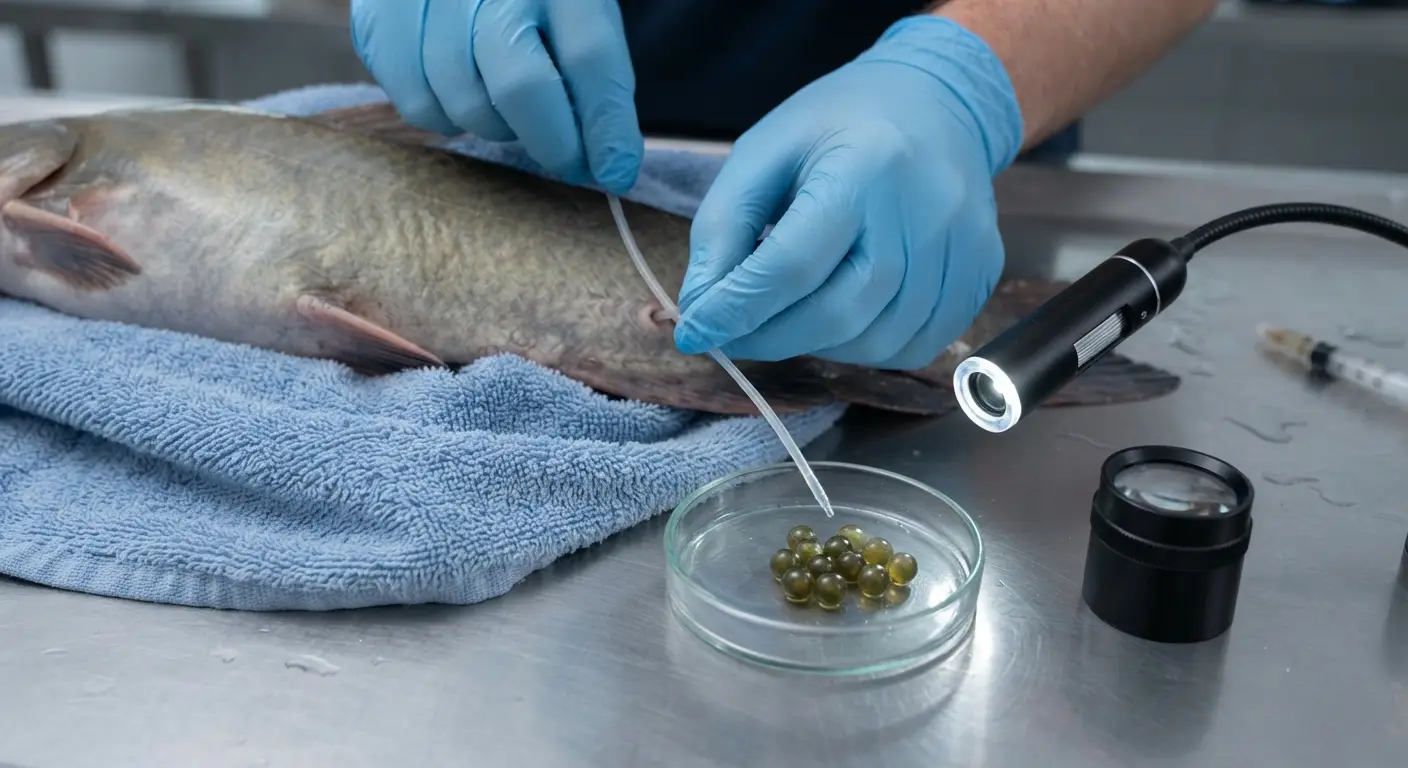
In females, a small cannula (a thin, blunt-ended tube, typically 1.5–2.0 mm diameter, 15–20 cm length) inserted carefully through the genital opening into the ovary allows withdrawal of a small sample of ovarian tissue for microscopic examination. This technique allows assessment of:
Oocyte development stage: Whether eggs are in the appropriate developmental stage for hormonal induction (late vitellogenic stage, ready for final maturation) or are too early in development (primary vitellogenic — will not respond adequately to hormonal induction) or post-ovulatory (eggs already overripe, having passed through final maturation without being stripped).
Oocyte diameter: Mature, induction-ready eggs in Clarias gariepinus are typically 1.0–1.4 mm in diameter. Eggs below 0.8 mm indicate early vitellogenic stage — induction will be premature. Eggs that have become irregular in shape or appear fragmented indicate post-ovulatory deterioration.
Practical application: Cannula testing is the most reliable pre-induction assessment tool available for determining which females in a broodstock cohort are genuinely ready for hormonal induction on a given day. It eliminates the uncertainty of selecting females based only on external appearance — some females that appear gravid externally (round abdomen) have immature or overripe eggs that will respond poorly to induction.
The technique requires a sterile cannula, a clean container for the extracted sample, and either a dissecting microscope or high-power magnifying lens to examine the eggs. It can be learned in 1–2 days of practical training under experienced guidance.
The Broodstock Conditioning Program
Why Conditioning Is Required
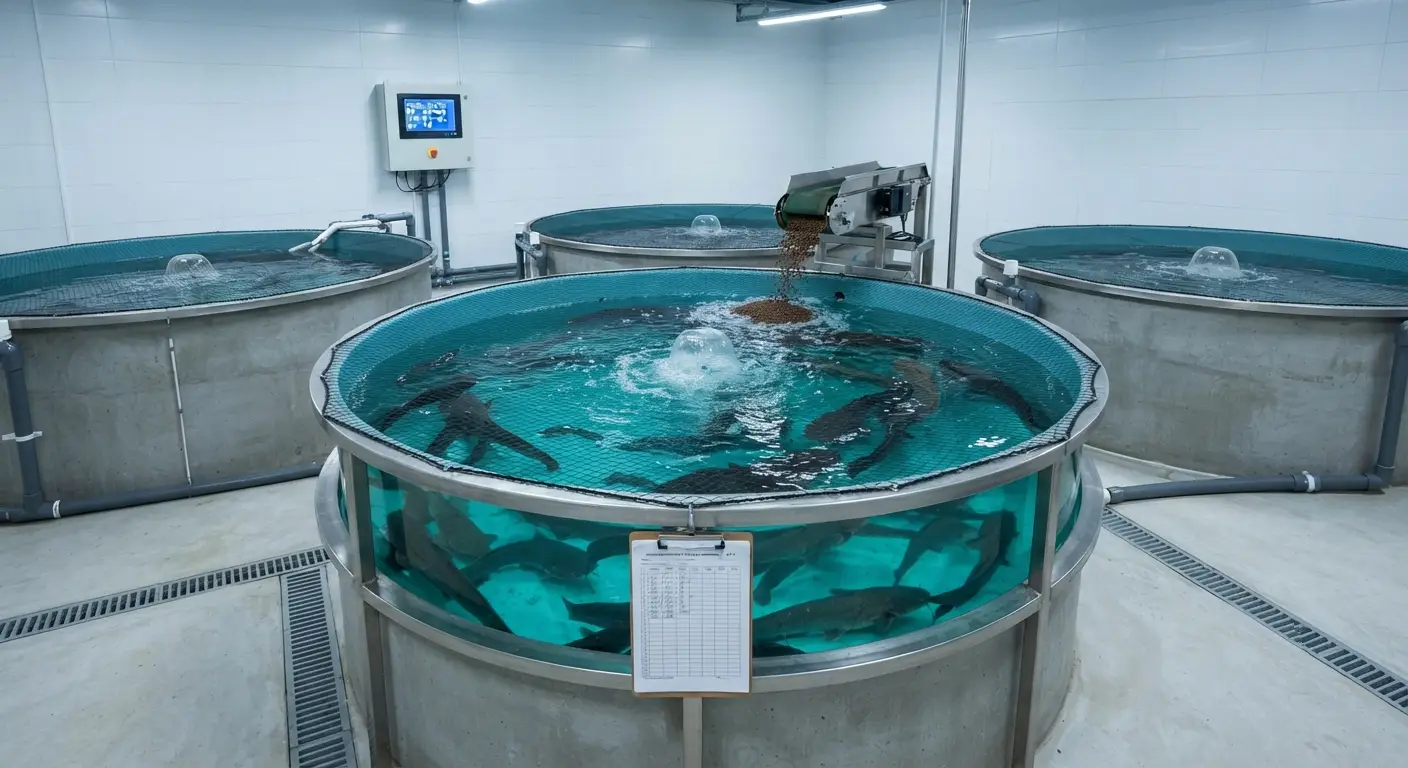
Commercial catfish hatcheries typically maintain broodstock in separate, dedicated holding facilities rather than using production fish for spawning as needed. The broodstock conditioning program is the management system that maintains these animals in continuously optimal health and reproductive readiness — so that when the hatchery needs to induce spawning, a cohort of fish in optimal condition is available rather than fish that have been in poor nutritional or environmental conditions.
Broodstock Holding Facility Requirements
Stocking density for broodstock holding: Low density relative to production fish — 5–10 kg/m³ in concrete tanks. Lower density reduces competition for feed, reduces handling stress, and allows individual observation of each fish’s condition.
Water quality standards: Maintain stricter water quality standards in broodstock tanks than in production tanks — DO above 5 mg/L continuously, TAN below 0.5 mg/L, temperature stable at 27–29°C. Broodstock fish are the hatchery’s primary productive asset; the investment in their superior water quality management pays back through spawning success rates.
Separation of sexes: Maintain males and females in separate tanks to prevent uncontrolled natural spawning (which Clarias gariepinus will not do naturally under confinement without hormonal induction and specific habitat, but which can occur in very large natural systems), and to allow sex-specific nutritional management.
Light management: Photoperiod (day length) influences reproductive development in many fish species including Clarias gariepinus — maintaining a consistent 12–14-hour light per day photoperiod provides the light cue associated with the pre-spawning season in the species’ natural environment.
Broodstock Nutrition
Protein requirement: Broodstock fish require higher dietary crude protein than production fish — 40–45% crude protein for females in active ovarian development, 38–42% for males. The additional protein supports the synthesis of vitellogenin (yolk protein) in females and sperm proteins in males.
Essential fatty acids: Phospholipids, DHA (docosahexaenoic acid), and EPA (eicosapentaenoic acid) are critical components of egg cell membranes and early larval development. Broodstock diets should include marine-origin ingredients (fish meal, fish oil) or specifically formulated lipid supplements that provide these fatty acids — plant-based oil substitutes that lack DHA and EPA produce eggs with lower hatching rates and larvae with higher early mortality.
Vitamin supplementation: Vitamins C and E are antioxidant vitamins that protect egg quality during the maturation process and support immune function in both males and females. Vitamin C also has a specific role in collagen synthesis — important for the connective tissue supporting the developing ovary. Broodstock diets should contain elevated levels of both vitamins relative to standard production diets.
Feeding rate: Feed broodstock at 1.5–2.5% of body weight per day, in two to three daily feedings. Overfeeding broodstock (above 3% body weight/day) leads to excessive fat deposition in the liver (hepatic steatosis) that impairs reproductive performance — particularly in females where fat infiltration of the liver can compress the ovary and impair egg development.
Feed frequency: Two to three feedings per day is optimal for broodstock — maintaining the relatively continuous nutrient supply that supports active ovarian development and spermatogenesis without the nutritional stresses of once-daily large feeding.
The Spawning Conditioning Cycle
Optimal spawning performance is achieved by cycling broodstock through a defined conditioning period before each induced spawning event:
Phase 1 — Post-spawning recovery (2–4 weeks after previous spawning):
- Reduce feed rate to 1.0–1.5% body weight per day
- Maintain excellent water quality
- Allow the female’s ovary to begin regressing and entering the next developmental cycle
- Females may appear significantly less distended during this phase — do not interpret reduced abdominal distension as poor condition
Phase 2 — Active conditioning (4–8 weeks before target spawning date):
- Increase feed rate to 2.0–2.5% body weight per day with high-quality broodstock diet
- Maintain stable water temperature at 27–29°C
- Provide 12–14 hours of light per day
- Begin bi-weekly abdominal assessment to monitor ovarian development progression
Phase 3 — Pre-spawning assessment (1–2 weeks before target spawning):
- Conduct cannula testing on all candidate females to assess oocyte development stage
- Select females showing oocytes of 1.0–1.2 mm diameter in late vitellogenic stage for inclusion in the induction cohort
- Identify and defer females with early-stage oocytes for 2–4 more weeks of conditioning
- Reduce feed rate to 1.0% body weight/day in the final 48 hours before planned induction to reduce gut fill that would complicate the stripping procedure
Broodstock Health Management
Why Broodstock Health Requires Dedicated Attention
Broodstock fish are maintained long-term in the hatchery at lower stocking densities than production fish but face specific health risks from their management context:
Chronic stress from repeated handling: Induced spawning procedures (injection, cannula testing, stripping) impose handling stress repeatedly throughout the broodstock animal’s productive life. Chronic stress suppresses immune function — broodstock fish that are handled frequently without adequate recovery time between spawning cycles show increased disease susceptibility.
Pathogen reservoir risk: Broodstock fish, particularly those sourced from multiple origins, can harbor subclinical pathogens that do not cause obvious disease in the carrier fish but are transmitted to eggs during the spawning process and cause high larval mortality. This is one of the most significant and underappreciated causes of poor hatchery performance — larvae dying from pathogens carried by apparently healthy broodstock parents.
Nutritional deficiency disease: The high nutritional demands of active reproductive cycles in inadequately fed or poorly formulated broodstock diets produce specific deficiency syndromes — vitamin C deficiency causing spinal deformities in larvae (which reflects deficient collagen in the egg that the larva’s skeleton inherits), essential fatty acid deficiency causing high early larval mortality, and protein deficiency causing reduced fecundity and hatching rate.
Quarantine for New Broodstock
All fish entering the broodstock facility from external sources — purchased replacement broodstock, wild-caught fish, fish transferred from grow-out operations — must complete a quarantine period before entering the broodstock holding tanks:
Minimum quarantine period: 21–28 days (consistent with the quarantine protocols described in the pig series biosecurity guidance — the principle applies equally to aquaculture).
Quarantine assessment:
- External parasite check (gill and skin wet mount microscopy) on arrival
- Bacterial culture from gill or kidney tissue in fish showing any clinical signs
- Treatment for any identified parasites before releasing to broodstock holding
Deworming: Administer appropriate antiparasitic treatment during quarantine — internal parasites (nematodes, Acanthocephala) are common in wild-caught broodstock and can significantly impair nutritional status and reproductive performance if untreated.
Vaccination of Broodstock
Vaccination of broodstock fish against significant bacterial pathogens — particularly Aeromonas hydrophila (the most common cause of bacterial ulcer disease in African catfish) and Edwardsiella species — provides systemic protection to the broodstock and, through maternal antibody transfer to eggs, passive protection to larvae during the early developmental period.
Commercial fish vaccines for African catfish are available from aquaculture suppliers in the region; their use in broodstock programs represents a specific health investment whose return is measured in reduced broodstock mortality and improved larval survival rates.
Parasite Management
External parasites: Protozoan parasites — particularly Trichodina (ciliate), Gyrodactylus (monogenean fluke), and Ichthyophthirius multifiliis (white spot, “Ich”) — commonly infest catfish held at the relatively high densities and repeated handling conditions of broodstock management. Monthly wet mount microscopy of gill and skin mucus from randomly selected broodstock individuals provides early detection before population-level infestation.
Treatment options for external parasites include formalin bath (at appropriate concentration and with DO monitoring during treatment — formalin consumes oxygen), salt bath (3–5 g/L NaCl for 20–30 minutes), and specific antiparasitic chemicals as directed by a fish health professional.
Internal parasites: Less visible than external parasites but clinically relevant for broodstock health and reproductive performance. Annual treatment with an appropriate anthelmintic (levamisole or mebendazole, as directed by a fish health professional) during the post-spawning recovery phase maintains internal parasite-free status without disrupting the active conditioning or spawning phases.
Broodstock Record-Keeping System
Why Individual Records Are Essential
A hatchery that tracks broodstock production history at the individual fish level can:
- Identify consistently high-performing females (high fecundity, high hatching rate, consistently responsive to induction) and prioritize them in the production program
- Identify consistently poor-performing individuals (low fecundity, poor spawning response, low hatching rate) and cull them before they consume additional conditioning resources
- Correlate reproductive performance with conditioning inputs (feed rate, temperature, photoperiod) to optimize the conditioning program
- Track genetic origins of offspring to prevent inbreeding in a closed broodstock population
A hatchery that does not maintain individual records treats all broodstock fish as equivalent and makes no improvement over time in the genetic and conditioning quality of its spawning population.
The Individual Broodstock Record Card
For each broodstock fish, maintain a card or digital record containing:
| Data Field | Recording Frequency |
|---|---|
| Individual identification (tag number or other permanent mark) | Once, at entry into broodstock program |
| Species, origin, and source | Once, at entry |
| Date of entry into broodstock program | Once |
| Weight at entry | Once |
| Sex | Once, confirmed by physical examination |
| Parent ID (if known) | Once, if from known crosses |
| Current weight (periodic) | Monthly |
| Body condition score (1–5 scale) | Monthly |
| Health events and treatments | As they occur |
| Spawning events: date, female weight, male weight, hormone used and dose | Each spawning |
| Stripping response: response quality (1 = no response, 5 = excellent full release) | Each spawning |
| Egg volume stripped (mL) | Each spawning |
| Egg diameter at stripping | Each spawning (from cannula assessment or post-strip measurement) |
| Male milt quality (1 = poor/no milt, 5 = abundant, milky white) | Each spawning |
| Fertilization rate (%) | Each spawning |
| Hatching rate (%) | Each spawning |
| Larval quality assessment at 48 hours (% normal swimming behavior) | Each spawning |
| Larval survival to first feeding (%) | Each spawning |
The Broodstock Inventory and Rotation Schedule
Beyond individual records, maintain a broodstock population inventory that tracks:
- Total number of active males and females
- Number available for induction in the next 2–4 weeks (based on conditioning phase)
- Number in post-spawning recovery (not available for 4–8 weeks)
- Number quarantined (not yet available)
- Target replacement number for the next 3 months
This population-level view allows the hatchery to plan its fingerling production schedule reliably — knowing how many broodstock pairs are available for induction in each production window rather than discovering on the day of planned induction that insufficient fish are in appropriate condition.
The Culling Decision
Broodstock have a productive lifespan in commercial hatcheries — typically 3–5 spawning cycles for females (after which fecundity tends to decline and spawning responses become less predictable) and slightly longer for males. A systematic culling decision based on individual production records — culling individuals whose performance has declined over successive spawning cycles rather than retaining all animals indefinitely — maintains the average quality of the broodstock population.
Culling criteria:
- Female that has failed to respond to hormonal induction in two consecutive attempts
- Female whose fertilization rate has declined below 60% in the most recent two spawning events
- Female whose hatching rate has declined below 50% in the most recent two spawning events
- Any individual that has required antibiotic treatment in three or more separate events in a single year
- Male that consistently produces no milt or sparse, watery milt under gentle pressure
Culled broodstock are sold as market fish or consumed — they are not retained in the broodstock system as “reserve” animals whose presence consumes conditioning resources without production contribution.
Summary
Broodstock quality is the limiting factor in commercial catfish hatchery production that receives the least management attention relative to its impact on fingerling output. The hatchery that invests in rigorous broodstock selection criteria, a structured conditioning program that brings fish to optimal spawning readiness, active health management that prevents the subclinical pathogen loads and nutritional deficiencies that reduce egg and larval quality, and an individual record-keeping system that makes each animal’s performance history visible and actionable — that hatchery produces consistently higher fingerling yields from fewer induction attempts and lower broodstock maintenance costs than one that selects large fish, injects them, and accepts whatever hatching rate results.
The specific criteria, conditioning protocols, and record structures in this guide are not complexity for its own sake — they are the operational foundation of the supply chain reliability that commercial grow-out operations require when they commit their tank space and operating capital to a fingerling delivery schedule. A hatchery that consistently delivers the right number of uniform, healthy fingerlings on schedule is a premium supplier; one that delivers variable quantities of inconsistent quality on unpredictable timing is a risk. The broodstock management program is what separates the two.
The next article covers induced spawning and artificial propagation techniques — the specific procedures that convert well-conditioned broodstock into fertilized eggs and the larvae that become the fingerlings the production system needs.