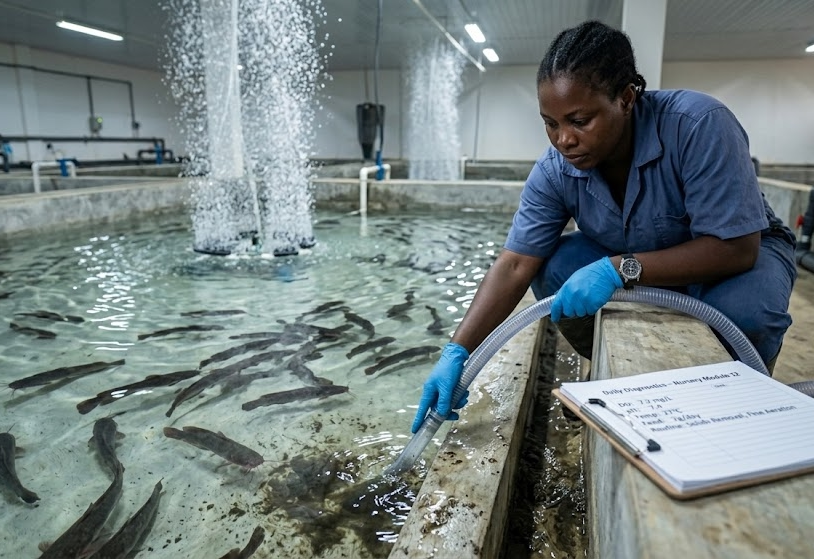
Catfish fry are particularly vulnerable during the early stages of aquaculture production. Their small size, developing immune systems, and sensitivity to environmental changes make them susceptible to disease, water-quality problems, and poor management conditions.
In African catfish (Clarias gariepinus) hatcheries, fry mortality can result from infectious agents, inadequate dissolved oxygen, unsuitable water conditions, poor feeding, overcrowding, or handling stress. Identifying the cause early is essential for protecting fry survival and improving production.
What Are Catfish Fry Diseases?
Catfish fry diseases are health problems affecting young catfish during the early stages of development after hatching. These problems may be caused by bacteria, fungi, parasites, or environmental conditions that interfere with normal growth and survival.
Not every episode of fry mortality is caused by an infectious disease. Environmental stress can produce similar symptoms and may also make fry more susceptible to infection.
Common Diseases and Health Problems in Catfish Fry
1. Bacterial diseases
Bacterial infections can affect catfish fry, particularly when water quality is poor, fish are stressed, or pathogens enter the hatchery.
Possible signs include:
- Reduced feeding activity.
- Weakness or abnormal swimming.
- Skin or fin damage.
- Unusual discoloration.
- Increased mortality.
These signs are not specific to bacterial disease. Confirmation may require examination by a qualified fish-health professional and, where appropriate, laboratory testing.
2. Fungal infections
Fungal infections can affect vulnerable fish and may occur in hatchery environments where infected material, damaged tissue, or unsuitable conditions are present.
Possible signs include visible cotton-like growth on affected tissue or eggs, depending on the organism and stage of infection.
Fungal-looking growth should not be diagnosed from appearance alone because other organisms or accumulated material may resemble fungal growth.
3. Parasitic infections
Parasites may affect the skin, gills, or other tissues of young catfish. The impact depends on the parasite species, the level of infestation, and the condition of the fry.
Possible signs include:
- Abnormal swimming.
- Reduced feeding.
- Irritation or unusual movements.
- Respiratory distress.
- Poor growth or increased mortality.
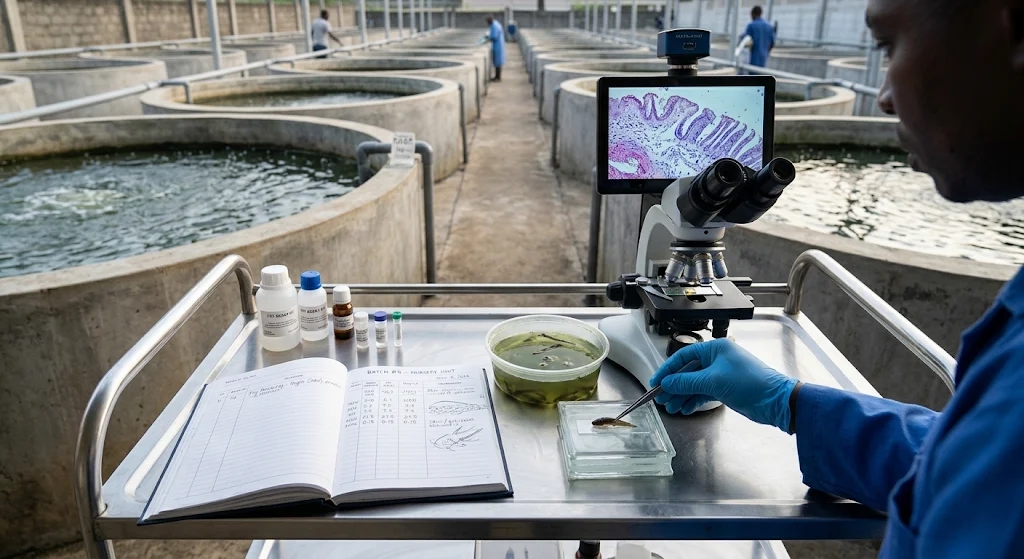
Microscopic examination may be needed to identify the parasite and select an appropriate response.
4. Water-quality-related problems
Poor water quality is an important cause of illness and mortality in catfish fry. Low dissolved oxygen, ammonia accumulation, nitrite exposure, and unsuitable temperature or pH can interfere with normal development.
Warning signs may include gasping, reduced activity, abnormal swimming, poor feeding, or sudden deaths.
Water quality should be checked whenever fry become distressed, even if an infectious disease is suspected.
5. Nutritional and feeding problems
Inadequate feeding, unsuitable feed size, poor feed quality, or inappropriate feeding practices can affect fry growth and condition.
Possible consequences include:
- Uneven growth.
- Weakness.
- Poor feeding response.
- Increased vulnerability to environmental stress.
- Reduced survival when nutritional problems are severe.
Feeding practices should be appropriate for the developmental stage and feeding behaviour of the fry.
Major Factors That Increase Disease Risk
Several management problems can increase the likelihood of disease outbreaks in hatcheries.
| Risk factor | Potential effect |
|---|---|
| Poor water quality | Environmental stress and impaired health |
| Low dissolved oxygen | Respiratory stress and mortality |
| Excessive stocking density | Increased waste production and greater disease-transmission opportunities |
| Inadequate hygiene | Greater opportunity for pathogens to enter or spread |
| Contaminated equipment | Possible transfer of infectious agents |
| Poor-quality feed | Inadequate nutrition and deterioration of water quality |
| Rough handling | Physical injury and additional stress |
| Introduction of infected fish | Potential introduction of pathogens into the hatchery |
Effective disease prevention requires attention to both fish health and the environment in which fry are raised.
How to Recognise Disease in Catfish Fry
Early observation can help identify problems before mortality becomes widespread.
Check fry regularly for:
- Reduced feeding.
- Unusual swimming patterns.
- Fish gathering at the water surface.
- Visible lesions or abnormal growths.
- Unusual respiratory movements.
- Uneven growth or persistent weakness.
- Increasing numbers of dead fry.
Record when symptoms first appear, how many fry are affected, recent feeding changes, and any changes in water management.
These observations help guide further investigation but do not independently establish a diagnosis.
How to Prevent Catfish Fry Diseases
1. Maintain good water quality
Monitor dissolved oxygen, temperature, pH, ammonia, and nitrite using methods suitable for the hatchery system.
Remove uneaten feed and waste where appropriate, and maintain water circulation or aeration as required.
Because fry can be sensitive to environmental changes, avoid abrupt changes in water conditions.
2. Maintain hatchery hygiene
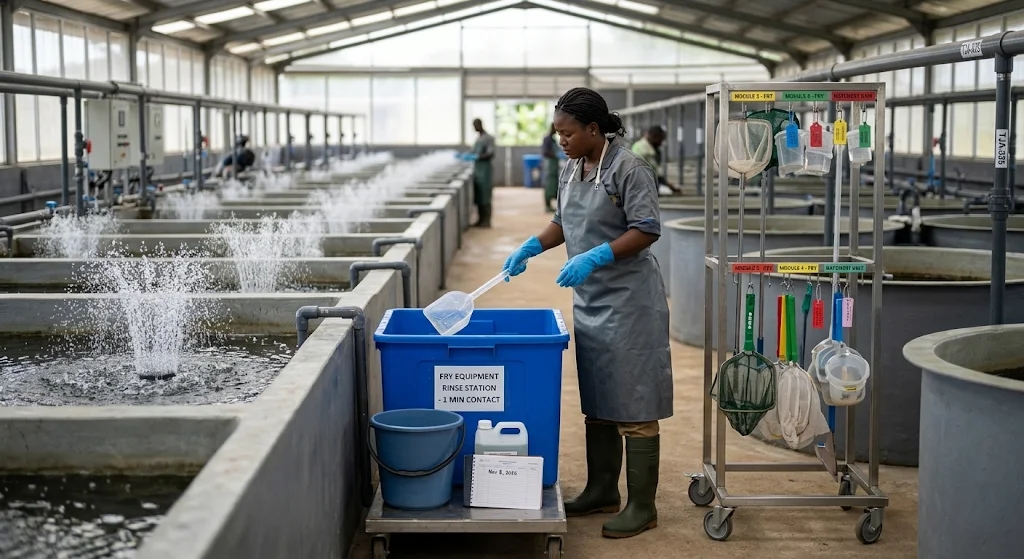
Clean and maintain equipment using procedures appropriate for aquaculture. Where disinfection is required, use products and procedures suitable for the equipment and production stage, following relevant safety guidance.
Avoid sharing equipment between tanks without appropriate cleaning and disinfection.
3. Use suitable stocking densities
Stocking density should reflect fry size, tank or pond volume, oxygen supply, water exchange, filtration capacity, and the hatchery’s ability to monitor conditions.
Excessive stocking can increase waste production and make it more difficult to maintain stable water quality.
4. Provide appropriate nutrition
Use feed suitable for the fry’s developmental stage. Manage feed quantity and frequency to meet their needs without creating excessive waste.
Observe feeding behaviour and investigate sudden reductions in appetite.
5. Quarantine and inspect incoming fish
Newly introduced fish can introduce infectious agents into a hatchery. Use a suitable quarantine and health-assessment process before mixing new stock with established populations.
Where possible, maintain separate equipment and water-management procedures for quarantine units.
6. Monitor fry and respond early
Inspect fry frequently and investigate unusual behaviour or mortality promptly.
If problems appear, check water quality, review recent management changes, and seek qualified fish-health advice when an infectious disease is suspected.
Avoid applying antibiotics, antifungal agents, or other chemicals without an appropriate diagnosis and confirmation that the treatment is suitable for the fish and production system.
What to Do When Catfish Fry Begin Dying
Unexpected fry mortality requires prompt investigation.
- Observe the fry: Look for respiratory distress, abnormal swimming, lesions, or feeding changes.
- Check water quality: Measure dissolved oxygen and assess ammonia, nitrite, temperature, and pH.
- Inspect the hatchery: Check aeration, water flow, filters, and possible contamination.
- Review recent changes: Consider feeding, handling, stocking, water exchange, and new fish introductions.
- Remove dead fry appropriately: Follow suitable hygiene and disposal practices.
- Seek a diagnosis: If mortality continues or an infection is suspected, consult a qualified fish-health professional.
Do not assume that a sudden mortality event is caused by bacteria or parasites without examining environmental conditions and the fish.
Frequently Asked Questions
Why are my catfish fry dying?
Possible causes include poor water quality, low dissolved oxygen, infection, parasites, nutritional problems, overcrowding, and handling stress. Water testing and a careful assessment of the fry are important first steps.
Are catfish fry more vulnerable to disease than larger fish?
Young fry can be especially vulnerable because their bodies and physiological systems are still developing. Their small size also means that environmental problems may affect them rapidly, depending on the production system.
Can poor water quality cause disease in catfish fry?
Poor water quality can directly harm fry and increase stress. It may also make them more susceptible to some infections. However, environmental problems and infectious diseases should be distinguished through appropriate investigation.
Should I treat all fry with antibiotics when mortality begins?
No. Antibiotics are not appropriate for every cause of mortality and should not be used without a justified diagnosis and qualified guidance. Water-quality problems, parasites, fungal infections, and other causes require different responses.
How can hatcheries reduce fry mortality?
Important measures include maintaining stable water quality, providing appropriate nutrition, controlling stocking density, maintaining hygiene, inspecting fry regularly, and using suitable quarantine procedures.
Conclusion
Catfish fry diseases can result from bacterial, fungal, or parasitic infections, but environmental and management problems can also cause serious illness and mortality. Accurate diagnosis is important because different causes require different responses.
For African catfish hatcheries, prevention depends on water-quality management, appropriate feeding and stocking, good hygiene, careful handling, and early detection of abnormal behaviour. Investigating the cause promptly can help protect fry survival and improve hatchery performance.