Abnormal swimming in catfish fry is a warning sign that may indicate poor water quality, oxygen deficiency, infection, parasitic infestation, nutritional problems, or physical stress. Healthy fry generally show coordinated movement, respond to feeding, and maintain normal swimming patterns for their developmental stage.
When fry begin spinning, swimming in circles, losing balance, floating uncontrollably or gathering at the water surface, farmers should investigate the cause quickly. Because several conditions can produce similar symptoms, abnormal swimming alone is not enough to confirm a specific disease.
What Does Abnormal Swimming Look Like in Catfish Fry?
Catfish fry may show different swimming abnormalities depending on the underlying problem.
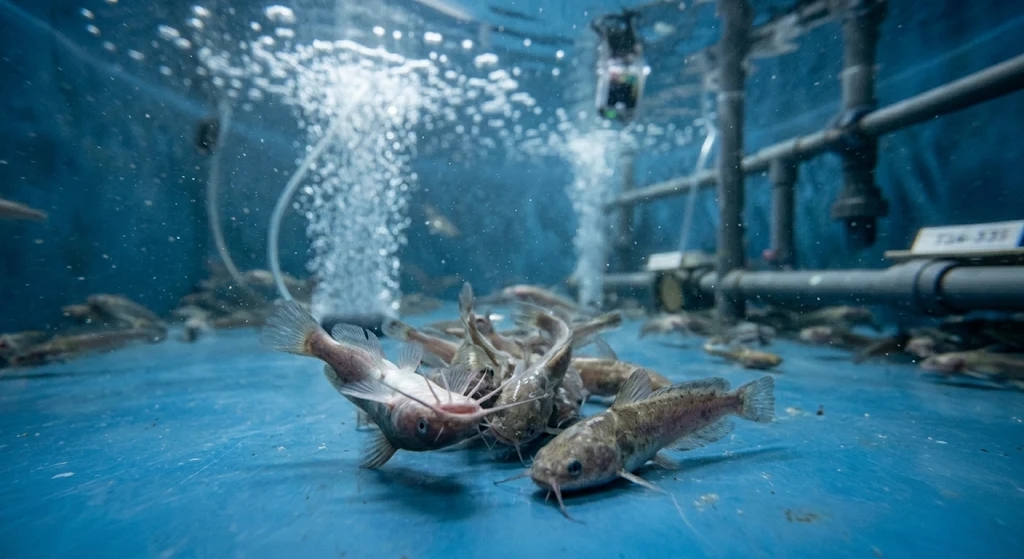
- Swimming in circles: Fry repeatedly move around in circular patterns instead of swimming normally.
- Loss of balance: Fish tilt sideways, roll over, or struggle to remain upright.
- Erratic swimming: Fry dart suddenly, change direction repeatedly, or appear unusually restless.
- Weak swimming: Fry move slowly, struggle against water movement, or remain inactive.
- Uncontrolled floating or sinking: Fish have difficulty maintaining their normal position in the water.
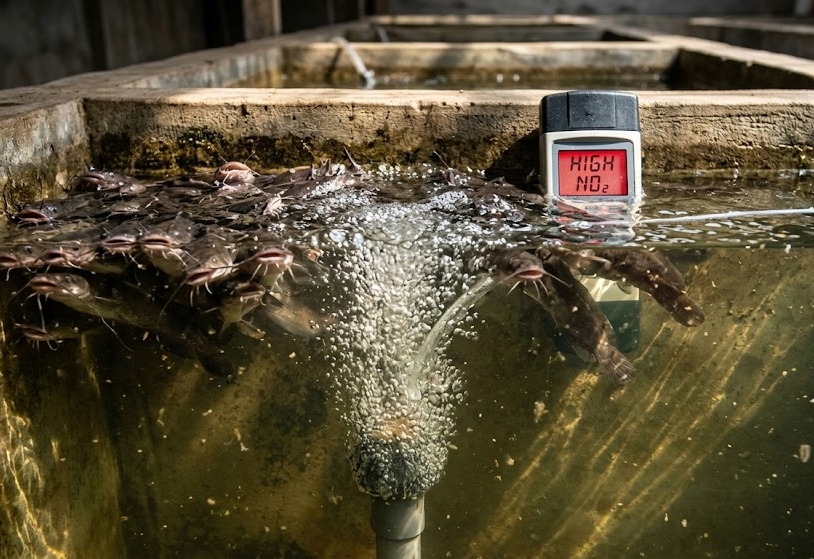
- Surface swimming: Fry gather near the surface, sometimes repeatedly opening their mouths or showing rapid gill movements.
- Clustering or isolation: Some fry gather tightly together, while others separate from the group and become inactive.
The significance of each behaviour depends on how many fry are affected, how quickly symptoms develop, and whether other signs of illness are present.
Causes of Abnormal Swimming in Catfish Fry
1. Low Dissolved Oxygen
Low dissolved oxygen can interfere with normal activity and place fry under severe physiological stress. Affected fry may gather near the surface, swim weakly, or become unusually restless.
Oxygen problems may develop because of excessive stocking density, organic waste decomposition, poor aeration, or sudden changes in pond conditions.
What to check: Measure dissolved oxygen, especially when symptoms appear early in the morning or after a period of heavy feeding.
2. Poor Water Quality
Unfavourable water conditions can irritate the gills, disrupt normal body functions, and weaken young fish.
Potential problems include:
- Elevated ammonia.
- Increased nitrite.
- Sudden pH changes.
- Accumulation of uneaten feed and organic waste.
- Rapid temperature fluctuations.
What to check: Test the water rather than relying only on its appearance. Clear water can still contain harmful concentrations of ammonia or nitrite.
3. Parasitic Infestation
External parasites affecting the skin or gills may cause irritation, respiratory distress, and abnormal behaviour.
Affected fry may rub against surfaces, dart suddenly, swim erratically or show rapid gill movements. However, these signs are not specific to parasites.
What to check: A trained fish-health professional can examine skin and gill samples under a microscope to identify parasites and determine whether they are responsible for the symptoms.
4. Bacterial Infection
Bacterial disease can affect the skin, gills, and internal organs of catfish fry. Depending on the infection, affected fish may become weak, lose coordination, stop feeding, or develop visible lesions.
Abnormal swimming alone does not establish a bacterial diagnosis.
What to check: Look for additional signs such as skin damage, discolouration, abnormal gills or increasing mortality. Veterinary or laboratory examination may be needed to confirm the cause.
5. Fungal Problems
Fungal growth is more commonly recognised by visible cotton-like material on affected tissues or eggs. Severe tissue damage or secondary complications may also interfere with normal movement.
What to check: Inspect affected fry carefully and distinguish suspected fungal growth from mucus, debris or other skin conditions before choosing treatment.
6. Temperature Stress
Sudden changes in water temperature can affect activity, feeding, and physiological function. Young fish may become stressed when water conditions change rapidly or move outside the range suitable for their species and developmental stage.
What to check: Measure water temperature and compare it with the requirements of the fry being raised. Avoid sudden temperature changes during water replacement or transfer.
7. Handling and Transport Stress
Fry may swim abnormally after grading, transportation, transfer between tanks or ponds, or other stressful handling.
Stress can become more serious when fish experience abrupt changes in temperature, pH or water chemistry.
What to check: Determine whether symptoms began immediately after handling or transfer, and compare the water conditions before and after the event.
8. Nutritional Problems
Inadequate feed quality, unsuitable feed size, or inconsistent feeding can weaken fry and affect their growth and condition. Nutritional problems may contribute to poor swimming, although they should not automatically be assumed to be the cause.
What to check: Review the feed’s suitability for the fry’s developmental stage, feeding frequency, storage conditions, and whether all fish can access the feed.
How to Diagnose Abnormal Swimming in Catfish Fry
Accurate diagnosis begins with observing the fish and checking their environment.
Step 1: Observe the Behaviour
Record whether fry are swimming in circles, losing balance, darting, floating abnormally, or gathering at the surface.
Note whether the behaviour affects a few individuals or most of the population.
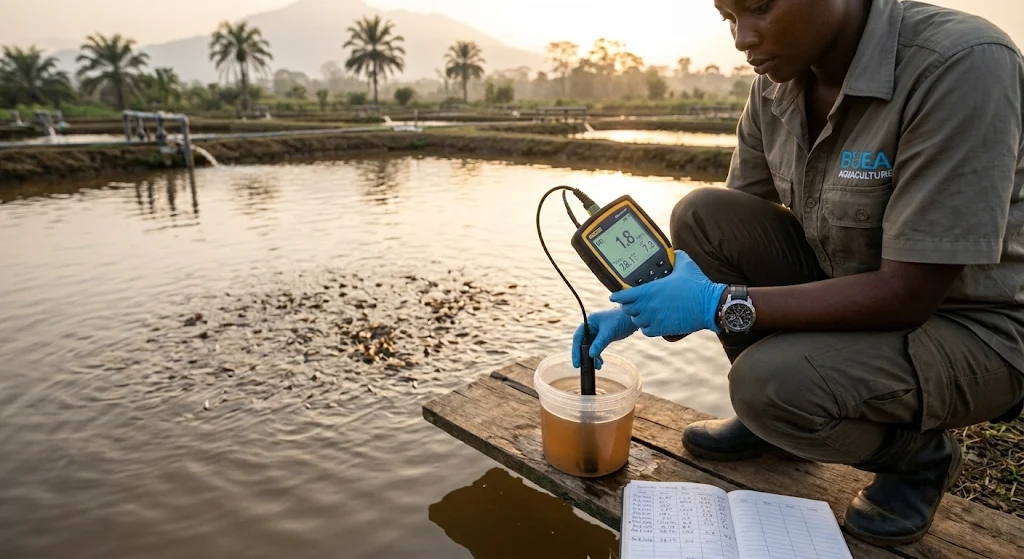
Step 2: Check Water Quality Immediately
Measure the available water-quality parameters, prioritising:
- Dissolved oxygen.
- Water temperature.
- pH.
- Ammonia.
- Nitrite.
Compare results with appropriate requirements for the species, life stage and production system.
Step 3: Examine the Fry
Look for external lesions, unusual discolouration, visible growths, damaged fins, abnormal gill appearance, and changes in body condition.
Avoid rough handling, which can worsen stress in very small fish.
Step 4: Review Recent Farm Activities
Consider whether the problem started after feeding, water exchange, transport, grading, stocking, or a change in aeration.
This timeline can help identify environmental or management-related causes.
Step 5: Seek Professional Diagnosis
If symptoms persist, spread, or occur alongside mortality, obtain help from an aquatic animal health professional or fish diagnostic laboratory. Microscopic examination and other appropriate tests may be needed to identify parasites or infectious disease.
What to Do When Catfish Fry Swim Abnormally
The appropriate response depends on the likely cause. Take these steps while investigating the problem.
- Check oxygen levels immediately. If dissolved oxygen is low, increase aeration or oxygen supply using a suitable system.
- Test the water. Identify ammonia, nitrite, pH, or temperature problems before making major changes.
- Remove uneaten feed and excess waste carefully. Reduce the organic load without disturbing the fry unnecessarily.
- Review feeding practices. Avoid excessive feeding, and ensure the feed is suitable for the fry’s size and developmental stage.
- Reduce unnecessary handling. Avoid grading, transport, or other stressful activities until the fish stabilise.
- Inspect for signs of disease. Seek professional assistance if infection or parasitic infestation is suspected.
- Monitor mortality and behaviour. Record the number of affected fry and whether the situation improves or worsens.
If many fry suddenly lose balance, gasp at the surface or begin dying, treat the situation as urgent. Correct an obvious oxygen problem promptly while investigating other possible causes.
Do not apply antibiotics, pesticides, salt or other chemicals indiscriminately. The correct treatment depends on the diagnosis, the production system, and the safety of the proposed product for fry.
How to Prevent Abnormal Swimming in Catfish Fry
Prevention depends on maintaining stable water conditions and reducing unnecessary stress.
- Monitor water quality regularly, with additional checks during periods of stress or unusual behaviour.
- Maintain effective aeration appropriate for the stocking density and system.
- Avoid overcrowding beyond the system’s management capacity.
- Feed appropriate fry diets and remove excessive uneaten feed.
- Keep tanks, hatchery equipment and water-handling tools clean.
- Introduce new fry carefully and use appropriate quarantine procedures.
- Avoid abrupt changes in temperature, pH, and other water conditions.
- Inspect fry frequently so that early signs of illness are identified promptly.
- Keep records of mortality, feeding, water-quality measurements and recent management changes.
Frequently Asked Questions
Why are my catfish fry swimming in circles?
Swimming in circles can be associated with environmental stress, neurological or physical problems, infection, or other conditions. It is not a diagnosis by itself. Check water quality and seek professional examination if the behaviour continues.
Why are catfish fry swimming upside down?
Fry swimming upside down or rolling over may be experiencing severe stress, loss of coordination, or another serious problem. Check dissolved oxygen and other water-quality parameters immediately, and seek diagnostic assistance.
Can low oxygen cause abnormal swimming in catfish fry?
Yes. Low dissolved oxygen can cause restlessness, surface gathering, weak swimming, and, in severe cases, death. Confirm the problem with a dissolved-oxygen measurement whenever possible.
Should I change the water when fry swim abnormally?
A water change may help when water quality is responsible, but an abrupt or poorly managed change can worsen the problem. Check water conditions first and ensure replacement water is suitable and introduced carefully.
When should I suspect a disease?
Disease becomes a greater concern when abnormal swimming persists despite correcting environmental problems, spreads through the population, or occurs alongside lesions, abnormal gills, loss of appetite, or increasing mortality. Professional diagnosis is recommended.
Conclusion
Abnormal swimming in catfish fry is an important warning sign, but it can result from several different problems. Low oxygen, poor water quality, parasites, bacterial infections, temperature changes, handling stress, and nutritional issues should all be considered.
The best response is to observe the behaviour, check water quality, review recent farm activities, and obtain a proper diagnosis when necessary. Early intervention can reduce losses and help maintain healthier fry populations.