Mistake 1: Inadequate Housing and Ventilation
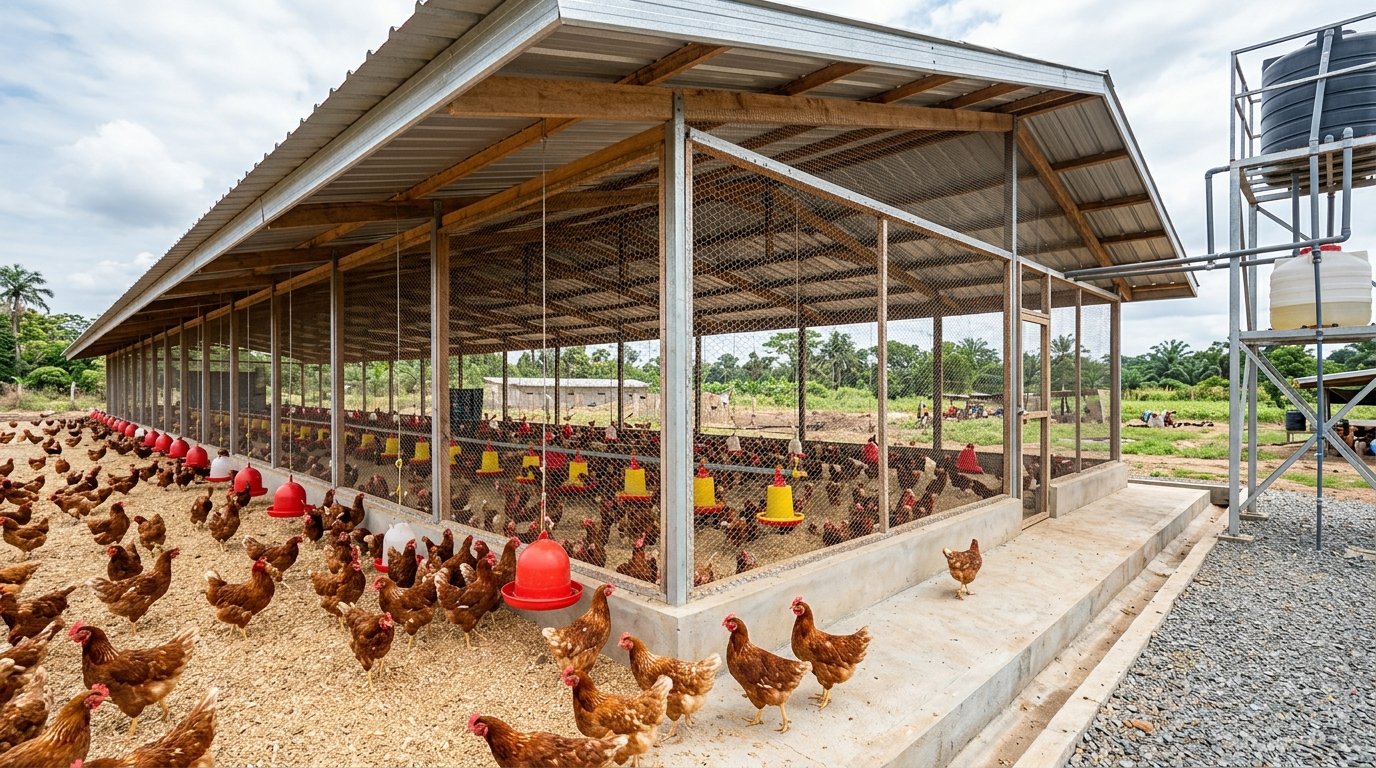
The problem: Many poultry operations in West and Central Africa use poorly ventilated structures—corrugated metal sheds without adequate openings, overcrowded pens, or housing that traps moisture and ammonia. These conditions accelerate respiratory diseases, reduce feed conversion, and kill birds during heat stress.
The fix: Design housing with a ventilation ratio of 1 square meter of opening per 100 birds. Use natural cross-ventilation: install open-sided designs with wire mesh or perches on opposite walls. For closed structures, maintain 15 cubic meters of air space per 1,000 birds. Ensure floor density does not exceed 8 birds per square meter for broilers or 6 birds per square meter for layers. Include roof overhangs (at least 1 meter) to allow airflow while blocking rain and sun.
In Cameroon and Nigeria’s humid climate, concrete floors with a slight slope (1:100) toward drainage channels prevent water pooling that breeds disease.
Mistake 2: Poor Biosecurity Practices
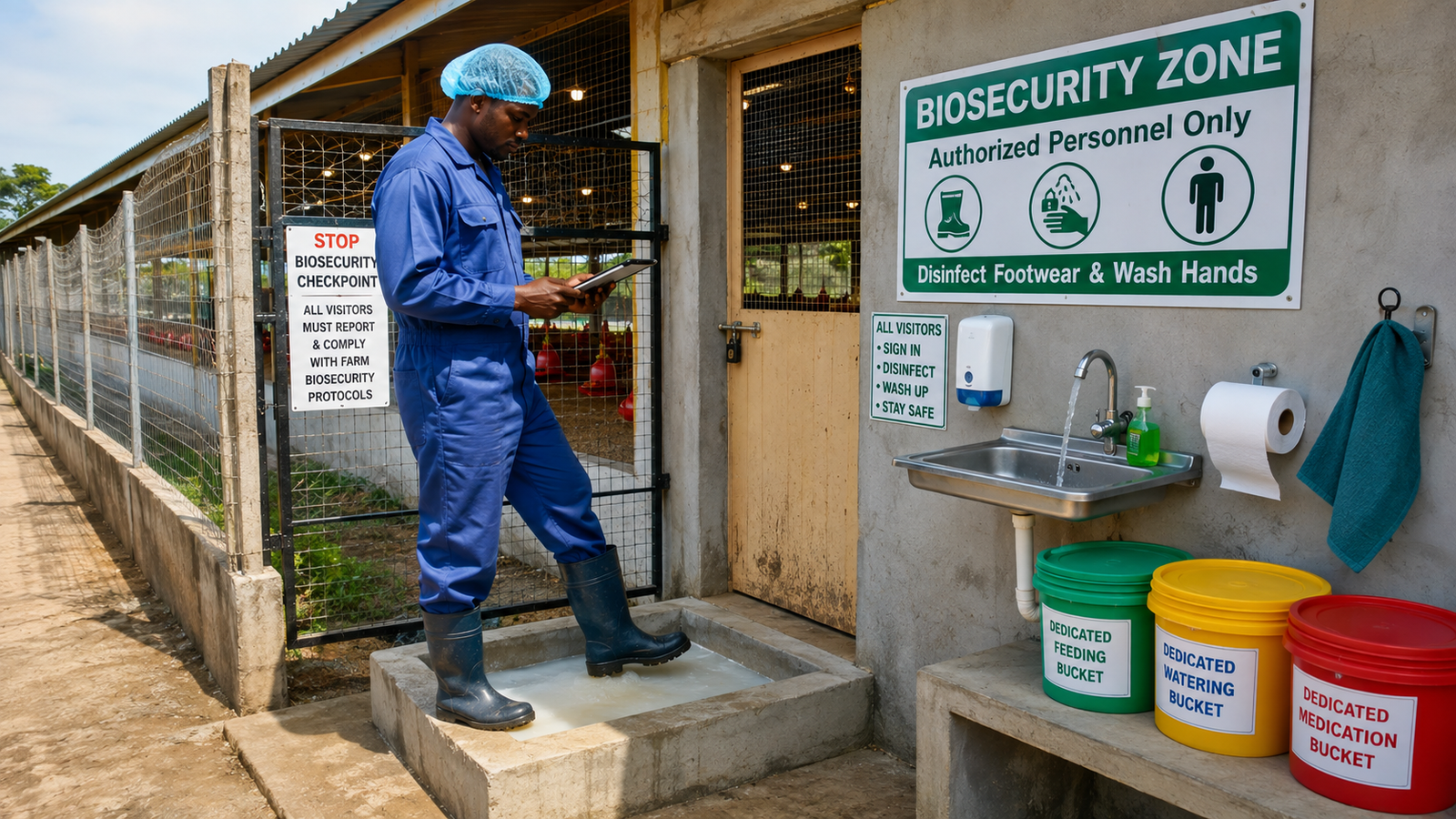
The problem: Uncontrolled visitor access, inadequate footbaths, shared equipment between flocks, and no perimeter fencing allow pathogens (Newcastle disease, avian influenza, coccidiosis) to enter your operation. A single infected bird from a neighbor’s farm or wet market can destroy your entire flock.
The fix: Establish a biosecurity protocol:
- Install a locked gate and require all visitors to use a footbath with 1:10 bleach solution before entering
- Dedicate feed scoops, brushes, and feeders to each poultry house
- Do not allow mixing of birds from different ages or sources in the same shed
- Keep wild birds and rodents out using wire mesh (6mm or smaller) on all openings
- Change clothes and wash hands before handling birds
- Quarantine new stock for 14 days in a separate location before integrating with existing flocks
Test birds for Newcastle disease (using a rapid diagnostic kit, ~3,000 XAF / $5 USD per test) before introducing them.
Mistake 3: Feeding Poor-Quality or Imbalanced Diets
The problem: Many farmers mix their own feed without understanding nutrient requirements or use expired premixes. Others stretch feed costs by adding low-protein grains and moldy ingredients. The result: slow growth, poor egg production, weak immune systems, and high mortality—negating any savings.
The fix: Formulate or purchase complete layer or broiler feeds that meet these minimum standards:
Broiler starters (Weeks 1–3): 23% crude protein, 2,900 kcal ME/kg, 0.9% calcium, 0.45% phosphorus Broiler finishers (Weeks 4–6): 20% crude protein, 3,050 kcal ME/kg, 0.85% calcium, 0.40% phosphorus Layer rations: 16–18% crude protein, 2,700–2,800 kcal ME/kg, 3.5–4.0% calcium, 0.35% phosphorus
Use a local feed mill (available in Douala, Lagos, Accra) that tests ingredient batches for aflatoxin contamination. Budget 45,000–52,000 XAF ($75–$87 USD) per 50 kg bag for quality broiler feed; 38,000–42,000 XAF ($63–$70 USD) for layer feed.
Store feeds in cool, dry conditions and do not keep open bags longer than 2 weeks to prevent nutrient degradation and mold growth.
Mistake 4: Inconsistent or Contaminated Water Supply
The problem: Birds denied water for even 4 hours stop eating and suffer heat stress. Contaminated water (high bacteria, iron, or nitrate levels) causes intestinal disease and poor performance. Many operations rely on hand-watering using buckets that are rarely cleaned.
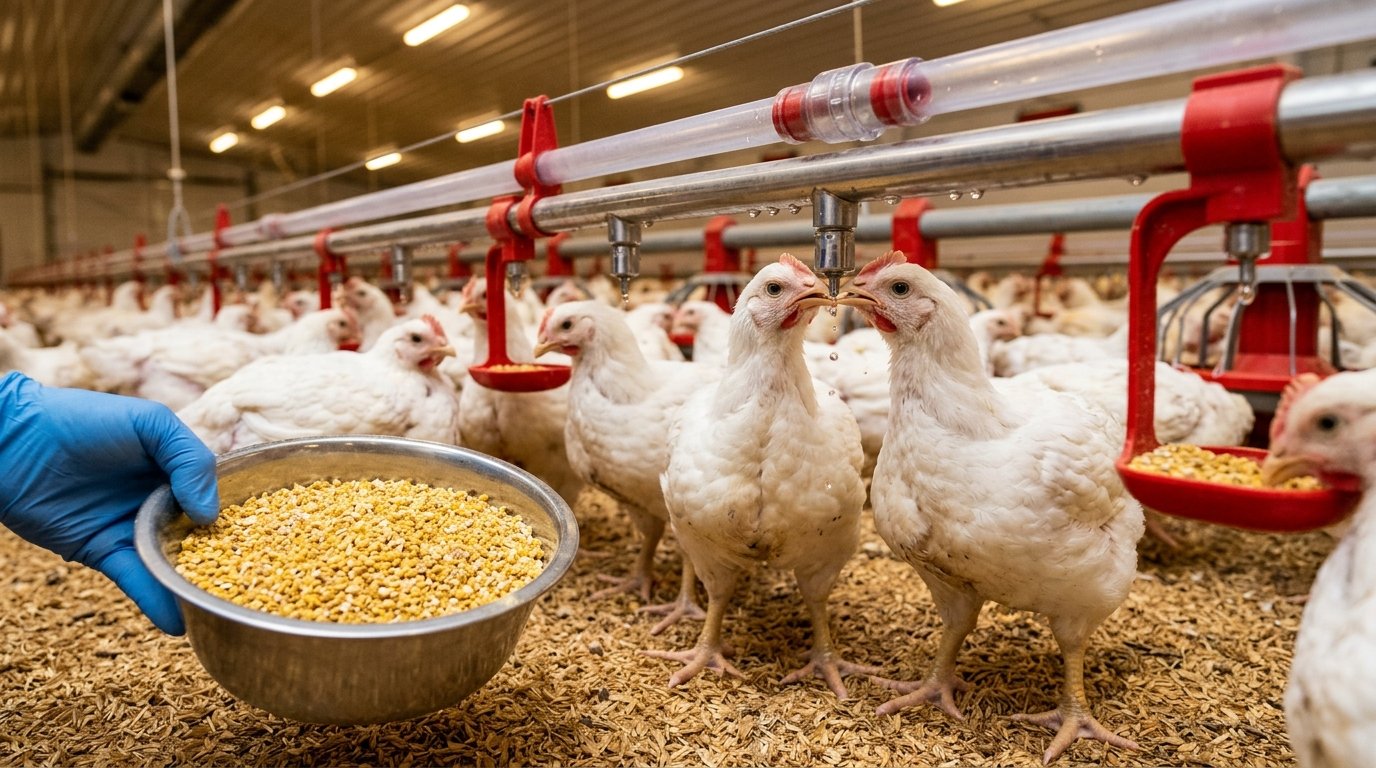
The fix: Provide automatic waterers (nipple drinkers or bell waterers) that deliver clean water continuously. Install at a height so birds’ eyes align with the drinking point—prevents head splashing and wet litter.
- Use 1 nipple drinker per 10–12 birds (broilers) or 1 per 8–10 birds (layers)
- Provide 25–50 ml of water per bird per day in warm climates; increase during heat waves
- Clean and refill drinkers daily; inspect lines for blockages and leaks
- Test water quarterly for bacterial contamination and iron/hardness levels; treat if necessary (use sand filters for sediment removal, lime for pH correction)
In areas with unreliable electricity, use gravity-fed overhead tanks (500–1,000-liter capacity) refilled daily from a borehole or community tap.
Mistake 5: Stocking Density Exceeds Recommended Rates
The problem: Overcrowding reduces space at feeders and drinkers, increases stress, worsens air quality, and promotes feather pecking and cannibalism. Birds cannot achieve their genetic potential for growth or production.
The fix: Adhere to these density standards:
| Type | Floor Space | Feeder Space | Drinker Space |
|---|---|---|---|
| Broiler chickens (0–6 weeks) | 8 birds/m² | 2 cm/bird | 1 cm/bird |
| Layer pullets (0–16 weeks) | 6 birds/m² | 3 cm/bird | 1.5 cm/bird |
| Laying hens | 3–4 birds/m² | 10 cm/bird | 2.5 cm/bird |
| Broiler breeder (male) | 3–4 birds/m² | 10 cm/bird | 2.5 cm/bird |
Oversized sheds sitting empty are less profitable than properly stocked, well-managed smaller ones. Calculate your shed capacity using this formula: (Floor area in m² × Recommended density) ÷ Average bird weight in kg = Number of birds.
Mistake 6: No Vaccination or Medication Program
The problem: Operating without a vaccination schedule invites rapid spread of Newcastle disease, Gumboro disease, and infectious bronchitis. Many farmers wait until birds show signs of illness—by then, losses are severe.
The fix: Implement this baseline vaccination schedule for broilers in Cameroon/Nigeria:
| Age | Disease | Route | Product |
|---|---|---|---|
| Day 1 | Marek’s + Newcastle + Gumboro (combo) | Subcutaneous/oral | Live vaccine |
| Day 10 | Newcastle reinfection | Intranasal / eye drop | Live vaccine |
| Day 21 | Infectious bronchitis | Drinking water | Live vaccine |
For layers, repeat Newcastle and Gumboro boosters at 10 and 16 weeks.
Source vaccines from licensed distributors (not black-market sources) and keep them refrigerated (2–8°C) at all times. A basic vaccination program costs 800–1,200 XAF ($1.30–$2 USD) per chick.
Work with a livestock extension officer or veterinarian to confirm local disease prevalence; vaccination protocols vary by region.
Mistake 7: Neglecting Record-Keeping
The problem: Without records, you cannot identify trends in mortality, feed conversion, egg production, or profitability. You also cannot trace disease outbreaks to their source or adjust management decisions based on data.
The fix: Track these minimum records daily or weekly:
- Feed intake (kg per 1,000 birds per day)
- Mortality (number and percentage of birds; causes, if known)
- Egg production (total eggs, percentage production for layers)
- Weight gain (sample weigh 30 birds every 2 weeks; plot trend)
- Treatments administered (antibiotic name, dose, dates)
- Expenses (feed, vaccine, medication, labor, utilities)
- Sales revenue (date, price per kg, total)
Use a simple paper log or spreadsheet. After 6–12 months, calculate feed conversion ratio (kg feed per kg body weight gain for broilers) or feed per dozen eggs for layers. Compare to industry benchmarks: broilers should achieve 1.8:1 to 2.0:1 FCR; layers should consume ~110 g/day for 60g eggs.
Mistake 8: Inadequate Lighting Management
The problem: Layers kept in dim conditions produce fewer eggs and show behavioral problems (piling, feather pecking). Broilers in constant darkness fail to find feeders and drinkers efficiently.
The fix: Provide 16 hours of light per day for layers (increasing gradually from 8 hours at pullet stage) and 23 hours for broilers to maximize feeding activity.
Use energy-efficient LED bulbs (6–10 watts per square meter of shed) to reduce operating costs. Introduce light gradually: increase by 1 hour per week when transitioning pullets to production lighting, avoiding sudden shifts that trigger molt.
For broilers, use a combination of natural light (through mesh windows) and supplemental LED to maintain target photoperiod without excessive heat buildup.
Mistake 9: Poor Litter Management
The problem: Wet, compacted litter harbors coccidial oocysts, Salmonella, and pathogenic bacteria. Birds develop respiratory disease and contact dermatitis (lesions on feet and breast). Ammonia levels spike, damaging lungs.
The fix: Use deep litter (8–10 cm depth) rather than bare floors:
- Starter materials: wood shavings or rice husks (not sawdust, which compacts)
- Spread fresh litter after each flock cycle
- Turn litter weekly using a fork to break up caking and improve aeration
- Add lime (50–100 kg per 1,000 m² of shed) if ammonia odor becomes noticeable
- Remove visibly wet patches daily; replace with dry material
Keep relative humidity below 65% through ventilation. If litter becomes consistently wet, investigate drinker leaks or excess water spillage.
After each flock, fully remove old litter (it is excellent compost for vegetable plots) and disinfect floors with a 1:20 bleach solution or quaternary ammonium compound before restocking.
Mistake 10: No Parasite Control Program
The problem: Internal parasites (roundworms, tapeworms) and external parasites (lice, mites) reduce nutrient absorption and cause anemia, resulting in poor growth and low egg production. Parasites can remain dormant in litter and infect successive flocks.
The fix: Deworm broilers at 3 and 5 weeks using broad-spectrum anthelmintics (levamisole, albendazole, or fenbendazole at label rates). For layers, treat every 12 weeks or when fecal egg counts exceed 500 eggs per gram.
Parasite control in poultry flocks:
- Use a medicated premix or in-feed anthelmintic (follow dose rates; underdosing breeds resistance)
- Treat for 3–5 consecutive days
- Clean and disinfect feeders and drinkers after treatment to reduce reinfestation
For external parasites, dust birds with approved poultry powder (pyrethrin-based, ~2,000 XAF / $3 USD per container) or apply spray-on treatments during cool hours.
Deep litter removal and shed disinfection also interrupt parasite life cycles.
Mistake 11: Ignoring Leg Problems and Skeletal Health
The problem: Rapid-growth broilers and confined layers develop leg weakness, tibial dyschondroplasia (TD), and femoral head necrosis, resulting in birds that cannot reach feeders, poor body weight, or early culling.
The fix: Ensure adequate calcium and phosphorus in feed (see Mistake 3 for ratios) and maintain a calcium: phosphorus ratio of 2:1.
Manage light and activity:
- Provide perches or platforms for broilers so they move and exercise muscles
- Avoid excessive stocking density; birds need space to stand without leg pressure
- Reduce broiler growth rate slightly (slower-growing genotypes, such as slower broiler strains, experience fewer leg problems than fast-growing lines but require 2–3 additional weeks to market weight)
Include vitamin D3 in feed at 2,500–4,000 IU/kg and monitor walking ability weekly by observing how many birds stand vs. sit. Cull any severely lame birds to prevent spread of bacterial osteomyelitis.
Mistake 12: Inattention to Biosecurity During Disease Outbreak
The problem: Once disease is detected (Newcastle, Gumboro, coccidiosis), many farmers still allow visitors, share equipment with neighbors, or mix recovered birds with healthy stock, accelerating spread within and beyond the farm.
The fix: Establish an outbreak protocol:
- Isolate affected birds in a quarantine pen with dedicated equipment
- Restrict all visitor access for 21 days minimum
- Treat sick birds only if a cost-benefit analysis justifies medication (often euthanasia of severely affected birds is more humane and economical)
- Test representative samples (send 5–10 dead birds to a diagnostic lab for necropsy; cost ~8,000–15,000 XAF / $13–$25 USD per sample) to confirm disease identity
- Disinfect feeders, drinkers, and equipment daily using a 1:10 bleach solution
- Keep detailed records of mortality, morbidity, treatments, and dates
Coordinate with local veterinary authorities; in some regions, Newcastle disease must be reported to livestock officials by law.
Mistake 13: Neglecting Exit Strategy and Financial Planning
The problem: Many farmers start without a clear understanding of target market, break-even point, or capital requirements. When prices drop or disease strikes, they lack a contingency plan.
The fix: Before stocking birds, document:
- Target market: Live bird traders, restaurants, processors, or direct consumer sales?
- Pricing: Current price per kg live weight (typical range in Nigeria/Cameroon: 900–1,400 XAF / $1.50–$2.30 USD for broilers; layers 600–1,000 XAF / $1–$1.67 USD); factor seasonal fluctuations
- Break-even volume: Gross margin calculation
- Broiler example: 1,000 chicks at 150 XAF / $0.25 USD = 150,000 XAF investment
- Feed cost (6 weeks): ~280,000 XAF (for 2.0 kg feed conversion, 42 kg final weight × 1,000 birds × average feed price)
- Other costs (vaccine, medication, fuel, labor): ~80,000 XAF
- Total cost: ~510,000 XAF
- Sales (42 kg × 1,000 at 1,200 XAF/kg): 504,000 XAF
- Margin: Breakeven or slight loss — highlights why even small efficiency gains matter
- Capital cushion: Maintain 3–6 months of operating costs in reserve to withstand disease loss, market price dips, or equipment failure
- Exit timeline: Define conditions under which you would sell birds at a loss (disease outbreak, facility damage) vs. hold for recovery
Common Regional Challenges in Cameroon and Nigeria
High temperatures increase water demand and heat stress mortality. Install shade structures and increase ventilation.
Unreliable electricity makes automatic feeders and cooled vaccine storage difficult. Use solar-powered water systems and backup manual watering protocols.
Limited access to quality inputs (premixes, vaccines, diagnostics). Build relationships with 2–3 reputable feed suppliers and maintain an inventory of essential medications (amoxicillin, toltrazuril for coccidiosis, Newcastle vaccine).
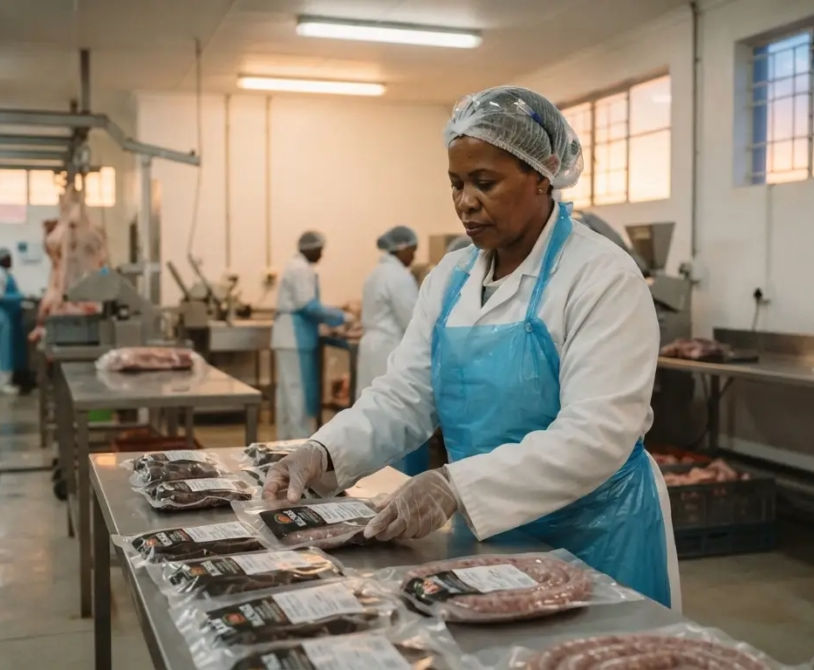
Market volatility and seasonal gluts after religious holidays (Sallah, Christmas) depress prices. Plan breeding cycles to avoid marketing peaks; consider value-added processing (frozen cuts, sausages) to capture higher margins.
Summary
Profitability in poultry hinges on six fundamentals: genetics, feed quality, health management, environmental control, record-keeping, and market access. Most losses result not from exotic diseases but from preventable management oversights—poor housing, inadequate feeding, or lax biosecurity.
Audit your operation against these 13 mistakes. Even correcting three or four will reduce mortality by 5–10%, improve feed conversion by 8–12%, and increase net profit by 15–25% within a single production cycle.
Start with the mistakes that currently cost you the most (feed waste, unexpected mortality, low production), fix those, then progress systematically through the rest.
Related Resources:
- Deep Litter Housing for Layers in Cameroon: Best Practices Guide
- Broiler Nutrition: Complete Feed Formulation for West African Conditions
- Poultry Disease Prevention: A Practical Biosecurity Manual
- Recording and Analyzing Poultry Production Data for Profit