Every management decision in commercial catfish farming has a biological basis. The stocking density that allows African catfish to be held at 150 fish per cubic meter in a concrete tank while channel catfish would suffocate at the same density is a function of the suprabranchial air-breathing organ that Clarias gariepinus possesses, and Ictalurus punctatus does not. The feeding schedule that delivers maximum growth in the 28–30°C range and produces near-zero growth below 18°C is a function of the ectothermic physiology that makes water temperature the primary driver of catfish metabolic rate. The size-grading protocol that must be applied to African catfish fingerlings every 2–3 weeks to prevent catastrophic cannibalism losses is a function of the species’ behavioral hierarchy and feeding aggression at juvenile stages.
A catfish farmer who understands these biological foundations does not follow management protocols blindly — they understand why each protocol exists, which means they can recognize when conditions have changed enough to require protocol adjustment, and they can diagnose the biological cause of production problems rather than simply observing their financial consequence.
This article covers the biology that underpins commercial catfish management: the complete life cycle from spawning through market harvest, the key anatomical systems whose function determines water quality requirements and disease vulnerability, and the behavioral characteristics that experienced producers read as real-time indicators of pond health and fish welfare.
The Life Cycle of Commercial Catfish
Stage 1: Egg and Embryonic Development
The catfish life cycle begins with fertilized eggs — adhesive, spherical structures 1.5–3.0 mm in diameter depending on species and broodfish size. Fertilization occurs externally: eggs stripped from the female are mixed with milt (sperm-containing fluid) from the male, and water is added to activate the sperm. Within seconds of water contact, the egg’s outer membrane hardens in a process called cortical reaction — the egg becomes water-hardened, and the outer layer develops the adhesiveness that, in natural spawning environments, causes eggs to clump together in a mass or attach to substrate.
Incubation period and temperature dependence:
The time from fertilization to hatching is entirely temperature-dependent — warmer water accelerates embryonic development, cooler water slows it. This relationship is described by the concept of thermal units (degree-days): the number of degree-days required for hatching is relatively constant for a given species, while the actual calendar time varies with temperature.
For Clarias gariepinus:
- At 26°C: hatching occurs at approximately 24–30 hours post-fertilization
- At 28°C: hatching at approximately 20–24 hours
- At 30°C: hatching at approximately 18–20 hours
For channel catfish (Ictalurus punctatus):
- At 24°C: hatching at approximately 5–7 days
- At 27°C: hatching at approximately 4–5 days
The substantially shorter incubation period of African catfish at tropical temperatures is consistent with the species’ overall faster developmental biology compared to North American species.
Critical embryonic development events:
During incubation, the embryo progresses through cleavage (division of the fertilized egg into progressively smaller cells), blastulation, gastrulation (establishment of the three primary tissue layers), and organogenesis (formation of the major organ systems). Visible developmental milestones include the appearance of the optic vesicles (eyes), the heartbeat (typically visible 12–14 hours post-fertilization in Clarias at 28°C), and the development of the tail somites that will form the muscle segments.
Stage 2: Larval Stage
Newly hatched larvae (prolarvae):
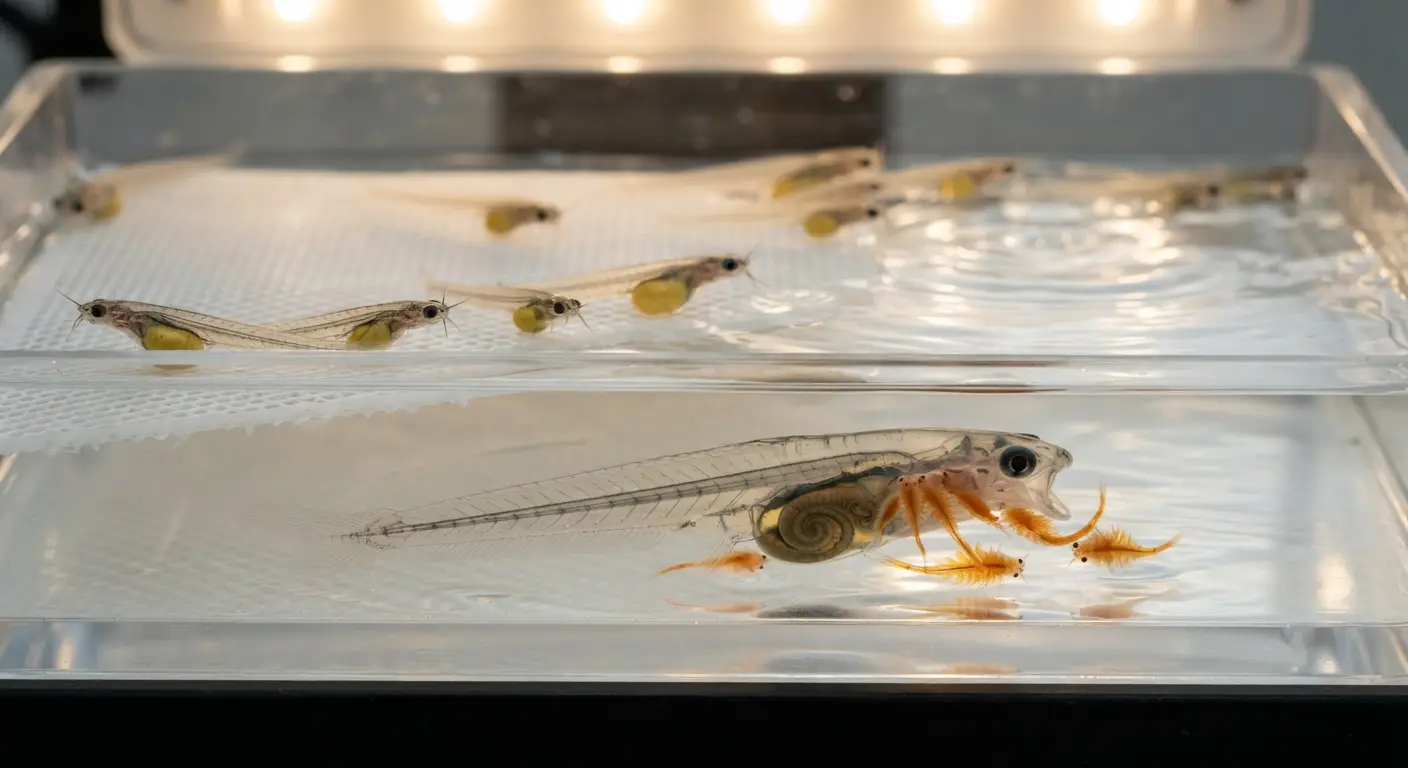
At hatching, catfish larvae are 3–6 mm in length, still carry a yolk sac that provides endogenous nutrition for the first 2–4 days of post-hatch life, and are not yet capable of exogenous feeding. They are initially photonegative (avoid light) and settle to the bottom or hide in substrate crevices — behavior that in natural conditions reduces predation during this most vulnerable developmental stage.
The yolk sac provides all nutrition during this period. Developmental priority is completion of the digestive system, swim bladder inflation (which allows the fish to achieve neutral buoyancy and move toward exogenous food sources), and development of the functional mouth and feeding apparatus.
First feeding transition (critical management event):
The transition from yolk-sac nutrition to exogenous feeding is one of the highest-mortality risk periods in the catfish life cycle. Larvae that do not find and successfully ingest food within a narrow window — typically 1–2 days after yolk sac absorption is complete — experience irreversible starvation and death even if food is subsequently provided.
In commercial hatchery operations, the timing of first feeding must be precisely synchronized with the natural depletion of the yolk sac — typically 3–5 days post-hatch for Clarias gariepinus at 28°C. The first food offered must be appropriately sized (typically Artemia nauplii, rotifers, or micro-encapsulated artificial diets 100–300 μm in diameter) to match the larva’s mouth gape.
Larval growth and development:
During the larval period (approximately days 1–20 post-hatch), the fish develops from a fragile, nearly transparent larva carrying a yolk sac into a recognizable juvenile with functional organ systems, pigmentation, and the behavioral capabilities required for independent feeding and predator avoidance.
Key developmental events during the larval period:
- Day 3–5: Yolk sac absorption complete; first exogenous feeding
- Day 5–8: Swim bladder functional; larvae become neutrally buoyant
- Day 7–10: Pigmentation develops; skin darkens
- Day 10–14: External gills (present in early larvae) regress and are replaced by internal gill structures
- Day 14–21: Transition from exclusively live food to acceptance of formulated micro-diets becomes possible
- Day 20–30: Fish are recognizable juveniles capable of consuming formulated feeds; typically 1–3 g body weight
Stage 3: Fingerling Stage
Definition: Catfish are referred to as fingerlings from the point at which they transition to formulated feed feeding (approximately 1 g) through to approximately 30–50 g body weight, the typical minimum stocking size for grow-out production.
Duration: In Clarias gariepinus at 28–30°C, the period from hatching to 10 g fingerling weight takes approximately 4–6 weeks under optimal hatchery conditions. The period from 10 g to 30 g takes approximately 3–4 additional weeks in nursery pond or tank conditions.
Critical management characteristics of the fingerling stage:
Cannibalism: African catfish show strong cannibalistic behavior from the larval stage onward — larger individuals actively pursue and consume smaller individuals. In the fingerling stage, this tendency is pronounced: a fish that is 20% larger than its tank-mates can successfully cannibalize them. Without regular size-grading (sorting fish by size and separating size classes), a fingerling cohort that begins as a uniform population can experience 30–50% cannibalism mortality within weeks as natural growth variation allows some individuals to outpace others.
Size-grading protocol: Size-grading every 2–3 weeks during the fingerling stage is the standard management response to cannibalism risk. Fish are harvested from the tank or pond, sorted by size using grading equipment (slotted grading boxes or mechanical graders), and returned to separate containers holding fish of similar size. This management step is labor-intensive but non-negotiable for acceptable fingerling survival rates.
Dietary transition: The fingerling stage spans the dietary transition from high-protein, highly digestible starter feeds (45–50% crude protein, 1–2 mm pellet diameter) to the standard juvenile feeds (40–45% crude protein, 2–3 mm pellet) that form the foundation of the grow-out nutrition program.
Stage 4: Juvenile and Sub-Adult (Grow-Out) Stage
From approximately 30–50 g to market weight (typically 500 g–1.5 kg for Clarias gariepinus in West African markets), catfish are in the grow-out phase — the longest production period and the phase that consumes the largest proportion of total feed input and operating cost.
Growth rate during grow-out:
Growth rate during grow-out is primarily determined by four factors: water temperature, feed quality and quantity, stocking density, and health status. Under optimal conditions for African catfish in West Africa:
- 50 g to 500 g: approximately 10–12 weeks (at 28–30°C, 35% crude protein feed, appropriate density)
- 50 g to 1,000 g: approximately 16–20 weeks
- 50 g to 1,500 g: approximately 22–26 weeks
These are achievable benchmarks for well-managed operations — not best-case projections. Operations with suboptimal water quality, inadequate feed quality, inappropriate stocking density, or disease pressure will show significantly slower growth and worse feed conversion.
Behavioral stabilization:
As fish move through the grow-out phase and become established in their social groups, behavioral aggression (including cannibalism) diminishes relative to the fingerling stage, though size disparities from early growth differences persist and can be amplified. Periodic re-grading through the grow-out phase (typically monthly) maintains size uniformity and reduces the competition disadvantage experienced by smaller fish in mixed-size populations.
Stage 5: Broodstock and Reproductive Stage
Catfish reach sexual maturity at varying ages depending on species and management conditions. Clarias gariepinus under commercial production typically reaches sexual maturity at 8–12 months of age at 800 g–1.5 kg. Sexually mature fish show visible physical differences between males and females:
Male African catfish: More elongated body shape, a visible urogenital papilla posterior to the anal opening (through which sperm is released during spawning)
Female African catfish: Rounder abdominal profile (becoming increasingly pronounced as eggs develop before spawning), softer abdomen to palpation when ripe
Natural spawning of Clarias gariepinus is triggered by rainfall events — the species is adapted to spawn during the onset of the West African rainy season, when flooded terrestrial areas provide habitat for larvae and first-feeding fry. In commercial production, natural spawning is unreliable and impractical to control — induced spawning using hormones (covered in the hatchery management article in this series) is the standard production practice.
Key Anatomical Systems and Their Production Relevance
The Respiratory System — Two Mechanisms for Oxygen Acquisition
Understanding catfish respiratory anatomy is directly relevant to water quality management, stocking density decisions, and emergency management of oxygen depletion events.
Gill respiration (standard in all fish):
The four paired gill arches of catfish carry gill filaments covered in lamellae — thin, highly vascularized plates across which oxygen passes from water into the blood and CO₂ passes from blood into the water. Water is drawn across the gills by the pumping action of the opercular (gill cover) muscles, creating continuous counter-current flow that maximizes oxygen extraction efficiency.
In channel catfish, gill respiration is the sole mechanism of oxygen acquisition — they are entirely dependent on adequate dissolved oxygen in the water for survival. Dissolved oxygen below 3 mg/L causes respiratory distress; prolonged exposure below 1 mg/L is lethal.
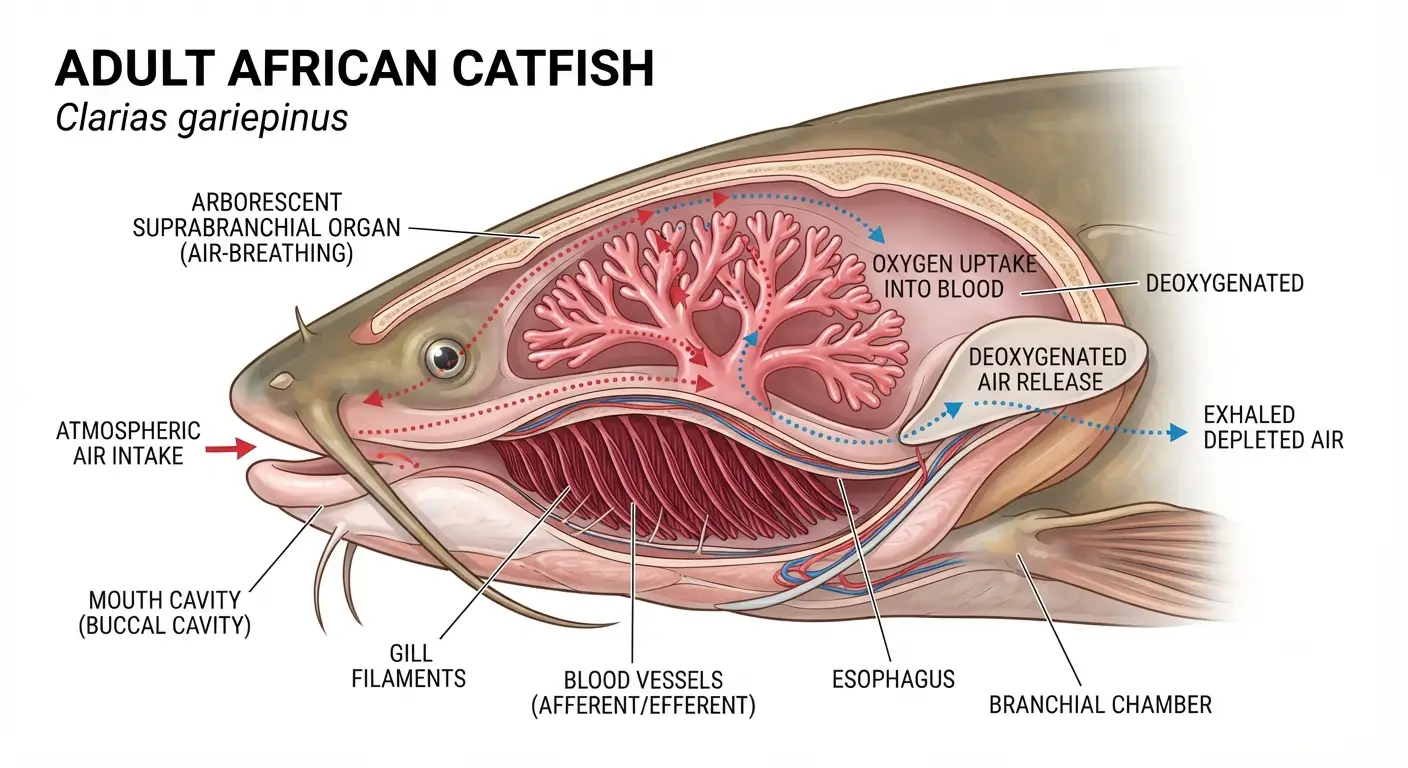
Suprabranchial air-breathing organ (unique to Clarias and related species):
The suprabranchial organ of Clarias gariepinus consists of paired arborescent (tree-like, highly branched) structures located in chambers above the gill arches. This organ is supplied by blood vessels and allows direct extraction of oxygen from atmospheric air gulped at the water surface. The fish surfaces periodically (typically every 10–20 minutes under conditions of adequate dissolved oxygen, more frequently when DO is low) to gulp air, which is passed over the suprabranchial organ, oxygen is extracted, and the depleted air is released.
Production implications:
- African catfish can survive in water with near-zero dissolved oxygen if they have access to the water surface for air-breathing — this is the biological basis for their tolerance of high stocking densities and the oxygen-depleted conditions that can develop in intensively stocked systems
- Covering tanks or preventing surface access (with nets or debris) removes the air-breathing option and can cause mortality even in systems with otherwise adequate dissolved oxygen
- The frequency of surface-breathing behavior is a useful health indicator — fish surfacing very frequently (every minute or less) indicates dissolved oxygen stress even if DO measurement appears adequate, because fish are compensating for gill-dissolved oxygen insufficiency with increased air-breathing
The Sensory System — Barbels, Lateral Line, and Electroreception
Barbels (whiskers):
The distinctive whisker-like barbels around the catfish mouth — four pairs in most catfish species — are covered in taste receptors (chemoreceptors) and touch receptors (mechanoreceptors) that allow the fish to locate food in low-visibility or zero-visibility conditions. In turbid pond water where visual hunting is limited, barbels allow catfish to detect and locate food by chemical cues and contact.
Production implication: Catfish can feed effectively in the dark and in turbid water. Night feeding (aligned with African catfish’s nocturnal peak feeding behavior) is not limited by light availability. However, feeding at night makes behavioral observation of feeding activity more difficult — requiring management adjustments in attended feeding programs.
Lateral line system:
The lateral line is a sensory organ running along the fish’s flank as a visible line of pores connected to mechanoreceptive hair cells in underlying canals. It detects pressure waves and vibrations in the water — allowing fish to sense the movement of other fish, approaching predators, and the hydrodynamic patterns created by food falling into the water.
Production implication: Catfish detect the vibration and sound patterns associated with feed delivery and can be conditioned to approach the feed area in response to specific stimuli (tapping on the tank edge, turning on a feeder motor) — a behavioral conditioning that facilitates efficient feed delivery and feeding behavior observation.
The Digestive System
Stomach: Catfish have a true stomach with acid secretion capability — important for the initial protein digestion that allows efficient use of high-protein commercial feeds. The stomach’s acid environment (pH 2–3 during digestion) also provides a degree of protection against ingested pathogens.
Intestine: The catfish intestine is relatively short compared to herbivorous fish — consistent with the carnivorous/omnivorous diet for which high-protein aquafeed is formulated. Nutrient absorption occurs primarily in the anterior intestine.
Liver: The catfish liver is large relative to body weight and serves as a primary metabolic organ — processing amino acids, synthesizing proteins, metabolizing lipids, and detoxifying ammonia. Liver health is critical for feed conversion efficiency; liver disease (common in fish on poor-quality feeds, in high-ammonia water, or affected by certain pathogens) directly reduces nutrient processing efficiency and appears as worsened FCR before more obvious clinical signs develop.
The Integument (Skin) — No Scales, Mucus Protection
All catfish species lack scales — their skin is smooth and covered instead by a mucus layer produced by goblet cells throughout the skin. This mucus layer serves multiple functions:
- Pathogen exclusion: The mucus contains lysozyme, immunoglobulins, and other antimicrobial factors that provide a first line of defense against bacterial, fungal, and parasitic pathogens. Damage to the mucus layer (from poor handling, abrasion against rough surfaces, chemical irritants in the water) removes this protective barrier and dramatically increases susceptibility to infection.
- Osmoregulation: The skin’s mucus layer reduces passive ion flux between the fish’s body fluids and the surrounding water, reducing the osmoregulatory work required to maintain appropriate internal ion concentrations.
- Hydrodynamic friction reduction: The mucus creates a lubricating layer that reduces friction in water flow across the fish’s surface.
Production implication: Handling that removes or damages the mucus layer — rough netting, crowding against abrasive surfaces, chemical treatment without appropriate concentration control — directly increases disease susceptibility. Careful handling, appropriate net materials (knotless nets preferred over knotted), and correct chemical treatment protocols all protect the mucus layer as a biosecurity investment.
Behavioral Biology — Reading Fish Behavior as a Management Tool
Feeding Behavior — The Primary Health Indicator
In commercial catfish production, feeding behavior is the most sensitive and earliest indicator of fish health, water quality, and environmental stress — more sensitive than most measurable water parameters and far earlier than the clinical disease signs that follow untreated problems.
Normal feeding behavior in African catfish:
- Active, competitive approach to feed immediately after delivery
- Vigorous surfacing and lateral feeding behavior at floating feed
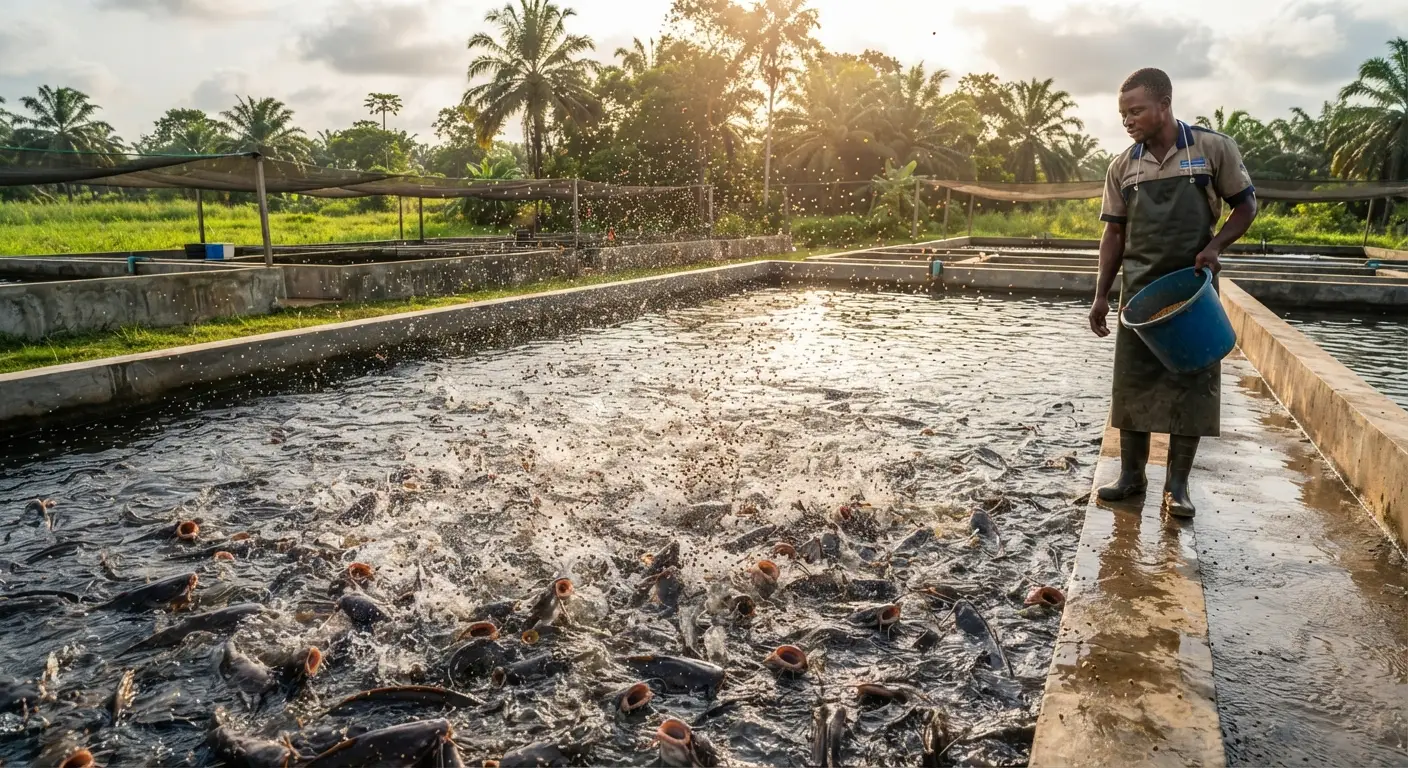
- Consistent feed consumption — the tank or pond cleared of feed within 15–30 minutes of delivery
- No fish floating or lying near the surface between feeding events
Abnormal feeding indicators requiring investigation:
| Behavioral Sign | Most Probable Causes |
|---|---|
| Reduced feed consumption (less than 70% of normal intake) | Water temperature drop, dissolved oxygen depletion, early disease, overcrowding stress, water quality parameter exceedance |
| Complete feed refusal | Severe DO depletion, acute disease onset, extreme temperature departure from optimal range, ammonia or nitrite toxicity |
| Erratic feeding (some fish feeding, others not) | Parasitic infection causing differential impact, early mortality event with sick fish not feeding |
| Fish at surface not feeding | Dissolved oxygen stress (fish surfacing to air-breathe rather than to feed) |
| Fish feeding at surface in bright light (for nocturnal species) | Dissolved oxygen depletion forcing daytime air-breathing and surface activity |
Schooling and Social Behavior
African catfish are not strictly schooling fish (which form organized moving groups), but they show aggregation behavior — tending to remain in groups rather than distributing uniformly throughout the available space. This aggregation is most pronounced at low temperatures (when metabolism slows and fish cluster in warmer bottom layers), during stress events, and in low-light conditions.
Production implication: In earthen ponds, catfish distribution is not uniform — fish tend to aggregate near inlet streams (for the dissolved oxygen they deliver), in deeper areas of the pond, and near the edges during feeding. Understanding this distribution pattern informs where to locate feed delivery points, aerators, and DO monitoring sensors for representative readings of the fish population’s actual environment.
Responses to Environmental Stress
Temperature stress responses:
- Below 18°C: Feeding activity decreases; fish become sluggish; clustering behavior near warmer micro-environments increases
- Below 14°C: Feeding essentially stops; immune function significantly compromised; disease risk elevated
- Above 32°C: Feeding rate declines; surface breathing frequency increases; disease susceptibility increases
Dissolved oxygen stress responses (in order of severity):
- Increased surface breathing frequency
- Fish gathering near water inlets (oxygen sources)
- Reduced feeding response
- Fish milling near surface (continuous surface breathing, no longer periodic)
- Fish gasping at surface with mouth open — severe emergency requiring immediate aeration
- Fish rolling at surface (loss of equilibrium) — critical mortality event underway
The Mortality Event — Early Warning Signs
Recognizing the early signs of a developing mortality event allows intervention before losses become severe. The behavioral sequence preceding a mass mortality event in catfish follows a consistent pattern:
24–48 hours before mass mortality:
- Feed consumption drops 30–50% below normal
- Fish appear lethargic, less responsive to disturbance
- Some fish may be observed near the surface or in shallow water
12–24 hours before mass mortality:
- Clear reduction in swimming vigor
- Abnormal swimming postures (head-up, tail-down, or spiral swimming indicating neurological involvement)
- Fish near surface even without obvious DO stress
Immediate pre-mortality:
- Fish floating at surface, still alive but unable to maintain position
- Open-mouth gasping
- Inability to right themselves when gently turned over
The critical management insight: A farm manager who checks the fish twice daily — observing feeding behavior and response at each check — will typically have 24–36 hours of warning before a mortality event becomes catastrophic. A farm manager who checks once per day and relies on measuring dead fish to detect a problem will typically find that the mortality has already peaked before intervention is possible.
Summary
Catfish biology is not background knowledge — it is operational information. The life cycle stages from egg through broodstock determine hatchery management protocols, fingerling sourcing requirements, and grow-out production planning. The anatomical characteristics — particularly the suprabranchial air-breathing organ of Clarias gariepinus, the barbel-based sensory system, and the mucus-protected scaleless skin — explain water quality tolerances, management approaches, and disease vulnerabilities. The behavioral biology of feeding, schooling, and environmental stress response provides the real-time monitoring data that experienced catfish farmers use to detect and respond to problems before they become production crises.
The subsequent articles in this series build on this biological foundation — water quality management targets are derived from the physiological tolerances described here, hatchery protocols reflect the developmental timing of the larval and fingerling stages, and disease management strategies are grounded in the anatomical vulnerabilities of the integument and immune system. Operators who understand the biology use management protocols purposefully rather than following them blindly — and adapt them correctly when conditions require.