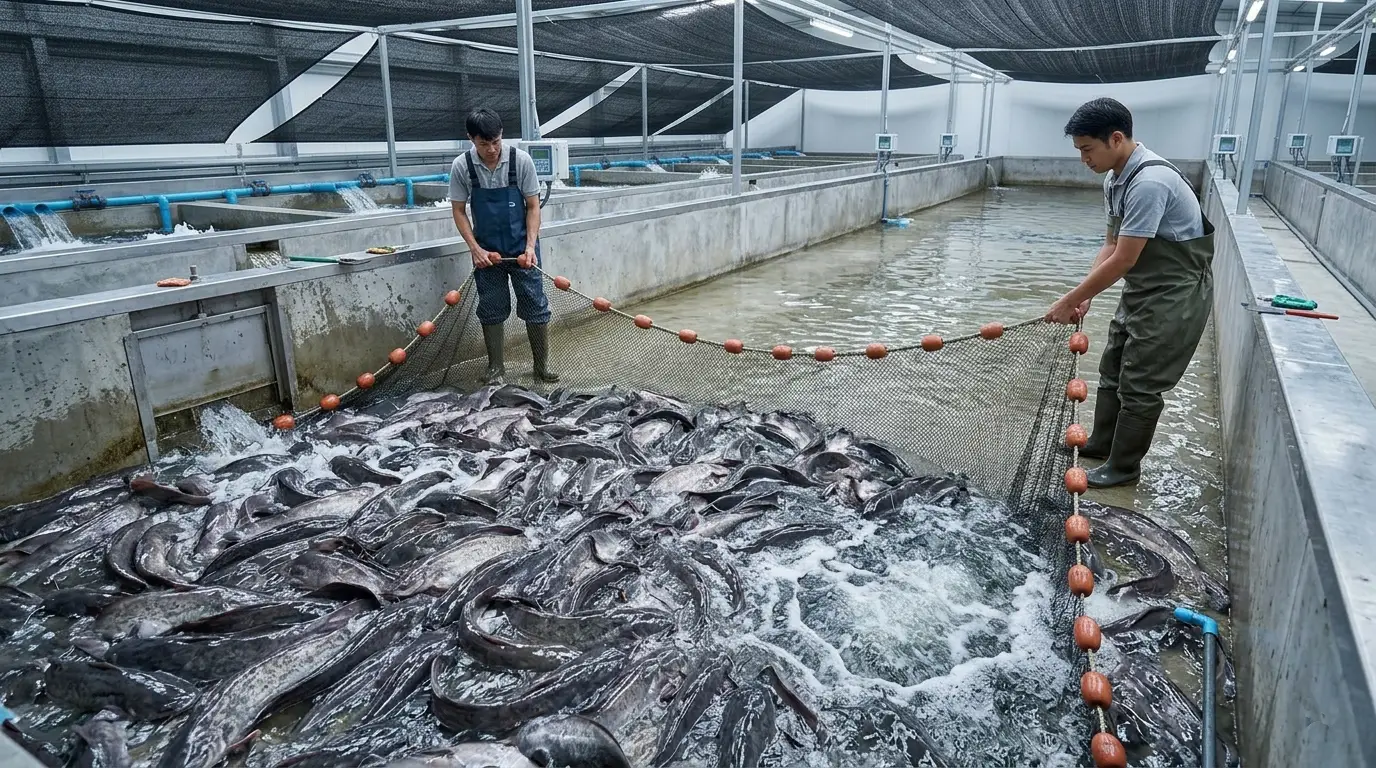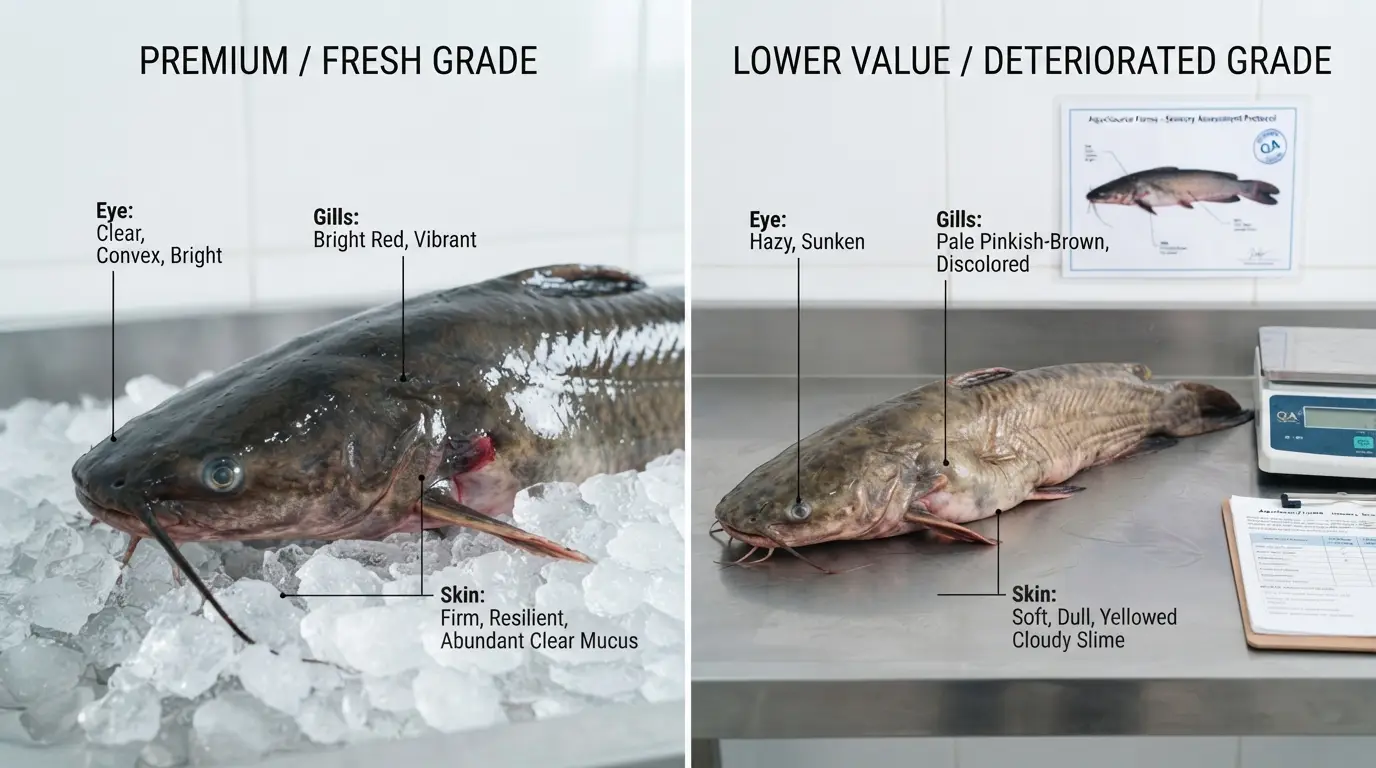
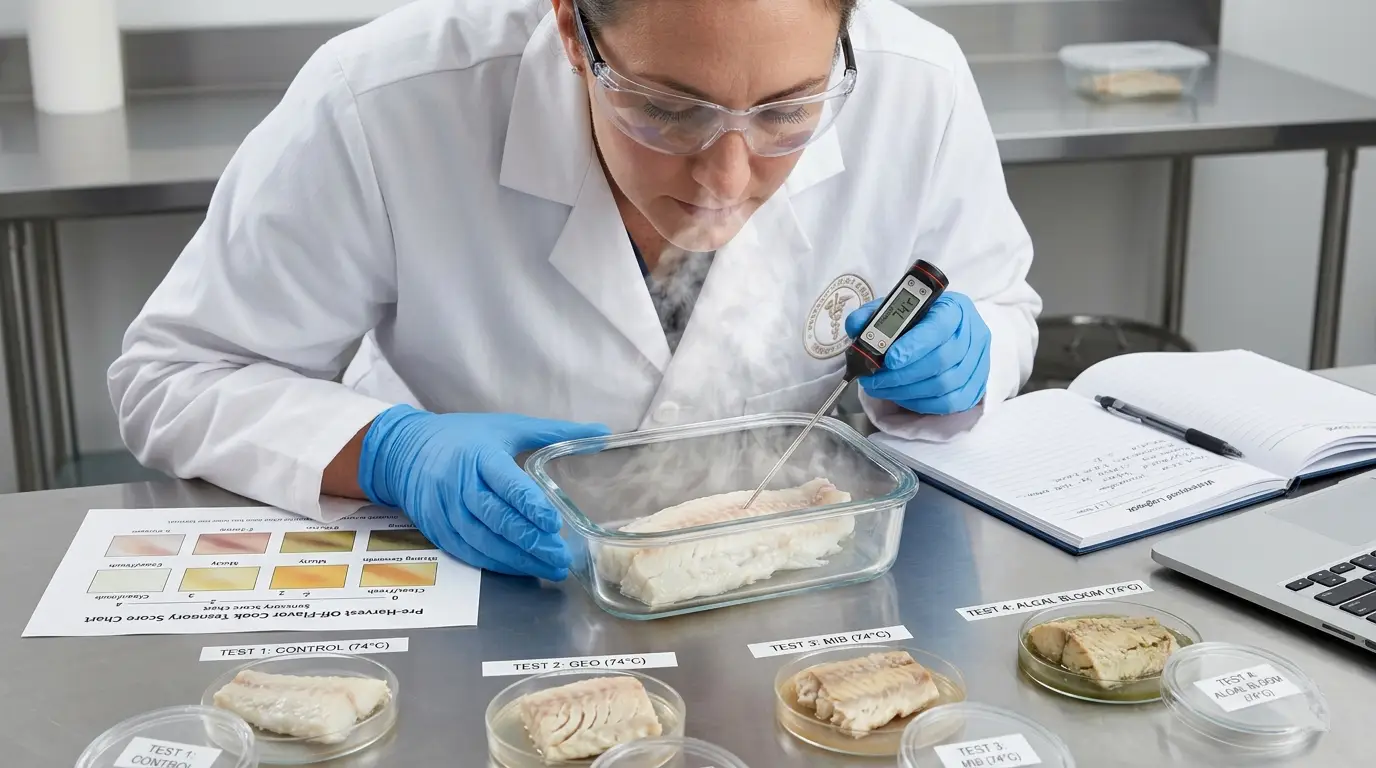
Off-flavor in catfish is a market access problem disguised as a production problem. A 500 kg batch of catfish that has reached target market weight, survived the production cycle with acceptable mortality, and converted feed at a reasonable FCR is worth XAF 1,250,000 at XAF 2,500/kg wholesale — or worth essentially nothing if the buyer performs a cook test, detects the characteristic musty, earthy, or muddy taste that off-flavor produces, and rejects the batch. The biological causes of off-flavor operate entirely below the threshold of any visual observation — the fish look normal, behave normally, and appear completely market-ready. The off-flavor compounds accumulate in the fish’s fat tissue without any external indicator.
This creates a specific management challenge: preventing and detecting a quality problem that has no early visible warning signs and that becomes commercially catastrophic only at the point of sale. The farms that manage off-flavor effectively — maintaining the pond conditions that prevent geosmin and MIB accumulation, testing fish before committing to a harvest date, and implementing purging protocols when testing reveals elevated off-flavor compound levels — protect their premium market relationships by delivering consistent quality. The farms that do not manage off-flavor actively discover the problem only after a buyer rejection has damaged the commercial relationship that took months to establish.
This guide covers the complete off-flavor management framework: the specific compounds responsible, the environmental conditions that favor their production, detection before harvest, the management practices that reduce their accumulation, and the purging protocols that remove them from affected fish.
The Chemistry of Off-Flavor in Catfish
The Two Primary Off-Flavor Compounds
Geosmin (trans-1,10-dimethyl-trans-9-decalol):
Geosmin is the primary off-flavor compound in commercial catfish production — responsible for the characteristic musty, earthy, beet-like odor and taste that consumers describe as “muddy” or “pond-like.” It is the same compound that produces the distinctive smell of rain on dry earth (petrichor) and the earthy taste of beets — compounds that are detectable by the human nose and palate at extremely low concentrations.
The human detection threshold for geosmin in catfish flesh is approximately 0.6–1.0 μg/kg (parts per billion) — meaning concentrations of less than one microgram per kilogram of fish tissue are sufficient to produce noticeable off-flavor in sensitive individuals. This extraordinarily low detection threshold makes geosmin management a precision exercise — concentrations that appear trace-level chemically are above the sensory threshold for most consumers.
2-methylisoborneol (MIB):
MIB produces a musty, camphor-like flavor often described as “moldy” or “medicine-like.” It is typically present at lower concentrations than geosmin in affected catfish, and its sensory threshold is somewhat higher (approximately 1–2 μg/kg in fish tissue). In operations where both compounds are present, geosmin typically dominates the sensory character of the off-flavor.
Who Produces These Compounds
Cyanobacteria (blue-green algae): The dominant producers of geosmin and MIB in earthen pond systems. Several species produce these compounds as secondary metabolites — including Anabaena, Aphanizomenon, Oscillatoria, Planktothrix, and others. Their production of geosmin and MIB appears to be highest during:
- Late stationary and declining phases of bloom development
- High temperature conditions (above 25°C — coinciding with the West African dry season)
- High nutrient loading conditions that support dense bloom development
- Conditions of nitrogen limitation relative to phosphorus (typical of heavily fed fish ponds where ammonia is nitrified but phosphorus continues to accumulate)
Actinobacteria: Soil and water bacteria (particularly Streptomyces species) are significant producers of geosmin — they are ubiquitous in pond sediments and can produce geosmin during organic matter decomposition in the pond substrate. Unlike cyanobacteria, actinobacterial geosmin production occurs below the water surface in the sediment layer rather than in the water column.
The accumulation pathway: Fish absorb geosmin and MIB from the water through the gills and directly through the skin (passive absorption across the mucus and skin barrier). The compounds are lipophilic (fat-soluble) — they concentrate in the fish’s fat tissue, particularly in the skin, subcutaneous fat, and fat depots in the abdominal region. The concentration factor between water and fish tissue can be 100–1,000× — meaning a water geosmin concentration of 10 ng/L (extremely low in absolute terms) can produce tissue concentrations above the sensory detection threshold.
The Pond Conditions That Drive Off-Flavor Risk
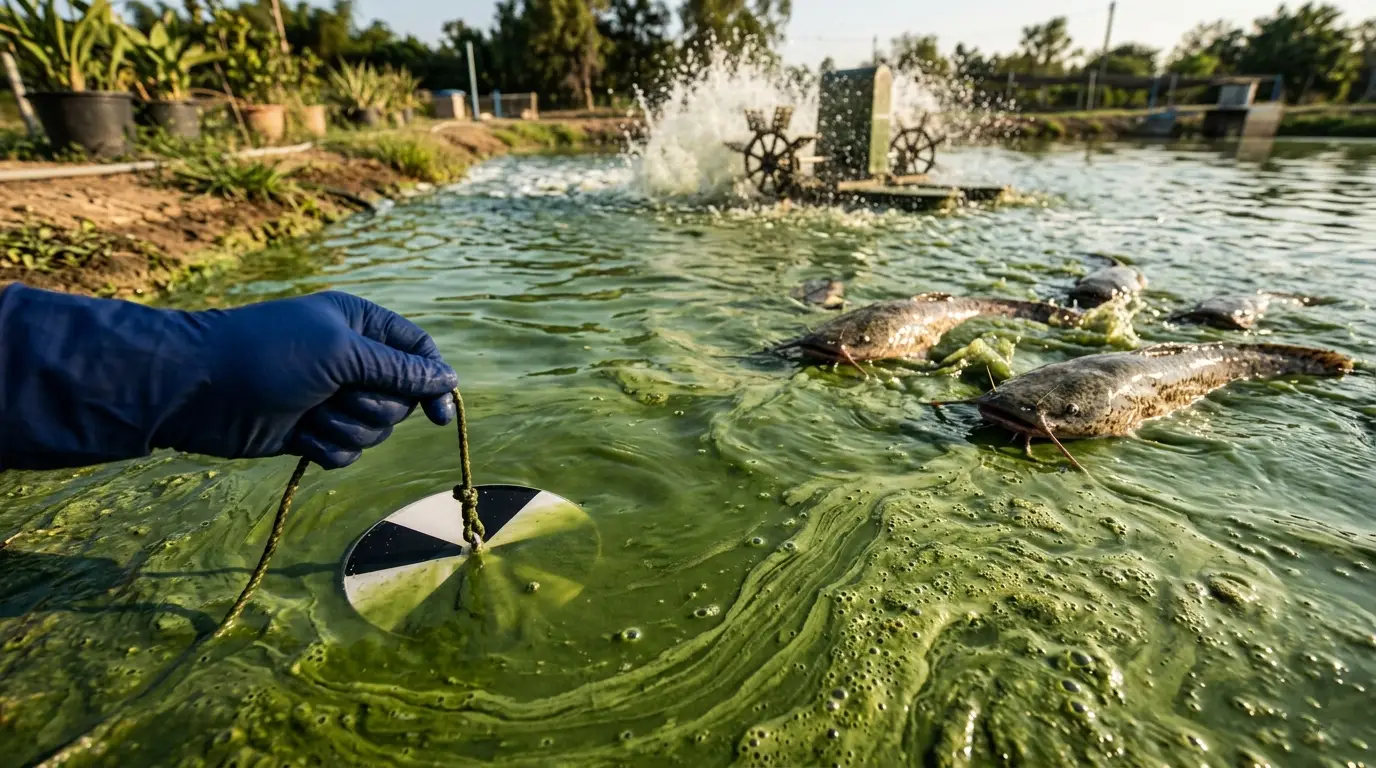
The Dense Algal Bloom — Primary Risk Factor
A dense algal bloom in an earthen pond is the single highest-risk condition for geosmin accumulation in catfish. The sequence of events:
- High nutrient loading from feed waste and fish excretion drives dense phytoplankton growth
- Cyanobacteria, which have competitive advantages over green algae in warm, nutrient-rich, stable water, establish dominance in the bloom
- Cyanobacteria produce geosmin and MIB as secondary metabolites
- Fish absorb the compounds from the water continuously throughout the day
- Compounds accumulate in fat tissue — concentration increasing with each day the bloom persists
- By the time the bloom crashes (sudden algal die-off from nutrient depletion or weather change), the fish may have accumulated tissue concentrations above the detection threshold
The timing problem: Geosmin accumulation in catfish flesh lags behind geosmin in the water — as water concentrations rise, tissue concentrations rise more slowly. When water concentrations fall (after a bloom crash or treatment), tissue concentrations also fall, but more slowly. A fish tested for off-flavor immediately after a pond’s geosmin water concentration has dropped may still have elevated tissue concentrations that will produce off-flavor despite the apparently resolved pond condition.
Secondary Risk Factors
Pond sediment depth: Old, heavily loaded ponds with accumulated organic sediment provide the substrate for actinobacterial geosmin production. Ponds that have not been dried and limed in several production cycles accumulate sediment that progressively increases the background geosmin production rate independent of water column conditions.
Low water exchange rate: Ponds with minimal water exchange allow geosmin and MIB to accumulate in the water column — the same compounds that daily water exchange would dilute and remove remain at elevated concentrations. Operations that manage water quality primarily through biological processes (algal uptake, bacterial decomposition) rather than physical exchange face higher off-flavor risk than those that maintain active water exchange.
High water temperature: Both cyanobacterial metabolic activity and the rate of geosmin absorption by fish increase with temperature — the peak off-flavor risk period in West African catfish production coincides with the hottest months of the year when both production and cyanobacterial activity are most intense.
Concrete tank systems and off-flavor: While off-flavor is primarily a pond production problem — because the algal and bacterial communities responsible for geosmin production are associated with earthen pond biology — concrete tank systems are not completely immune. Tanks with poorly managed biofilm on walls and substrates, tanks receiving water from contaminated surface sources, or tanks with algal growth on surfaces exposed to light can accumulate geosmin from these secondary sources. However, the risk is substantially lower in concrete tanks than in earthen ponds, and the daily water exchange rates typical of concrete tank systems provide continuous dilution that earthen ponds typically do not.
Detecting Off-Flavor Before Harvest
The Cook Test — The Definitive Field Test
The only reliable pre-harvest off-flavor test is organoleptic evaluation — a trained taster assessing the smell and flavor of cooked fish tissue. Laboratory analysis (gas chromatography-mass spectrometry for geosmin and MIB quantification) is the scientifically definitive method, but requires specialized laboratory equipment and 24–48 hours for results — impractical as a routine pre-harvest test for most commercial operations.
The cook test is rapid (results in 10–15 minutes), inexpensive (requires no specialized equipment), and sensitive enough to detect off-flavor above the consumer rejection threshold when performed correctly by a trained evaluator.
Cook test protocol:
Step 1: Sample collection
Sample 3–5 fish from the pond or tank under evaluation — ideally fish of typical size for the batch, without obvious disease or injury (which would confound flavor assessment with pathological flavor changes). The sample should represent the fish that would actually be sold.
Step 2: Fillet preparation
Fillet one side of each fish — remove the skin and subcutaneous fat (the area of highest geosmin concentration) or leave it on depending on how the fish will be processed for sale. If the farm sells skin-on fish, test with the skin on. If the farm sells skinless fillets, test without the skin — skin removal significantly reduces the geosmin concentration in the test sample.
Important: Skin and subcutaneous fat concentrate geosmin at 2–5× higher levels than the underlying muscle tissue. Testing with the skin on provides the worst-case off-flavor scenario (most sensitive to detect early accumulation) while testing without skin provides the representation most relevant to the specific product form being sold.
Step 3: Microwave cooking
Microwave cooking (rather than pan frying, deep frying, or baking) is the standard method for off-flavor evaluation because it does not introduce cooking flavors (oil, spices, browning) that would mask the subtle off-flavor compounds being assessed. Place the fillet in a covered microwave-safe container with no added seasonings, fat, or flavoring — cook until just fully cooked through (typically 2–3 minutes for a 100–150 g fillet).
Step 4: Sensory evaluation
Assess the cooked fillet immediately after removal from the microwave while still hot — geosmin volatilizes most strongly at eating temperature and the aroma assessment while hot is the most sensitive detection method:
Aroma assessment (most sensitive): Hold the just-opened container close to the face and inhale deeply. Any earthy, musty, peaty, or “pond” aroma indicates geosmin or MIB presence. Clean fish smell mildly of cooked fish and steam — nothing else.
Flavor assessment: Taste a small piece of the cooked fillet, chewing slowly and noting any off-flavors. The characteristic off-flavor is described as earthy, musty, muddy, or reminiscent of soil.
Scoring:
| Score | Description | Harvest Decision |
|---|---|---|
| 0 | No detectable off-flavor — clean, fresh cooked fish aroma and flavor | Harvest approved |
| 1 | Slight earthiness barely detectable on close assessment — below most consumers’ threshold | Harvest approved with caution — retest in 1 week |
| 2 | Definite earthy or musty note perceptible on tasting — at or near consumer detection threshold | Hold harvest — begin purging immediately |
| 3 | Clear, prominent off-flavor clearly detectable by any taster | Hold harvest — aggressive purging required; retest in 1–2 weeks |
| 4 | Severe off-flavor — strongly musty, muddy, unpleasant | Do not harvest for premium market — purge 2–3 weeks minimum |
Who performs the test: Consistency requires the same trained evaluator performing tests across time — sensitivity to geosmin varies substantially between individuals (approximately 10–15% of people have very low sensitivity due to genetic variation in olfactory receptor expression), and evaluators with low geosmin sensitivity will systematically underdetect off-flavor. Identify the staff members with highest geosmin sensitivity (test by having multiple people evaluate the same known off-flavor sample) and designate them as the farm’s standard evaluators.
Testing Frequency
Standard schedule:
- Initial test: 3–4 weeks before planned harvest date
- Second test: 1–2 weeks before planned harvest if first test was clean
- Final test: 2–3 days before planned harvest
When to test more frequently:
- Following a visible algal bloom crash (test within 24 hours and again at 72 hours)
- During the hottest months when cyanobacterial activity is highest
- After any period of reduced water exchange that may have allowed geosmin accumulation
- If the previous production cycle experienced off-flavor problems in the same pond
Prevention — Managing Pond Conditions to Prevent Off-Flavor
Managing Algal Blooms — The Primary Prevention Strategy
Target phytoplankton density: Maintain the pond’s phytoplankton bloom at a Secchi disk depth of 30–45 cm — dense enough to provide the productive pond biology that supports natural food production and biological water quality buffering, but not so dense that cyanobacteria dominate. A Secchi depth consistently below 25 cm (very dense bloom) indicates excessive phytoplankton that creates off-flavor risk; consistently above 60 cm (sparse bloom) indicates underproductive water that fails to provide the biological benefits of a functioning pond ecosystem.
Monitor bloom species composition: Where access to microscopy allows, monthly examination of a pond water sample at 100× magnification identifies whether the phytoplankton community is dominated by green algae (lower off-flavor risk) or cyanobacteria (higher off-flavor risk). Cyanobacteria are recognizable by their characteristic filamentous or colonial morphology and lack of a visible nucleus.
Manage nutrient loading: The dense cyanobacterial blooms that cause off-flavor are driven by high nutrient concentrations — primarily phosphorus (which is not removed from the pond by nitrification, accumulating with each production cycle) and the nitrogen-to-phosphorus imbalance that favors cyanobacteria over other algal groups.
- Correct feeding rates to minimize uneaten feed accumulation (the primary phosphorus input)
- Increase water exchange rate during periods of visible bloom intensification
- Apply copper sulfate (0.5–1.0 mg/L as Cu) to suppress cyanobacterial bloom development where bloom monitoring indicates high-risk species dominance — with caution, since copper sulfate at effective concentrations can stress fish and must be applied carefully with fish behavior monitoring
Physical pond management:
- Regular destratification (mixing the water column by running aerators across the full pond surface): prevents the thermally stratified conditions that favor cyanobacterial bloom development in the warm upper layer
- Increased aeration during high-risk periods (hot season, dense bloom periods): the turbulence from surface aeration reduces the calm conditions that cyanobacteria require for positive buoyancy and surface bloom formation
Sediment Management
Annual drying and liming: Draining and drying the pond base between production cycles — with agricultural lime applied to the dry sediment (200–400 kg per 1,000 m²) — reduces the actinobacterial sediment population responsible for geosmin production from the pond bottom. Liming creates an alkaline pH environment that suppresses actinobacterial activity and oxidizes organic matter that would otherwise provide substrate for geosmin-producing bacteria.
Sediment removal: Where sediment has accumulated to more than 20–30 cm depth, mechanical removal (pump dredging or manual excavation during the dry season) restores pond depth and removes the accumulated organic substrate for actinobacterial geosmin production. Sediment removal should be planned for every 3–5 production cycles depending on organic loading intensity.
Purging — Eliminating Off-Flavor Before Harvest
The Biology of Off-Flavor Elimination
Geosmin and MIB that have accumulated in fish fat tissue are eliminated through a combination of:
- Metabolism: the fish’s liver and other tissues metabolize both compounds, converting them to non-odorous products
- Passive diffusion: the lipophilic compounds gradually re-equilibrate from tissue to water across the gill surface as water concentrations fall below tissue concentrations
Both processes are dependent on the fish’s metabolic rate (higher temperature accelerates both processes) and on the concentration gradient between tissue and water (lower water concentration creates a stronger driving force for passive diffusion from tissue).
The rate-limiting step is metabolic capacity — fish can only metabolize geosmin and MIB as fast as their enzymatic systems can process them. Purging protocols that provide clean water and adequate metabolic conditions (appropriate temperature, adequate DO, low stress) maximize the elimination rate. Purging protocols that stress fish (overcrowding, poor water quality, low DO, extreme temperature) suppress metabolic function and slow elimination.
Purging Protocol for Earthen Ponds
The challenge: It is not practical to replace all the water in an earthen pond with certified geosmin-free water — the volume is too large and the water source may itself contribute some geosmin. Pond purging therefore relies primarily on managing the pond conditions to reduce geosmin production and accelerate fish metabolism:
Step 1 — Suppress the off-flavor source:
- Treat the pond to control cyanobacterial bloom: copper sulfate (0.5–1.0 mg/L as Cu) applied in the early morning when cyanobacteria are at the surface — with fish behavior monitoring for stress signs. Alternatively, increase water exchange rate substantially (20–30% per day if water supply allows) to dilute both the water-phase geosmin and the nutrients supporting bloom development.
- Apply agricultural lime at 20–30 kg per 1,000 m² of water surface to raise pH and create unfavorable conditions for cyanobacterial growth
Step 2 — Maximize water exchange:
- During the purging period, increase water exchange to the maximum the water supply allows — continuously replacing off-flavor-containing pond water with clean water maintains the concentration gradient that drives geosmin diffusion from tissue to water
- If water exchange is limited, consider transferring fish to concrete tanks with high exchange rates for the purging period
Step 3 — Maintain optimal purging conditions:
- Water temperature: 26–30°C — within the optimal metabolic range for African catfish
- DO: above 6 mg/L — adequate for normal metabolic function during elimination
- Feed: reduce to 50% of normal ration or suspend feeding entirely during the purging period — unfed fish mobilize fat reserves (including geosmin-containing fat depots), accelerating geosmin release from tissue
- Stress minimization: no harvesting, grading, or handling activities during the purging period
Expected purging duration (earthen pond): 7–14 days in clean water with good water exchange, for fish with moderate off-flavor (score 2). Severe off-flavor (score 3–4) may require 2–3 weeks. Cook test after 7 days to assess progress.
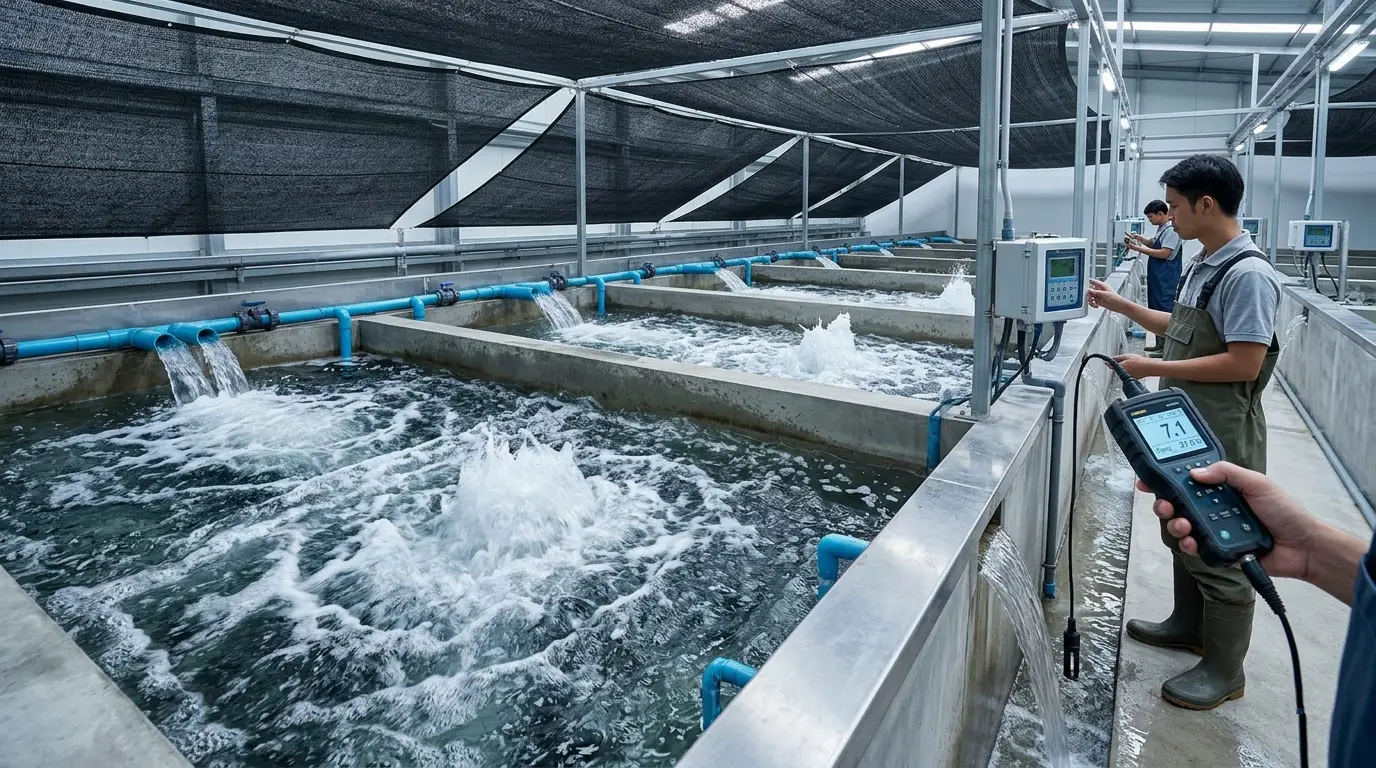
Purging Protocol for Concrete Tanks
Concrete tank purging is substantially more effective than earthen pond purging because:
- Water can be completely exchanged with clean water on a daily basis
- The water volume is small enough that daily exchange removes a large proportion of the dissolved geosmin
- Fish can be managed at controlled density without the spatial constraints of a pond
Concrete tank purging protocol:
Step 1 — Transfer fish to clean tanks if available: If an empty concrete tank with clean supply water is available, transferring the affected fish immediately removes them from the off-flavor source environment and begins purging in a fully controlled clean water environment. This is the fastest purging approach — the concentration gradient from fish tissue to clean water is maximized from the beginning.
Step 2 — High water exchange rate:
- Minimum 30–50% daily water exchange during the purging period
- Where the supply allows, exchange 50–80% of tank water daily for the first 3–5 days when tissue concentrations are highest and the elimination rate is greatest
Step 3 — Feed withdrawal:
- Suspend feeding completely for the first 3–5 days of purging — fasted fish metabolize fat stores more actively, accelerating geosmin release from fat depots
- Resume feeding at 50% of normal ration after Day 5 if purging is proceeding successfully on cook testing
Step 4 — Verify with cook testing:
- Test on Day 5 — if score has declined from 3 to 1–2, purging is proceeding effectively
- Test on Day 10 — target score 0–1 before approving harvest
Expected purging duration (concrete tanks): 5–10 days for moderate off-flavor; 10–14 days for severe off-flavor. Significantly faster than earthen pond purging due to the complete control of the water environment.
Market Implications and Quality Communication
Off-Flavor and Premium Market Access
The practical commercial consequence of off-flavor management is that it determines which market channels a catfish operation can reliably access. The quality sensitivity of different buyer categories:
Wholesale/commodity buyers (live fish, traditional markets): Generally low sensitivity to off-flavor — the fish are typically sold and cooked by consumers who may not distinguish mild off-flavor from normal catfish taste variation, particularly when the fish is heavily spiced or smoked. Mild off-flavor (score 1) is typically not rejected in these channels.
Mid-market buyers (butchers, urban retailers, moderately priced restaurants): Moderate quality sensitivity — clear off-flavor (score 2–3) will be noticed and typically results in a price reduction request rather than outright rejection. Repeated off-flavor deliveries damage the relationship.
Premium market buyers (hotels, high-end restaurants, supermarkets, export): High quality sensitivity — any detectable off-flavor (score 2 or above) may result in batch rejection. These buyers have the alternative of sourcing from other suppliers and will do so rather than accept a quality compromise that damages their own product offering. A single off-flavor batch rejected by a premium hotel buyer may end the supply relationship permanently.
The quality premium: The price differential between commodity catfish (XAF 1,500–2,000/kg wholesale) and premium market catfish (XAF 3,500–5,000/kg for fresh fillets in hotel supply channels) is largely sustained by consistent quality assurance — premium buyers pay the premium because they can rely on consistent quality from verified suppliers. Off-flavor management is not a separate quality program — it is the foundation of the quality assurance that makes premium market access financially sustainable.
Communicating Quality Assurance to Buyers
Premium buyers who are considering sourcing from a new catfish supplier will typically request one or more of the following before establishing a supply relationship:
- A farm visit to verify production practices
- Sample product for quality evaluation
- Confirmation of pre-harvest testing protocols
A farm that can demonstrate a documented pre-harvest testing protocol — showing the cook test records for the previous three to five production cycles, with results and harvest decisions documented — provides evidence of quality management discipline that most buyers in the premium channel find reassuring. The documentation does not guarantee the product quality of the next delivery, but it demonstrates the management system that is designed to maintain it.
Summary
Off-flavor in catfish is the invisible quality problem whose commercial consequences are highly visible — buyer rejection, relationship damage, and the loss of the price premium that makes premium market positioning financially viable. It is caused by geosmin and MIB produced by cyanobacteria and actinobacteria in pond environments, accumulated in fish fat tissue through passive absorption, and detectable by consumers at concentrations measured in parts per billion.
The management framework for off-flavor prevention and elimination has three components: preventing the pond conditions that favor geosmin-producing organism proliferation (controlling algal bloom density and species composition, managing sediment accumulation, maintaining active water exchange); detecting off-flavor before harvest through the cook test protocol on a defined pre-harvest schedule; and purging affected fish in clean water with optimized conditions for geosmin metabolism when pre-harvest testing identifies unacceptable levels.
The farms that implement this framework consistently — testing before every harvest, purging when testing indicates the need, and managing pond conditions to reduce the frequency of off-flavor events — protect their premium market relationships through demonstrated quality consistency. The farms that harvest without pre-testing discover off-flavor only when a buyer rejects the batch, at which point the management intervention that would have prevented the commercial damage is 2–3 weeks in the past.
Test before harvest. Always.