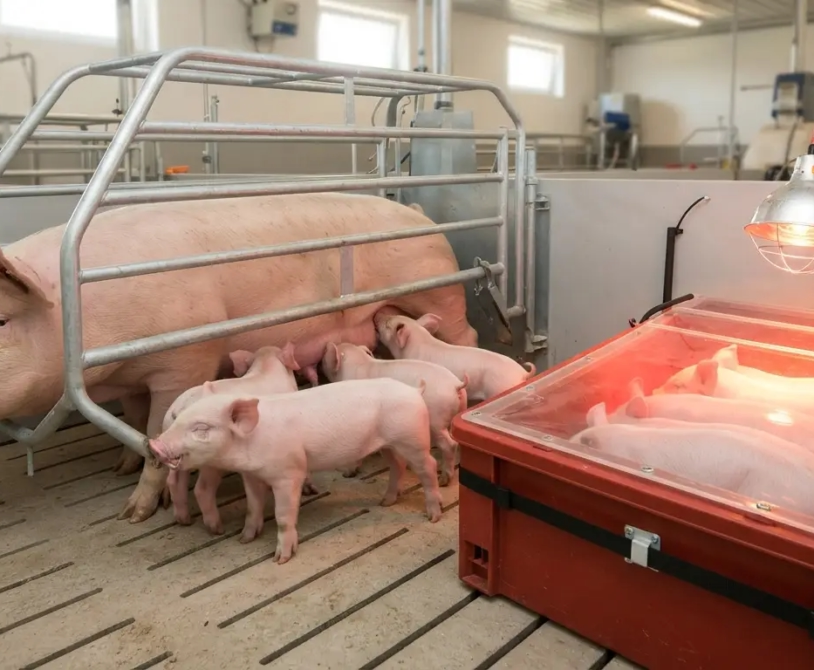
In every commercial sow herd, every farrowing produces piglets that are measurably smaller than their littermates at birth. In most litters, the smallest piglet is 30–50% lighter than the average litter birth weight. In large litters from high-producing modern sow lines, the birth weight range within a single litter can span from 0.8 kg to 2.0 kg — a more than twofold difference between the litter’s smallest and largest member.
This weight disparity is not merely an aesthetic concern or a temporary developmental lag that naturally resolves as the litter grows. Low birth weight piglets — those below 1.0 kg at birth, and particularly those below 0.8 kg — carry specific physiological disadvantages that extend from the first minutes of their life through their entire productive trajectory. They account for a disproportionate share of pre-weaning mortality: a piglet below 1.0 kg at birth is 4–6 times more likely to die before weaning than a piglet above 1.3 kg from the same litter. Those that survive to weaning wean at lower weight, enter the growing period with a persistent disadvantage, and reach market weight later than their heavier littermates — converting feed less efficiently throughout their lives.
But low birth weight is not a universal death sentence or a universal write-off for production efficiency. The outcome for an individual low-birth-weight piglet is substantially determined by the management interventions applied in its first hours, days, and weeks of life. A 0.9 kg piglet that receives adequate colostrum within its first hour, is protected from hypothermia, receives assisted nursing support until it establishes competitive teat access, and is subsequently fostered to a sow with lower teat competition can wean at a weight approaching its heavier littermates and reach market weight only marginally later. A 0.9 kg piglet left without intervention in a competitive litter of 14 piglets from a sow with peak lactation stress is likely to be dead within 48 hours.
The difference is management, not destiny.
The Biology of Low Birth Weight — Why Runts Exist
Intrauterine Growth Restriction (IUGR)
The primary cause of low birth weight in commercial pig production is intrauterine growth restriction — the developmental process by which individual fetuses within a litter develop more slowly than their siblings due to competition for uterine resources during gestation.
The mechanism: The pig uterus is a competitive environment. Each fetus attaches to its own section of uterine endometrium through placentation, and its access to maternal nutrients, oxygen, and growth factors is determined by the size and efficiency of its placenta-endometrium interface. In litters of 12–16 fetuses — the norm for modern high-producing sow lines — the physical space within the uterine horns is limited. Fetuses that implant in positions with superior endometrial blood supply and greater placental surface area develop faster and achieve higher birth weights. Fetuses in less favorable implantation positions, or those whose placentas develop less efficiently, show IUGR — growing more slowly throughout the second half of gestation.
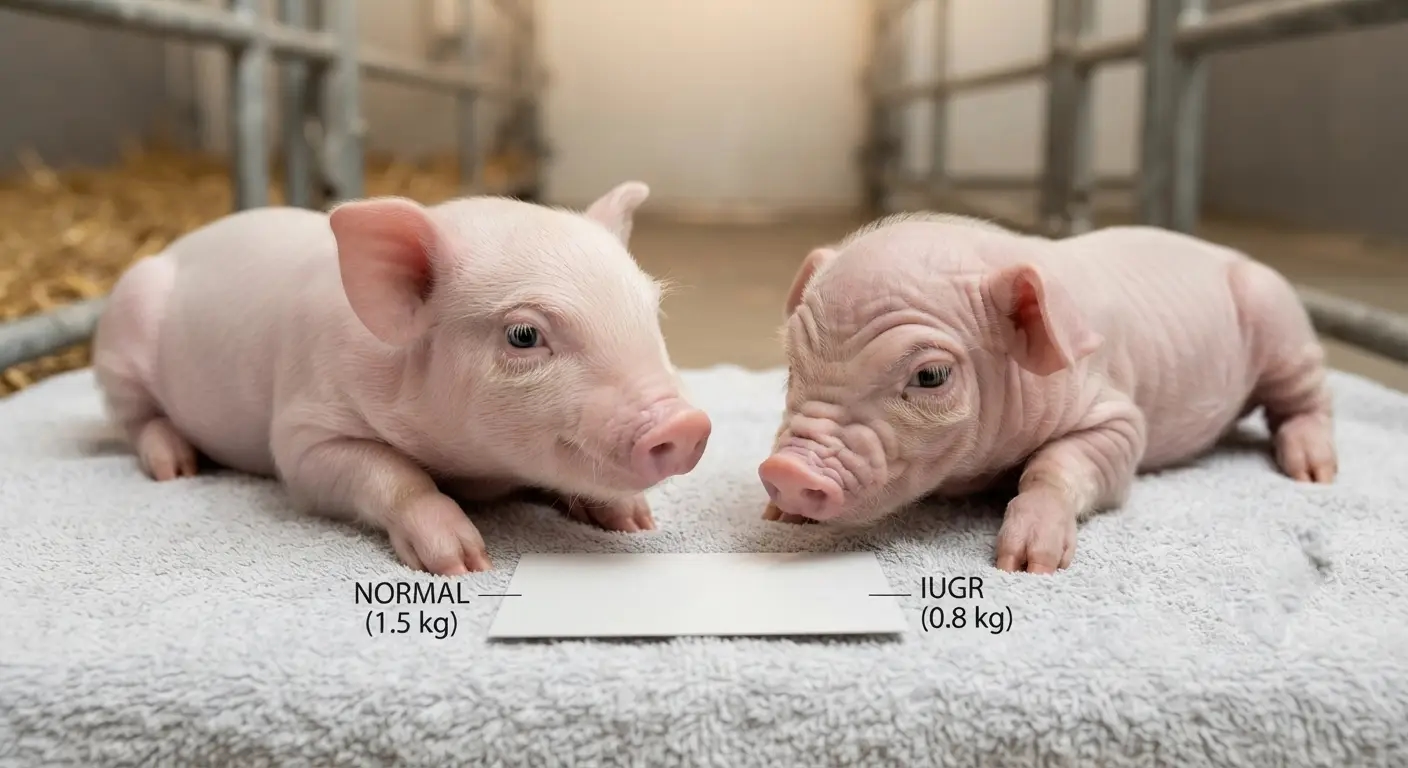
The specific IUGR phenotype: Beyond simple smallness, IUGR piglets show characteristic features that distinguish them from normal birth weight piglets that happen to be small:
- Wrinkled, “old man face” appearance: The facial skin appears loose and wrinkled rather than taut, reflecting the reduced subcutaneous fat and tissue turgor of IUGR development
- Disproportionate head-to-body ratio: The brain is relatively protected during IUGR (the “brain sparing” effect — blood flow to the brain is preferentially maintained at the expense of other organs during growth restriction), producing a piglet whose head appears large relative to its body compared to normal birth weight piglets
- Reduced organ development: The gastrointestinal tract, liver, and skeletal muscle are disproportionately affected by IUGR relative to the brain — contributing to the digestive and metabolic disadvantages detailed below
The last-born piglet problem: In addition to IUGR, the last piglets born in large litters may show low birth weight due to an additional mechanism — prolonged partial oxygen deprivation from placental separation that begins earlier in the farrowing process and is complete before the last piglets are delivered. These piglets may show signs of birth asphyxia (pallor, respiratory difficulty) alongside low birth weight.
Why IUGR Piglets Are Physiologically Disadvantaged
Gastrointestinal limitations: The IUGR piglet’s gut development is compromised — shorter intestinal villi (reducing absorptive surface area), lower digestive enzyme activity, and reduced gastric acid production all contribute to lower digestive efficiency. This means that even when an IUGR piglet does consume adequate colostrum and milk volume, it absorbs a lower proportion than a normal birth weight piglet consuming the same volume.
Thermoregulation deficiency: IUGR piglets have less subcutaneous fat (the primary insulating tissue) and less glycogen reserve (the primary substrate for metabolic heat generation) than normal birth weight piglets. Their surface-area-to-mass ratio is also higher. The combination produces a piglet whose body temperature drops faster, falls lower, and takes longer to recover than a normal birth weight littermate facing the same thermal challenge.
Colostrum competition disadvantage: The weakness and reduced mobility of IUGR piglets, combined with their reduced suckling vigor, places them at a competitive disadvantage for teat access in proportion to their size deficit — the relationship is not linear but exponential, because dominant piglets actively displace smaller ones, and smaller piglets have less capacity to resist displacement.
The lifetime trajectory: IUGR leaves a permanent mark on the pig’s development. Research consistently shows that pigs identified as IUGR at birth, even those that survive to weaning and reach market weight, show:
- Persistently lower daily gain throughout the growing period (approximately 5–10% below normal birth weight contemporaries)
- Worse FCR throughout the growing period (approximately 5–8% worse)
- Altered muscle fiber composition (fewer primary muscle fibers with more secondary fibers) that affects meat quality
- Higher susceptibility to disease throughout the production period from the immunological compromise associated with IUGR’s effects on immune system development
Identifying Which Runts Are Worth Saving
The Triage Decision — Allocating Intervention Resources
Commercial pig production operates within real resource constraints — farrowing house staff time, colostrum supply, foster sow availability. The intervention strategies in this guide require genuine time and resource investment. Applying them uniformly to every small piglet in the farrowing house regardless of individual prognosis is not realistic management — it is important to identify which low birth weight piglets have a genuine probability of surviving and performing adequately with intervention, and which do not.
Assessment Criteria at Birth
Assess within the first 30 minutes of birth:
Signs suggesting viability with intervention:
- Birth weight above 0.8 kg (piglets below this threshold have very high mortality regardless of intervention)
- Responsive to handling — active limb movement, vocalization, head-righting when held
- Breathing adequately — regular chest movement, no labored respiratory effort after initial airway clearing
- Visible suckling reflex — if you touch your finger to the piglet’s mouth, it attempts to suckle
- No gross anatomical defects that would preclude independent feeding (cleft palate, severe joint deformity)
Signs suggesting poor prognosis regardless of intervention:
- Birth weight below 0.7 kg — at this weight, even with intensive intervention, survival rate is low and long-term production performance is very poor
- Complete absence of responsiveness after aggressive stimulation (more than 60 seconds of vigorous stimulation produces no response)
- Severe respiratory distress not resolving after airway clearance
- Visible anatomical defects — cleft palate (visible as a groove in the roof of the mouth when you open the piglet’s jaw) prevents effective nursing and is incompatible with survival in commercial conditions; severe congenital joint deformity prevents normal mobility required for nursing
The cleft palate assessment deserves specific emphasis because it is a common, entirely non-salvageable condition that is also frequently missed on casual observation — the defect is on the roof of the mouth, not visible externally, and requires deliberately opening the mouth and visually inspecting the palate. A piglet with cleft palate that receives intensive colostrum supplementation and foster sow placement will still die — because it cannot nurse effectively regardless of the resources allocated to it. The 30-second cleft palate check on every small piglet saves the resources of misallocated intervention.
The Documentation Standard
For every low birth weight piglet (below 1.0 kg) in the farrowing house, record:
- Birth weight
- Triage assessment result (viable/intervention warranted vs. poor prognosis)
- Interventions applied
- Status at 24 hours, 48 hours, weaning
This record serves two purposes: real-time management tracking of individual at-risk piglets, and retrospective analysis of the intervention protocols’ effectiveness for informing future management improvements.
The First 24 Hours — Critical Intervention Window
Intervention 1: Immediate Thermal Priority
As established in the golden hour guide, thermal management is the first survival priority after respiratory establishment. For IUGR and low birth weight piglets, this priority is amplified — they chill faster, to lower temperatures, with more severe consequences.
Active warming for any small piglet showing signs of hypothermia:
- Warming box or heating pad at 38–40°C for 10–15 minutes before colostrum administration
- The rationale for warming before feeding: a hypothermic piglet’s suckling reflex is suppressed, and its gut motility and absorptive function are compromised. Attempting to feed a cold piglet is inefficient — warming first restores the physiological readiness for both effective suckling and efficient absorption
- After warming, verify the piglet is alert and showing suckling reflex before proceeding to colostrum administration
Intervention 2: Guaranteed First Colostrum Dose
As detailed in the colostrum management guide, the first colostrum dose is the highest-priority nutritional intervention for any newborn piglet. For low birth weight piglets, the urgency is amplified by their higher competition disadvantage and lower suckling vigor.
The target dose: 25–30 mL of first-milking colostrum within the first 2 hours of life, for any low birth weight piglet that has not successfully nursed during this period.
Administration method selection:
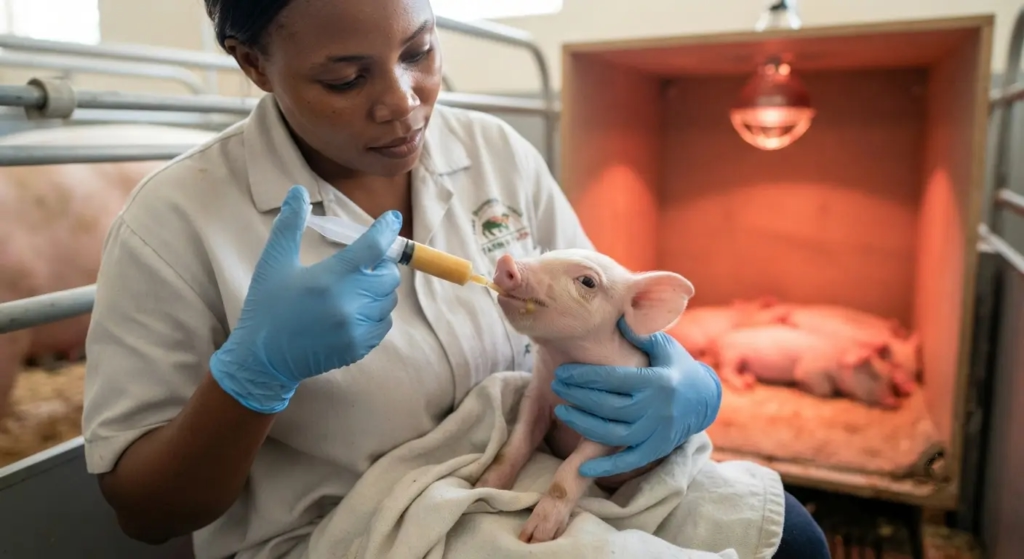
- If the piglet shows a suckling reflex and can swallow: syringe administration with 2–3 mL delivered per episode, pausing between each to allow swallowing, with verification that the piglet is actually swallowing (throat movement visible) rather than allowing fluid to pool in the mouth
- If the piglet has no suckling reflex or cannot coordinate swallowing safely: stomach tube administration as described in the colostrum guide — 5–10 mL delivered directly to the stomach
- If the piglet has a weak suckling reflex: facilitate nursing on the sow with direct assistance (guiding the piglet to a productive teat and supporting its body in position until it achieves sustained suckling)
Intervention 3: Dedicated Heat Source Access
Within the first 24 hours, a low birth weight piglet that is not in a position of consistent warm-zone access is at ongoing thermal risk regardless of the initial warming intervention. Specific attention to whether small piglets are accessing the creep heating area or are being displaced to the periphery of the farrowing crate (where temperatures are lower) is warranted.
Where multiple low birth weight piglets in a litter are consistently displaced from the warm creep area: A secondary small warming box positioned within or adjacent to the creep area — a cardboard box with a heat pad inside — allows a small group of at-risk piglets to be placed in a warm, protected environment periodically while still returning them to the sow for nursing at appropriate intervals.
The Nutrition Strategy for Surviving Runts — Days 1 to Weaning
The Core Challenge: Meeting Nutritional Requirements in a Competitive Environment
The fundamental challenge in nutritional management of low birth weight piglets is not finding the right nutrition to give them — sow’s milk is the right nutrition. It is ensuring they can access and absorb an adequate quantity of that nutrition against the competitive disadvantage of their smaller size and weaker suckling.
Strategy 1: Split Nursing Prioritization
As described in the farrowing management handbook, split nursing — periodically confining larger piglets in the creep while smaller piglets have uncontested udder access — is the primary management tool for equalizing milk access within a litter.
Frequency for runts in large litters: In the first 72 hours for litters with birth weight ranges spanning more than 50% (i.e., heaviest piglet more than 1.5× the weight of the lightest), split nursing every 2–3 hours during the daytime period ensures adequate nursing opportunities for the smallest piglets during the gut-closure window for colostrum and during the critical first-day energy-intake period.
Teat assignment within split nursing: During uncontested access periods, actively place the smallest piglets at the highest-producing anterior teats rather than allowing them to access any teat — the anterior glands typically produce more milk, and ensuring the piglet with the weakest suckling vigor accesses the most productive gland compensates partially for its reduced suckling strength.
Strategy 2: Milk Replacer Supplementation
For farrowing houses managing multiple large litters simultaneously, or for litters where the sow’s total milk production is insufficient for the litter size, commercial pig milk replacer provides supplementary nutrition beyond what natural nursing can supply.
Milk replacer selection criteria:
- Composition should approximate sow’s milk: approximately 25% crude fat, 25% crude protein, 40% lactose on a dry matter basis
- High digestibility — whey-based protein sources rather than complex plant proteins
- Appropriate osmolarity for neonatal piglets (formulated to prevent the osmotic diarrhea that inappropriate formulations can cause in young piglets)
Administration approaches:
Bowl/trough feeding in the creep area: Position a shallow bowl of prepared milk replacer (warmed to approximately 37°C) in the creep area, accessible to the litter during the periods when larger piglets are confined for split nursing. Small piglets will often begin lapping from a bowl before they have learned to use a nipple-based supplemental feeder — the low-sided bowl eliminates the learning requirement of a nursing station.
Commercial supplemental nursing stations: Automated or semi-automated supplemental nursing systems (available from pig equipment suppliers) provide continuous access to warmed milk replacer through a bank of nipple teats sized for neonatal piglets, in a protected area of the farrowing crate accessible to piglets but not to the sow. These systems allow supplemental nutrition 24 hours per day and are most cost-effective in large-scale farrowing operations where the staff time required for frequent manual supplementation is significant.
Preparation hygiene: Milk replacer is a high-nutrient-density liquid at a temperature ideal for bacterial proliferation. Prepare fresh batches at each feeding (every 4–6 hours at most), clean all containers thoroughly between batches, and discard any prepared milk replacer not consumed within 4 hours in tropical ambient conditions. Contaminated milk replacer delivering Klebsiella, E. coli, or other environmental bacteria directly into the gastrointestinal tract of an immunologically vulnerable neonatal piglet causes more harm than the nutritional benefit of the supplementation.
Strategy 3: Fostering to a Lower-Competition Sow
For low birth weight piglets in litters larger than the sow’s nursing capacity — specifically where the litter size exceeds the functional teat count, or where the competition from large littermates is too severe for the small piglets to overcome even with split nursing assistance — fostering to a sow with a smaller litter provides a fundamentally better long-term management solution than continued intensive intervention within the original litter.
Fostering timing for runts: Unlike the general cross-fostering guidance (which recommends completing all moves within 24–48 hours of birth), small piglets with significant competition challenges may benefit from a delayed fostering approach:
- Ensure the piglet receives adequate colostrum from its birth dam in the first 12–24 hours (the farm-specific pathogen-matched colostrum is highest value)
- Once colostrum intake is confirmed and the gut closure window is substantially complete (24–36 hours), transfer to the foster sow
- This approach captures both the farm-specific colostrum immunity from the birth dam and the reduced competition environment of a smaller foster litter
Selecting the right foster sow:
- A sow with a litter size 20–30% below her functional teat count (leaving multiple teats available without strong competition)
- A sow with a good milking history — high milk production compensates for the foster piglet’s weaker suckling vigor
- A sow in mid-to-late lactation (if the fostered piglet was born into a late-farrowing batch and a concurrent sow is available who farrowed slightly earlier) — paradoxically, fostering a very young piglet to a mid-lactation sow means the foster piglet enters a less competitive environment (older foster litter members have established teat order and are less likely to actively displace a new arrival than similarly-aged piglets)
Strategy 4: Artificial Rearing (The Last Resort)
For low birth weight piglets from litters where no suitable foster sow is available and natural nursing cannot be adequately supported — or for piglets from sows that have died or are completely agalactic — artificial rearing using milk replacer as the sole nutrition source from birth through weaning is the management option of last resort.
Why it is a last resort: The survival rates of artificially reared neonatal piglets in commercial conditions are substantially lower than those of naturally reared piglets, even with excellent management. The reasons include: the difficulty of replicating the 45–60 minute nursing rhythm that drives gut hormone cycles and optimal absorption; the hygiene challenges of keeping warm liquid milk replacer free of pathogenic bacterial contamination over multiple daily feedings; and the absence of the immunostimulatory components of sow’s milk beyond immunoglobulins (lysozyme, lactoferrin, cytokines, growth factors) that play supporting roles in gut and immune development.
Conditions where artificial rearing is the appropriate choice despite these challenges:
- Sow death during or immediately after farrowing
- Complete MMA complex causing total agalactia with no available concurrent sow for fostering
- Piglets from litters where infectious disease in the sow (requiring treatment that renders the milk unsuitable for piglet consumption) makes natural rearing contraindicated
The artificial rearing protocol:
- Colostrum (frozen bank supply) for the first 24–48 hours — the immunological foundation cannot be substituted
- Pig milk replacer from 24–48 hours onward, prepared fresh every 4 hours maximum, warmed to body temperature, offered from a shallow bowl or nipple bottle initially
- Feeding frequency: 6–8 times per 24 hours in the first week, reducing to 4–6 times per day in weeks 2–3
- Daily weight gain monitoring against expected benchmarks (target 150–200 g/day in week 1, 200–250 g/day in weeks 2–3) to verify adequate intake
- Gradual transition to creep feed and ultimately starter diet beginning at 14–17 days, allowing early gut exposure to solid food that will support a smoother weaning transition
Part 5: The Nutrition Strategy for Growing Runts — Post-Weaning Through Market
Does the Investment Continue After Weaning?
The management question for a low birth weight piglet that has survived to weaning — often weaning at a weight still below the average for its contemporaries — is whether the additional resources required to support its continued catch-up growth justify the investment given the persistent growth disadvantage of IUGR.
The production economics:
A piglet that weaned at 4.5 kg (compared to the pen average of 6.5 kg) requires approximately 14–18 additional days to reach the same 25 kg grower transition weight as its heavier contemporaries, assuming both groups grow at equivalent rates. Those 14–18 additional pen-days represent real costs: feed consumed at an FCR appropriate for the weight range (approximately 1.6–1.8 in the 5–10 kg range), housing overhead allocated to the slow-growing pen-mate, and stockperson attention to the animal’s below-average performance.
Against these costs: the market value of a pig at 100 kg market weight is the same regardless of whether it entered the growing period at 4.5 kg or 6.5 kg after weaning — the ultimate product value is equivalent; the pathway to it is simply longer and somewhat less efficient.
The viability threshold: A piglet that weaned at or above 4.0 kg and is visibly healthy (no persistent disease signs, active, competitive for feed access) has a viable economic trajectory to market, slower than its pen-mates but acceptable as part of a batch that will not be uniform in days-to-market regardless. A piglet that weaned below 3.0 kg with no evidence of catch-up growth approaching its weaning weight — still substantially below the average at 14 days post-weaning — is a candidate for humane culling as an animal whose continued maintenance cost is unlikely to be recovered in its eventual market value.
Nutritional Support for Post-Weaning Catch-Up Growth
Low birth weight piglets that survive to weaning and are included in the growing population have one nutritional advantage over their heavier contemporaries: compensatory growth potential. An animal that has been nutritionally constrained (by competition for teat access) and has grown below its genetic capacity has a period after nutritional access is improved where growth rate exceeds what it would have been without the prior restriction — the animal’s biological drive to reach its genetic target body weight produces temporarily accelerated growth when adequate nutrition is provided.
Capitalizing on compensatory growth:
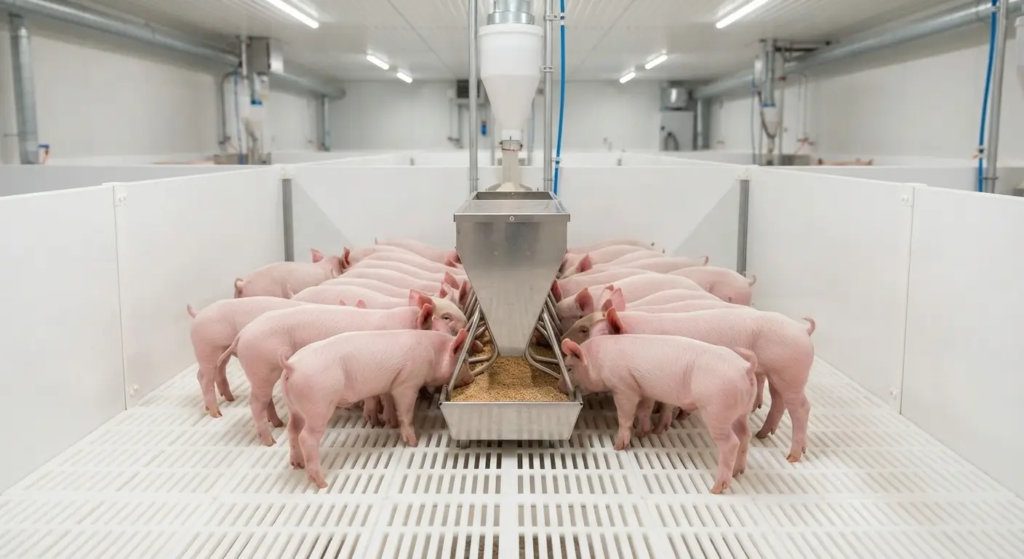
Separate smaller piglets in a “lightweight pen”: Rather than mixing weaned runts into standard weight-class pens where they immediately face competitive disadvantage again, grouping similarly-sized small weanlings creates a less competitive social environment, allows the feeder and drinker height to be set appropriately for their smaller size, and allows temperature to be maintained at the slightly higher level appropriate for their weight, rather than compromised toward the level appropriate for their heavier pen-mates.
Provide Phase 1 starter for longer: The highest-specification, most digestible post-weaning diet (Phase 1 starter with dairy inclusion, 20–22% CP, 1.40–1.50% SID lysine) should be maintained for longer for lightweight pen members than for standard weight contemporaries — transitioning the light pen to Phase 2 when they reach the Phase 2 weight threshold (approximately 11 kg) rather than at the calendar date when the average pen has reached that weight.
Prioritize bunk space and drinker access: In the lightweight pen, feeder space and drinker positions should be configured to allow all animals to eat and drink simultaneously without significant competition — the same principle applied to the farrowing house teat competition problem, adapted to the post-weaning feed access context.
Part 6: Prevention — Reducing Runt Prevalence at the Population Level
Management Factors That Affect IUGR Prevalence
While individual low birth weight piglets are managed as described above, reducing the prevalence of IUGR at the population level — reducing the proportion of each litter that is born at below-threshold weights — is a complementary long-term goal.
Sow nutrition during gestation: Adequate dietary energy and protein throughout gestation supports consistent uterine blood supply to all fetuses. Sows that experience energy deficiency in mid-to-late gestation show higher IUGR rates in the resulting litters. The phase-feeding approach to gestating sow nutrition — providing higher energy density in the final third of gestation when fetal growth rate is highest — is specifically designed to support this.
Sow body condition entering pregnancy: Sows that enter gestation at below-target body condition (BCS below 2.5) have less reserve to support the metabolic demands of late-gestation fetal growth, particularly for the largest litters. The body condition management detailed in gilt selection and sow management guidance is directly relevant to IUGR prevalence.
Controlling litter size: The most direct predictor of within-litter birth weight variance is litter size — larger litters have more individual variation and more competition for uterine resources, producing more low birth weight members. This creates a genuine tension with the genetic selection goal of increasing litter size (a primary driver of PSY) — selection programs that prioritize uniformity of birth weight alongside litter size number, rather than maximizing born alive count without regard for individual birth weight, produce populations with lower IUGR prevalence.
Farrowing induction management: Controlled farrowing using prostaglandin-based induction (where practiced) allows better timing of staff attendance and can reduce the proportion of last-born piglets experiencing oxygen deprivation — one of the contributing mechanisms for low birth weight in late-farrowing positions within large litters.
Summary
Low birth weight piglets are an unavoidable feature of commercial pig production from high-producing modern sow genetics — a direct consequence of the competition for uterine resources that large litter size creates. They are not, however, an unavoidable loss. The difference between a low birth weight piglet that becomes a profitable market pig and one that dies in the first 48 hours of life or grows to market weight at economically unacceptable cost is almost entirely a management difference, specifically a nutritional management difference applied in the most time-sensitive window in commercial production.
The triage decision — identifying which low birth weight piglets have viable prognosis with intervention and which do not — prevents resource misallocation to non-viable animals. The first-24-hour protocol — immediate thermal support, guaranteed early colostrum dose, dedicated heat access — establishes the physiological foundation for survival. The ongoing nursing support strategy — split nursing prioritization, milk replacer supplementation, strategic fostering — addresses the competitive access problem that is the primary nutritional threat through the nursing period. The post-weaning lightweight pen management — same-size grouping, extended Phase 1 nutrition, appropriate space — capitalizes on compensatory growth potential to bring surviving runts to market weight on an acceptable economic trajectory.
Every low birth weight piglet that reaches market weight represents production value recovered from an animal that genetics and uterine competition had placed at severe disadvantage. The management investment in recovering that value — most of it concentrated in the first 24 hours of the animal’s life — is one of the highest-returning applications of stockperson skill and attention available in the farrowing house.