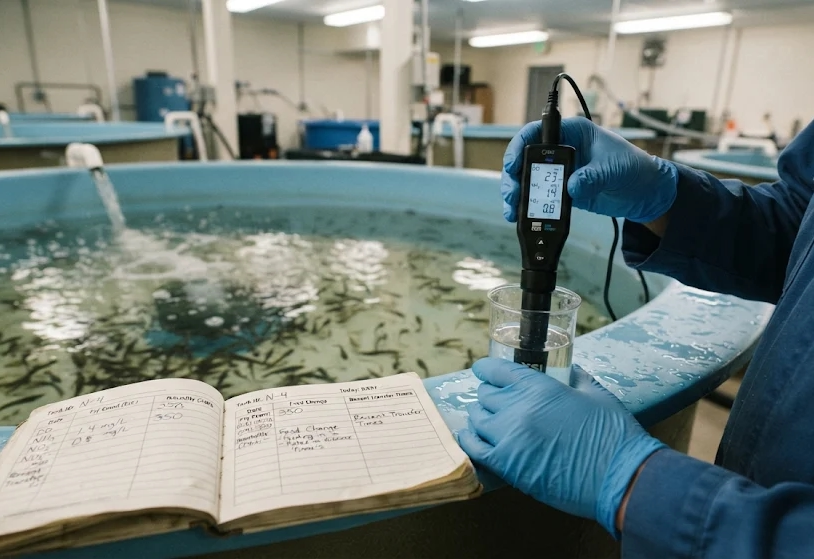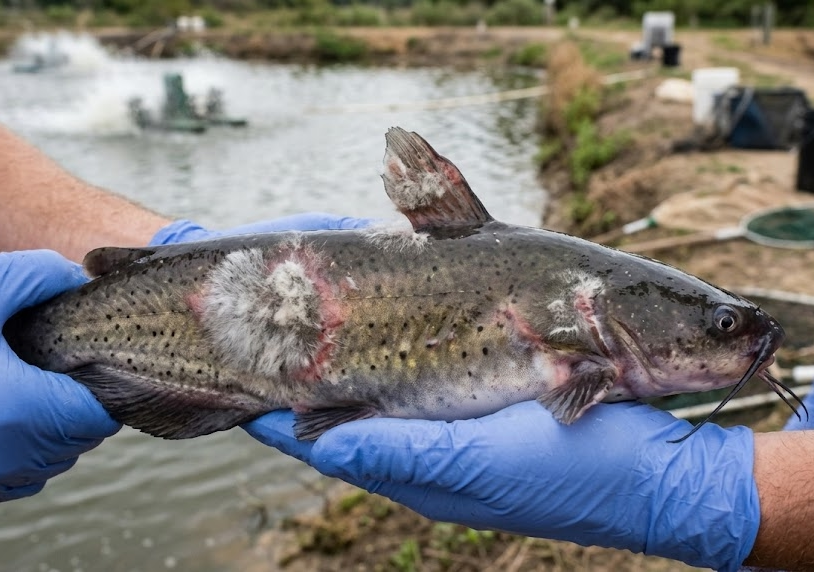
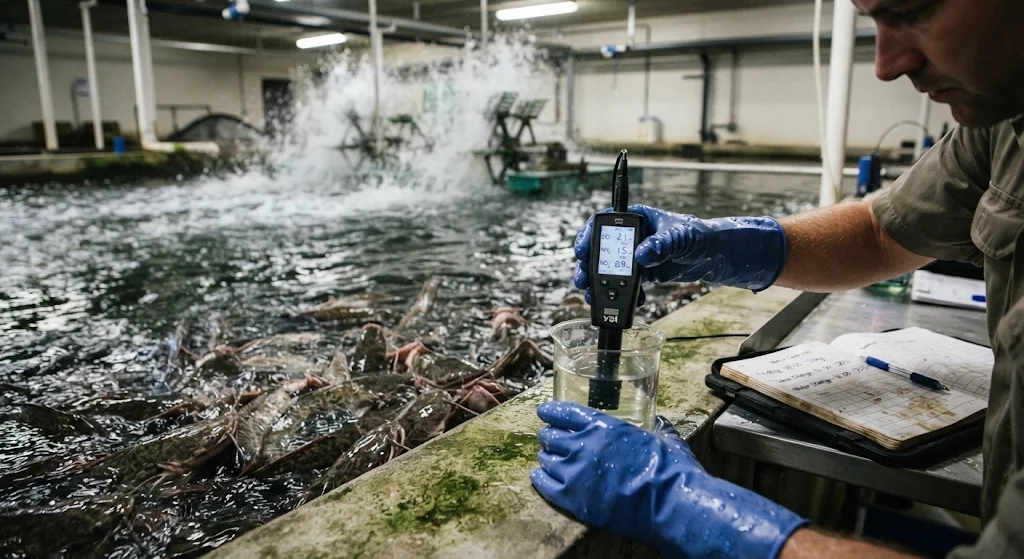
Catfish gasping at the water surface is a sign of respiratory stress. In African catfish (Clarias gariepinus), surface gasping can be associated with low dissolved oxygen, gill problems, ammonia, nitrite, parasites, or other water-quality and environmental conditions.
Gasping should not automatically be treated as evidence of a specific disease. The underlying cause needs to be investigated.
What Does Gasping at the Surface Mean?
When catfish repeatedly move to the water surface and appear to gulp or gasp, they may be struggling to obtain enough oxygen.
The response can occur when:
- Dissolved oxygen is too low
- The gills are damaged or irritated
- Gill parasites interfere with respiration
- Ammonia is causing physiological stress
- Nitrite is affecting fish health
- Water quality has deteriorated
- Fish are experiencing severe environmental stress
Surface gasping is therefore an important warning sign for catfish farmers.
Why Do Catfish Gasp for Air?
Low Dissolved Oxygen
Low dissolved oxygen is one of the first conditions to investigate when many catfish suddenly begin gasping.
Oxygen availability can decrease because of factors such as:
- High stocking density
- Excessive organic matter
- Heavy feeding
- Poor water movement
- Decomposition of organic material
- Other changes in pond or tank conditions
When oxygen becomes insufficient, fish may concentrate near the surface where oxygen availability can be higher.
Gill Problems
Healthy gills are essential for extracting oxygen from water.
Gill damage, inflammation, parasites, or infection can interfere with normal respiratory function. The catfish may therefore show increased gill movement or move toward the surface.
Possible gill-related causes include:
- Gill parasites
- Gill flukes
- Bacterial gill disease
- Fungal gill infections
- Physical gill damage
- Irritation caused by poor water conditions
The catfish disease cluster identifies gill parasites, gill flukes, bacterial gill disease, fungal gill infections, and low oxygen as related causes that require separate investigation.
Ammonia Stress
Elevated ammonia can negatively affect catfish health and may contribute to respiratory stress.
Ammonia problems can develop when waste accumulates in the production system.
Potential contributing factors include:
- Overstocking
- Excessive feeding
- Organic waste
- Poor water management
- Inadequate removal or breakdown of waste
If catfish begin gasping, ammonia should be checked rather than assuming the fish have a contagious disease.
Nitrite Stress
Nitrite is another important water-quality parameter to investigate.
The topical cluster specifically identifies nitrite as a factor affecting catfish gills and includes nitrite poisoning as a separate health topic.
A water-quality investigation should therefore consider both ammonia and nitrite when fish show respiratory problems.
Gill Parasites
Gill parasites can interfere with normal gill function.
Possible signs associated with gill parasite problems may include:
- Gasping
- Rapid gill movement
- Reduced activity
- Reduced feeding
- Surface swimming
- General respiratory stress
However, these symptoms do not confirm a parasite infection. Examination is required to establish the cause.
Other Environmental Stress
Catfish may also show abnormal respiratory behavior following environmental changes or stressful farm-management conditions.
Consider recent:
- Water changes
- Fish handling
- Transportation
- Stocking changes
- Temperature changes
- Heavy rainfall
- Feeding changes
- Pond or tank disturbances
The timing of the gasping can help identify what changed before the symptoms appeared.
What Should You Do When Catfish Are Gasping?
1. Check Dissolved Oxygen
Check dissolved oxygen as soon as possible.
If oxygen is inadequate, the immediate priority should be addressing the oxygen problem and preventing further fish stress.
2. Check Ammonia and Nitrite
Test ammonia and nitrite to determine whether water chemistry is contributing to the problem.
Do not assume that clear-looking water is necessarily healthy water.
3. Observe the Fish
Look for additional symptoms such as:
- Pale gills
- Swollen gills
- Excessive mucus
- Red spots
- Skin ulcers
- Damaged fins
- Abnormal swimming
- Loss of appetite
- Increased mortality
Multiple symptoms can provide more useful information than gasping alone.
4. Examine the Gills
If water-quality conditions do not explain the problem, examine the gills for abnormalities.
The broader disease-diagnosis cluster includes examination of catfish gills as part of identifying disease causes.
5. Check Stocking Density
High stocking density can increase environmental stress and contribute to deteriorating water conditions.
The topical plan identifies stocking density and overcrowding as factors associated with catfish disease.
6. Review Feeding
Excess feed can contribute to organic waste and deteriorating water quality.
Review recent feeding levels if gasping occurs alongside worsening water conditions.
Gasping vs. Gill Disease
Gasping does not automatically mean that catfish have a gill infection.
The same symptom can occur because of:
- Low dissolved oxygen
- Ammonia
- Nitrite
- Gill parasites
- Bacterial disease
- Fungal infection
- Environmental stress
This distinction is important because treating the wrong cause may fail to resolve the problem.
Can Gasping Cause Catfish Death?
Severe respiratory stress can contribute to mortality, particularly when the underlying problem is persistent or affects a large proportion of the fish population.
Sudden or increasing mortality should be treated as a serious farm-health event.
The cause should be investigated through both water-quality assessment and examination of affected fish.
How to Prevent Catfish From Gasping
Prevention focuses on maintaining suitable production conditions.
Maintain Water Quality
Regularly monitor:
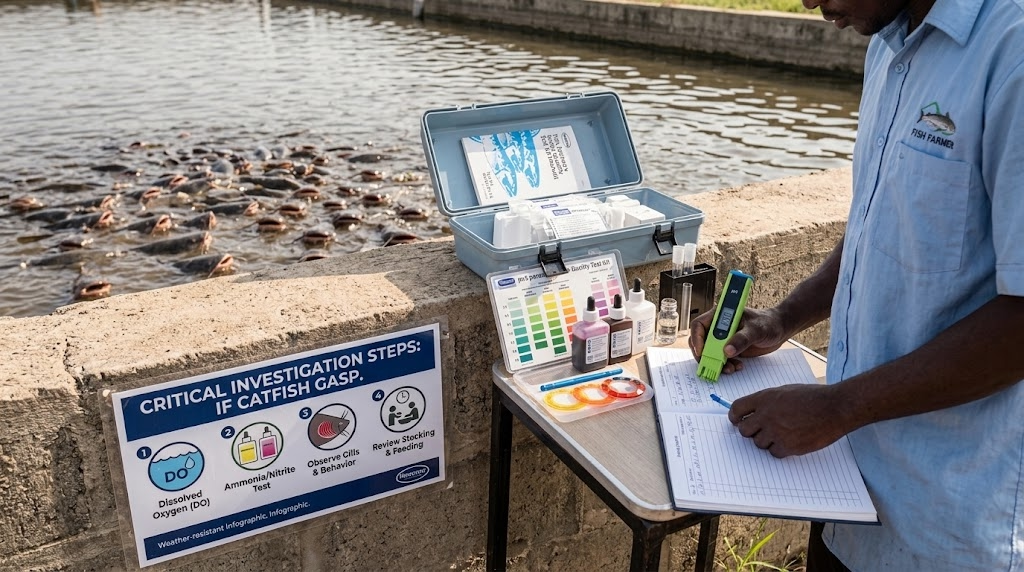
- Dissolved oxygen
- Ammonia
- Nitrite
- pH
- Temperature
- Organic waste
These parameters form an important part of the broader catfish water-quality topic cluster.
Avoid Overstocking
Maintain an appropriate stocking density for the production system.
High fish density can increase waste production, oxygen demand, stress, and disease risk.
Manage Feeding
Avoid excessive feeding and remove practices that result in unnecessary accumulation of organic waste.
Reduce Stress
Minimize unnecessary handling, sudden environmental changes, and other avoidable stressors.
Quarantine New Fish
New fingerlings can introduce pathogens or parasites into an existing production system. Quarantine is therefore an important component of disease prevention.
When Should You Seek Professional Help?
Professional or laboratory assistance should be considered when:
- Mortality continues
- Many fish are affected
- Gasping persists despite correcting water-quality problems
- Gill abnormalities are visible
- The cause cannot be identified
- A suspected infectious disease is spreading
- Treatment decisions involve antibiotics or other disease-control products
The source plan emphasizes that treatment should be evidence-based and species-appropriate and that unexplained disease should, where possible, be confirmed by a qualified fish-health professional or laboratory.
Frequently Asked Questions
Why are my catfish gasping at the surface?
Possible causes include low dissolved oxygen, gill problems, parasites, ammonia, nitrite, and other environmental stressors. Water quality should be checked before assuming that the fish have a specific disease.
Is gasping always caused by low oxygen?
No. Low oxygen is an important possibility, but gill parasites, gill damage, ammonia, nitrite, and other problems can also produce respiratory stress.
Can ammonia make catfish gasp?
Ammonia can contribute to fish stress and may be associated with respiratory problems. Test the water rather than diagnosing the cause from gasping alone.
Can parasites cause catfish to gasp?
Yes. Gill parasites can interfere with normal gill function and may produce respiratory signs such as gasping and rapid gill movement.
Why are my catfish gasping after a water change?
The cause cannot be determined from the timing alone. Check dissolved oxygen, ammonia, nitrite, temperature, pH, and other relevant conditions, and consider whether the fish experienced sudden environmental stress.
Should I treat gasping catfish immediately with medicine?
Do not assume a specific disease from gasping alone. First investigate water quality and other possible causes. Treatment should be based on an appropriate diagnosis and product-label guidance.
Key Takeaways
- Gasping is a symptom, not a diagnosis.
- Low dissolved oxygen is an important cause to investigate.
- Gill parasites, bacterial disease, and fungal infections can also affect respiration.
- Ammonia and nitrite should be checked.
- Overstocking and excessive organic waste can worsen environmental conditions.
- Examine both the fish and their water when investigating respiratory problems.
- Persistent gasping or mortality may require professional or laboratory diagnosis.