Catfish fry mortality is a major challenge in African catfish farming, particularly during the early stages of production. When fry begin dying unexpectedly, farmers may lose a significant portion of a batch before the underlying problem is identified.
Catfish fry can die because of poor water quality, low dissolved oxygen, unsuitable feeding practices, infections, parasites, overcrowding or handling stress. Several of these factors may occur simultaneously, making it important to investigate the cause rather than assume every death is due to disease.
1. Common Reasons Catfish Fry Die
Low Dissolved Oxygen
Low dissolved oxygen can cause fry to struggle to breathe, become weak, and die. The risk may increase when stocking density is high, organic waste accumulates or aeration and water circulation are inadequate.
Warning signs include:
- Fry gathering near the water surface or water inflow.
- Rapid gill movement.
- Reduced activity and feeding.
- Sudden mortality, particularly when oxygen levels deteriorate rapidly.
What to do: Check dissolved oxygen promptly and restore adequate aeration or water circulation. Do not wait for a disease diagnosis before addressing a suspected oxygen emergency.
Poor Water Quality
Ammonia and nitrite accumulation can harm fish and interfere with normal physiological functions. Unstable pH and unsuitable water temperature may also cause stress.
Poor water quality can result from excessive feeding, accumulated waste, inadequate water exchange or a production system operating beyond its treatment capacity.
What to do: Test dissolved oxygen, ammonia, nitrite, pH and temperature. Correct the identified problem using a management procedure appropriate for the hatchery or nursery system.
Inadequate Feeding
Fry require suitable feed to support growth and development. Inadequate feeding, unsuitable feed size or poor feed quality can contribute to weakness, uneven growth and poor survival.
Excess feeding can also create problems by increasing organic waste and deteriorating water quality.
What to do: Review feed suitability, storage, feeding frequency and the amount offered. Observe feeding response and remove uneaten feed where practical.
Bacterial Infections
Bacterial diseases can affect fry, especially when fish are stressed or injured. Depending on the infection, affected fish may show skin damage, abnormal swimming, reduced feeding or increased mortality.
These signs are not enough to confirm a bacterial infection because environmental problems can produce similar symptoms.
What to do: Investigate water quality and seek professional fish-health diagnosis if an infectious disease is suspected. Avoid administering antibiotics without an appropriate diagnosis and treatment recommendation.
Fungal Infections
Fungal infections may affect damaged or weakened fish and can sometimes be associated with poor environmental conditions.
Possible signs include white or grey cotton-like growth on affected tissue, weakness and worsening condition.
What to do: Have the affected fish examined where possible, improve water quality and reduce handling stress. Do not assume every white patch is fungal disease.
Parasitic Infections
Parasites affecting the skin or gills can interfere with feeding, movement and respiration.
Possible signs include:
- Rapid gill movement.
- Rubbing against tank or pond surfaces.
- Excess mucus.
- Reduced feeding.
- Abnormal swimming and weakness.
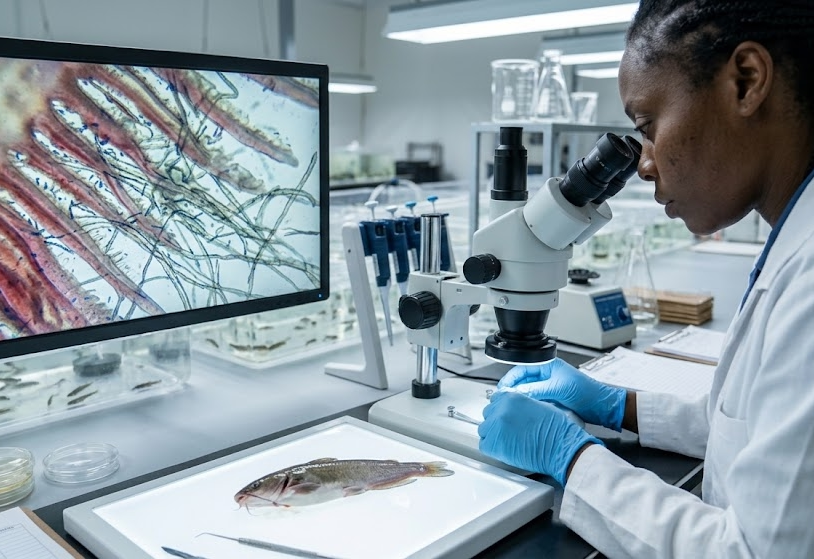
Microscopic examination may be needed to confirm the parasite and select a suitable treatment.
Overcrowding
Stocking too many fry in a system can increase competition, waste accumulation, and oxygen demand. Crowding may also increase stress and the likelihood of disease spreading.
What to do: Compare the number and size of fry with the system’s capacity, aeration, water flow, and waste-removal capability. Adjust stocking or transfer fry only when it can be done safely.
Handling and Transfer Stress
Grading, transport, sorting, and transferring fry can cause physical injury and stress, particularly when handling is rough or environmental conditions change abruptly.
If mortality begins after a transfer, review the handling process and compare water conditions before and after the move.
2. How to Identify the Cause of Fry Mortality
A structured investigation can help farmers distinguish environmental emergencies from infectious disease.
| Observation | Possible cause to investigate | First response |
|---|---|---|
| Fry die suddenly across a tank | Oxygen depletion, toxic water conditions or acute disease | Check oxygen and water quality immediately |
| Fry gasp at the surface | Low oxygen or impaired gill function | Assess oxygen, aeration and gill health |
| Fry stop feeding gradually | Feed problems, stress, poor water quality or infection | Review feeding and test the water |
| White or cotton-like growth appears | Possible fungal or other tissue condition | Examine affected fry and check water quality |
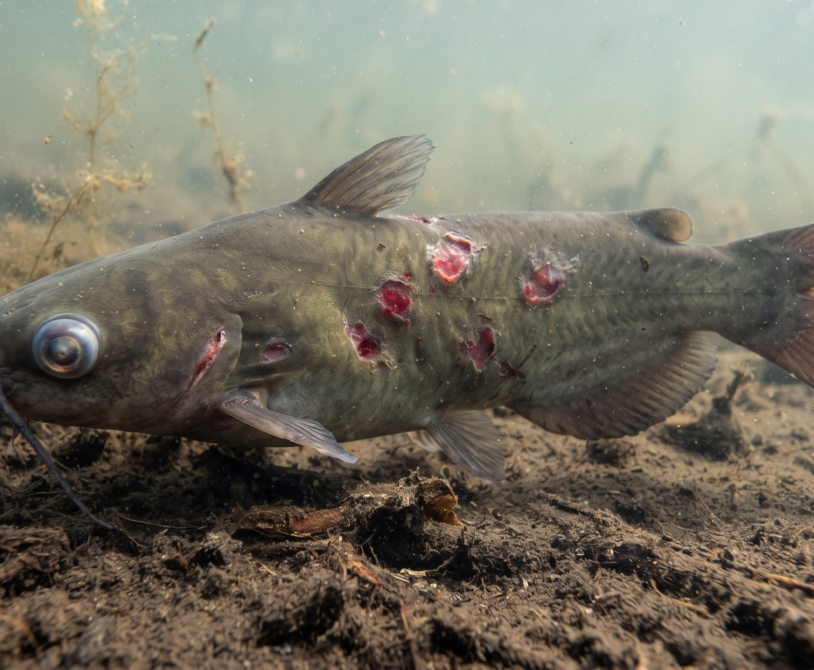
| Fry develop skin sores | Injury, bacterial infection or another skin problem | Inspect affected fish and seek diagnosis |
| Deaths follow handling or transfer | Stress, injury or environmental change | Review handling and compare water conditions |
| Growth becomes uneven | Feeding competition, crowding or chronic health problems | Review feed access, stocking and water quality |
These are investigative clues, not definitive diagnoses. More than one problem may be present at the same time.
3. What to Do When Catfish Fry Start Dying
Take action in a logical order to reduce further losses.
- Check the fry immediately. Observe their swimming, breathing, feeding and visible condition.
- Assess dissolved oxygen. If oxygen depletion is suspected, restore adequate aeration promptly.
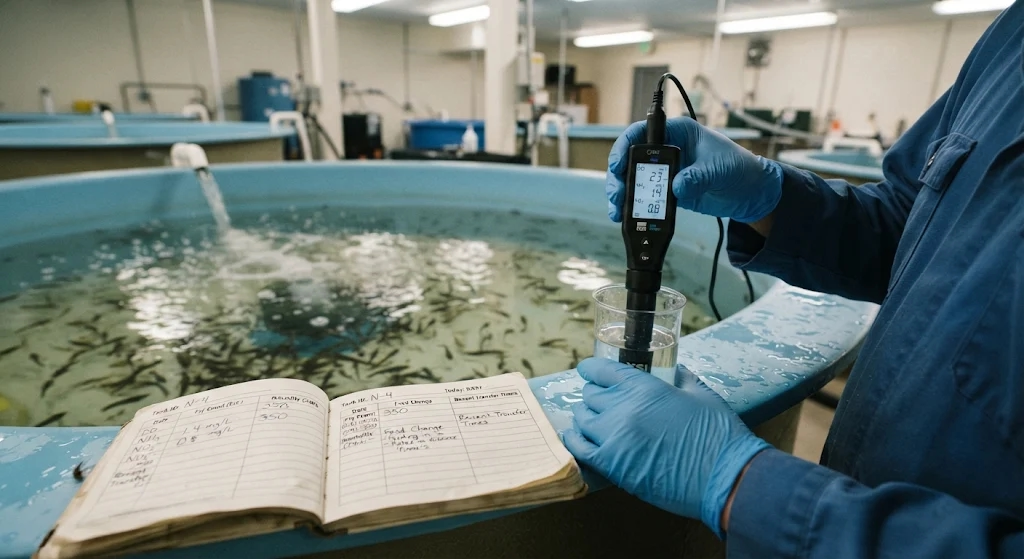
- Test water quality. Measure ammonia, nitrite, pH and temperature as well as dissolved oxygen.
- Remove dead fry. Remove dead fish promptly and dispose of them safely according to local guidance.
- Review recent activities. Check for recent feeding changes, stocking, transfers, water replacement or chemical applications.
- Reduce avoidable stress. Avoid unnecessary handling and transfers while investigating the outbreak.
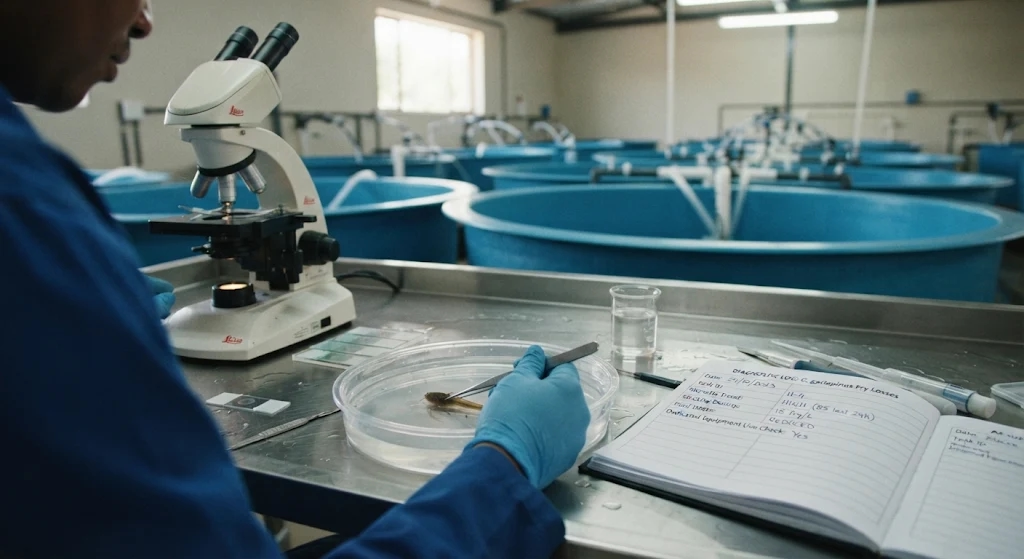
- Seek a diagnosis. Contact an aquaculture specialist or fish-health laboratory if deaths continue, symptoms are severe or an infectious disease is suspected.
Avoid making several drastic changes to water conditions at once. Sudden changes in temperature, pH or other conditions can add further stress.
4. How to Prevent Catfish Fry Mortality
Prevention depends on maintaining stable production conditions and identifying problems early.
Maintain Water Quality
Monitor dissolved oxygen, ammonia, nitrite, pH and temperature according to the production system’s needs. Maintain effective aeration and remove accumulated waste.
Feed Correctly
Use feed appropriate for the developmental stage of the fry. Store feed properly, observe feeding behaviour and avoid excessive feeding that leaves waste in the system.
Manage Stocking Density
Stock fry according to the capacity of the tank, pond or hatchery system. Consider aeration, water circulation, waste removal and the size of the fish when determining suitable stocking levels.
Maintain Hatchery Hygiene
Clean equipment appropriately and avoid transferring contaminated water or equipment between batches. Keep records of cleaning and disinfection procedures.
Handle Fry Carefully
Minimize unnecessary sorting, grading and transfers. When handling is required, use procedures that reduce injury and abrupt environmental changes.
Monitor Fry Daily
Check feeding response, swimming, appearance and mortality every day. Record changes so that developing problems can be detected early.
Use Biosecurity Measures
Inspect new fish before introducing them to established stocks. Quarantine new batches where practical, and investigate unusual symptoms before moving fish between production units.
5. When Should Farmers Seek Professional Help?
Seek professional assistance when:
- Mortality continues despite correcting obvious environmental problems.
- Deaths increase rapidly or affect multiple tanks.
- Fry show severe skin lesions, gill abnormalities or unusual growths.
- A contagious infection or parasite infestation is suspected.
- The cause remains unclear after basic water-quality checks.
A fish-health professional may recommend microscopic examination, laboratory testing or other diagnostic procedures. These can help distinguish infections from environmental problems and reduce the risk of ineffective treatment.
Frequently Asked Questions
Why are my catfish fry dying one by one?
Gradual mortality may be associated with water-quality problems, inadequate feeding, parasites, infections or ongoing stress. Check water conditions, inspect affected fry and record how mortality changes over time.
Why do catfish fry die suddenly overnight?
Possible causes include oxygen depletion, toxic water conditions or an acute disease problem. Check dissolved oxygen and water quality immediately. The timing alone cannot establish the cause.
Can dirty water kill catfish fry?
Yes. Poor water quality can expose fry to harmful substances, reduce available oxygen and increase physiological stress. However, water appearance alone is not a reliable indicator of water quality.
Should I change all the water when fry begin dying?
Not automatically. An abrupt water change can create additional stress if the replacement water differs substantially in temperature, pH or other characteristics. Choose a water-management response based on testing and the condition of the fish.
Can medicine stop catfish fry from dying?
Medicine may help when a treatable infection or parasite is correctly identified, but it will not resolve every cause of mortality. Low oxygen, ammonia accumulation, unsuitable temperature and feeding problems require appropriate management rather than indiscriminate medication.
Conclusion
Catfish fry mortality can result from low oxygen, poor water quality, feeding problems, overcrowding, handling stress or infectious disease. The most effective response is to investigate the underlying cause, address urgent environmental problems, reduce additional stress and obtain professional diagnosis when necessary.
For African catfish farmers, consistent monitoring, suitable feeding, good hatchery hygiene and careful handling are essential for improving fry survival and preventing avoidable losses.