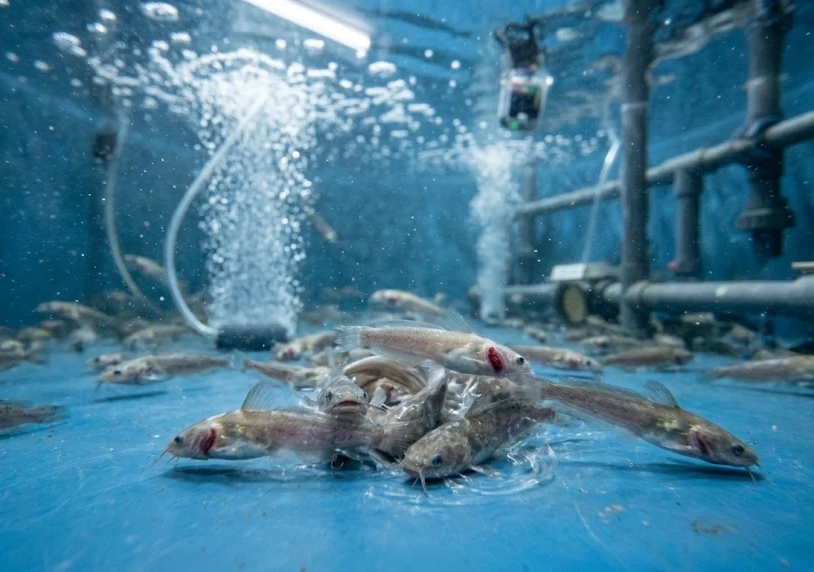
Ammonia poisoning is a serious water quality problem in catfish farming. It occurs when ammonia accumulates in pond or tank water and reaches levels that harm fish. Affected catfish may experience gill damage, reduced feeding, abnormal swimming, stress and, in severe cases, death.
Effective ammonia management depends on maintaining good water quality, controlling organic waste, monitoring feeding and stocking density, and testing water before choosing corrective measures.
What Causes Ammonia Poisoning in Catfish?
Ammonia enters catfish farming systems mainly through fish waste, uneaten feed and the decomposition of organic matter.
Common causes include:
- Overfeeding: Uneaten feed decomposes and increases the organic waste load.
- High stocking density: More fish produce more waste, increasing the risk of ammonia accumulation.
- Poor water exchange: Waste and dissolved pollutants can build up when water management is inadequate.
- Insufficient biological filtration: In tank systems, an immature or poorly functioning biofilter may fail to convert ammonia efficiently.
- Accumulated organic matter: Dead fish, leftover feed and other decomposing materials contribute to water quality deterioration.
- Inadequate water quality monitoring: Without regular testing, ammonia can rise before the farmer recognizes the problem.
Ammonia problems can occur in earthen ponds, concrete tanks, plastic tanks and recirculating aquaculture systems.
How Ammonia Affects Catfish
Ammonia exists in water in two main forms: ionized ammonium (NH₄⁺) and un-ionized ammonia (NH₃). The un-ionized form is generally more toxic to fish.
The proportion of toxic NH₃ increases as water pH and temperature rise. This means that the same total ammonia reading can pose different levels of risk under different water conditions.
Ammonia exposure can:
- Damage the gill tissues responsible for respiration and waste regulation.
- Interfere with normal oxygen exchange.
- Cause physiological stress and abnormal swimming.
- Reduce appetite and growth.
- Weaken the fish’s ability to withstand additional stress.
- Cause severe injury or mortality when exposure is sufficiently high.
African catfish (Clarias gariepinus) can tolerate some challenging farming conditions, but this does not make them immune to ammonia toxicity.
Symptoms of Ammonia Poisoning in Catfish
Symptoms vary depending on ammonia concentration, exposure duration, temperature, pH and the condition of the fish.
Watch for the following signs:
- Reduced feeding or complete loss of appetite.
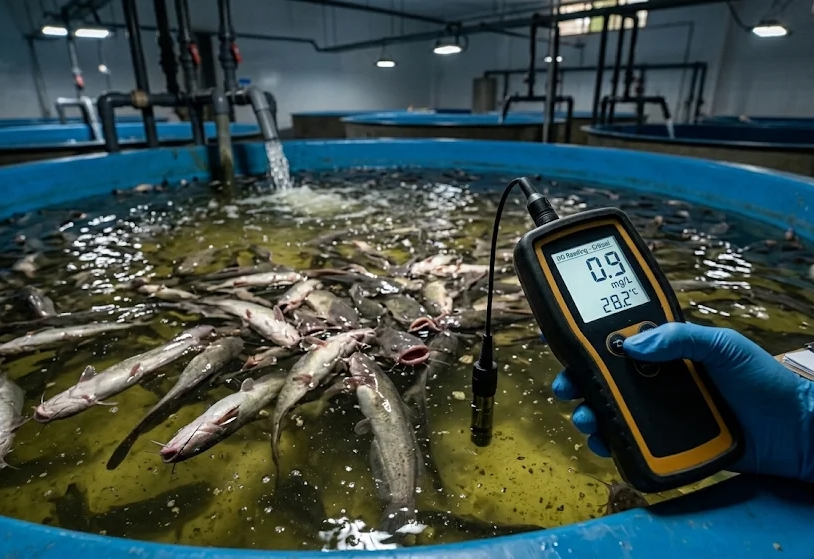
- Catfish gathering near water inflows or areas with better circulation.
- Rapid gill movement or signs of respiratory distress.
- Unusual swimming, agitation or loss of coordination.
- Increased mucus production or irritated gill tissues.
- Reddened or damaged gills.
- Sluggish behaviour and reduced activity.
- Sudden deaths in severe cases.
These symptoms are not unique to ammonia poisoning. Low dissolved oxygen, nitrite toxicity, parasites and gill infections can produce similar signs. Testing the water is therefore essential before deciding on a diagnosis.
How to Diagnose Ammonia Poisoning
A reliable diagnosis combines water quality measurements, observation of fish behaviour and, where necessary, examination of the gills.
1. Test total ammonia
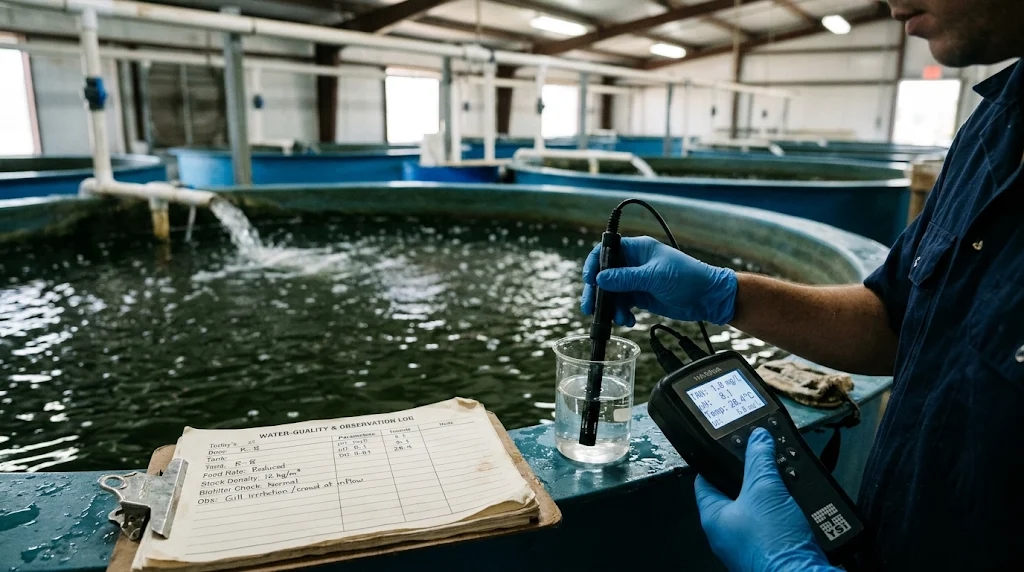
Use a suitable aquaculture water test kit or meter to measure total ammonia nitrogen (TAN). Confirm whether the test reports ammonia as nitrogen or uses a different unit before interpreting the result.
2. Measure pH and temperature
Record pH and water temperature alongside the ammonia reading. These parameters help determine how much of the total ammonia is present in the more toxic NH₃ form.
3. Measure dissolved oxygen
Low oxygen can occur alongside ammonia accumulation, particularly where organic waste is high. Check dissolved oxygen rather than assuming ammonia is the only cause of respiratory distress.
4. Check other water quality parameters
Depending on the farming system, test nitrite and inspect the condition of the water, filtration system and waste-removal process.
5. Examine affected fish
Observe the gills, swimming pattern, appetite, and mortality pattern. If deaths continue or the cause remains uncertain, consult an aquatic animal health professional for further investigation.
How to Reduce Ammonia in Catfish Ponds and Tanks
When ammonia poisoning is suspected, act promptly while confirming the water measurements.
Improve aeration and circulation
Increase aeration when fish show signs of distress, and make sure water circulates effectively. Aeration supports oxygen availability and can help beneficial microorganisms involved in biological filtration, although it does not directly remove ammonia from the water.
Reduce or temporarily stop feeding
Avoid adding more feed while fish are severely stressed or ammonia levels are elevated. Remove uneaten feed and resume feeding gradually when water quality and fish behaviour improve.
Remove accumulated waste
Clean out accessible organic waste and dead fish. In tanks, inspect solids-removal systems and filtration equipment. Avoid disturbing pond sediments excessively during an emergency.
Perform suitable water exchange
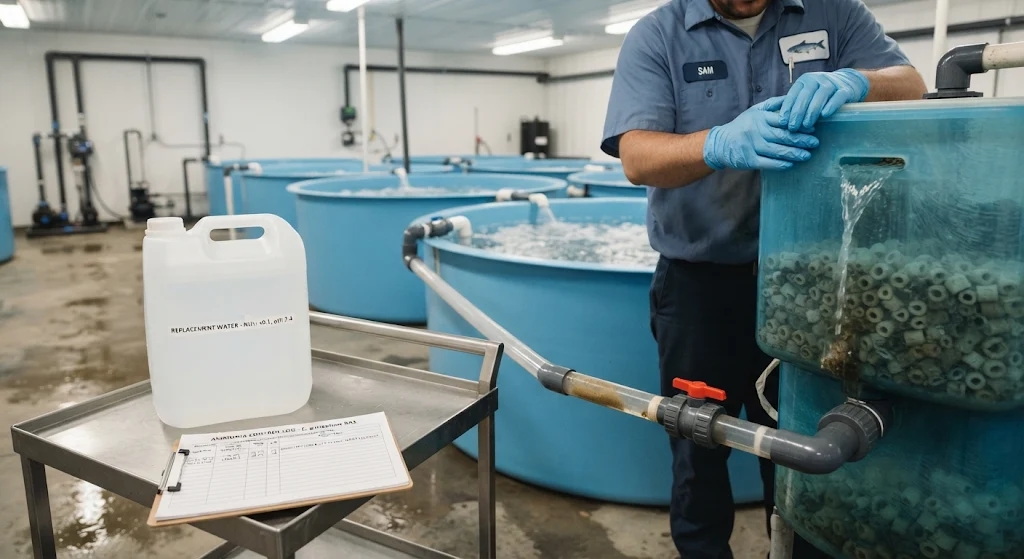
Where a safe, tested water source is available, a carefully managed partial water exchange may help reduce ammonia concentration. Check the replacement water for ammonia, pH, temperature and other potential problems before use. Sudden changes in water conditions can create additional stress.
Check biological filtration
In tank-based and recirculating systems, inspect the biofilter and verify that it is functioning properly. Avoid actions that damage beneficial bacteria, and do not increase feeding until the system can manage the waste load.
Retest the water
After corrective measures, measure ammonia, pH, temperature and dissolved oxygen again. Continue monitoring until the values are stable and the fish recover.
Important: Do not apply chemicals or medication blindly. The appropriate response depends on the measured water conditions, farming system and severity of the problem.
How to Prevent Ammonia Poisoning in Catfish Farming
Prevention is more reliable than responding after fish begin dying.
- Feed according to fish size and appetite. Avoid excessive feeding and remove uneaten feed where practical.
- Manage stocking density. Keep the number and biomass of fish appropriate for the system’s water supply, aeration and waste-treatment capacity.
- Test water regularly. Monitor ammonia, pH, temperature and dissolved oxygen, increasing testing frequency when conditions deteriorate.
- Maintain good water circulation. Prevent stagnant areas and ensure that pumps and aerators operate as required.
- Remove organic waste. Clean tanks, manage sludge and remove dead fish promptly.
- Maintain biological filters. In recirculating systems, protect the biofilter and monitor its performance.
- Keep accurate records. Record water readings, feed quantities, stocking levels, fish behaviour and mortality to identify developing problems.
- Investigate repeated ammonia spikes. Review feeding, filtration, water exchange and stocking practices instead of treating each incident as an isolated event.
Ammonia Poisoning vs. Other Catfish Water Quality Problems
| Problem | Possible signs | What to check |
|---|---|---|
| Ammonia poisoning | Gill irritation, reduced feeding, abnormal swimming | Total ammonia, pH and temperature |
| Low dissolved oxygen | Gasping, surface congregation, respiratory distress | Dissolved oxygen and aeration |
| Nitrite poisoning | Respiratory distress, weakness and poor performance | Nitrite concentration |
| Gill disease | Gill damage, excess mucus, respiratory distress | Gill examination and appropriate diagnostic testing |
Because these conditions can overlap, avoid diagnosing a disease or applying treatment based on symptoms alone.
Frequently Asked Questions
Can catfish die from ammonia poisoning?
Yes. Severe or prolonged ammonia exposure can cause serious gill injury, physiological stress and death. The risk depends on ammonia concentration, exposure duration and water conditions.
Does changing water reduce ammonia?
A partial water exchange can reduce ammonia if the replacement water is suitable and contains less ammonia. Poor-quality replacement water or abrupt changes in pH and temperature can make the situation worse.
Does aeration remove ammonia?
Aeration primarily improves oxygen availability and water circulation. It does not directly remove ammonia, so it should be combined with appropriate waste management, filtration and water-quality correction.
Why does ammonia increase after feeding?
Fish excrete nitrogenous waste after consuming feed, while uneaten feed and faeces contribute to organic decomposition. Excessive feeding can therefore increase the ammonia load beyond what the farming system can process.
How often should catfish farmers test ammonia?
Testing frequency should reflect stocking density, feeding rate, system design and recent water quality trends. Test more frequently when fish show unusual behaviour, after major management changes, or when previous readings indicate unstable water quality.
Conclusion
Ammonia poisoning in catfish is a preventable water quality problem that can reduce growth, damage gills and cause mortality. The most effective management approach combines ammonia testing, pH and temperature monitoring, suitable aeration, controlled feeding, waste removal and effective filtration.
When catfish show signs of distress, test the water promptly and address the underlying cause rather than relying on symptoms alone.