Parasites can affect the health and survival of catfish fry in hatcheries and nursery systems. Depending on the parasite involved, an infestation may affect the skin, gills, or other tissues, interfering with normal breathing, feeding, and swimming.
In African catfish farming, parasitic problems may contribute to poor growth, weakness and mortality, particularly when fry are stressed by poor water quality or unsuitable stocking conditions. However, abnormal swimming, rapid breathing, and reduced feeding are not proof of parasitic infection. Accurate diagnosis is important before treatment begins.
Common Types of Parasites That May Affect Catfish Fry
Parasites affecting fish are diverse, and the types present depend on the production environment and exposure pathways.
1. External Skin Parasites
Some parasites attach to or live on the surface of fish, irritating the skin and potentially damaging its protective mucus layer.
Possible signs include:
- Frequent rubbing against tank or pond surfaces.
- Excess mucus on the skin.
- Irritation and unusual swimming.
- Reduced feeding and activity.
- Poor growth when infestations persist.
These signs can also occur with chemical irritation, poor water quality, or other skin conditions.
2. Gill Parasites
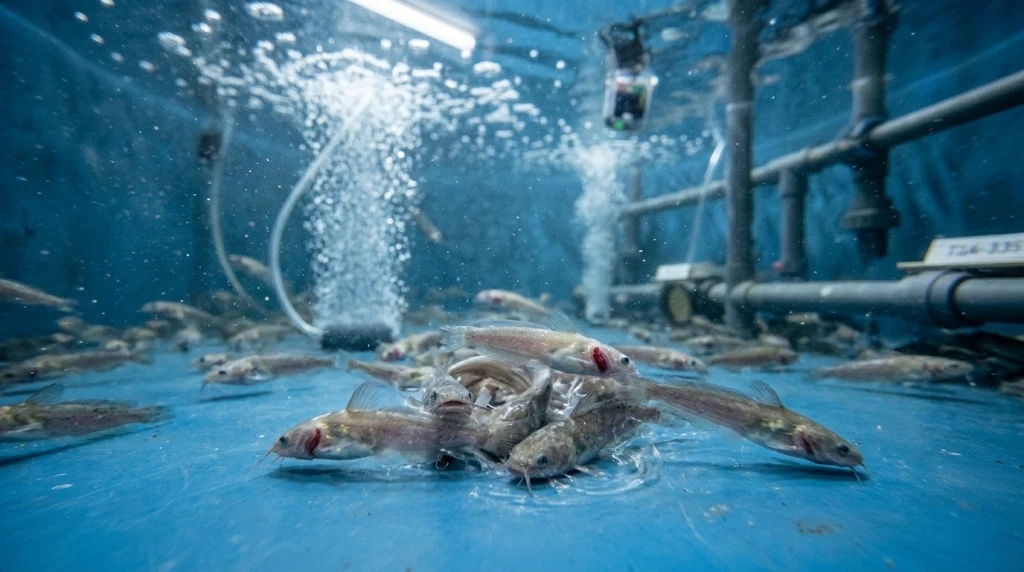
Gill parasites can interfere with the gills’ ability to perform their respiratory function. Heavy infestations may be especially serious in small fish.
Possible signs include:
- Rapid gill movement.
- Gasping near the water surface.
- Gathering near water inflows or areas with better circulation.
- Reduced feeding.
- Weakness and increased mortality in severe cases.
Low dissolved oxygen and other gill problems can produce similar symptoms, so water quality must be assessed alongside fish examination.
3. Protozoan Parasites
Some microscopic protozoan parasites can affect the skin or gills of fish. Their impact depends on the organism, infestation level, fish condition, and environmental conditions.
Possible signs may include irritation, excessive mucus, respiratory distress, and reduced activity.
Microscopic examination is often necessary to identify the organism and determine whether it is responsible for the observed symptoms.
4. Other Parasitic Organisms
Other parasites may affect fish depending on the hatchery or nursery environment. Their presence and significance cannot be determined from general symptoms alone.
Farmers should avoid assuming that every visible spot, skin abnormality, or unusual movement is caused by a parasite.

Symptoms of Parasitic Infection in Catfish Fry
Early observation can help farmers recognize a possible problem before mortality becomes extensive.
| Symptom | Possible explanation |
|---|---|
| Rapid gill movement | Gill parasites, low oxygen, or other gill damage |
| Rubbing against surfaces | External parasites, skin irritation or environmental problems |
| Excess mucus | Parasites, chemical irritation or poor water conditions |
| Reduced feeding | Stress, infection, unsuitable feed or water-quality problems |
| Abnormal swimming | Irritation, weakness, environmental stress or disease |
| Gasping at the surface | Low oxygen or impaired gill function |
| Increasing mortality | Severe infestation, poor water quality or another acute problem |
These symptoms are clues for investigation, not definitive evidence of parasites.
How Parasites Affect Catfish Fry
Parasitic infestations may affect hatchery performance in several ways.
Reduced Feeding
Irritation, respiratory difficulty, or general weakness can interfere with normal feeding behaviour.
Slower Growth
Fry experiencing prolonged stress or illness may grow more slowly than healthy fish, resulting in uneven sizes within a batch.
Gill Damage and Respiratory Stress
Parasites affecting the gills may interfere with oxygen uptake. The severity depends on the parasite, infestation level, and condition of the fish.
Increased Mortality
Severe infestations can contribute to mortality, particularly when combined with low oxygen, unsuitable water conditions, or other infections.
How to Diagnose Parasites in Catfish Fry
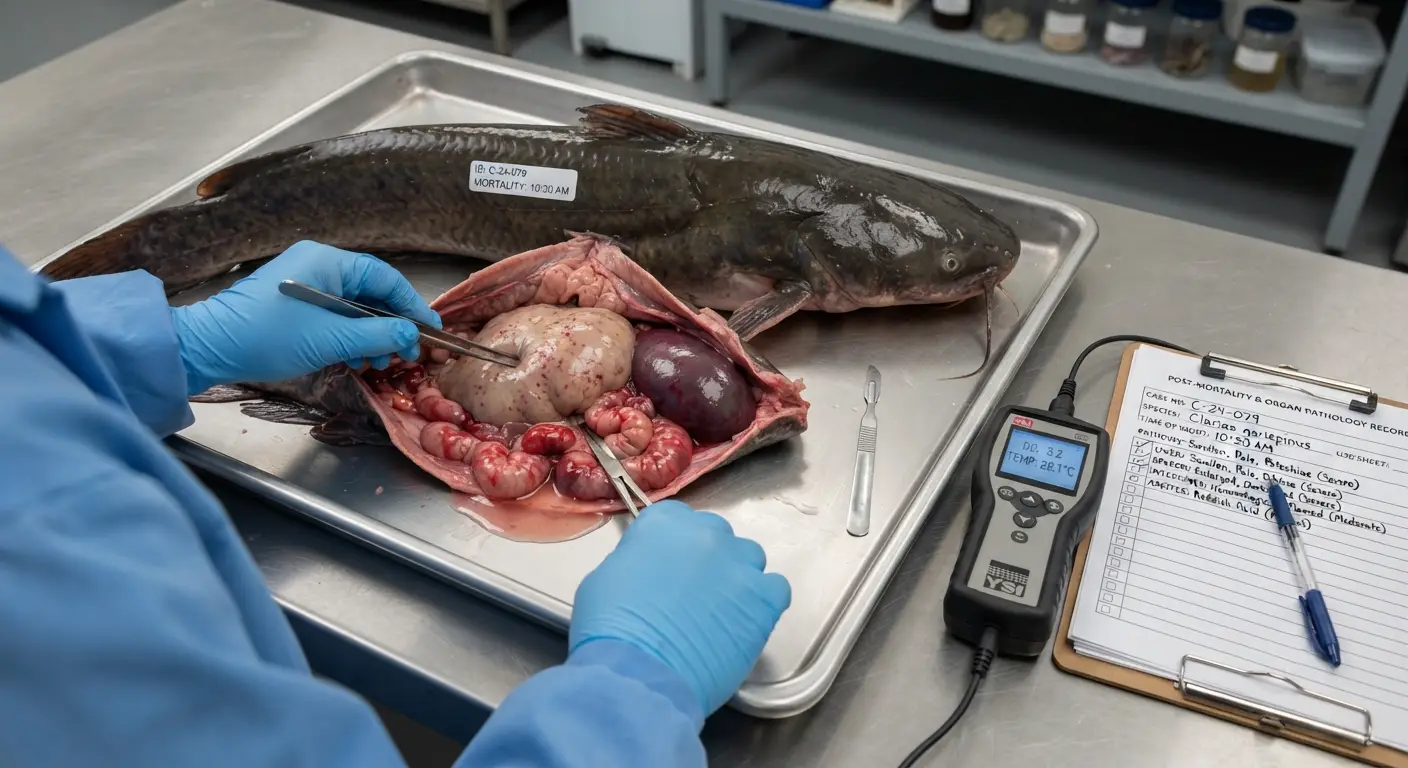
Because symptoms overlap with other health problems, diagnosis should combine observation, water testing and examination of affected fish.
Step 1: Observe Fry Behaviour
Check swimming patterns, feeding response, breathing, and the distribution of affected fish. Record when the symptoms began and whether the number of affected fry is increasing.
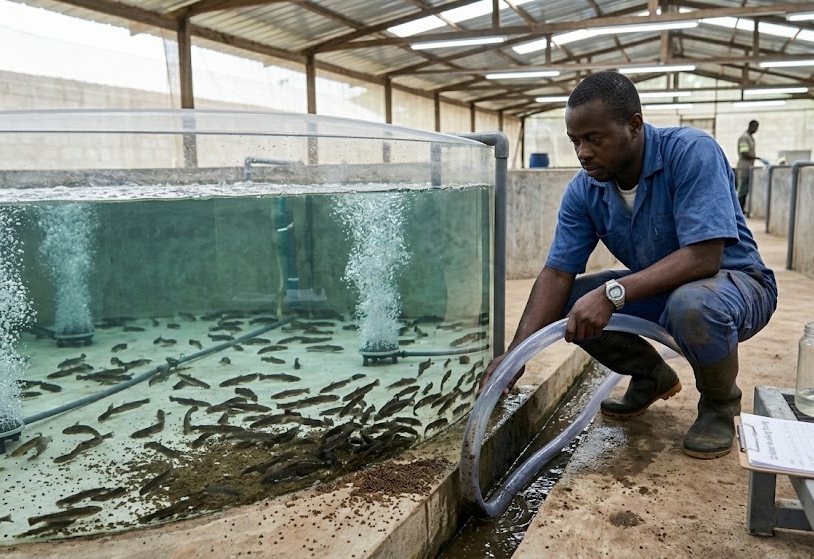
Step 2: Check Water Quality
Measure dissolved oxygen, ammonia, nitrite, pH, and temperature. Correct urgent water-quality problems, even if a parasitic infestation is suspected.
Step 3: Examine the Skin and Gills
A qualified fish-health professional can examine suitable samples under a microscope to look for parasites and assess their abundance.
Step 4: Review Recent Management Activities
Consider recent stocking, transfer, water replacement, and introduction of new fish. Review whether equipment or water may have been shared between batches.
Step 5: Confirm the Cause Before Treatment
Where possible, identify the parasite involved before choosing a treatment. Different parasites may require different management approaches, and an unsuitable product may harm fry.
How to Manage Parasitic Infections in Catfish Fry
Management depends on the identified parasite, the severity of the infestation, and the production system.
- Correct water-quality problems: Maintain suitable oxygen levels and address ammonia, nitrite, or other harmful conditions.
- Reduce unnecessary stress: Avoid rough handling and unnecessary transfers while fry are affected.
- Remove dead fry promptly: Dispose of dead fish safely according to local guidance.
- Review biosecurity: Prevent the movement of potentially contaminated water and equipment between batches.
- Obtain professional diagnosis: Seek advice from an aquaculture specialist or fish-health laboratory when symptoms persist or mortality increases.
- Use treatments carefully: Apply only treatments appropriate for the identified parasite, fish developmental stage, and production system, following qualified guidance and applicable regulations.
Do not use chemical treatments simply because fry are rubbing against surfaces or gasping. These symptoms may have environmental causes, and unnecessary chemicals can worsen the situation.
How to Prevent Parasites in Catfish Fry
Quarantine New Fish
Where practical, keep newly acquired fish separate from established stocks for an appropriate observation period. Investigate unusual symptoms before introducing new fish to the main production system.
Maintain Hatchery Hygiene
Clean equipment appropriately and avoid transferring water, nets and containers between batches without suitable cleaning and disinfection.
Monitor Water Quality
Maintain suitable water conditions and respond quickly to changes in oxygen, temperature, pH, ammonia and nitrite. Good water quality supports fish health but does not guarantee that parasites will be absent.
Avoid Excessive Stocking Density
Stock fry according to the capacity of the production system. Overcrowding may increase stress and complicate the management of an outbreak.
Inspect Fry Regularly
Observe breathing, swimming, feeding, and skin condition daily. Investigate changes early rather than waiting for mortality to increase.
Maintain Records
Record mortality, symptoms, water-test results, fish sources, and recent management activities. These records can help identify recurring problems and support diagnosis.
Frequently Asked Questions
How can I tell if catfish fry have parasites?
Possible signs include rubbing, excess mucus, rapid gill movement, reduced feeding, and abnormal swimming. These symptoms are not specific to parasites. Microscopic examination may be necessary to confirm an infestation.
Can parasites kill catfish fry?
Yes. Severe infestations may cause serious tissue damage or respiratory problems and contribute to mortality. The risk depends on the parasite, infestation level, fish condition, and environmental circumstances.
Can parasites spread between catfish fry?
Some parasites can spread directly between fish or through shared water and contaminated equipment. The transmission route depends on the parasite involved. Quarantine and good biosecurity help reduce the risk.
Should I treat all fry when a few show symptoms?
Not automatically. First investigate the likely cause and determine whether a parasite is present. The appropriate response depends on the diagnosis, severity, and production system.
Can poor water quality cause symptoms that look like parasitic disease?
Yes. Low oxygen, ammonia exposure, chemical irritation and other water-quality problems can cause respiratory distress, unusual swimming and reduced feeding. Water testing is an important part of the investigation.
Conclusion
Parasites can affect catfish fry by irritating the skin, damaging the gills and interfering with normal feeding and behaviour. However, many visible symptoms overlap with water-quality problems and other diseases.
For African catfish farmers, effective prevention relies on routine observation, suitable water quality, careful stocking, hatchery hygiene and biosecurity. Confirming the cause before treatment helps reduce unnecessary chemical use and protects fry survival.