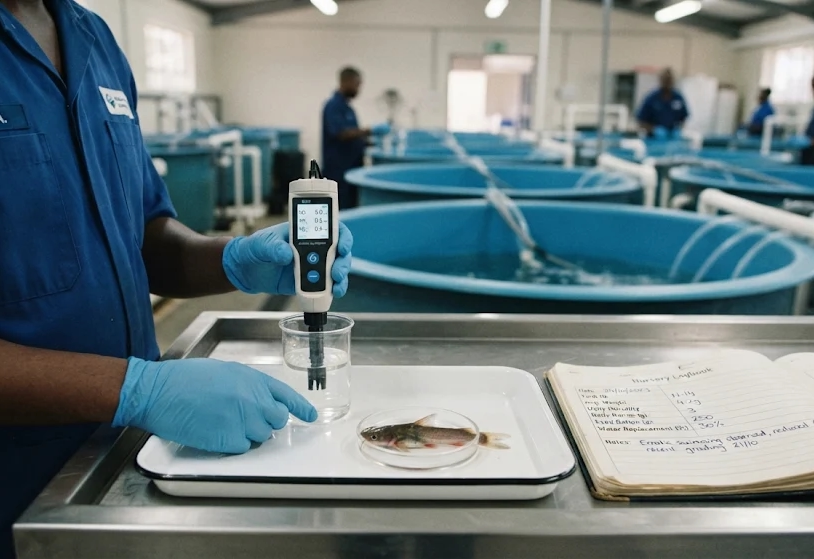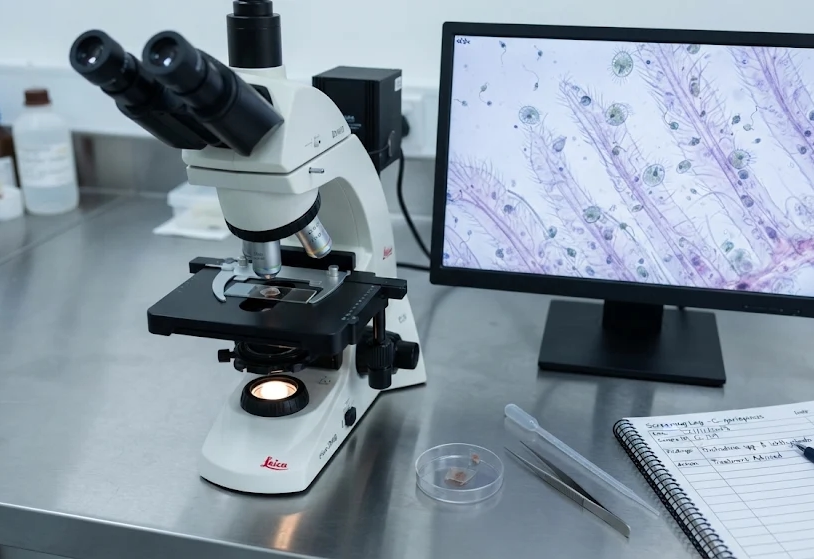
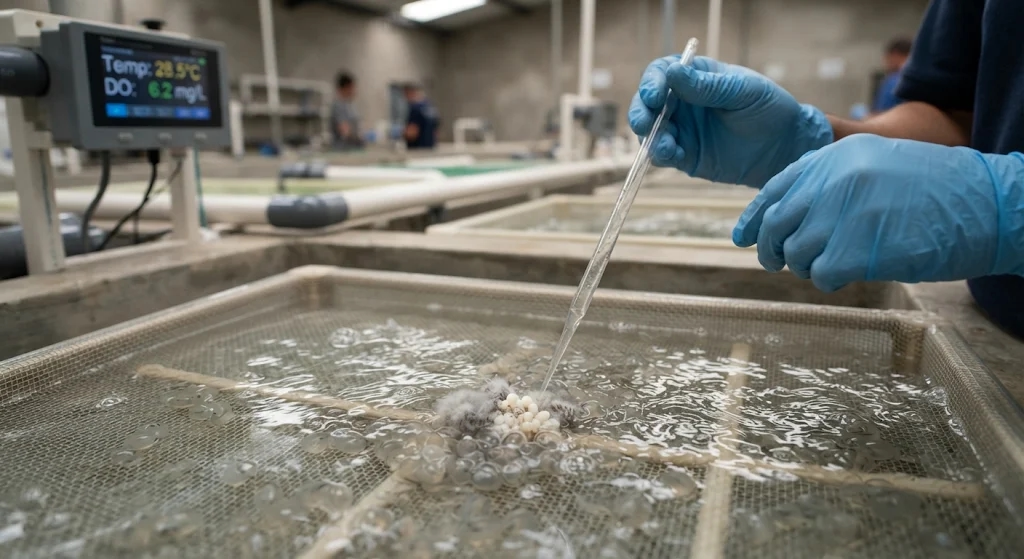
Fungal infections in catfish eggs can be a serious problem in hatchery production because affected eggs may fail to develop normally, reducing the number of healthy larvae available for stocking. The risk is especially important when eggs are damaged, dead eggs remain among viable eggs, or hatchery water and equipment are poorly managed.
In African catfish hatcheries, cotton-like growth on eggs may indicate fungal involvement, but visual appearance alone does not confirm the exact cause. Effective management depends on recognizing abnormal eggs, maintaining suitable incubation conditions, and using appropriate hatchery hygiene.
What Causes Fungal Growth on Catfish Eggs?
Fungal growth may occur when conditions favour organisms that colonize damaged or non-viable eggs. Several factors can contribute to the problem.
1. Dead or Unfertilized Eggs
Dead, damaged or unfertilized eggs may become sites where fungal-like growth develops. Growth can then affect nearby eggs, depending on the organism and incubation conditions.
Prevention: Inspect egg batches regularly and remove clearly dead or affected eggs using a method that minimizes damage to viable eggs.
2. Poor Water Quality
Unsuitable incubation water can stress developing embryos and reduce egg survival. Accumulated organic matter may also contribute to poor hatchery conditions.
Important factors to monitor include water temperature, dissolved oxygen, water cleanliness and adequate water circulation.
Prevention: Maintain suitable incubation conditions for the species and developmental stage. Monitor water quality and prevent waste from accumulating around the eggs.
3. Poor Hatchery Hygiene
Dirty incubation equipment, contaminated containers and inadequate cleaning can contribute to unhealthy hatchery conditions.
Prevention: Clean and maintain incubation trays, tanks, nets and other equipment. Apply appropriate cleaning and disinfection procedures between batches, ensuring that equipment is safe to use before introducing eggs.
4. Physical Damage to Eggs
Rough handling, inappropriate transfer methods or mechanical disturbance may damage eggs. Damaged eggs may be more vulnerable to colonization by microorganisms.
Prevention: Handle eggs gently and use incubation procedures appropriate for the egg type and production system.
Symptoms of Fungal Disease in Catfish Eggs
Early observation can help hatchery workers identify abnormal eggs before losses become extensive.
Possible warning signs include:
- White or grey cotton-like growth on individual eggs.
- Eggs that become opaque or discoloured.
- Eggs that stop developing normally.
- Dead eggs accumulating among apparently healthy eggs.
- Declining hatch rates.
- Increasing numbers of abnormal eggs during incubation.
These signs are not conclusive proof of fungal infection. Egg death can also result from fertilization failure, unsuitable water conditions, physical damage or other biological problems.
How Fungal Problems Affect Catfish Egg Hatchability
Fungal growth and other egg-health problems can reduce hatchery performance in several ways.
Reduced Egg Survival
Affected eggs may stop developing or die before hatching. The proportion of viable eggs in the batch may therefore decrease.
Reduced Hatch Rate
When a large number of eggs fail to develop or survive incubation, fewer larvae are produced from the original batch.
Potential Spread Among Eggs
Under favourable conditions, organisms growing on dead or affected eggs may colonize nearby eggs. The extent of this risk depends on the organism and hatchery conditions.
Increased Hatchery Workload
Affected batches may require closer monitoring, additional inspection and more careful removal of dead eggs. Poorly managed outbreaks can increase labour and production costs.
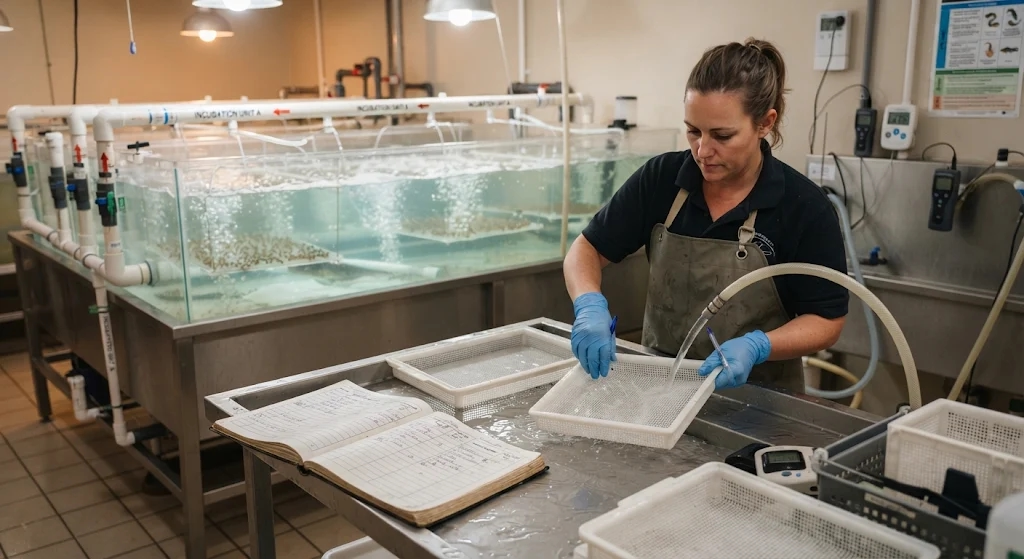
How to Manage Fungal Disease in Catfish Eggs
Management should focus on identifying the problem, protecting viable eggs and correcting the conditions that contributed to egg loss.
Step 1: Inspect the Egg Batch
Look for abnormal colour, opacity, cotton-like growth and eggs that appear to have stopped developing. Record the number and distribution of affected eggs.
Step 2: Check Incubation Conditions
Review water temperature, dissolved oxygen, circulation and cleanliness. Check whether water flow is appropriate for the incubation system and whether organic waste has accumulated.
Step 3: Remove Dead or Affected Eggs Carefully
Where appropriate, remove clearly dead eggs using a method that avoids damaging healthy eggs. Follow the hatchery’s established procedures for handling affected material.
Step 4: Review Hygiene Procedures
Inspect equipment-cleaning practices, water sources and handling procedures. Correct hygiene weaknesses before the next egg batch is introduced.
Step 5: Seek Professional Diagnosis
If the problem continues or egg losses are high, consult an aquaculture specialist or fish-health laboratory. Examination may be needed to determine whether fungal organisms are involved and whether another cause explains the mortality.
Step 6: Use Treatments Only When Appropriate
Do not apply antifungal chemicals or other treatments based solely on the appearance of affected eggs. The correct approach depends on the organism involved, the incubation system, the sensitivity of developing embryos and the products legally approved for the intended use.
Incorrect chemical concentrations or unsuitable treatments may damage viable eggs and reduce hatch success.
How to Prevent Fungal Disease in Catfish Eggs
Prevention should begin before eggs enter the incubation system.
Maintain Good Incubation Water Quality
Monitor the conditions required for successful egg development. Maintain suitable oxygen availability, temperature and water circulation, and remove accumulated waste.
Remove Dead Eggs Promptly
Inspect eggs at appropriate intervals and remove dead eggs when this can be done safely. Avoid unnecessary handling that could damage healthy eggs.
Clean and Disinfect Equipment Properly
Use suitable cleaning and disinfection procedures for incubators, containers and other hatchery equipment. Follow product instructions and ensure residues will not harm eggs.
Handle Eggs Carefully
Minimize physical damage during collection, transfer and incubation. Use equipment and procedures appropriate for the egg type.
Maintain Hatchery Biosecurity
Avoid moving contaminated water, equipment or biological material between incubation units. Keep records of egg sources, incubation conditions, mortality and hatch rates.
Monitor Each Batch
Record the number of eggs introduced, observed abnormalities, removals and larvae successfully hatched. Comparing batches can help identify recurring problems.
Frequently Asked Questions
Does white growth on catfish eggs always mean fungal disease?
No. White or cotton-like growth may suggest fungal involvement, but egg death, damage and other biological processes can produce abnormal appearances. Examination may be needed to confirm the cause.
Can fungal growth spread from one catfish egg to another?
Some organisms that colonize dead or damaged eggs can affect nearby eggs under favourable conditions. Prompt inspection, removal of dead eggs where appropriate and good incubation management can help reduce losses.
Why are my catfish eggs dying before hatching?
Possible causes include poor fertilization, unsuitable incubation conditions, physical damage, oxygen problems and fungal or other biological infections. Review incubation records and seek professional diagnosis if the problem persists.
Should I treat all catfish eggs when fungal growth appears?
Not automatically. Treatment suitability depends on the cause, the incubation system and the sensitivity of developing embryos. Unnecessary chemicals may harm viable eggs.
How can I improve the hatch rate of African catfish eggs?
Maintain suitable incubation conditions, handle eggs carefully, remove dead eggs where appropriate, maintain equipment hygiene and investigate abnormal egg mortality early.
Conclusion
Fungal disease is one possible cause of poor egg survival in catfish hatcheries, but abnormal eggs can also result from fertilization failure, physical damage and unsuitable incubation conditions. Reliable management requires careful inspection, good water quality, appropriate hygiene and diagnosis when losses persist.
For African catfish farmers, preventing egg damage and maintaining consistent incubation conditions are essential steps toward improving hatchery performance and producing healthy larvae.