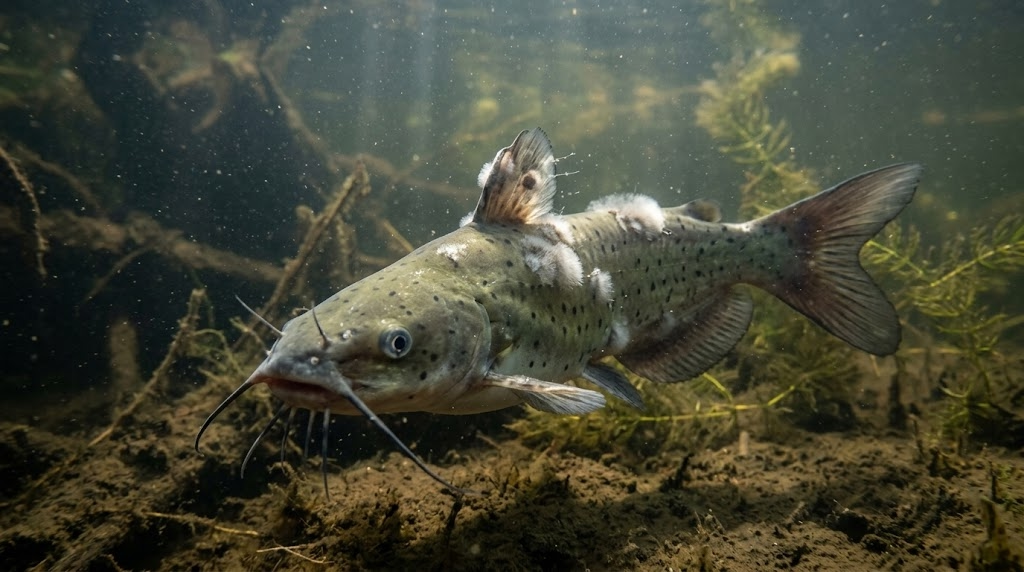
Gill flukes are parasitic organisms that can affect the gills of catfish and interfere with normal respiratory function. In African catfish (Clarias gariepinus) farming, a gill-fluke problem may appear through symptoms such as gasping, rapid gill movement, reduced feeding, lethargy, and poor growth.
These symptoms are not specific to gill flukes. Low dissolved oxygen, ammonia, nitrite, bacterial disease, fungal infections, and other environmental problems can produce similar signs. Diagnosis should therefore consider both the fish and the water conditions.
What Are Gill Flukes?
Gill flukes are parasitic organisms associated with fish gills.
They can irritate or damage gill tissue and interfere with normal respiration. Gill flukes are specifically identified in the catfish disease topical cluster as an important subtopic under catfish gill diseases.
Gill parasites belong to the broader parasite topic within catfish health, alongside organisms and groups such as Dactylogyrus, Gyrodactylus, protozoan parasites, fish lice, and anchor worms.
Symptoms of Gill Flukes in Catfish
Gasping at the Water Surface
Catfish affected by gill irritation may move toward the surface and gasp.
However, surface gasping should not automatically be interpreted as a parasite infection. Low dissolved oxygen is another important possibility.
Rapid Gill Movement
Fish may show unusually rapid movement of the gill covers when experiencing respiratory stress.
This can occur when the gills are irritated or when fish are struggling to obtain sufficient oxygen.
Excessive Gill Mucus
Abnormal mucus around the gills can indicate irritation.
Excess mucus may interfere with normal respiratory function and should be considered alongside other symptoms.
Reduced Feeding
Catfish under parasite-related stress may reduce their feeding activity.
A sudden reduction in feeding should also prompt investigation of water quality, temperature, feed quality, handling stress, and other possible causes.
Lethargy
Affected fish may become less active than normal.
Lethargy is more significant when it occurs together with gasping, rapid gill movement, abnormal gills, or increased mortality.
Poor Growth
Persistent parasite problems can contribute to poor fish performance.
Slow growth, however, can have many causes, including inadequate nutrition, poor water quality, excessive stocking density, and disease.
Increased Mortality
Severe gill problems may contribute to fish mortality.
When mortality occurs, farmers should investigate the underlying cause instead of assuming that gill flukes are responsible.
What Causes Gill Fluke Problems?
The source material identifies gill flukes as a specific catfish gill-disease topic but does not provide a detailed transmission cycle or species-level breakdown for individual gill flukes.
For the farm-level investigation, relevant risk factors in the broader disease-prevention cluster include:
- Introduction of new fish
- Poor quarantine procedures
- Poor farm hygiene
- Equipment contamination
- High stocking density
- Poor water quality
- Fish stress
The topical plan specifically includes catfish quarantine procedures, parasite prevention, water-quality management, stocking density, equipment disinfection, and farm hygiene within disease prevention.
How Gill Flukes Affect Catfish
Gill flukes can affect the gills, which are essential for respiration.
Gill irritation can result in respiratory stress and abnormal fish behavior.
Possible effects include:
- Increased respiratory effort
- Gasping
- Rapid gill movement
- Reduced feeding
- Reduced activity
- Poor growth
- Increased vulnerability to environmental stress
- Mortality in severe cases
The severity of the problem depends on the parasite burden and the overall condition of the fish and production system.
Gill Flukes and Water Quality
A suspected parasite problem should always be investigated alongside water quality.
Important parameters include:
- Dissolved oxygen
- Ammonia
- Nitrite
- pH
- Temperature
The catfish water-quality cluster identifies these parameters as central to catfish health management.
Why Oxygen Matters
Low dissolved oxygen can produce gasping and rapid gill movement even when parasites are not present.
This means a farmer should not assume that respiratory symptoms are caused by gill flukes without checking oxygen conditions.
Why Ammonia Matters
Ammonia can contribute to fish stress and respiratory problems.
If fish begin gasping, ammonia should be assessed as part of the investigation.
Why Nitrite Matters
Nitrite is another important water-quality factor associated with respiratory stress.
The topical plan specifically identifies how nitrite affects catfish gills and includes nitrite poisoning as a separate topic.
How to Diagnose Gill Flukes in Catfish
Symptoms can indicate that a respiratory problem exists, but they cannot reliably identify a particular parasite.
Observe the Fish
Record:
- Surface gasping
- Gill movement
- Feeding behavior
- Swimming behavior
- Activity level
- Mortality
Look for patterns affecting multiple fish.
Examine the Gills
The gills should be examined for abnormalities such as:
- Excess mucus
- Unusual coloration
- Irritation
- Tissue damage
- Other abnormal changes
The broader catfish disease-diagnosis cluster includes how to examine catfish gills as a dedicated diagnostic topic.
Check Water Quality
Test the relevant water parameters before concluding that gill flukes are responsible.
A water-quality problem can create symptoms that look similar to a parasite problem.
Use Appropriate Diagnostic Testing
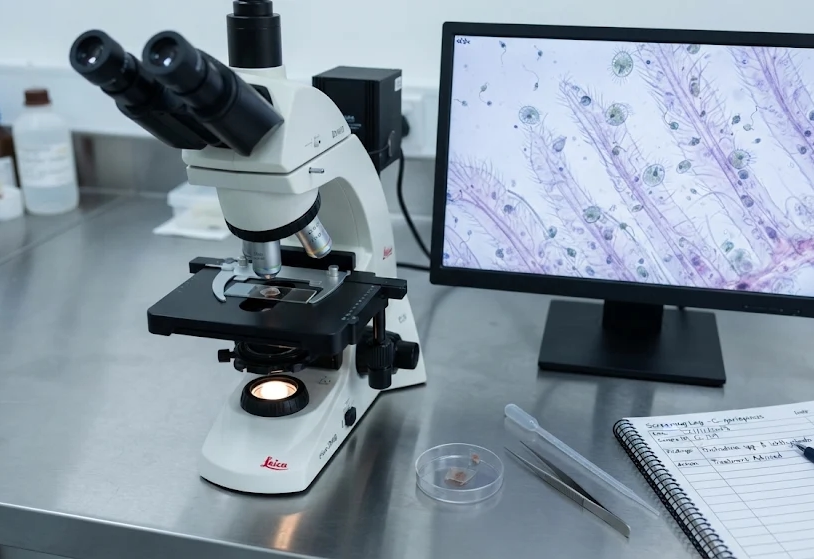
Where parasite infection is suspected but cannot be confirmed visually, microscopic or laboratory examination may be necessary.
This is particularly important when selecting a targeted treatment.
Gill Flukes vs. Other Causes of Gasping
Gasping can have multiple causes.
| Sign | Possible causes |
|---|---|
| Gasping at the surface | Low oxygen, gill parasites, ammonia, nitrite, other stress |
| Rapid gill movement | Gill irritation, parasites, low oxygen, water-quality problems |
| Reduced feeding | Disease, parasites, poor water quality, stress |
| Lethargy | Disease, environmental stress, parasites |
| Increased mortality | Severe disease, poor water quality, oxygen problems, other causes |
These signs should be treated as clues for investigation rather than definitive diagnoses.
How to Prevent Gill Flukes
Quarantine New Fish
Quarantine is an important part of preventing pathogens and parasites from entering an established production system.
The disease-prevention cluster specifically includes how to quarantine new catfish and catfish quarantine procedures.
Maintain Good Water Quality
Good water-quality management helps reduce environmental stress.
Regularly monitor appropriate parameters and respond to problems before fish become severely stressed.
Avoid Excessive Stocking
Overcrowding can increase stress and make disease management more difficult.
Appropriate stocking density should therefore be part of parasite prevention.
Disinfect Equipment
Equipment used between production units can contribute to disease spread.
Appropriate equipment disinfection can reduce this risk.
Maintain Farm Hygiene
Good farm hygiene reduces opportunities for parasites and other pathogens to move between fish groups and production areas.
Reduce Stress
Minimize unnecessary:
- Handling
- Transport stress
- Sudden environmental changes
- Poor water conditions
- Excessive stocking
Stress management is an important part of maintaining healthy fish.
Should You Treat Gill Flukes Immediately?
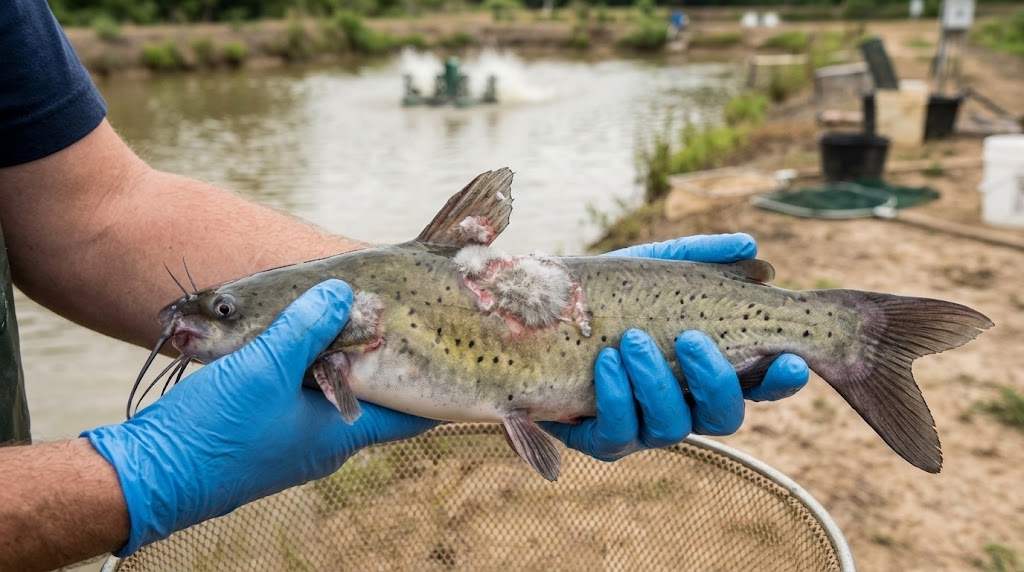
Treatment should follow an appropriate diagnosis.
Gasping, rapid gill movement, or poor feeding alone does not establish that gill flukes are responsible.
Before selecting a treatment, investigate:
- Fish behavior
- Gill appearance
- Dissolved oxygen
- Ammonia
- Nitrite
- Other water-quality parameters
- Stocking density
- Recent fish movement or introduction
- Possible parasite exposure
- Diagnostic findings
The source material specifically advises against blanket antibiotic or chemical dosing without diagnosis and recommends considering species, water conditions, fish size, local regulations, and product-label guidance.
When Should a Farmer Seek Professional Help?
Professional or laboratory assistance should be considered when:
- Many fish are affected
- Mortality is increasing
- Respiratory symptoms persist
- Gill abnormalities are severe
- The suspected parasite cannot be identified
- The problem spreads between production units
- Previous management changes do not resolve the problem
- Treatment requires accurate pathogen identification
A qualified fish-health professional or laboratory can help distinguish gill flukes from other causes of respiratory stress.
Frequently Asked Questions
What are gill flukes in catfish?
Gill flukes are parasitic organisms associated with catfish gills. They can interfere with normal gill function and contribute to respiratory stress.
What are the symptoms of gill flukes in catfish?
Possible signs include gasping, rapid gill movement, excessive mucus, reduced feeding, lethargy, poor growth, and increased mortality. These signs can also occur with other health and water-quality problems.
Can gill flukes make catfish gasp?
Yes. Gill irritation caused by parasites can contribute to respiratory stress and gasping. However, low dissolved oxygen and other environmental problems can produce the same symptom.
How do I know if catfish have gill flukes?
Behavioral symptoms alone cannot reliably confirm gill flukes. Examination of the gills and appropriate diagnostic testing may be necessary.
Can poor water quality make gill fluke symptoms worse?
Poor water quality can increase fish stress and produce respiratory symptoms of its own. Water quality should therefore be evaluated whenever gill problems are suspected.
How can farmers prevent gill flukes?
Important measures include quarantine of new fish, farm hygiene, equipment disinfection, appropriate stocking density, good water-quality management, and reducing unnecessary stress.
Should I use antibiotics for gill flukes?
Do not assume antibiotics are appropriate for a suspected parasite problem. The cause should first be identified, and treatment should be based on an appropriate diagnosis and applicable product guidance.