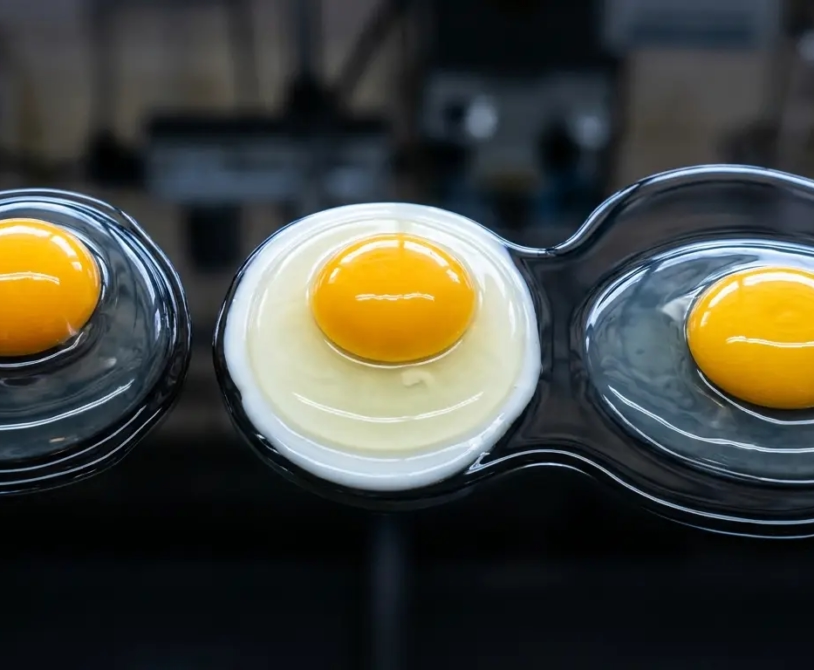

The cuticle is the egg’s immune system. It is a protein-glycoprotein layer approximately 10–20 micrometers thick, deposited on the shell surface during the final 1–2 hours of egg formation in the hen’s uterus. It seals the 7,000–17,000 microscopic pores distributed across the eggshell — openings through which gases exchange during incubation and through which bacteria enter when the cuticle is compromised.
An intact cuticle reduces bacterial penetration through the shell by 10–100-fold compared to a washed or mechanically abraded shell. It extends shelf life by limiting moisture loss and CO₂ exchange at ambient temperature. It is the reason that an unwashed egg from a clean nest box can be safely stored at room temperature for 2–3 weeks in West African conditions, while a washed egg of identical age deteriorates in days without refrigeration.
This biological reality creates the central tension of egg sanitation: the eggs that most need cleaning — those with fecal contamination, nest material, blood, or environmental soiling — are also the eggs that are most severely damaged by the cleaning methods most commonly applied. Aggressive scrubbing removes the cuticle. Cold water washing creates suction that draws bacteria through shell pores. Detergent removes the protein layer with chemical efficiency. All three interventions leave the cleaned egg more vulnerable to bacterial contamination than the uncleaned egg was.
The correct approach to egg cleaning is therefore not “clean everything with whatever is available.” It is a decision tree: identify the contamination type, select the appropriate cleaning method for that type, apply it in a way that preserves as much cuticle integrity as possible, and maintain the cleaned egg under conditions that compensate for the reduced natural protection.
This article builds that decision tree and the specific protocols at each branch.
The Cuticle: Biology That Determines Protocol
What the Cuticle Is
The cuticle is a non-calcified outer layer composed primarily of proteins (including lysozyme — the same antimicrobial enzyme found in tears and saliva), glycoproteins, and lipids. It is deposited on the shell surface by secretions from the uterine glands during the final stage of egg formation. The deposited cuticle is initially soft and wet; it dries to a firm, adhering layer within minutes of oviposition.
Cuticle composition varies between individual hens and between breeds — some hens deposit a denser, more complete cuticle than others. Brown-egg breeds generally deposit a thicker cuticle than white-egg breeds. The commercial significance of this variation is that brown-egg commercial layer breeds have a slight inherent advantage in natural shelf life and bacterial penetration resistance over white-egg breeds — a factor relevant to the choice of cleaning intensity required for each breed’s production.
What Damages the Cuticle
Mechanical abrasion: Scrubbing an egg with any abrasive material — sandpaper, wire brush, rough cloth, coarse sponge — physically removes the cuticle layer. The amount removed depends on the abrasive material and scrubbing force. Even dry soft cloth applied with pressure removes some cuticle. This is unavoidable when mechanical cleaning is required — it must be accepted as a trade-off and compensated for in storage and handling.
Chemical dissolution: Acidic cleaners (below pH 5.5) dissolve the glycoprotein matrix of the cuticle. Highly alkaline cleaners (above pH 11.0) also denature the protein structure. Most common household detergents and dishwashing soaps fall in the mildly alkaline range (pH 9–11) and cause partial cuticle dissolution. Cuticle removal by chemical dissolution is more uniform across the shell surface than mechanical removal — meaning a fully washed egg has more complete cuticle loss than a spot-cleaned egg.
Cold water shock: Water colder than the egg’s temperature (or colder than 5°C below the egg’s surface temperature) creates a rapid contraction of the shell contents that generates negative pressure inside the egg. This negative pressure acts as a pump, drawing surface water — and any bacteria suspended in it — through the shell pores into the interior. This is the most directly dangerous cleaning error from a food safety perspective.
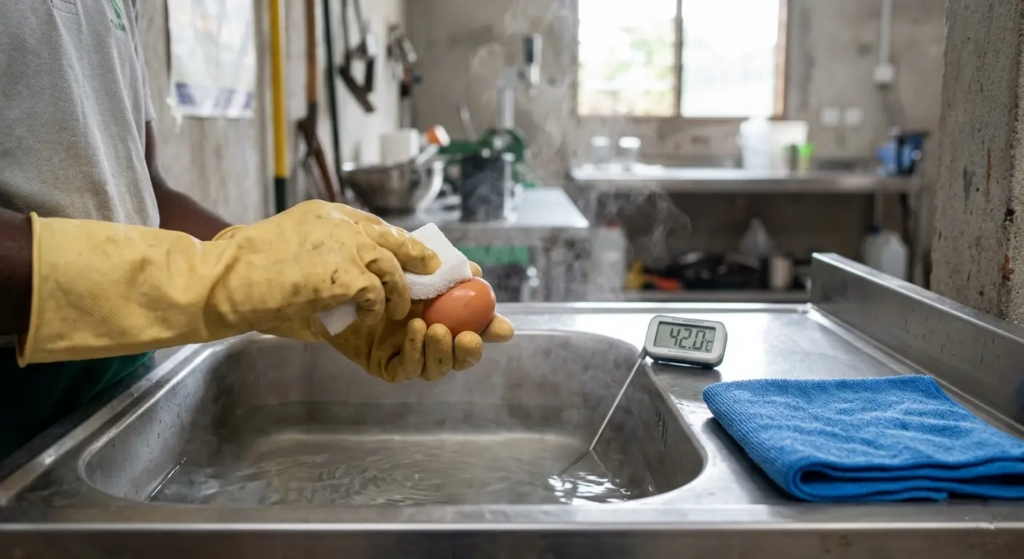
Temperature: the most critical variable in egg washing. Water used for egg washing must always be at least 10°C warmer than the egg’s temperature. This creates a slight positive pressure from the egg’s contents expanding, which pushes outward through shell pores rather than drawing inward. The practical minimum wash water temperature for eggs collected at tropical ambient temperature (28–35°C): at least 40–45°C water, warm to the hand, not just tepid.
The Cleaning Decision Tree: What to Do with Each Egg Type
Category 1: Clean Eggs (No Visible Contamination)
Definition: Shell free of fecal material, nest material, blood, or any foreign matter. Shell surface is dry and intact.
Correct action: Nothing. Do not wash, rub, wipe, or spray. The cuticle is intact and provides maximum natural protection. Any intervention reduces this protection.
Why this matters in practice: Many farm workers instinctively wipe every collected egg with a cloth as part of the collection routine — a habitual “cleaning” step that removes cuticle from clean eggs that needed no intervention. This is one of the most common and most damaging egg handling practices in West African commercial operations. Train collection staff explicitly: if it is clean, do not touch the shell surface. Place it directly in the collection tray.
Category 2: Lightly Soiled Eggs (Dry Nest Material, Dust, or Very Slight Smearing)
Definition: Shell has minor dry soiling — a few pieces of dry shavings adhering, a small area of dried mud, or light dust that does not involve fecal contamination.
Correct action: Dry cleaning.
Dry cleaning uses a fine sandpaper pad (220–320 grit), a dry medium-fine steel wool pad, or a dedicated egg cleaning sponge (dry) to abrade away dry contamination without moisture contact. The technique:
- Hold the egg in one hand, cupped but not gripping
- Using the cleaning pad in the other hand, apply gentle rotational pressure to the soiled area only — do not rub the entire shell
- Remove the loosened material by blowing gently or tapping gently against a clean, dry surface
- Inspect: if contamination is removed and the shell is intact, proceed to tray placement
- Do not wet the egg after dry cleaning — moisture applied after mechanical abrasion penetrates exposed pores more readily than before
Cuticle impact: Dry cleaning removes cuticle in the cleaned area. The surrounding intact area retains its cuticle. Net result: the egg is safer than it was with soiling (which itself carries bacteria on the shell surface) but less protected than a truly clean egg. These eggs should be sold promptly and not held in ambient storage for more than 3–4 days.
Category 3: Moderately Soiled Eggs (Moist or Fresh Fecal Smearing, Small Area)
Definition: Shell has fresh fecal material covering less than 20% of the surface. The contamination is moist or recently dried.
Correct action: Limited wet cleaning with warm water.
Fresh fecal material on the shell surface carries Salmonella, E. coli, and Campylobacter at concentrations that make the egg a food safety risk. Dry cleaning is insufficient to remove bacteria embedded in moist fecal material. Wet cleaning is required — but must be executed correctly to avoid creating a greater hazard than the surface contamination itself.
Wet cleaning protocol for moderately soiled eggs:
- Temperature check first: Ensure wash water is at least 40°C — warmer than the egg’s surface temperature. Do not proceed with water below this temperature.
- Use minimal water: Dampen a clean cloth or cellulose sponge with the warm water. Do not immerse the egg.
- Wipe in one direction — not scrubbing back and forth, which mechanically transports bacteria from the contaminated area to adjacent clean areas
- Use a fresh cloth or rinse the sponge between eggs — using the same sponge on multiple eggs without rinsing transfers bacteria from each egg to the next
- Dry immediately: Pat the washed area dry with a clean dry cloth or allow air drying at ambient temperature — but do not leave the egg wet, as moist shell surfaces have dramatically increased bacterial penetration risk
- Do not sanitize with cold water spray after warm washing — this creates the temperature reversal that produces suction-driven bacterial ingress
Cuticle impact: More significant than dry cleaning. The wetted area loses cuticle in proportion to the water temperature, contact time, and any cleaning agent used. These eggs must be stored under refrigeration (below 15°C) and sold within 48 hours of washing.
Category 4: Heavily Soiled Eggs (Large Area Fecal Contamination, Wet, or Blood)
Definition: Shell has extensive fecal soiling covering more than 20% of the surface, or fresh blood contamination, or wet soiling from a broken egg in the nest.
Correct action: Full wet washing or commercial-grade sanitization — or discard.
The decision between washing and discarding depends on the contamination type:
Blood contamination: Typically from a vent injury, prolapse event, or cannibalism. The blood is a Salmonella-contaminated fluid (if from an infected bird) or a sterile fluid (if from a localized injury). Wash with warm water, dry immediately, and inspect for shell integrity. If the shell is intact and blood has not penetrated the membrane, the egg is suitable for immediate sale to food processing channels. Do not hold.
Extensive fecal soiling: These eggs represent the highest food safety risk category. Commercial washing at the correct temperature with approved sanitizer is the appropriate intervention. In the absence of commercial washing equipment, discard. The risk of incorrect home-washing creating an actively contaminated egg that appears clean is higher than the loss of the egg’s value.
Cracked shell with contamination: Discard immediately. Do not wash, do not sell. A cracked shell with fecal contamination allows direct bacterial access to the egg white regardless of shell cleaning.
Commercial Egg Washing: When and How
The Commercial Washing Standard
When commercial egg washing is performed — typically at operations above 5,000 birds where the volume of soiled eggs justifies washing equipment investment — the process must meet specific parameters to produce food safety improvement rather than food safety degradation.
Commercial egg wash water parameters:
| Parameter | Requirement | Reason |
|---|---|---|
| Water temperature | 32–46°C (minimum 10°C above egg temperature) | Prevents suction-driven bacterial ingress |
| pH | 10.5–11.5 (slightly alkaline, approved food-grade alkali) | Optimal for bacterial removal without excessive cuticle damage |
| Chlorine concentration (if used) | 100–200 ppm free chlorine in wash water | Bactericidal action during washing |
| Contact time | 30–60 seconds maximum | Longer contact increases cuticle dissolution |
| Final rinse | 50 ppm chlorine, water 5°C above wash water temperature | Removes wash residue; continues sanitization |
| Air drying | Immediate forced-air drying after rinse | Prevents wet shell bacterial colonization |
Post-wash storage requirement: Commercially washed eggs have lost most of their cuticle protection. They must be refrigerated within 30 minutes of washing and maintained below 8°C throughout the supply chain. A washed egg stored at ambient tropical temperature will deteriorate in interior quality within 24–48 hours. This is the primary reason commercial washing is followed by mandatory refrigeration in all regulatory frameworks — it is not a preference but a biological necessity.
Approved Cleaning and Sanitizing Agents for Eggs
| Agent | Category | Concentration | Notes |
|---|---|---|---|
| Sodium hypochlorite (chlorine bleach) | Sanitizer | 100–200 ppm free chlorine in wash water; 50 ppm in rinse | Most widely available; effective against Salmonella and E. coli; rinse thoroughly |
| Peracetic acid (PAA) | Sanitizer | 200–300 ppm in wash water | More effective than chlorine in hard water; food-contact approved; degrades rapidly — prepare fresh |
| Quaternary ammonium compounds (QUAT) | Sanitizer | Per label instruction (typically 200 ppm) | Residual activity; must be food-contact grade; rinse well |
| Approved egg washing detergents | Detergent + sanitizer combined | Per label instruction | Commercial formulations that combine cleaning and sanitization — preferred over separate agents for simplicity |
| NOT APPROVED: Household detergent, bleach without rinsing, vinegar, baking soda | — | — | Not food-contact certified; incorrect pH; inadequate bacteria kill; or incomplete rinsing creates sanitizer residue |
The Oiling Option: Compensating for Lost Cuticle
Some commercial egg washing operations apply a light mineral oil spray to washed eggs immediately after drying — “oiling” — which creates an artificial barrier that partially replaces the removed cuticle function:
- Reduces CO₂ loss and moisture evaporation (extends interior quality)
- Reduces bacterial penetration through washed shell pores
- Approved for use in food-contact applications when food-grade mineral oil is used
Oiling extends the shelf life of washed eggs by 3–5 additional days at ambient temperature compared to uncoated washed eggs. It does not restore full cuticle protection — it is a partial compensation. In West African markets where refrigerated supply chains are not yet universal, oiling of washed eggs offers meaningful shelf life improvement.
Oiling protocol: Apply food-grade mineral oil (white mineral oil, paraffin oil approved for food contact) by light spray or foam applicator immediately after air drying. The application should leave a barely visible sheen — not a visible oil coating. Excessive mineral oil application leaves a greasy surface that consumers find objectionable.
The Production Approach: Making Washing Unnecessary
The most effective egg cleaning strategy is preventing contamination before it reaches the egg. Every washing step — however correctly executed — reduces cuticle integrity. The goal of production management is to produce eggs that do not need washing.
Contamination Prevention Priorities
1. Floor egg elimination: Floor eggs are more than 10 times more likely to be soiled than nest box eggs, because the litter surface they contact has high bacterial loads from fecal accumulation. Reducing floor egg rate from 5% to below 1% (achievable through correct nest box design, substrate management, and lighting program — as covered in earlier articles in this series) eliminates the primary source of heavily contaminated eggs.
2. Nest box hygiene management: In nest box systems, soiled nest box substrate carries bacteria from contaminated eggs to clean eggs laid subsequently. Replace or deeply top up the substrate weekly. Lock nest boxes closed at night to prevent overnight roosting that deposits fecal material into the nest. Remove any heavily soiled substrate patches immediately when identified.
3. Collection frequency: An egg that sits in a nest box for 6 hours is exposed to the same bacterial load as an egg collected in 20 minutes — but for 18 times longer. More frequent collection reduces cumulative bacterial contact time and contamination rate.
4. Hen hygiene: Wet vent feathers from loose droppings or high humidity in the house contaminate eggs at the moment of laying. Managing litter moisture and intestinal health (through organic acid supplementation and probiotic management, as covered in the gut health article) reduces wet dropping incidence and the associated vent contamination that soils eggs at laying.
The production management target: An operation where 95%+ of eggs require no cleaning — clean, dry, intact shells coming directly from nest box to collection tray — has achieved the condition where egg cleaning protocol is a minor and rarely invoked decision rather than a major daily management activity.

Shelf Life by Cleaning Method: What Biology Predicts
Understanding how cleaning methods affect shelf life is essential for supply chain planning — particularly for farms in West Africa where cold storage is not universally available or affordable at the farm level.
| Egg Status | Ambient Storage (28–30°C) | Refrigerated Storage (10–15°C) |
|---|---|---|
| Unwashed, intact cuticle, clean shell | 14–21 days | 45–60 days |
| Dry cleaned (minor abrasion), no moisture contact | 10–14 days | 35–45 days |
| Spot wet cleaned, warm water, air dried | 5–7 days | 20–30 days |
| Commercially washed, chlorine, air dried | 3–5 days (ambient) — mandatory refrigeration recommended | 14–21 days |
| Commercially washed + oiled | 7–10 days | 25–35 days |
The shelf life table confirms the core principle: Every cleaning step reduces shelf life. The reduction is most dramatic at the transition from dry to wet cleaning. The difference between an unwashed clean egg (14–21 days ambient) and a commercially washed egg without oiling (3–5 days ambient) is the practical argument for production management that prevents contamination rather than washing management that addresses it after the fact.
For farms supplying institutional channels with multiple-week supply contracts — and without guaranteed refrigerated delivery capability — the shelf life implications of washing decisions are not secondary considerations. They are supply chain design inputs.
Regulatory Context: Egg Washing Laws in West Africa
Unlike the EU (which prohibits commercial egg washing to preserve cuticle integrity and promote room-temperature shelf life) and the US (which requires commercial egg washing for food safety compliance), West African regulatory frameworks do not yet uniformly mandate or prohibit egg washing. This regulatory gap creates both flexibility and responsibility:
The flexibility: Producers can choose the cleaning approach that best serves their specific production conditions, market channels, and storage infrastructure — without being bound to a single regulatory standard.
The responsibility: Without regulatory prescription, the producer bears full food safety responsibility for the cleaning method chosen. A producer who commercially washes eggs and then stores them at ambient temperature without refrigeration — because no regulation mandates refrigeration of washed eggs — has created a food safety hazard that regulatory compliance would have prevented.
The emerging standard: As West African hotel chains, supermarkets, and food processing companies increasingly require supplier food safety documentation, the de facto standard for commercial supply channels is converging toward unwashed eggs for ambient supply chains, and washed + refrigerated eggs for institutional channels where buyers specifically require the visual cleanliness of washed shells.
Understanding this direction allows forward-looking producers to design their cleaning and storage infrastructure toward the standard that premium buyers will require — not just toward the current regulatory minimum.
Summary
Egg cleaning is not a simple hygienic step. It is a biological decision with specific consequences for shell protection, bacterial penetration risk, and shelf life — consequences that vary depending on the contamination type, the cleaning method, the water temperature, and the post-cleaning storage and handling conditions.
The correct sequence: prevent contamination through production management first. When contamination occurs, match the cleaning method to the contamination type — dry cleaning for dry soiling, warm wet cleaning for fresh fecal contamination, commercial washing with sanitization for heavy soiling, and discard for cracked contaminated shells.
Always use water warmer than the egg. Never use cold water on a warm egg. Never rub clean eggs that need no cleaning. Always dry-wash eggs immediately. Always refrigerate washed eggs.
The cuticle cannot be replaced once removed. Every cleaning decision either preserves what is there or removes what cannot be restored. Make that decision deliberately.