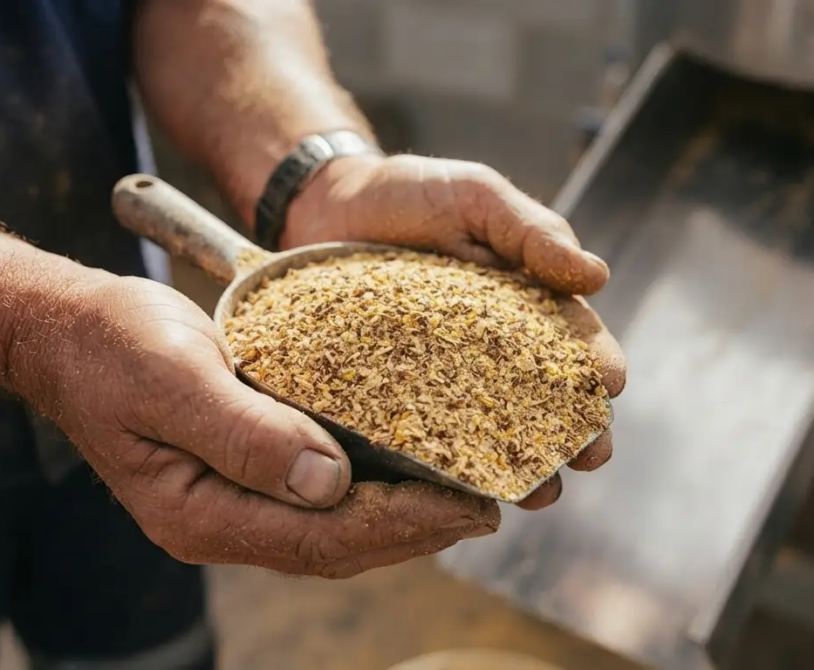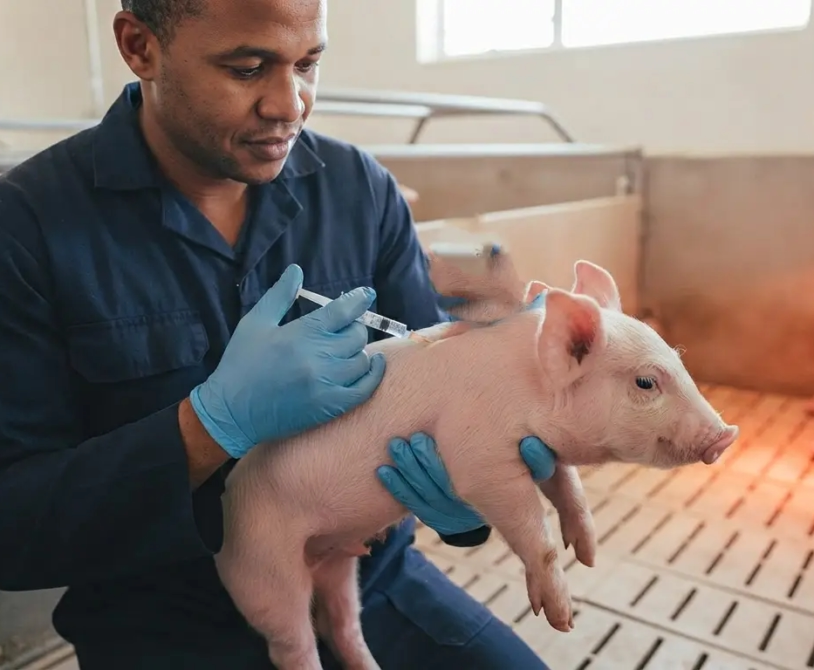
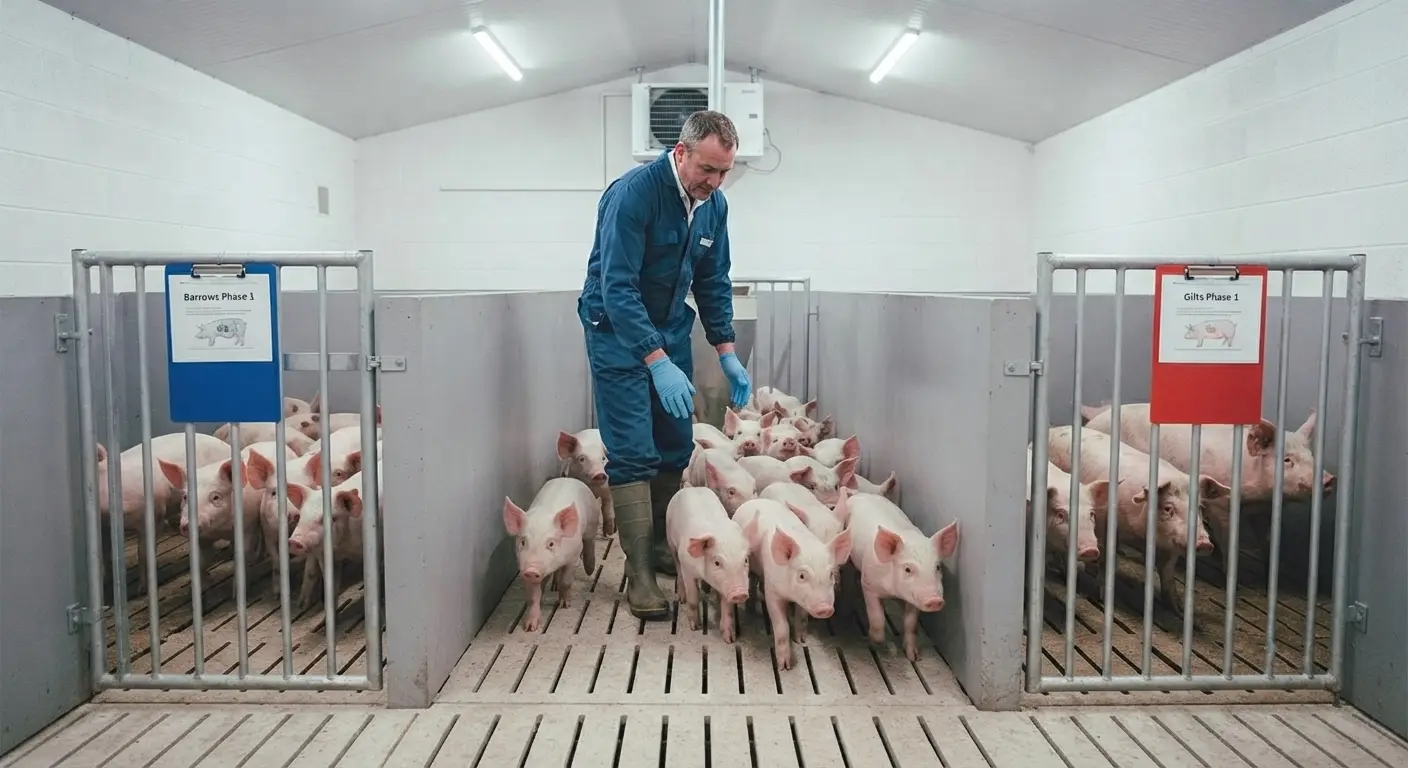
Most commercial pig operations feed gilts and barrows the same ration in the same pens at the same time. This is the path of least resistance — one ration to formulate, one pen structure to manage, one batch to track. It is also a measurable waste of money, happening every day, across every batch, because gilts and barrows are not nutritionally the same animal.
They differ in growth rate. They differ in lean deposition rate. They differ in fat deposition tendency. They differ in amino acid requirement relative to feed intake. And they differ in the trajectory of those differences across the finisher weight range — with the gap between them typically widening as they approach market weight, precisely the period when the cost of mismatched nutrition is highest because the daily feed consumption is also at its peak.
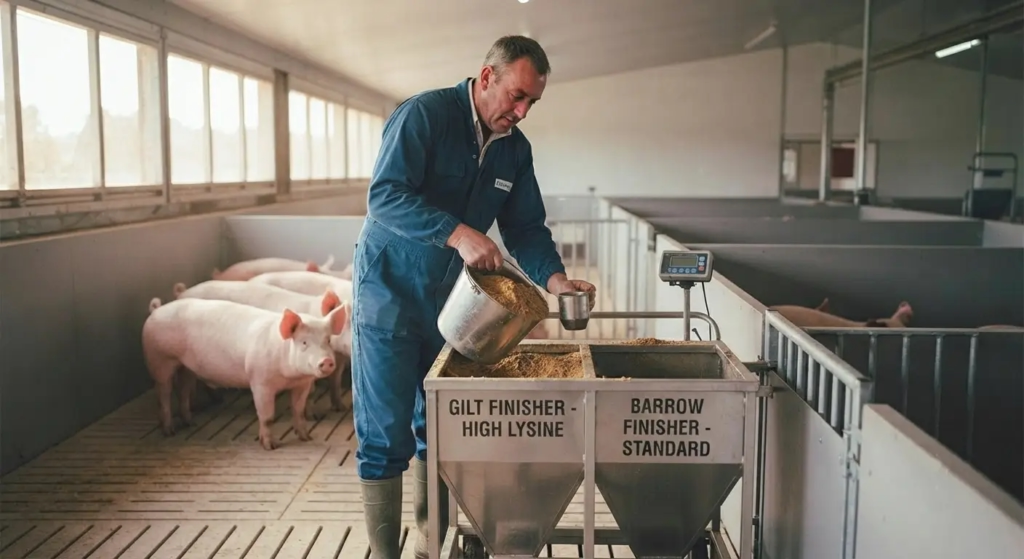
Split-sex feeding addresses this by separating gilts and barrows into same-sex pens and formulating distinct rations for each — a ration that precisely matches the gilt’s higher amino acid requirement relative to feed intake, and a separately formulated ration that accounts for the barrow’s higher voluntary feed intake and greater fat deposition tendency. The result is better nutrient matching for both sexes, measurable FCR improvement in both, and feed cost reduction from avoiding the systematic overformulation that occurs when a single ration is set to cover the higher-requirement sex.
The concept is not new — it has been part of the commercial pig nutrition toolkit since the 1980s. What keeps it underimplemented in West African commercial pig production is primarily a management organization question (it requires separating pigs by sex at or near weaning and maintaining that separation through to slaughter) rather than a nutritional complexity question. This guide provides both the nutritional case that makes the investment worthwhile and the management framework that makes it practical at commercial scale.
Part 1: The Biological Differences That Drive the Nutritional Gap
Testosterone and Lean Deposition in Intact Males vs. Barrows and Gilts
In commercial pig production outside most of Europe, male pigs destined for slaughter are typically castrated as piglets (producing barrows) to prevent boar taint — the sex-hormone-influenced off-odor that develops in the meat of intact male pigs as they approach puberty. This castration fundamentally alters the male pig’s hormonal profile relative to both the intact boar and the female gilt, with direct consequences for growth physiology and nutrient partitioning.
The intact male advantage (relevant where boars are slaughtered intact): Testosterone and related androgens in intact males stimulate lean tissue deposition, suppress fat deposition, and improve feed conversion efficiency — intact males typically show 5–10% better FCR and 8–12% higher lean yield than barrows at the same body weight. Where intact boar production is practiced (increasingly common in some markets as a cost-reduction strategy), the nutritional requirements of intact males most closely resemble those of gilts in terms of their high lean-to-fat deposition ratio, though they differ in absolute magnitude.
The barrow’s physiology: Castration removes the primary androgenic drive for lean tissue deposition. Barrows therefore:
- Deposit lean tissue at a lower rate than gilts or intact males
- Deposit fat at a higher rate than gilts or intact males at the same body weight and feed intake
- Have higher voluntary feed intake than gilts (partly hormonal, partly related to the lower satiety signal from leaner body composition that would otherwise limit intake in higher-lean individuals)
- Require less dietary lysine per unit of feed consumed (because they are depositing less lean tissue per kg of feed, and lean tissue is what requires dietary lysine to construct)
The gilt’s physiology: Gilts retain the estrogenic hormonal environment appropriate to their intact female status, which:
- Supports a higher rate of lean tissue deposition relative to body weight than barrows
- Suppresses fat deposition relative to barrows at the same body weight
- Results in lower voluntary feed intake than barrows (gilts self-regulate intake more effectively, a characteristic important for their future role as breeding females managing body condition)
- Requires more dietary lysine per unit of feed consumed (because they are depositing more lean tissue per unit of intake, each unit of which requires lysine to construct)
The Quantified Performance Gap
The performance differences between gilts and barrows are well-documented across multiple research populations and commercial production conditions:
| Metric | Gilts | Barrows | Gilts’ Advantage (vs. Barrows) |
|---|---|---|---|
| Daily feed intake (60–110 kg) | 2.30–2.60 kg/day | 2.55–2.85 kg/day | 10–15% lower |
| Average daily gain (60–110 kg) | 790–870 g/day | 820–900 g/day | Gilts slightly lower |
| Feed conversion ratio | 2.55–2.80 | 2.70–3.00 | Gilts 5–8% better |
| Lean meat percentage at slaughter | 58–65% | 54–61% | Gilts 4–6% higher |
| Backfat depth at P2 | 12–18 mm | 16–22 mm | Gilts 20–30% lower |
| Loin eye area (cm²) | Higher per unit carcass weight | Lower per unit carcass weight | Gilts produce higher-value carcass |
The practical implications for a mixed-sex pen fed a single ration:
In a conventionally managed mixed-sex pen, the barrow’s higher voluntary feed intake means it eats more than the gilt per day. If the ration is formulated to the gilt’s higher lysine-per-unit-of-intake requirement, the barrow receives excess lysine (and therefore excess protein ingredient cost) through its higher intake — the barrow is eating a ration that is unnecessarily expensive for its actual lean deposition rate.
If the ration is formulated to the barrow’s lower lysine-per-unit-of-intake requirement (the more common outcome, since this produces a cheaper ration that still passes visual performance assessment without obvious failure), the gilt is systematically undersupplied with lysine relative to its actual lean deposition capacity — constraining its lean growth rate below genetic potential and worsening its FCR unnecessarily.
Either compromise costs money. Split-sex feeding eliminates the compromise by allowing each sex to receive exactly the ration that matches its specific nutrient requirement at each production stage.
Part 2: The Formulation Differences — What Changes Between Gilt and Barrow Rations
The Lysine Requirement Differential
The central formulation difference between gilt and barrow rations is the dietary lysine concentration — specifically, the grams of standardized ileal digestible (SID) lysine per kilogram of feed, which is what determines the pig’s effective daily lysine intake when multiplied by actual voluntary feed intake.
Why the dietary concentration matters for sex-differentiated feeding:
- Gilts eat less feed per day but need more lysine per kg of lean gain
- Barrows eat more feed per day but need less lysine per kg of lean gain
- The net result is that gilts require a higher dietary concentration of lysine (more grams of lysine per kilogram of feed) to meet their higher lean deposition requirement despite lower feed intake
- Barrows can be adequately supplied with a lower dietary concentration of lysine, delivered at adequate total daily grams through their higher feed intake
Specific SID lysine concentration targets by sex and weight:
| Weight Range | Gilt SID Lysine (% diet) | Barrow SID Lysine (% diet) | Difference |
|---|---|---|---|
| 60–75 kg | 0.88–0.94% | 0.78–0.84% | +0.10% in gilt ration |
| 75–90 kg | 0.82–0.88% | 0.72–0.78% | +0.10% in gilt ration |
| 90–110 kg | 0.74–0.80% | 0.65–0.71% | +0.09% in gilt ration |
The difference seems modest — roughly 0.10 percentage points of dietary lysine between the two sex-specific rations at any given weight range. But across the entire finisher period, feeding this difference correctly (meeting the gilt’s higher requirement rather than compromising down to the barrow’s requirement for both) produces the documented lean growth and FCR improvement that generates the financial case for split-sex management.
How the Full Ration Changes Beyond Lysine
Crude protein: The gilt’s higher lysine requirement, when met through a higher dietary lysine concentration, also generally implies a slightly higher overall crude protein percentage — typically 0.5–1.5 percentage points higher in the gilt ration than the barrow ration at each phase.
Where synthetic amino acid supplementation is used to support protein reduction (as detailed in amino acid and formulation strategy guidance elsewhere in this series), this difference can be reduced — the gilt ration achieves its higher lysine target through synthetic lysine supplementation without requiring proportionally higher crude protein, allowing the cost benefit of protein reduction to be captured for both sex-specific rations while still maintaining the appropriate lysine concentration differential between them.
Energy: The barrow’s higher voluntary feed intake means it consumes more total energy per day than a gilt on the same dietary energy density. Two approaches exist for managing the barrow’s consequent higher fat deposition tendency:
- Lower dietary energy density in the barrow ration: Reduce ME (metabolizable energy) by 50–100 kcal/kg in the barrow ration relative to the gilt ration, providing less energy per unit of feed intake to partially offset the barrow’s higher total energy consumption from its greater feed intake — moderating its fat deposition tendency without restricting feed access
- Accept the barrow’s higher fat deposition and optimize the ration for efficiency: Maintain the same energy density in both rations, capture the barrow’s naturally higher daily gain from its greater feed intake, and optimize the barrow ration specifically for FCR rather than attempting to manage carcass composition through energy dilution
The correct approach depends on the specific market’s carcass specification requirements — if lean yield above a specific threshold is a payment criterion (as in many formal abattoir and supermarket supply contracts), approach 1 (energy dilution in the barrow ration) is more relevant; if payment is primarily on live weight or without lean yield grading, approach 2 may be more cost-effective.
Other amino acids: Following the ideal protein ratio framework detailed in amino acid guidance elsewhere in this series, all other amino acid targets adjust proportionally to the lysine change between the two sex-specific rations — the ideal protein ratios (methionine + cystine at 55–60% of lysine, threonine at 60–65%, etc.) remain the same between gilt and barrow rations, but the absolute dietary concentrations of each scale with the different lysine targets.
Part 3: The Financial Case — Calculated Savings from Split-Sex Feeding
Cost of Single-Sex Formulation Overfeeding (Barrow Being Overfed Lysine)
When a single ration is formulated to the gilt’s higher lysine requirement (the approach that avoids undersupplying the higher-requirement sex), barrows receive excess dietary lysine relative to their actual requirement. This excess is:
- Not stored — amino acids cannot be stored in meaningful quantity; excess lysine is catabolized (broken down) and the nitrogen excreted in urine
- Carried at full ingredient cost — the soybean meal or synthetic lysine that supplied the excess lysine cost the same per kilogram as the lysine that was productively used for lean tissue synthesis
- A purely wasted cost — it produced no growth benefit, no FCR improvement, no additional market value
Quantifying the overfeeding cost:
For barrows at 60–110 kg fed at the gilt lysine specification (0.88% SID Lys in the 60–75 kg phase, for example, vs. the barrow’s actual requirement of 0.80%):
- Overfeeding: 0.08 percentage points of dietary SID lysine × 2.5 kg average daily intake (barrow, 60–75 kg) = 2.0 g excess SID lysine per barrow per day
- Period: 30 days in the 60–75 kg phase
- Total excess: 2.0 g × 30 days = 60 g excess SID lysine per barrow across this phase
- Cost of excess: This excess could be supplied by reducing L-Lys HCl inclusion by approximately 0.09% (since L-Lys HCl is approximately 78.8% lysine) — saving approximately XAF 0.9/kg × 2,500 kg/tonne × (0.09%/100) = approximately XAF 20/tonne of barrow feed, or across 43.5 days average finisher phase: approximately XAF 1,200 per barrow for the full finisher period
At 500 barrows per year: XAF 600,000 (USD 1,000) per year in unnecessary overformulation cost — purely from providing the gilt’s higher lysine specification to barrows who do not need it.
FCR Improvement Value (Gilts Being Undersupplied)
The more financially significant component of the split-sex feeding benefit comes from the FCR improvement that occurs when gilts receive their correctly formulated higher-lysine ration rather than the barrow-calibrated ration.
As detailed in amino acid guidance, gilt lean growth is constrained when lysine supply falls below requirement. At the 60–90 kg phase, feeding gilts at the barrow’s 0.78% SID Lys specification rather than their actual 0.88% requirement represents approximately 11% below requirement.
From published dose-response research on lysine supply below requirement for this weight range: approximately 4–5% FCR worsening and 3–4% daily gain reduction for each 10% below requirement.
Financial consequence at a 500-gilt annual production:
FCR worsening (4.5%): 500 gilts × 75 kg gain × 2.80 FCR (actual) vs. 2.68 FCR (target) = 500 × 75 × 0.12 = 4,500 kg additional feed consumed without additional gain 4,500 kg × XAF 310/kg = XAF 1,395,000 (USD 2,325) additional feed cost per year from gilts being undersupplied with lysine across the full finisher period
Growth rate reduction (3.5%): Gilts reaching market weight approximately 4 additional days later (pen turnover reduced by ~4 days per batch) 500 gilts × 4 days × XAF 800 overhead cost per pig-day (housing, labor allocation) = XAF 1,600,000 (USD 2,667) per year in additional fixed cost from extended days to market
Combined annual benefit of correct gilt lysine formulation: XAF 1,395,000 (FCR improvement) + XAF 600,000 (reduced barrow overformulation) + XAF 1,600,000 (faster gilt throughput) = XAF 3,595,000 (USD 5,992) per year at a 500-gilt + 500-barrow annual production scale.
These figures represent the financial benefit available from a single management change — separating gilts from barrows and formulating two distinct finisher rations — without any change in genetics, housing, health management, or other production inputs.
Part 4: Implementing Split-Sex Management — The Practical Framework
At What Point to Separate
The ideal separation point is at weaning. Piglets are sexed (identified as gilt or barrow) at birth or at castration (typically 3–7 days of age), making sex identification information available from the earliest stages. Establishing sex-segregated weanling pens at the point of weaning allows sex-specific nutrition to be applied from the start of the post-weaning solid-feed period.
Practical note: Sex-specific nutrition is most financially significant in the finisher phase, where the sex-based differences in lean deposition rate and feed intake are largest and where daily feed consumption is highest. But earlier separation (at weaning) avoids the management complexity of re-sorting pigs by sex at the grower-finisher transition — a mixing event that itself generates the social disruption and temporary performance setback described in FCR management guidance. Separating at weaning, and maintaining that separation through to slaughter, is simpler in total management terms than separating at the grower or finisher transition even if the nutritional benefit is concentrated in the finisher phase.
Infrastructure Requirements
Pen assignment: Approximately half of the grower and finisher pens will house gilts, half will house barrows. No new construction is required — the same total pen count and pen area accommodates the same total pig number, simply reorganized by sex rather than by mixed-sex batches.
Feed storage: Two grower-finisher rations (one for each sex) must be stored separately and delivered to the correct pens. This requires either two separate feed bins or feed bags clearly labeled by sex and ration designation, and a feed delivery protocol that prevents accidental mixing — the single most common implementation error in split-sex programs.
Record-keeping: Each pen must be identified in the farm’s records by the sex it houses, with corresponding ration specification documented — ensuring that when rations are updated (due to ingredient price changes, seasonal availability of alternatives, or genetic improvement in the herd that shifts requirement targets), both sex-specific rations are updated appropriately and neither defaults back to a single undifferentiated specification by accident.
Managing the Transition to Gilt Retention for Breeding
For farrow-to-finish operations retaining some gilts from the finisher cohort as replacement breeding stock, the split-sex management system creates a useful secondary benefit: gilts managed in sex-segregated pens are more easily identified and accessed for individual assessment against the gilt selection criteria detailed in gilt selection guidance elsewhere in this series, compared to the same animals in mixed-sex pens where visual assessment and individual handling are more complex.
The transition of selected gilts from finisher nutrition to the pre-breeding nutrition program (as detailed in phase-feeding guidance for gilts in the breeding preparation period) is also more clearly managed when gilts are already in their own pens — transitioning a designated pen to pre-breeding nutrition without affecting barrow pens that should be continuing on finisher specification.

Part 5: What Split-Sex Feeding Does Not Fix
Intact Boar Production — A Different Set of Requirements
Where boars are raised to slaughter without castration (intact boar production, practiced in some commercial systems to capture the growth and FCR advantages of testosterone-driven lean deposition), the nutritional requirements differ from both barrows and gilts — intact males have higher amino acid requirements than gilts (not lower, as barrows do) and produce the leanest, most feed-efficient carcass of the three sex categories. Split-sex feeding in this context requires a three-way separation and three distinct ration formulations — intact males, gilts, and barrows each with separate pens and separate rations.
This management complexity is one reason why most operations choose between intact boar production and castration rather than running all three sex categories simultaneously — and where intact boar production is implemented, it is typically applied to the entire male cohort rather than as a mixed approach where some males are castrated, and others are not.
Other Sources of FCR Variation That Sex-Specific Formulation Cannot Address
Split-sex feeding improves the precision of nutrient matching between ration and pig requirement for each sex — but as detailed throughout the FCR management guidance in this series, FCR is simultaneously affected by health status, thermal environment, water access, stocking density, and feed quality. Sex-specific ration formulation is one lever among many, and its benefit is fully realized only when the other levers (health, environment, water, space, ingredient quality) are also correctly managed.
A farm with subclinical disease pressure, inadequate ventilation, or mycotoxin contamination in its feed supply will not close the entire performance gap through split-sex feeding alone — though the performance improvement from correct sex-specific formulation is real and additive to whatever baseline performance the other management factors establish.
Part 6: The Intact Boar Alternative — Is Castration Worth It?
This is a related but distinct question from split-sex feeding that deserves brief address, since the decision to castrate or not determines the sex categories that exist on the farm and therefore the structure of any sex-specific feeding program.
The case for castration (producing barrows):
- Eliminates boar taint risk in finished pork (the primary driver of castration in commercial production)
- Simpler management — docile barrows are easier to handle than intact males approaching puberty
- Standard practice in most West African commercial pig markets, where buyer familiarity with and preference for barrow pork is established
The nutritional cost of castration:
- Barrows have 5–10% worse FCR than intact males at slaughter weight
- Barrows produce 4–6% lower lean yield than intact males at the same body weight
- At a 500-barrow annual operation, the FCR and lean yield disadvantage represents a real, quantifiable production cost
This is not a simple decision — boar taint management (immunocastration, where available and accepted in the market; earlier slaughter before taint hormones develop; genetic selection for low taint expression) offers alternatives to physical castration in contexts where the cost of castration’s performance penalty justifies the management complexity of alternatives. But in most West African commercial pig production contexts currently, physical castration remains the standard practice, and split-sex feeding is implemented between gilts and barrows rather than between gilts and intact males.
Summary
Gilts and barrows are nutritionally different animals. Gilts deposit lean tissue more efficiently but eat less. Barrows eat more but convert that additional intake proportionally more toward fat. The ration that correctly serves a gilt’s higher amino acid requirement per unit of intake systematically overfeeds a barrow, wasting protein ingredient cost. The ration set for a barrow’s lower amino acid requirement per unit of intake systematically underfeeds a gilt, constraining its lean growth rate and worsening its FCR below genetic potential.
Split-sex feeding corrects both errors simultaneously by providing each sex with the formulation that precisely matches its specific requirement — a gilt ration with higher dietary lysine concentration to support its higher lean deposition rate at lower feed intake, and a barrow ration with lower dietary lysine concentration that delivers adequate total daily lysine through the barrow’s higher voluntary intake.
At a 500-gilt + 500-barrow annual production scale, the combined benefit of eliminating gilt lysine deficiency and barrow overformulation — measured in FCR improvement, reduced feed cost, and faster gilt throughput — is approximately XAF 3,595,000 (USD 5,992) per year. This benefit requires no capital investment, no genetic change, no new infrastructure — only the management discipline to separate pigs by sex at weaning, maintain that separation through to slaughter, and formulate and deliver two distinct rations to the appropriate pens.
Of all the precision nutrition strategies available in commercial pig production, split-sex feeding is among the simplest to implement and among the most financially reliable to deliver on its projected return. The separation is the only real barrier. Once gilts and barrows are in different pens, the nutritional precision follows from the formulation — and the savings accumulate with every batch.