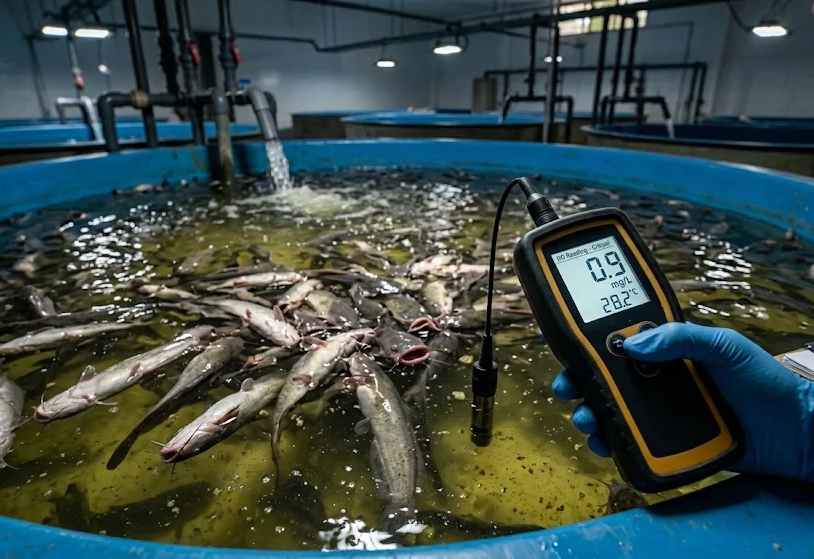
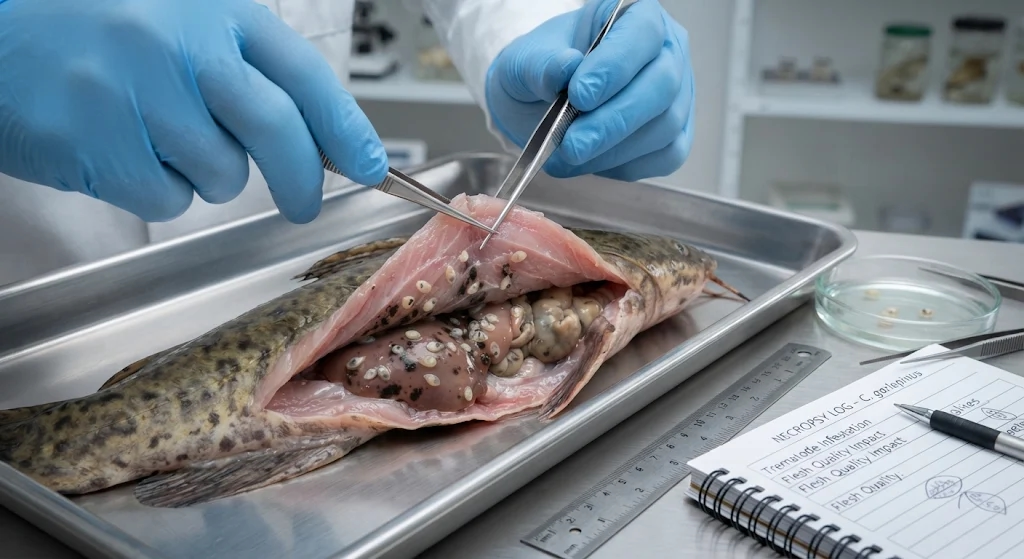
While ectoparasites like skin flukes and internal nematodes command significant attention in fish health management, digenean trematodes (flukes) represent a complex and economically damaging category of internal and tissue-dwelling parasites affecting African catfish (Clarias gariepinus) and Channel catfish (Ictalurus punctatus).
Unlike monogenean flukes—which complete their entire life cycles directly on a single host—digenean trematodes require complex, multi-host life cycles involving aquatic mollusks (snails) as intermediate hosts and piscivorous birds or mammals as definitive final hosts. Depending on the specific species, catfish can serve as either intermediate hosts harboring encysted juvenile stages (metacercariae) or final hosts harboring adult worms in their digestive tracts.
1. Biology and Life Cycle Dynamics of Digenean Trematodes
Understanding the biology of digenean trematodes requires tracking a sophisticated developmental path that bridges aquatic environments and terrestrial food webs:
- The Definitive Host Phase: Adult trematodes reside inside the intestinal tract, gallbladder, or bile ducts of final hosts—typically waterbirds (such as herons, egrets, and cormorants) or mammals that consume fish. These mature worms produce eggs that are expelled into the water via the host’s feces.
- First Intermediate Host (Freshwater Snails): Eggs hatch into free-swimming ciliated larvae called miracidia, which actively locate and infect specific freshwater snail species (such as Bulinus, Lymnaea, or Melanoides). Inside the snail, the parasite undergoes asexual multiplication, eventually releasing thousands of free-swimming fork-tailed larvae known as cercariae into the pond water.
- Infection of Catfish (Second Intermediate Host): Free-swimming cercariae actively swim through the water column to locate a catfish. They penetrate the fish’s skin, gills, or fins and migrate through tissues to encyst as metacercariae (often referred to as grubs) in the musculature, internal organs, eyes, or body cavity. Alternatively, if the catfish ingests an infected snail or aquatic vector directly, certain species like Orientocreadium batrachoides establish themselves directly as adults within the intestinal lumen.
2. Clinical Manifestations and Pathology
The clinical impact of trematode infections on African catfish depends heavily on the specific species involved, the intensity of the parasite burden, and whether the fish acts as an intermediate or final host:
- Tissue Damage and Aesthetic Degradation: When heavy burdens of metacercariae encyst within the flesh, skin, or fins of catfish, they form distinct visible cysts (often called black grubs, yellow grubs, or white grubs depending on pigment accumulation). While light infections may be tolerated, heavy encystment ruins the market value of the fish by making the flesh aesthetically unappealing, discolored, and unmarketable.
- Visceral and Organ Dysfunction: Species migrating through or encysting in vital internal organs (such as the liver, heart, kidneys, and mesenteries) cause localized inflammation, tissue necrosis, and granuloma formation. Severe visceral migration can lead to organ failure, ascites (fluid accumulation in the body cavity), and elevated mortality—particularly in fragile fry and fingerling stocks.
- Intestinal Pathology: Intestinal trematodes such as Orientocreadium batrachoides attach to the gut mucosa, causing localized enteritis, epithelial thickening, and reduced nutrient absorption, which translates to chronic stunting and poor feed conversion ratios.
3. Root Causes and Environmental Triggers
Digenean trematode outbreaks in commercial or homestead aquaculture facilities are driven by ecological factors that bring snails, birds, and fish into proximity:
- Abundant Snail Populations: Earthen ponds with heavy organic accumulation, dense aquatic vegetation, and soft bottom sediments provide an ideal habitat for freshwater snails, establishing a permanent local reservoir for the parasite.
- Presence of Piscivorous Birds: Egrets, herons, and cormorants visiting production ponds to feed act as definitive hosts. When they defecate over or near the water, they continuously introduce fresh trematode eggs into the system.
- Unfiltered Water Sources: Pumping raw water directly from rivers, lakes, or unprotected canals without mechanical filtration allows free-swimming cercariae or infected snails to enter production ponds freely.
- High Stocking Densities and Organic Loads: Nutrient-rich, stagnant aquaculture environments promote rapid snail proliferation and increase the probability that free-swimming cercariae will successfully locate and infect fish hosts.
4. Comprehensive Prevention and Management Strategies
Because treating encysted metacercariae deep within fish muscle or organs with chemicals is generally ineffective or economically unviable in food-fish production, management must focus entirely on breaking the parasite’s life cycle:
- Elimination of Intermediate Snail Hosts: The most effective defense against digenean trematodes is controlling snail populations. This can be achieved through physical pond drying, clearing aquatic vegetation, manual removal, or introducing molluscophagous fish species that consume snails. Where permitted and regulated, approved molluscicides can be utilized under professional guidance.
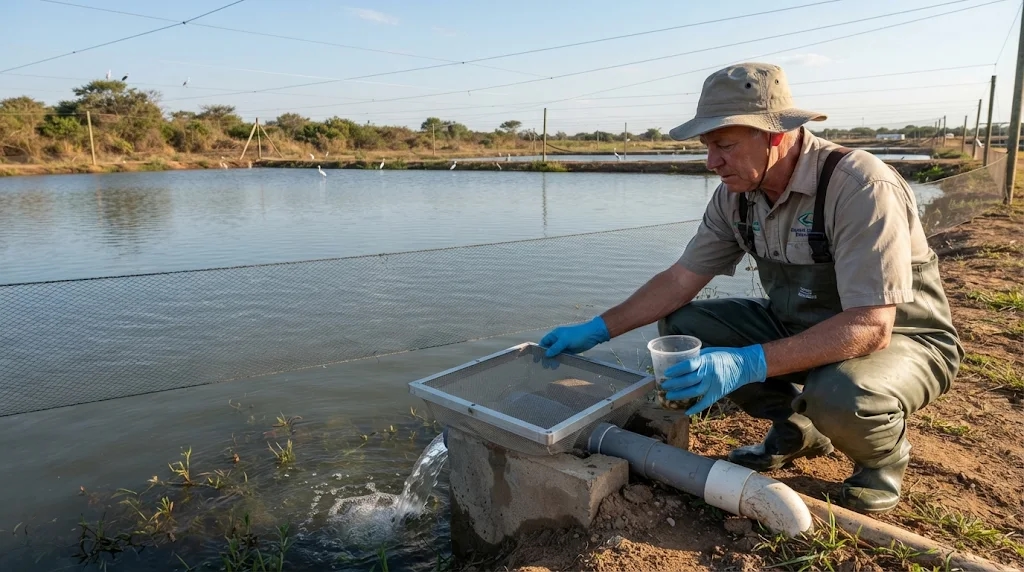
- Deterring Piscivorous Birds: Install physical exclusion measures such as overhead netting, taut bird wires, or visual deterrents to prevent herons, egrets, and cormorants from roosting near production ponds and shedding parasite eggs into the water.
- Install Fine-Mesh Inlet Filters: Equip water supply lines with fine-mesh screens and settling basins to prevent wild snails, larvae, and intermediate vectors from entering culture tanks and earthen ponds.
- Pond Bottom Management and Liming: Between production cycles, completely draining, scraping, liming, and thoroughly drying earthen ponds destroys snail habitats, eggs, and overwintering parasite stages residing in bottom mud.
- Strict Quarantine Protocols: Isolate and inspect incoming fingerlings or wild-caught stock to ensure they are free of larval cysts before introducing them to clean production units.
Need Assistance?
Are you observing unusual cysts, spots in the flesh, poor growth rates, or high parasite burdens during fish sampling in your catfish production system? Please contact us today
for professional diagnostic support, necropsy evaluations, and tailored biosecurity programs to protect your stock.