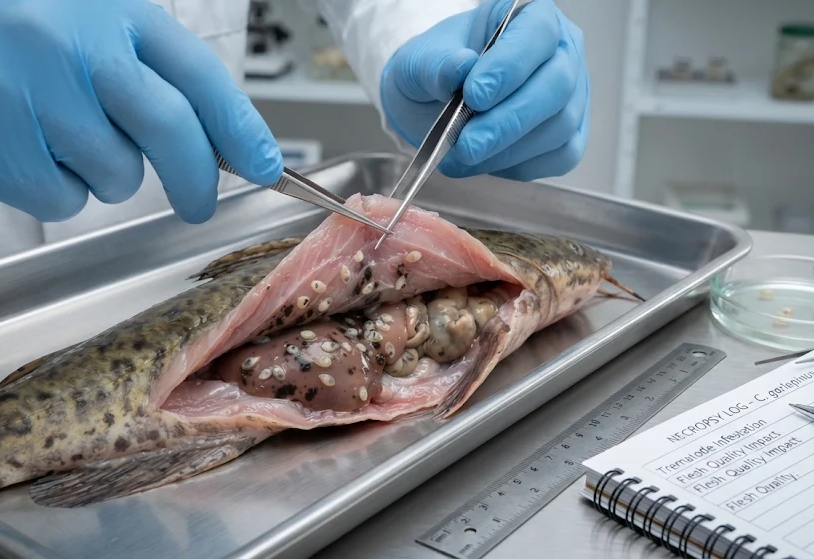
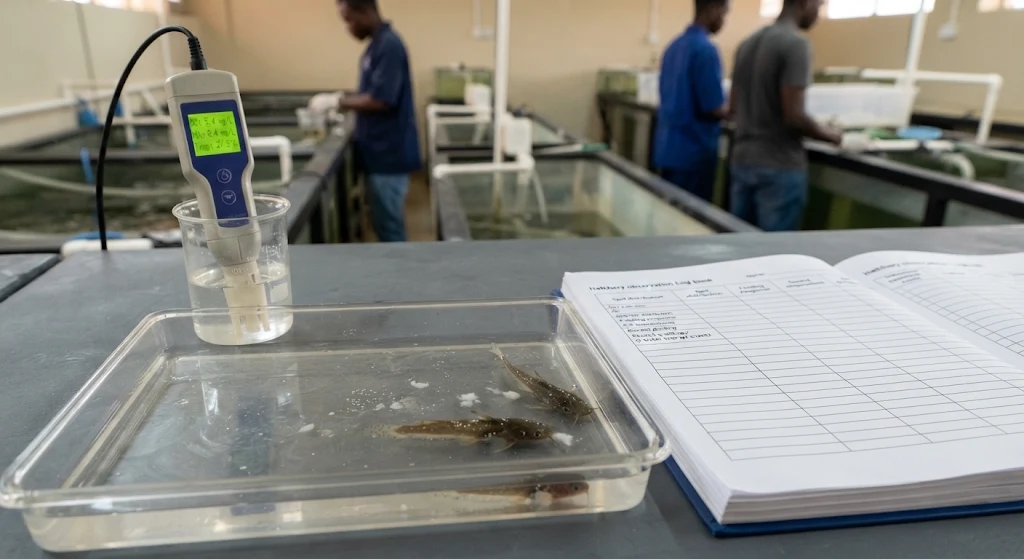
White spots on catfish fry can indicate a health problem affecting the skin, gills or other tissues. In African catfish hatcheries and nursery systems, these spots may be associated with parasitic infections, fungal growth, skin damage or other environmental and biological conditions.
The appearance of white spots alone does not establish a diagnosis. Their size, texture, distribution and progression, together with the behaviour of affected fry and the condition of the water, can help farmers determine what to investigate.
What Causes White Spots on Catfish Fry?
1. Parasitic Infections
Some external parasites can affect the skin or gills of fish and produce visible changes, irritation or excess mucus. The appearance varies with the parasite involved.
Possible accompanying signs include:
- Rubbing against tank or pond surfaces.
- Reduced feeding.
- Abnormal swimming.
- Rapid gill movement.
- Weakness or increasing mortality in severe cases.
Not every parasitic infection produces visible white spots, and not every white spot indicates a parasite.
2. Fungal Growth
Fungal organisms may colonize damaged or weakened tissue under suitable conditions. Affected areas may develop white or grey growth that appears cotton-like rather than forming distinct, smooth spots.
Possible accompanying signs include skin damage, reduced activity and deterioration in the condition of affected fry.
Visual inspection alone cannot reliably distinguish fungal growth from other skin conditions.
3. Skin Injury or Tissue Damage
Physical injury during handling, grading or transfer may cause local changes in the skin. Damaged tissue can sometimes become affected by secondary infections.
Review recent handling activities if white areas appear shortly after fish have been moved or graded.
4. Poor Water Quality
Poor water quality can irritate fish, damage sensitive tissues and increase susceptibility to disease. Relevant problems include low dissolved oxygen, ammonia or nitrite accumulation, unsuitable temperature and unstable pH.
Water-quality problems do not necessarily cause white spots directly, but they can contribute to illness and may occur alongside an infectious condition.
How to Recognize Different White-Spot Patterns
The appearance of the affected area can help guide further investigation, although it cannot confirm the cause.
| Appearance or behaviour | What to investigate |
|---|---|
| Small, distinct white spots | Possible parasitic or other skin condition |
| White or grey cotton-like growth | Possible fungal involvement or colonization of damaged tissue |
| Pale patches around injured areas | Physical damage or a secondary skin problem |
| White areas with excess mucus | Parasites, irritation or water-quality problems |
| White spots with rapid breathing | Gill problems, low oxygen or possible parasitic involvement |
| White spots accompanied by increasing deaths | Serious health or environmental problem requiring prompt investigation |
These patterns are not definitive diagnostic criteria. The location and texture of the spots, microscopic examination and other findings may be needed to identify the cause.
How to Diagnose White Spots on Catfish Fry
Step 1: Observe the Affected Fry
Check whether the spots occur on a few individuals or throughout the batch. Record their size, appearance, location and progression.
Also observe feeding, swimming, breathing and mortality.
Step 2: Test Water Quality
Measure dissolved oxygen, ammonia, nitrite, pH and temperature. Check aeration, water circulation and accumulated waste.
If fry are gasping or dying, investigate urgent water-quality problems immediately.
Step 3: Examine the Skin and Gills
A qualified fish-health professional can examine appropriate samples under a microscope to look for parasites or other abnormalities. Additional laboratory examination may be needed if infection is suspected.
Step 4: Review Recent Management Changes
Consider whether the spots appeared after transport, grading, handling, water replacement, introduction of new fish or a change in feeding.
These events may help identify possible sources of stress or exposure.
Step 5: Confirm the Cause Before Treatment
Different conditions can produce similar visible symptoms. Identifying the likely cause helps prevent unnecessary medication or chemical treatment.
How to Manage White Spots on Catfish Fry
Management depends on the cause and severity of the problem.
- Address water-quality problems: Correct identified oxygen, ammonia, nitrite, temperature or pH issues using appropriate procedures.
- Reduce handling stress: Avoid unnecessary transfers, grading or other disturbances while investigating the outbreak.
- Remove dead fry promptly: Dispose of dead fish safely according to local guidance.
- Review hatchery hygiene: Clean equipment appropriately and reduce the movement of potentially contaminated water or equipment between batches.
- Seek professional diagnosis: Consult an aquaculture specialist or fish-health laboratory if spots spread, fry deteriorate or mortality increases.
- Use targeted treatment only when appropriate: Select treatment based on the identified condition, the developmental stage of the fish, the production system and applicable regulations.
Avoid applying antifungal products, antiparasitic chemicals or antibiotics solely because white spots are visible. An incorrect treatment may harm fry, worsen water quality or delay effective intervention.

How to Prevent White Spots on Catfish Fry
Maintain Suitable Water Quality
Monitor water conditions regularly, maintain adequate aeration and remove accumulated waste. Good water management reduces stress but does not eliminate every infectious risk.
Handle Fry Carefully
Use appropriate methods during grading, transfer and sampling. Minimize injury and unnecessary handling.
Maintain Hatchery Hygiene
Clean tanks, nets and containers appropriately. Follow suitable disinfection procedures between batches and avoid sharing equipment without proper cleaning.
Quarantine New Fish
Where practical, keep newly acquired fish separate from established stocks for an appropriate observation period. Investigate unusual symptoms before introducing them into the main system.
Monitor Fry Daily
Observe skin condition, breathing, feeding and swimming behaviour. Record changes and investigate unusual symptoms early.
Avoid Unnecessary Chemical Use
Treatments should be selected according to a reliable diagnosis and professional guidance. Indiscriminate chemical use can harm developing fish and disrupt the production system.
Frequently Asked Questions
Are white spots on catfish fry always caused by parasites?
No. Parasites are one possible cause, but fungal growth, skin injury and other conditions may also produce white areas. Microscopic or laboratory examination may be necessary.
Can white spots kill catfish fry?
The spots themselves do not establish how serious the problem is. The underlying cause may be harmless, manageable or severe. Increasing mortality, respiratory distress or rapidly spreading lesions require prompt investigation.
Should I isolate fry with white spots?
Where practical, separate affected fish or batches if an infectious condition is suspected and separation can be carried out safely. Avoid unnecessary handling, and seek professional guidance about the appropriate biosecurity response.
Should I change the water when white spots appear?
Not automatically. First assess water quality and the source water. Corrective water changes may be appropriate in some situations, but abrupt changes can cause additional stress.
What is the best medicine for white spots on catfish fry?
There is no single suitable treatment for every cause of white spots. The correct approach depends on the diagnosis, fish size, production system and locally approved treatment options.
Conclusion
White spots on catfish fry may be associated with parasites, fungal growth, skin injury or other health and environmental problems. Their appearance alone cannot identify the cause.
For African catfish farmers, the best response is to inspect affected fry, test water quality, review recent management activities and obtain a reliable diagnosis before selecting treatment. Good hatchery hygiene, careful handling and daily monitoring can help reduce avoidable losses.